Traditional recipes
The classics of Portuguese pastry to make at home, explained step by step.
340 recipes
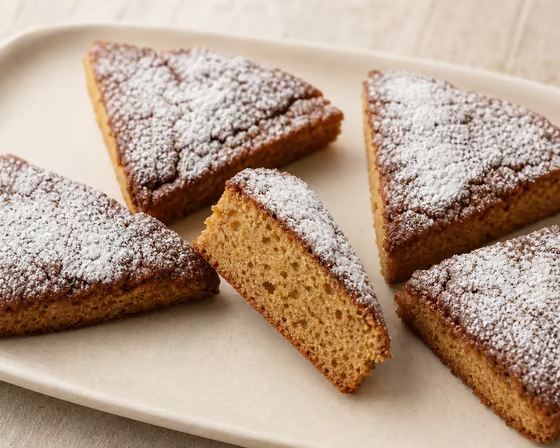
Agualva Cinnamon Triangles
A published home formula for the cake that Sintra Municipality's heritage route records among the foods of the old Agualva Fair: a milk, lemon and cinnamon batter lightened with whipped egg whites, tray-baked and cut into sugared triangles. No official specification has been published; this recipe documents one version without presenting it as the only formula.
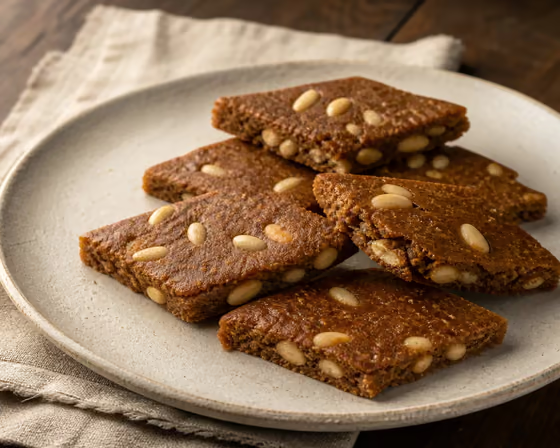
Alcomonias — Santiago do Cacém Heritage Formula
This is the large-scale formula recorded by Manuel Fialho and published by Santiago do Cacém municipality in 2023. Its volume measures and batch size are preserved without editorial scaling.
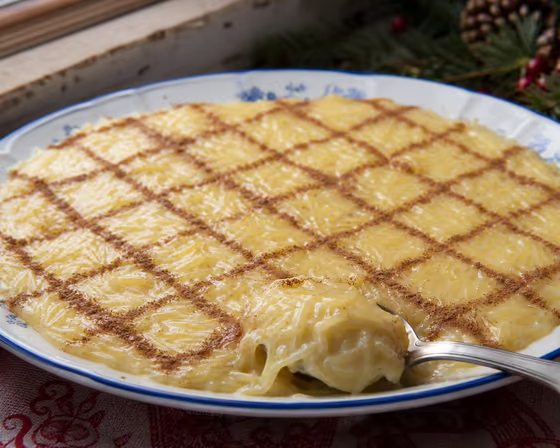
Traditional Portuguese Aletria
Portuguese aletria changes texture by region: in Minho it tends to be creamy, while in the Beiras it may set firmly enough to slice. This recipe follows the rich milk-and-yolk version documented by Teleculinária, creamy when served and firmer once cold. Lemon, cinnamon and the final powdered decoration give it its Christmas character.
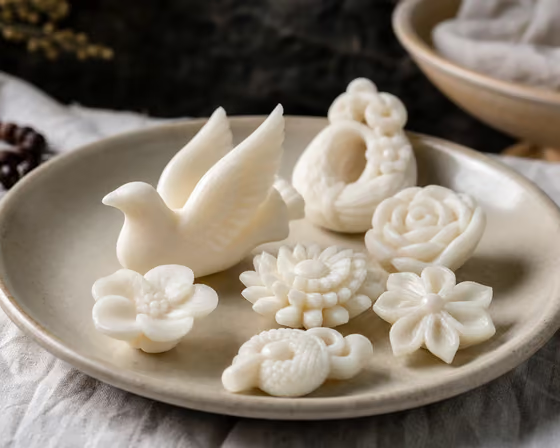
Alfenim — Official Santa Maria Formula
This recipe reproduces DGADR's published Santa Maria formula. Pulled sugar involves extremely hot syrup; it requires suitable protection, a stable work surface and experience with sugar stages.
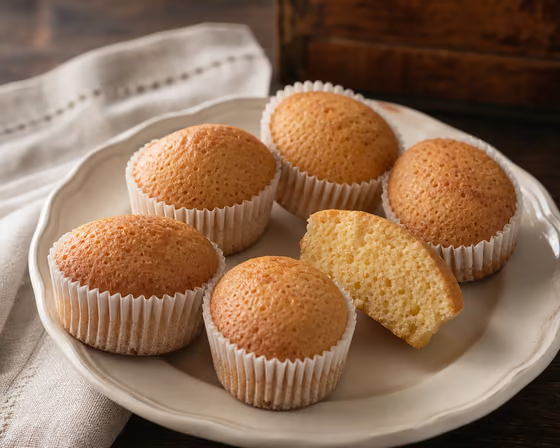
Amarantinos
This reproduction follows the formula published in the MINHA TERRA network's Recipes and Flavours of Rural Territories and reproduced by DGADR: equal weights of flour and sugar, separated eggs, cinnamon and lemon zest, baked in small greased moulds.
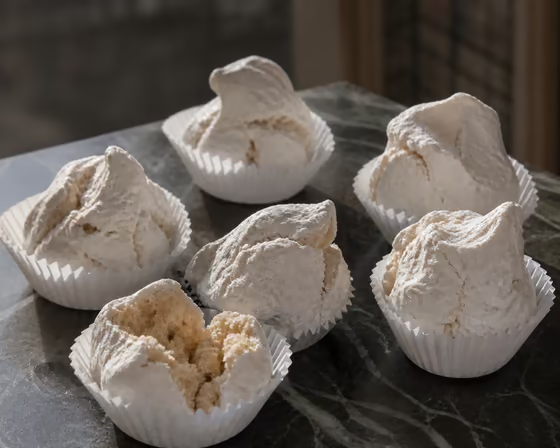
Amores de Azeitão — Gastronomia e Vinhos Version
This is the formula published by Gastronomia e Vinhos for the small egg-white, sugar and almond cakes associated with Pastelaria Regional Cego. A Setúbal Municipality video confirms the ingredients, shaping and slow bake but demonstrates different house proportions without quantifying the whole batch; the two versions are not conflated.
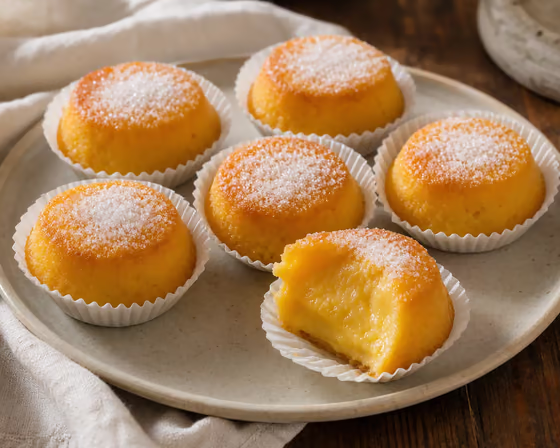
Areias Brancas — Marli Henriques Adaptation
Marli Henriques presents this formula as her adaptation of Areias Brancas and states explicitly that the original Lourinhã family recipe remains secret. The published version makes about eight small puddings with almonds, eggs, flour, milk and vanilla, baked at 200°C / 392°F for 10 to 15 minutes and then coated in sugar.
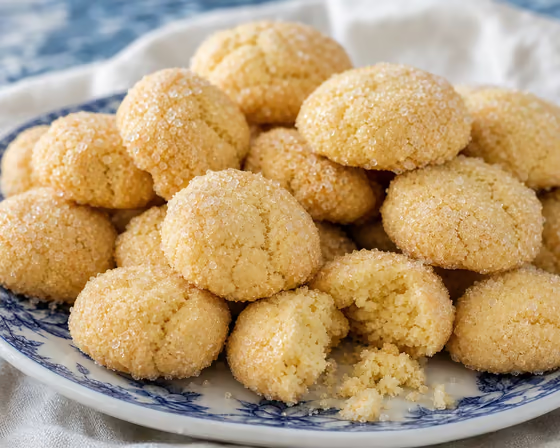
Areias de Cascais — All-Butter Version
This published formula uses only butter, sugar and flour, coating the hot biscuits in sugar. It is a simple version consistent with the identity of Areias, not the sole recipe: Cascais FoodLab also publishes a municipal formula using butter, lard and lemon.
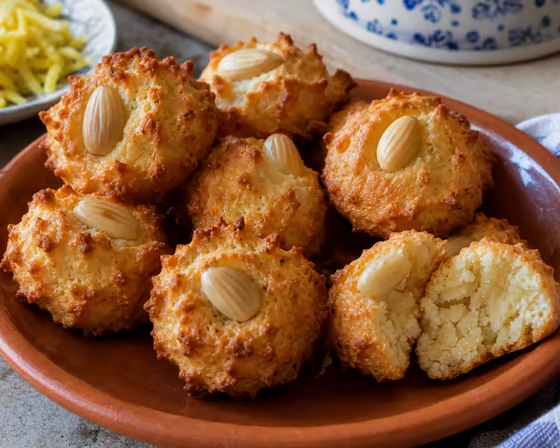
Algarve Almond Arrepiados — Revista Lusitana Formula
Espiga publishes this quantified formula, credited to Revista Lusitana no. 49, page 27: slivered almonds, partly ground, are bound with egg whites, sugar, lemon and cinnamon before baking at 150°C. Other attributed formulas use markedly different ratios and baking schedules, so this version is presented without merging them.
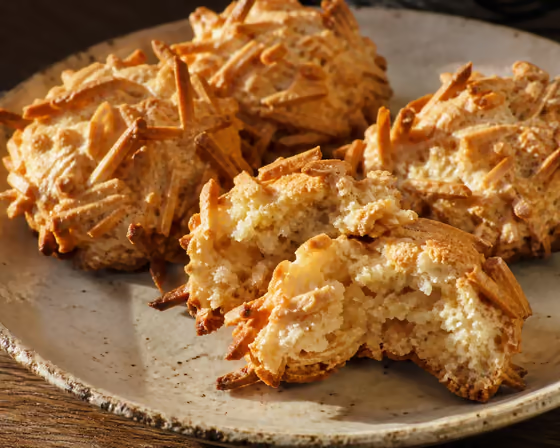
Almoster Convent Arrepiados — Municipal Formula
This formula attributed to Santarém Municipal Council uses equal weights of almonds and sugar, eight egg whites and cinnamon. It matches the method registered by Portugal's DGADR: thinly sliced toasted almonds bound with egg whites beaten with sugar and shaped into rough-surfaced cakes.
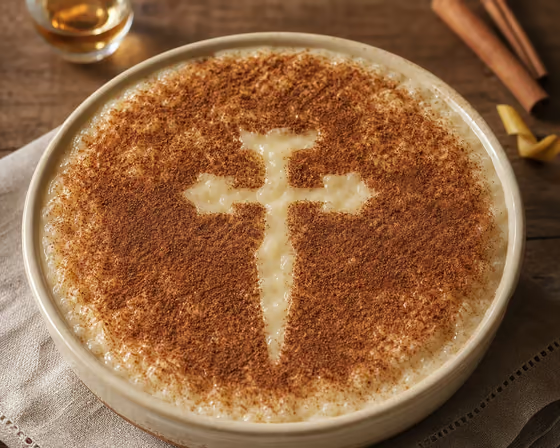
Palmela Sheep's-Milk Rice Pudding
The egg-free recipe taught by Palmela municipality in 2025: carolino rice pre-cooked in water, finished slowly with infused Saloia sheep's milk, then enriched off the heat with sugar and sheep's butter. The source publishes complete quantities and method but gives neither duration nor serving count.
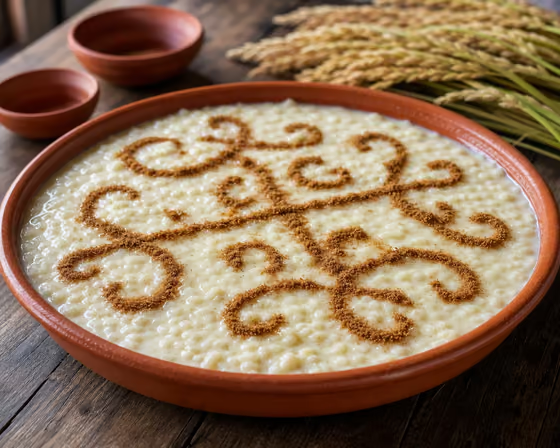
Lower Mondego Rice Pudding — Meãs do Campo Formula
The Rice and Lamprey Festival publishes this formula from the Meãs do Campo Folklore and Ethnographic Group. It uses Lower Mondego Carolino rice and milk at a community scale for twenty people, linking a reproducible recipe to the territory that promotes it.
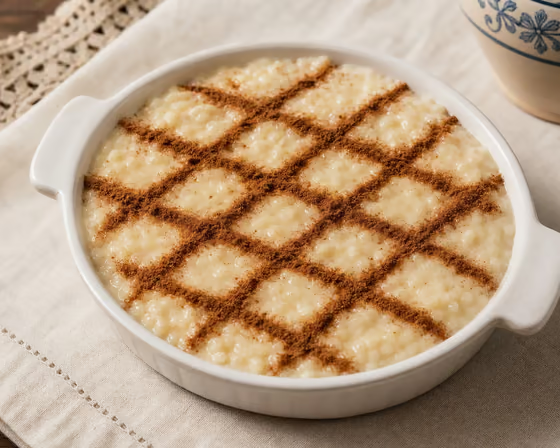
Portuguese Rice Pudding
Arroz-doce is Portugal's quintessential celebration dessert, served at weddings, baptisms and Christmas Eve suppers. Carolino rice is cooked slowly in milk scented with lemon peel and a cinnamon stick, then enriched at the end with egg yolks for a velvety, golden cream. It is served at room temperature, decorated with a lattice or stripes of ground cinnamon.
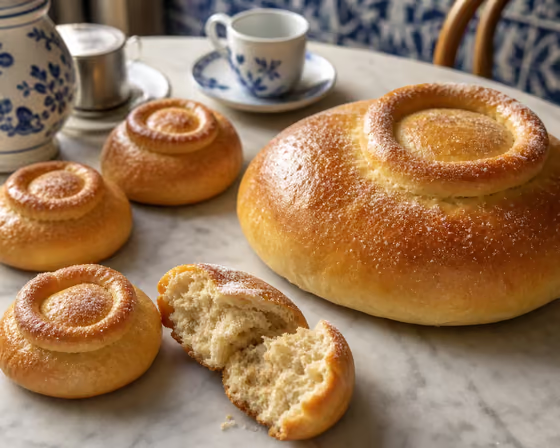
Arrufadas de Coimbra — Hélio Loureiro's Formula
This Continente formula attributed to Hélio Loureiro makes eight arrufadas with the dough crown described by DGADR. It was published for a cooking machine; the steps below retain the published temperatures, timings and sequence while expressing the operations without requiring the machine's programme names.
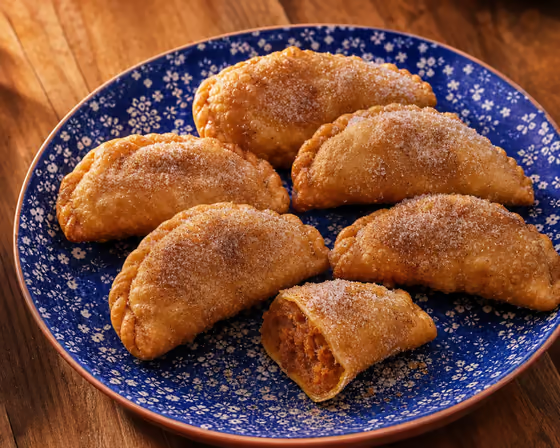
Chickpea Azevias
This home version follows the Alentejo identity recorded by DGADR: very thin tender pastry, sweet chickpea filling, half-moon shape, frying, and a sugar-and-cinnamon coating. Quantities follow Continente's published formula and are corroborated, with small differences, by other Portuguese recipes; they are not presented as one definitive convent recipe.
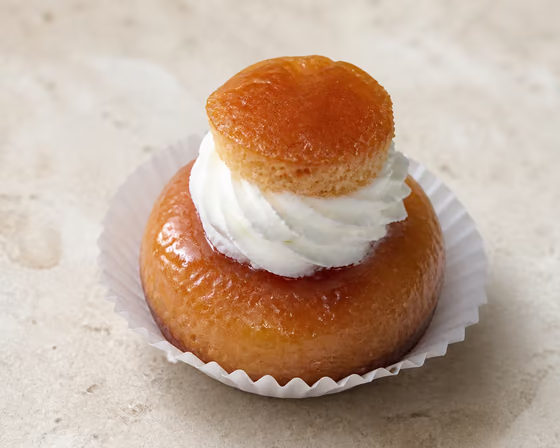
Rum Baba — Alain Ducasse's Formula
Alain Ducasse's professional formula makes fifteen yeasted babas, soaks them in vanilla-citrus syrup and serves them with rum and vanilla whipped cream. Fabrico Próprio documents the same base construction on Portuguese counters: porous yeasted cake, rum syrup and chantilly. Shape and service vary, so this is an attributed chef's recipe, not a claim to one national formula.
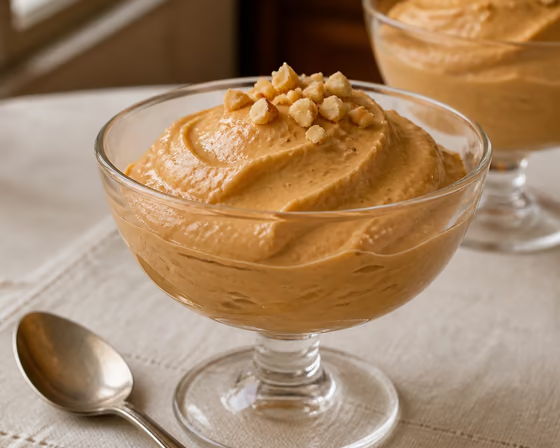
Traditional Portuguese Baba de Camelo
Baba de Camelo needs just two essential ingredients: cooked condensed milk and eggs. Yolks enrich the caramel while whipped whites turn it into a light mousse. Use pasteurised eggs when serving children, pregnant people, older adults or anyone with a weakened immune system.
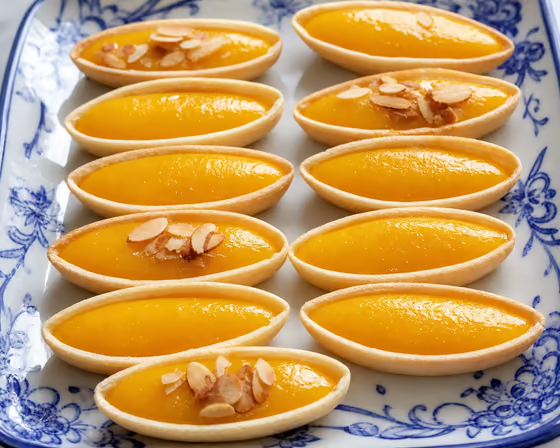
Ovos-Moles Boats — Filipa Gomes Formula
Filipa Gomes published this simple yolk-cream formula for 10 to 20 biscuit boats: ten yolks tempered with sugar syrup, thickened over medium-low heat, cooled and piped into the shells. The source uses cups without stating their capacity and publishes no timings; those measures and omissions are preserved.
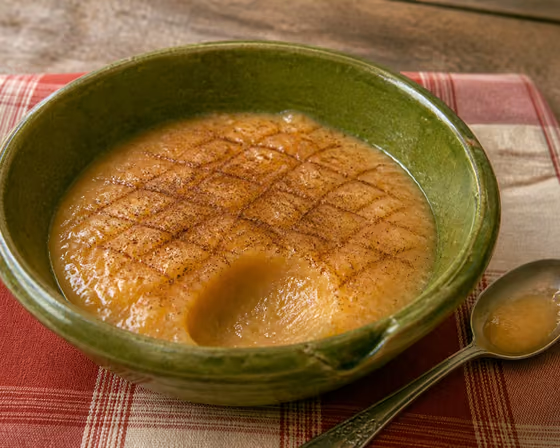
Arouca Barriga de Freira
DGADR describes the Arouca version as a thick cream of eggs, sugar, almonds and bread, cooked for 45 minutes. This home recipe preserves that method and uses quantities from a published Portuguese version; it is a reproducible interpretation, not the proprietary formula of any Arouca producer.
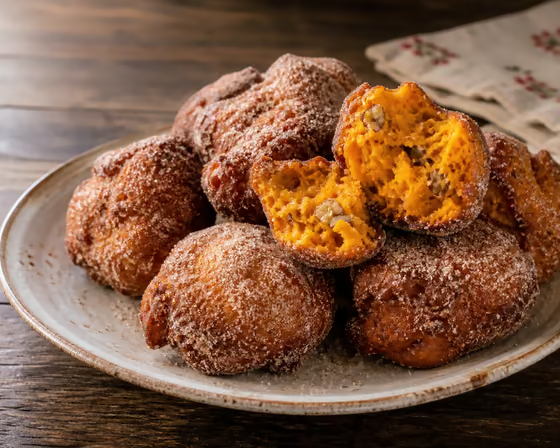
Bilharacos — Municipal Pumpkin Guild Recipe
Vagos Municipality published this recipe from the Confraria dos Sabores da Abóbora: menina pumpkin cooked with citrus and cinnamon, drained overnight, bound with eggs, sugar and flour and fried as small quenelles. DGADR and Turismo Centro corroborate the regional identity while also showing that family formulas differ.
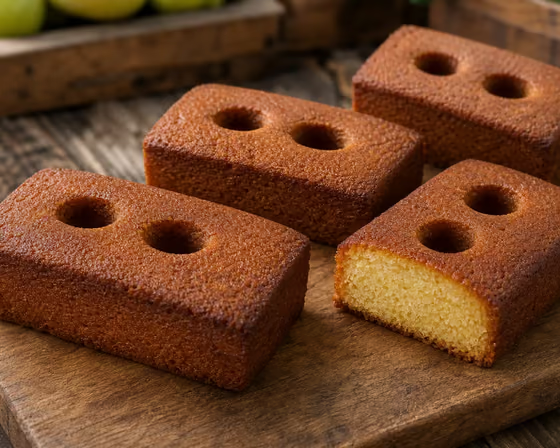
Biscoito da Teixeira — yellow variant
Biscoito da Teixeira is a compact, mildly sweet rectangular cake associated with fairs and pilgrimages across the Douro and Tâmega e Sousa. This recipe halves the formula published in an academic survey of regional food heritage and represents the yellow egg-and-cinnamon variant that DGADR distinguishes from a paler, more lemon-forward version.
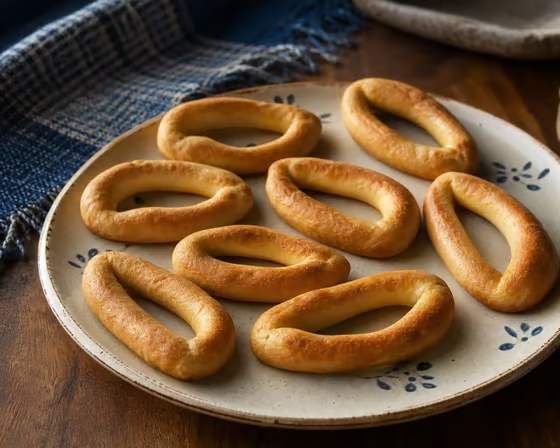
Santa Maria Brandy Biscuits — Formula Published in 2012
This is the Santa Maria formula published by the Santa Maria Açores portal in 2012: one kilogram of flour, twelve eggs, small amounts of sugar, butter and lard, and a generously filled glass of brandy, kneaded without water and immediately baked in a very hot oven. DGADR independently confirms the same ingredients, waterless kneading, no rest, ring shape and fierce oven. The source defines neither glass capacity, yield, temperature nor baking time.
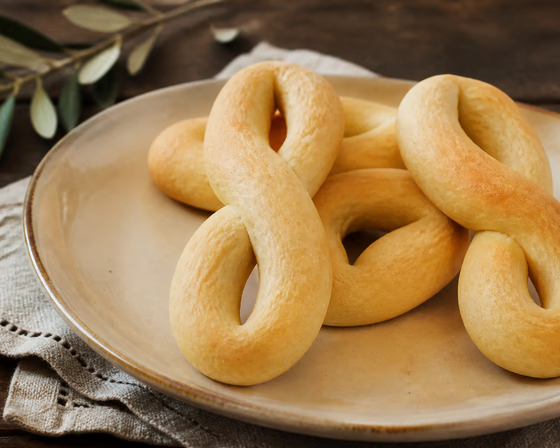
Soure Olive-Oil Biscuits
The regional formula attributed to Soure makes yeast-raised figure-eight biscuits without eggs or sugar: flour, water, low-acidity olive oil, yeast and salt. The publication specifies a 45-minute proof but only a ‘medium oven’; we preserve the baking temperature and duration as unknown.
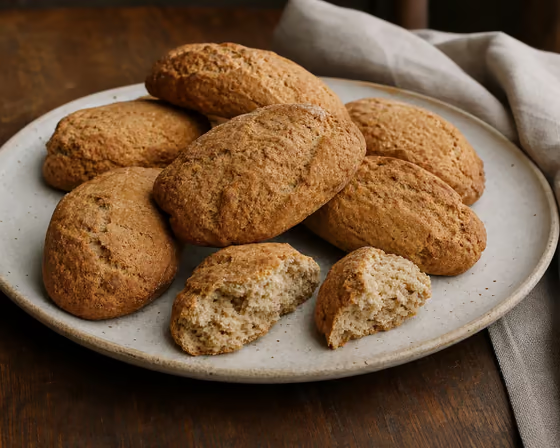
Biscoitos de Escalhão — Berenice's Household Version
This household formula published by Berenice uses ten eggs, 550 g flour, 350 ml olive oil, 250 g sugar and half a small glass of aguardente, with a short domestic-oven bake. Its ingredients agree with DGADR's Biscoitos de Escalhão record, but shaping differs: the traditional record describes flattened rolls and a wood-fired oven, while this version drops small spoonfuls and uses 180°C / 355°F. We keep that difference visible rather than merging the methods.
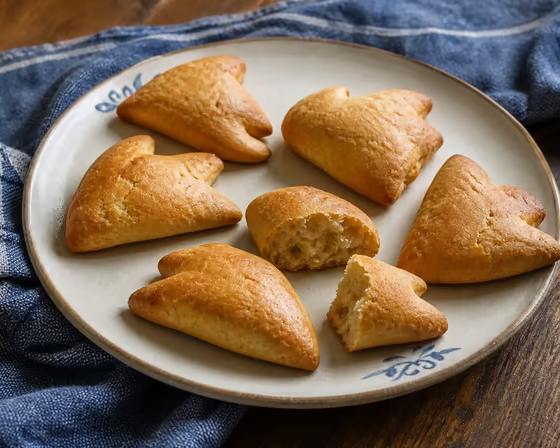
Santa Maria Ear Biscuits — Traditional Formula Published by ByAçores
This is the large-scale formula published by ByAçores: three kilograms of flour, ten eggs, lard, sugar, butter and a bread starter prepared the day before. The official Azores Handicrafts certification specification independently confirms the homemade starter, two kneading and rising stages, triangular shaping around the fingers, clipped tips and a second oven pass for drying. Starter flour and water, rising times, temperature, baking time and yield are unpublished.
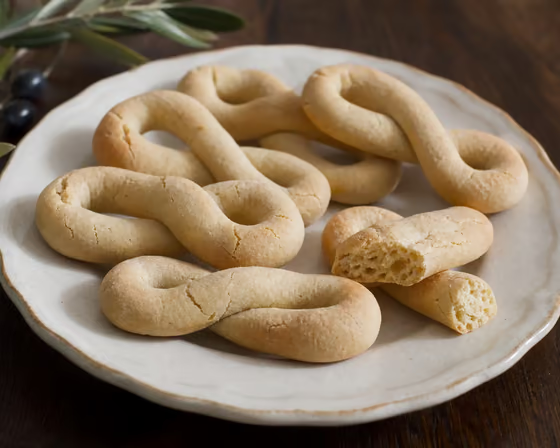
Biscoitos do Louriçal — Unsweetened Household Version
This household formula published by Berenice retains the profile treated as defining by DGADR and Louriçal Parish Council: flour, olive oil, yeast, water and salt, with no sugar. It uses 250 g flour for about 16 biscuits, rises for 30 minutes and adapts the traditional gentle oven to 180°C / 355°F for about 15 minutes. It is a home-kitchen version, not the commercial formula used by local bakeries.
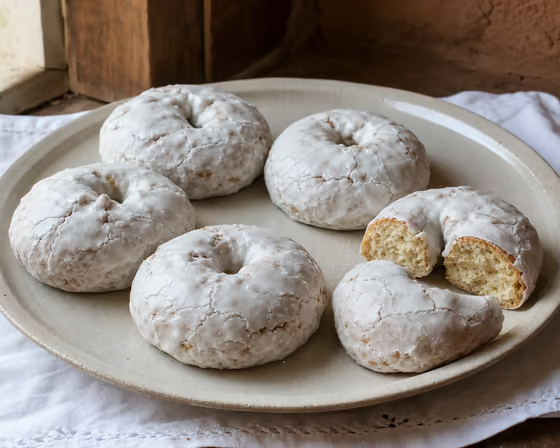
Biscoitos Encanelados — Incomplete Santa Maria Household Formula
A Santa Maria household publication supplies quantities for the flour, eggs and fats and a separate formula for the white coating. However, it directs the cook to beat ‘eggs, sugar, butter and lard’ without stating how much sugar enters the dough, and it omits yeast, water, yield and oven parameters. This record preserves the account with its omissions visible; it is not a fully reproducible domestic recipe.
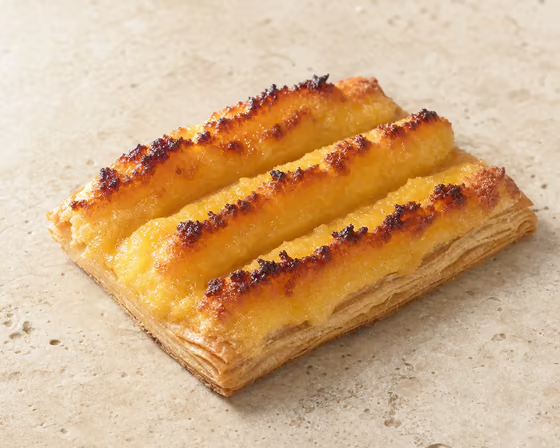
Bispo — Published Technical Formula
Jorge Silva publishes a ten-serving formula matching the documented northern Portuguese Bispo identity: a puff-pastry rectangle receives three strips of coconut cream alternating with two of pastry cream, bakes at 200°C and is glazed. Puff pastry, pastry cream and glaze are used ready-made.
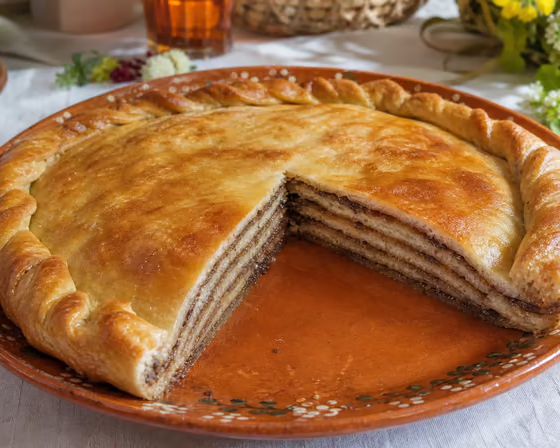
Bola Doce Mirandesa — a Sendim family recipe
Virgílio Nogueiro Gomes collected this formula from the family of Amélia das Dores Cangueiro Ferreira of Sendim. It matches the identity documented by DGADR: bread dough enriched with eggs, butter and olive oil, opened into seven sheets and layered with sugar and cinnamon. This is a large-format home recipe; timing and thickness may vary with the tray and oven.
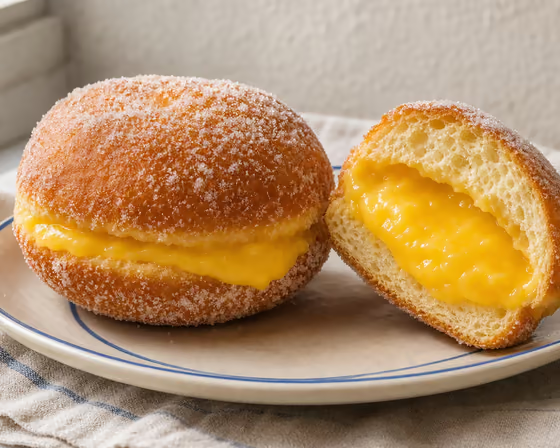
Bolas de Berlim
Bolas de Berlim are the king of Portuguese beach fritters: a soft, yeasted dough, deep-fried, rolled in sugar and filled with egg cream (creme pasteleiro). The secret lies in a well-kneaded dough, patient proving and oil at the right temperature, which leaves the characteristic pale band around the middle.
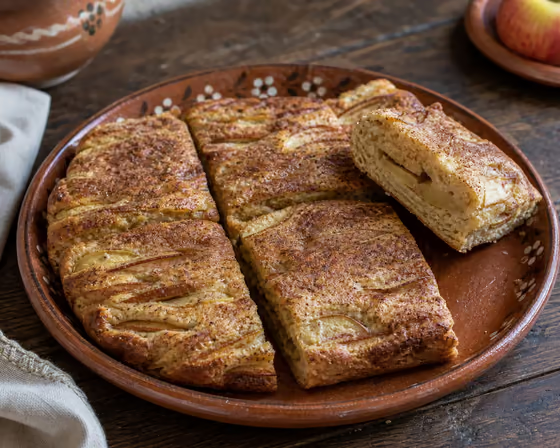
Upper Alentejo Boleima
This reproduction follows the formula published in Recipes and Flavours of Rural Territories: a single-layer boleima with brown sugar and cinnamon, without apple, allowing olive oil or vegetable oil and milk, coffee or milky coffee. It is one documented variant, not a universal recipe for every boleima.
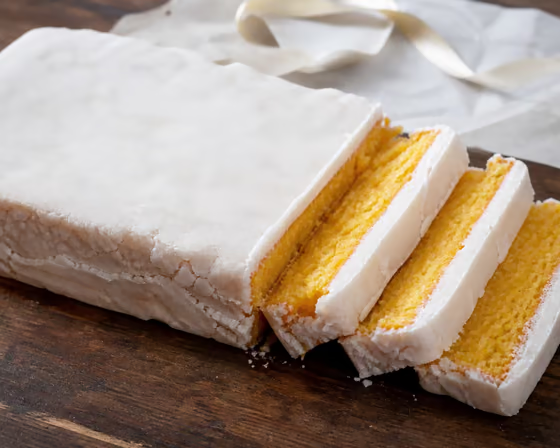
Bolinhol de Vizela — Published Sugar-Syrup Version
This published formula reproduces Vizela's rectangular sponge cake with abundant yolks and an opaque sugar coating. It is presented as an attributed version: DGADR confirms the egg, sugar and flour base, rectangular shape and syrup, but the know-how of local producers cannot be reduced to one public formula.
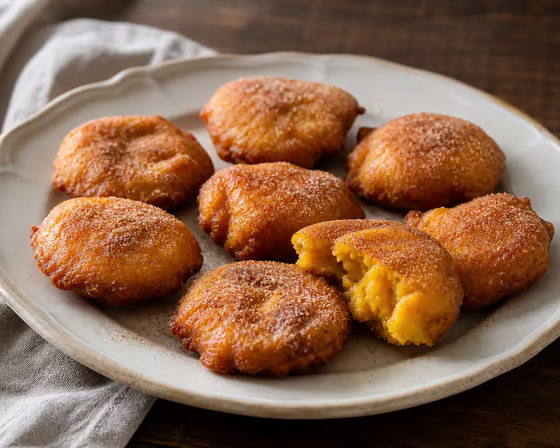
Pumpkin Fritters — Confraria do Anho Assado Formula
DGADR publishes this formula from the Confraria do Anho Assado com Arroz de Forno for Entre Douro e Tâmega. Jerimum pumpkin is cooked the day before, drained for 24 hours, bound with eggs, sugar, cinnamon, aguardente and a little flour, rested and fried as discs about 5 cm across.
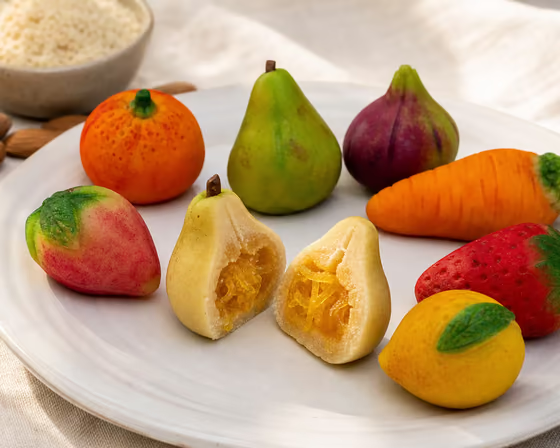
Silves Almond Sweets — Doçaria do Sul’s Second Formula
This is the second doce fino paste published by Silves-based Doçaria do Sul, which lists ‘Bolinhos de Amêndoa do Algarve’ among the family’s names. It binds 500 g almonds with a syrup of 250 g sugar and 250 ml water cooked to about 108°C / 226°F, rests for 12 hours, and is then shaped and painted. The formula contains no filling; ovos moles or egg threads documented in other versions have not been added.
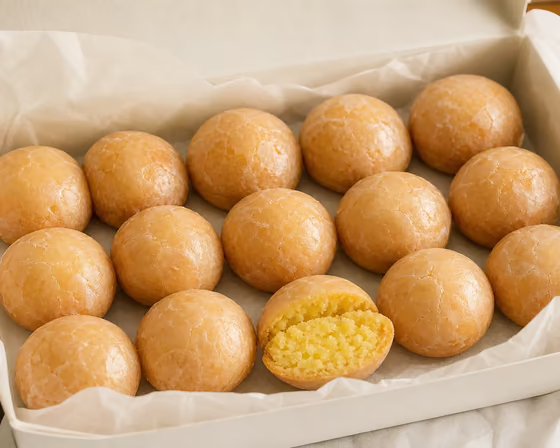
Bolinhos de Amor — Maria Júlia Guedes Version
The ACPP publishes this formula by Maria Júlia Guedes of Penafiel, made with whole eggs, butter, cinnamon and flour, then finished with syrup and sugar. It is an attributed version of the regional sweet: heritage and municipal sources state that Casa dos Bolinhos de Amor keeps its recipe secret.
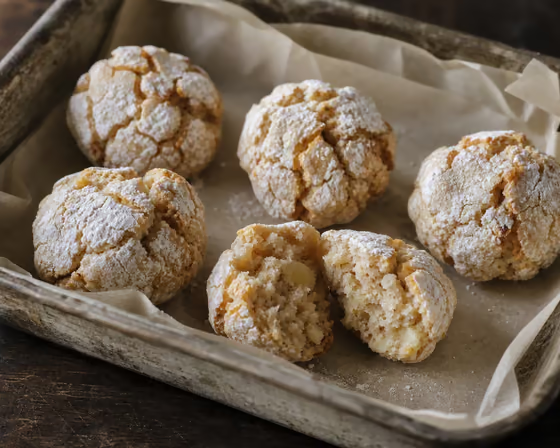
Armamar Apple Cakes — Formula from the 2022 Gastronomy Guide
This is the formula published for Armamar in the official Fins-de-Semana Gastronómicos 2022 guide: small spheres of dough with diced apple, walnut, coconut, cinnamon and aniseed, coated in flour and baked in a very hot oven. Armamar Municipal Council confirms that the apple cakes were created by local pastry shops and belong to the municipality's growing apple-sweet repertoire. The source gives neither a yield nor portion size, so both remain open.
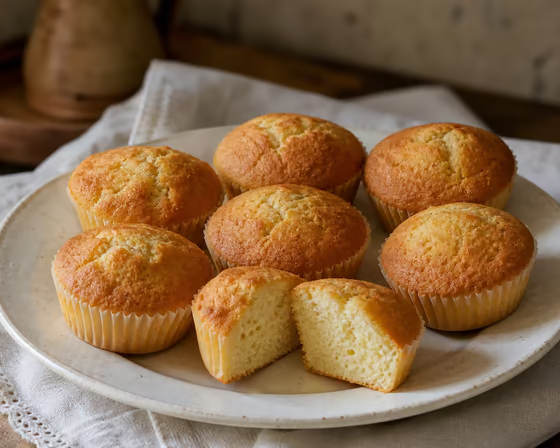
Bolinhos de Trás-da-Matriz — Modern Nutella Adaptation
This is the only detailed public formula located for Bolinhos de Trás-da-Matriz: a contemporary promotional adaptation published by Nutella. The batter combines eggs, milk, olive oil, sugar, orange, flour and raising agent and makes 30 cakes; the hazelnut spread is added only after baking. The recipe is useful and fully attributed, but it should not be mistaken for Vilar's historical formula, which remains unpublished.
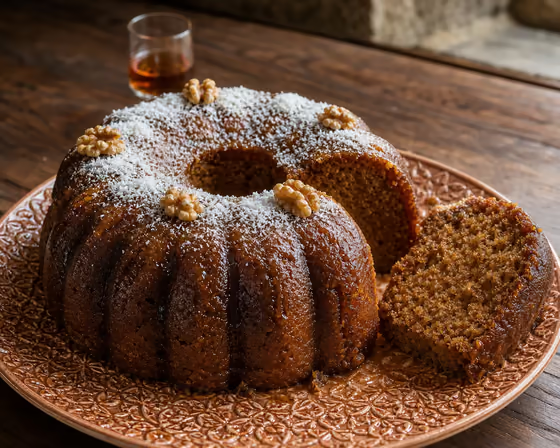
Douro Bolo Borrachão — the formula published by RTP
This recipe preserves the household measures and sequence published by RTP's Praça da Alegria: an egg, yolk, butter, walnut and Port cake soaked after baking with a second Port-flavoured syrup. The municipalities of Alijó and Sabrosa document Bolo Borrachão in their respective Douro food traditions. The culinary source gives no mould size, cup or goblet volume, serving count, or instruction for the coconut; those gaps remain explicit.
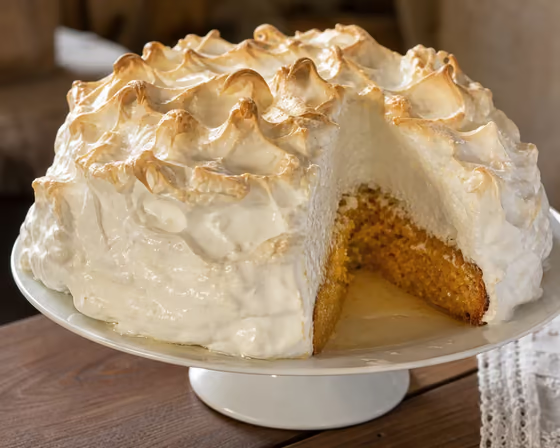
Bolo Conde de Alcáçovas — Margarida Ilhéu's Recipe
Margarida Ilhéu of Alcáçovas supplied this recipe to “Recipes and Flavours of Rural Territories”. Its local identity is also documented by Viana do Alentejo Municipality and Casa Maria Vitória. The source publishes neither oven temperature nor baking time; those parameters have not been invented.
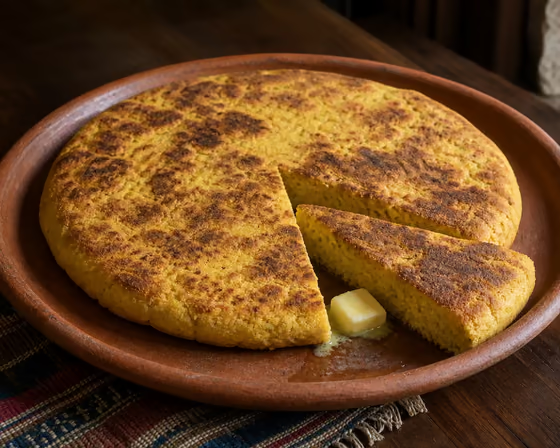
Bolo da Sertã — Azorean Version Published by byAçores
This formula published by byAçores turns 2 kg maize flour, 250 g wheat flour, boiling water and salt into unleavened rounds cooked on a very hot earthenware griddle. Its identity agrees with DGADR's record for São Miguel, São Jorge and Pico, but these proportions belong to this published version: Azorean practice varies between islands, households and cooking surfaces.
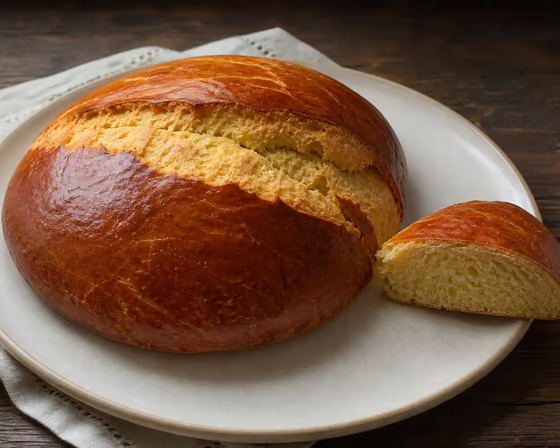
Bolo das Alhadas — Gastronomic Charter Household Version
The Gastronomic Charter of the Coimbra Region distinguishes Leonor dos Bolos' secret formula from this version, which it describes as common in many Alhadas households. It uses 1 kg flour, 300 g sugar, five eggs, lemon, cinnamon and either butter or olive oil, with about two hours' rising and half an hour in a wood-fired oven. This is a documented household recipe, not a reproduction of the family's protected commercial formula.
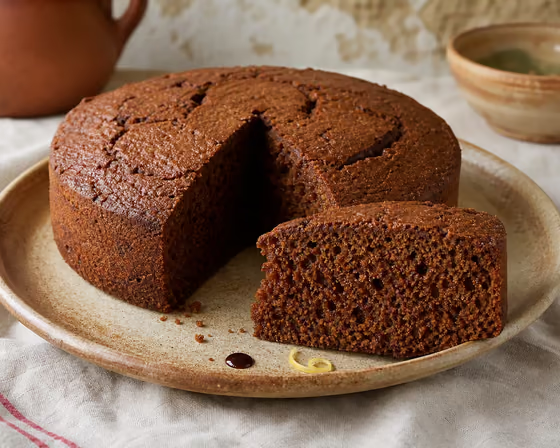
Alentejo Água-mel Cake — Formula Published by Mel do Cortiço
This reproduction follows, without combining versions, the complete formula published by Alentejo producer Mel do Cortiço: four separated eggs, sugar, flour, olive oil, água-mel and cinnamon, baked for 45 minutes. The Alentejo Gastronomic Charter documents another family version from Mértola with different proportions, baking powder and lemon; it corroborates the tradition but is not used to fill or alter this recipe.
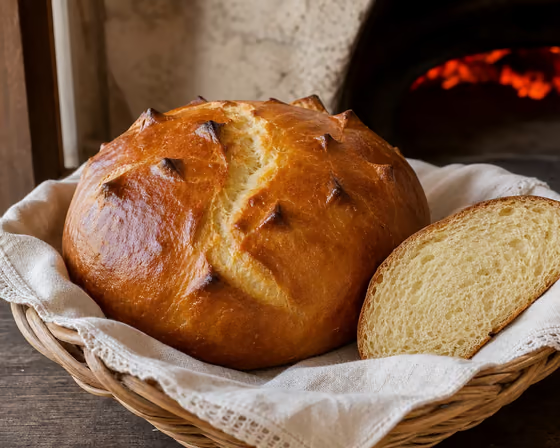
Ançã Sweet Bread
The formula published with a contribution from the Bolo de Ançã confraternity combines equal parts type 65 and type 55 flour with eggs, sugar, butter, yeast and lemon. Its characteristic crown is cut halfway through baking. We preserve ‘moderately hot oven’ and ‘until doubled’ without inventing a temperature or duration.
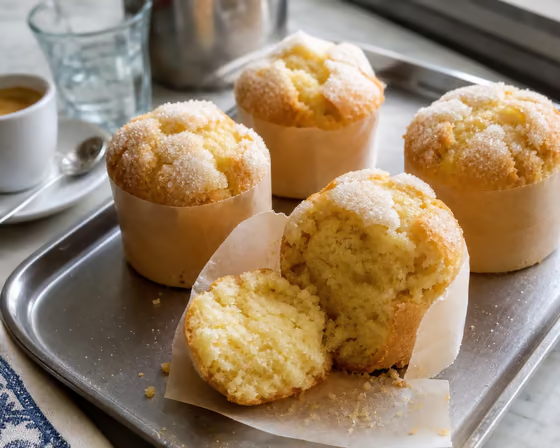
Bolo de Arroz — Yämmi Version
This Yämmi/Continente formula uses rice flour, butter, eggs, milk and lemon in paper-lined individual moulds. It matches the pastry-shop cake documented in the entry but remains an attributed machine version, not a universal formula.
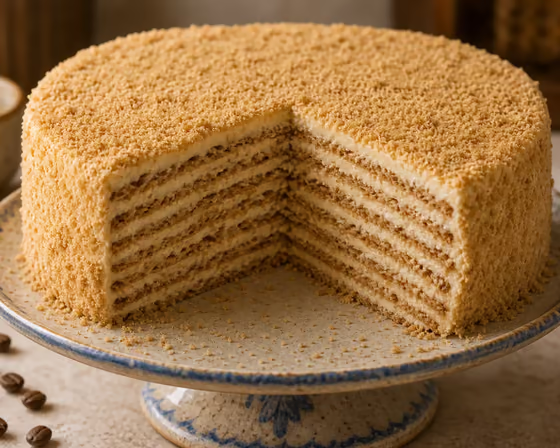
Traditional Portuguese Biscuit Cake
Layers of toasted biscuits briefly dipped in coffee alternate with a cream of butter, sugar, egg yolks and strong coffee. This formula follows the traditional version published by Teleculinária; Continente's documented cream-cheese construction is treated as a variation rather than blended into the main recipe.
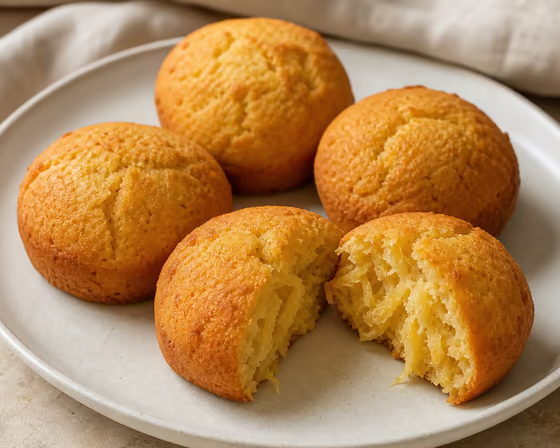
Ponte de Lima Chila Cake — Published Round-Cake Version
This version, published as a Ponte de Lima recipe, combines three eggs, three yolks, well-drained preserved chila and almonds in a flourless batter. The original formula uses 250 g sugar and blanched almonds; the article's author says she used 200 g brown sugar and skin-on almonds. This page preserves the formula before those substitutions and separately identifies the author's observed 180°C and 45-minute bake.
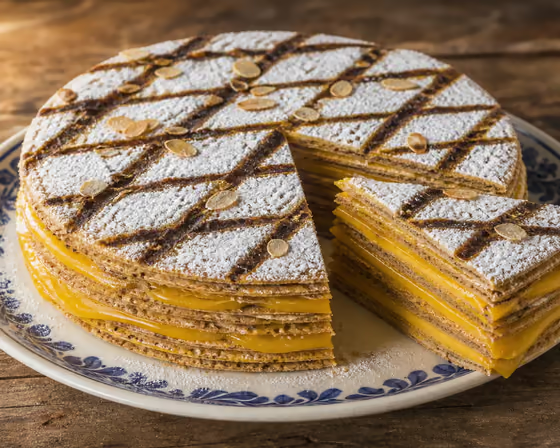
Arcos de Valdevez Almond Disc Cake
The formula published in the regional Gastronomic Weekends programme uses all eight whites in thin sugar-and-skin-on-almond discs and reserves the eight yolks for the cream between the layers. A second published recipe completes the ovos-moles syrup with eight tablespoons of water and specifies 180°C / 350°F for 15–20 minutes per batch. The result is the defining cake documented by Arcos de Valdevez Tourism, not a puff-pastry cake.
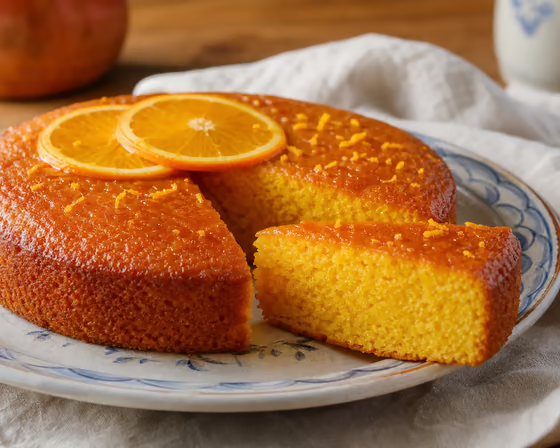
Whole-Orange Cake — Formula Published by RTP
This is RTP's published whole-orange version: the seeded fruit is blended with its peel and combined with almond, flour, eggs and oil; a separate syrup is applied after unmoulding. It is an attributed, reproducible formula, not a claim to be Portugal's single canonical recipe. 24Kitchen independently publishes the same whole-orange technique with different proportions.
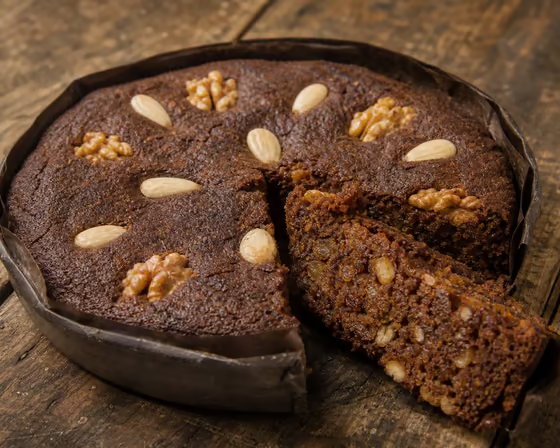
Madeira Sugarcane Honey Cake
There is no single canonical formula: Portugal's official traditional-products inventory documents a wide range of closely guarded family recipes. This practical version preserves the defining elements—sugarcane honey, leavened dough, spices, nuts, candied peel and Madeira wine—and requires two long rises. Make it well ahead and break the cake by hand, as tradition requires.
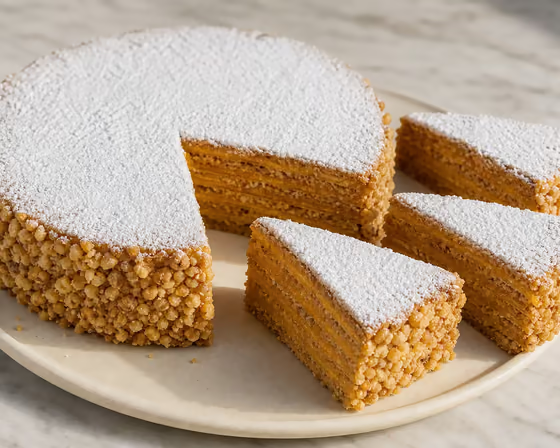
Honey and Walnut Cake — Published Layered-Cake Formula
Cunho Português publishes a complete formula for a cake of egg-white-and-walnut discs layered with yolk sweet and honey. The construction matches the photograph and description of the old-style Honey and Walnut Cake entered by Estremoz in 2019, but the municipality does not attribute this recipe to Pastelaria Formosa. It is published as a documented Portuguese formula for the same construction, not as disclosure of the bakery's commercial recipe.
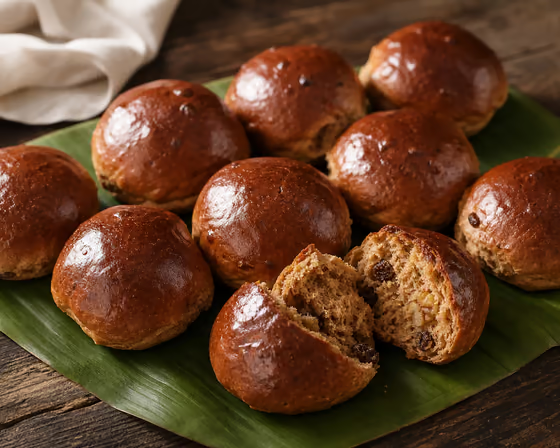
Madeiran Bolo de Noiva — Arlete Santos's Batch Collected in 2018
Madeira’s Ethnographic Museum publishes this professional 5-kilogram flour batch and its field-recorded process. The list prints “½ of margarine” without a unit, uses undefined measures such as “loose spoon” and “grafada”, and leaves water, lemon, cloves, yield and proving times unquantified. This transcription preserves those limits.
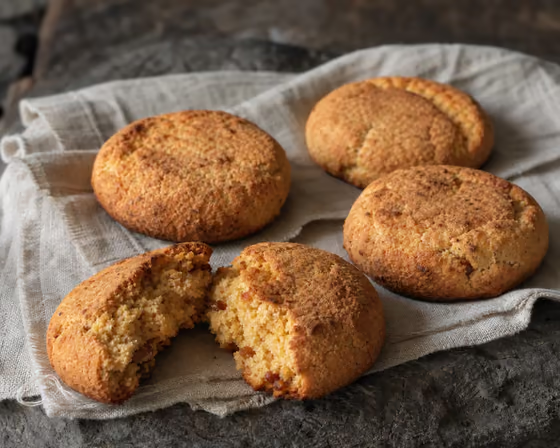
Bolo de Pé de Torresmo — a Published Azorean Formula
The Azorean author of Food With A Meaning publishes this contemporary formula to preserve a cake that has fallen out of use: wheat and maize flours, eggs, sugar, lard, chopped cracklings and the sediment called pé de torresmo form low cakes baked at 200°C until golden and dry. This version documents the tradition but does not literally reproduce the older preparation, which reused scraps of maize-bread dough on baking day.
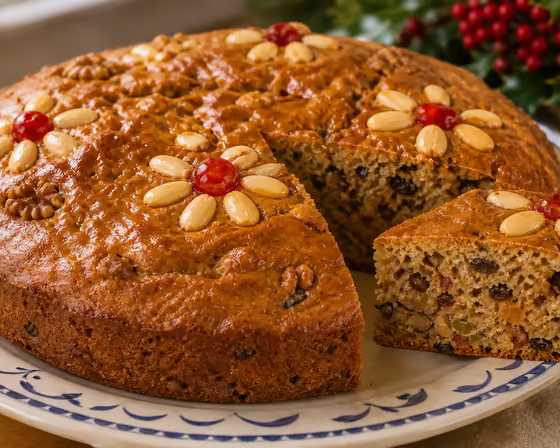
Bolo de Santa Eulália — Published 28 cm Version
This published version of Águeda's Christmas cake combines walnuts, currants, crystallised fruit and almonds in a 500 g flour batter baked in a 28 cm round tin. The municipality's 2025 visitor guide separately confirms Bolo de Santa Eulália as an Águeda food speciality. The milk cup and finishing ingredients have no defined volumes or quantities.
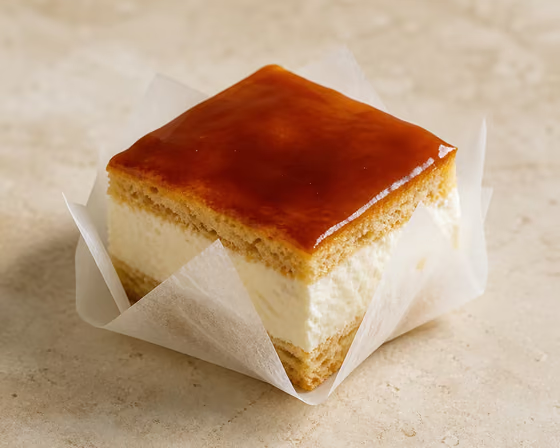
Bolo de São Marcos — Round Version Adapted from Alexandre Mota
This is the formula published by the Portuguese Baking School, created by Jeremiah Duarte Bills from a recipe by Alexandre Mota. It turns the pastry-counter São Marcos—normally assembled in a tray and cut into squares—into a 23 cm round cake serving ten to twelve. It retains soaked sponge, a thick cream layer, sweet egg-yolk cream and burnt sugar, but uses neither the gelatine nor freezing that Fabrico Próprio documents for the commercial format.
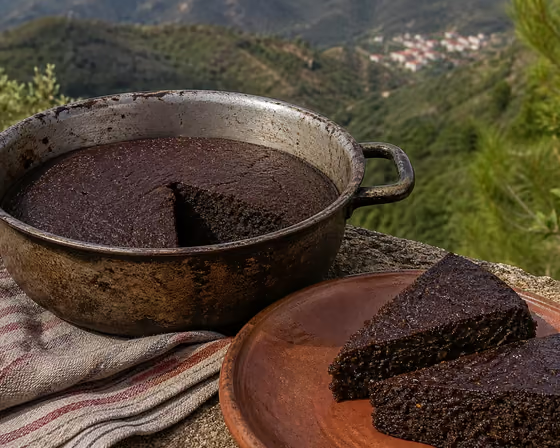
Monchique Bolo de Tacho — A Charrete Restaurant Recipe
Monchique's A Charrete restaurant supplied this large two-day formula to “Recipes and Flavours of Rural Territories”. DGADR and Portugal's national intangible-heritage inventory confirm the scalded cornmeal technique, resting, pot baking and variation among families. This is an attributed version—with anise liqueur or aguardente, cocoa and chocolate—not a single canonical recipe.
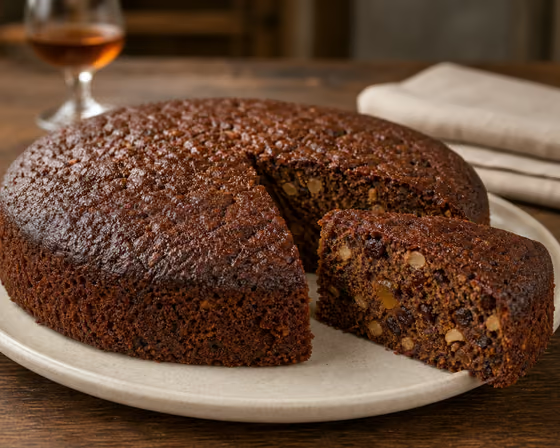
Madeira Bolo Família — Iguaria Version
Iguaria publishes this large Madeiran Christmas formula with molasses, cinnamon, raisins, citron and walnuts. The page recommends maturation but gives no baking duration; we keep that limitation visible and do not turn its 60-minute total into an invented oven time.
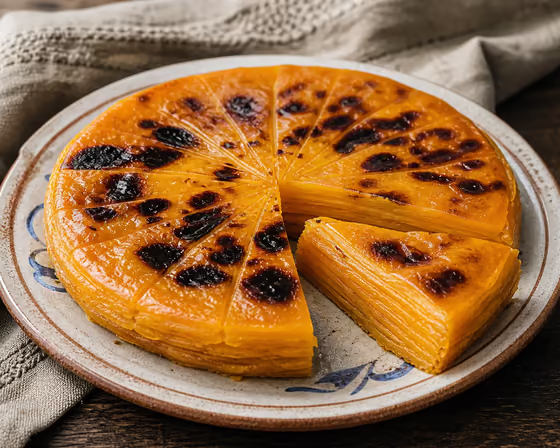
Bolo Fidalgo — Published Alentejo Formula
Revista Outsider publishes this ten-serving construction: thin sheets made in syrup from twelve yolks and one whole egg enclose an egg-yolk filling made with a further eighteen yolks. Casa Maria Vitória, a producer in Alcáçovas, confirms the structure of fine layers and egg-yolk filling but does not publish its formula. This page therefore documents the reproducible editorial version, not a trade secret.
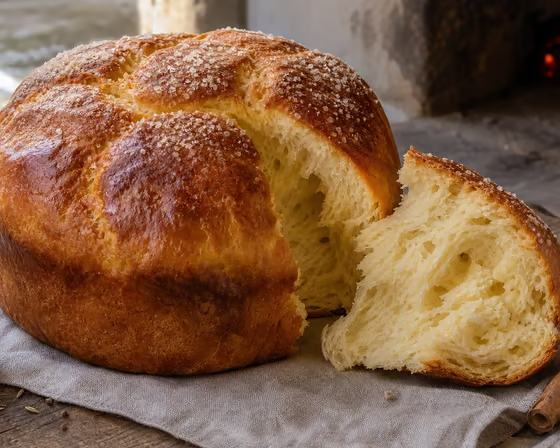
Oliveira do Hospital Bolo Finto
This regional version first makes a fermented starter from flour, yeast and warm water; 500 g of that starter is then enriched with eggs, sugar, olive oil, butter and more flour. The publication locates the recipe in Oliveira do Hospital. We retain the water as ‘as needed’ and the wood-fired oven without inventing a temperature or duration.
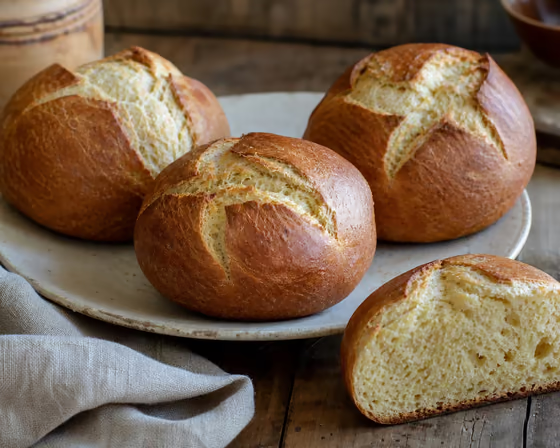
Portalegre Bolo Finto — Hotel School Formula
The Portalegre School of Hospitality and Tourism presented this Easter formula prepared by instructors and students: a large batch of yeasted dough with eggs, sugar, milk, olive oil, aguardente, cinnamon, fennel and lemon. The publication allows up to six hours of rising and 45 minutes of baking but gives no yield, loaf size or exact temperature.
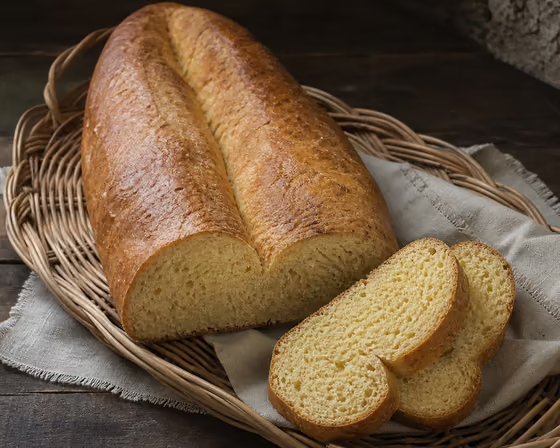
Bolo Folar da Guarda — Cristina Bernardo's Household Version
This household formula published by Cristina Bernardo reproduces the unsweetened profile of Bolo Folar da Guarda: flour, eggs, olive oil, aguardente, salt and baker's yeast. Its identity agrees with DGADR's record, although the household version omits the ascorbic acid listed for registered production. The author uses a food processor and provides a conventional-oven adaptation; we preserve those conditions rather than inventing a quantified hand-kneading method.
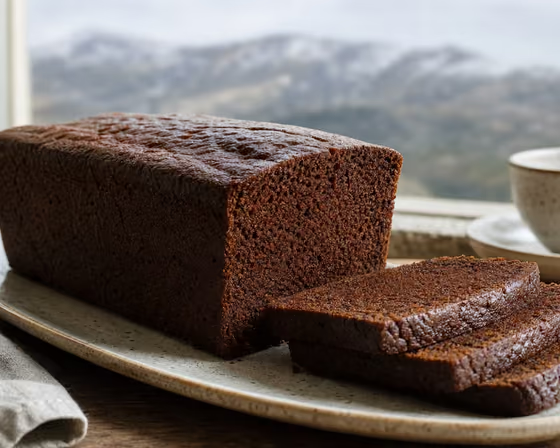
Bolo Negro de Loriga — Confraria Recipe
This formula was supplied by the Confraria da Broa e do Bolo Negro de Loriga to the book Recipes and Flavours of Rural Territories. DGADR confirms the same ingredients, the tall rectangular form and about one hour in the oven. It is a published community recipe, not a current producer's proprietary commercial formula.
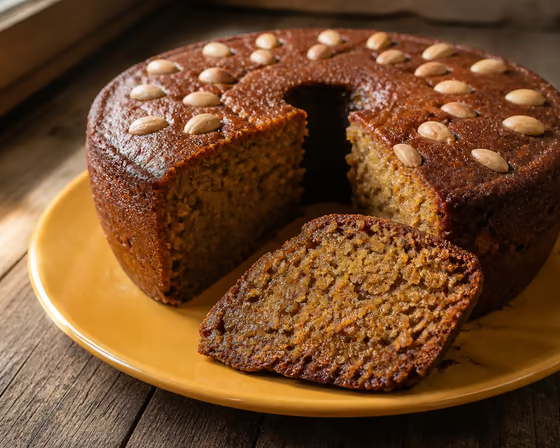
Alentejo Bolo Podre — Iguaria Version
This version published by Iguaria combines olive oil, honey, spirit, cinnamon and orange and is presented for Christmas. The publisher itself acknowledges variants with Port or lard, so the formula remains attributed and does not replace regional diversity.
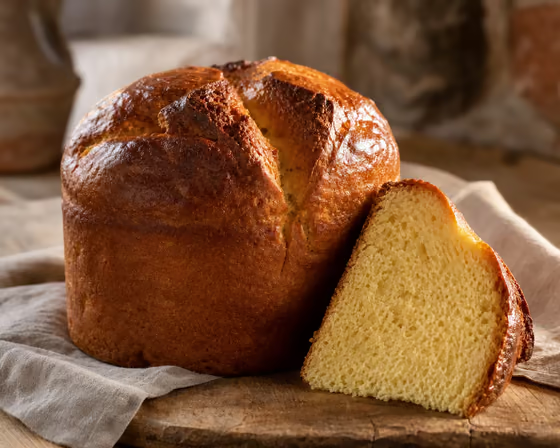
Castro Daire Bolo Podre — Published Home Adaptation
This home adaptation, also published for Thermomix, uses olive oil and butter, four eggs, cinnamon and fresh yeast for a cake of about 800 g. It is presented as a reproducible version, not Castro Daire's sole formula: local sources document family recipes containing lard and different proportions. The variants have not been merged.
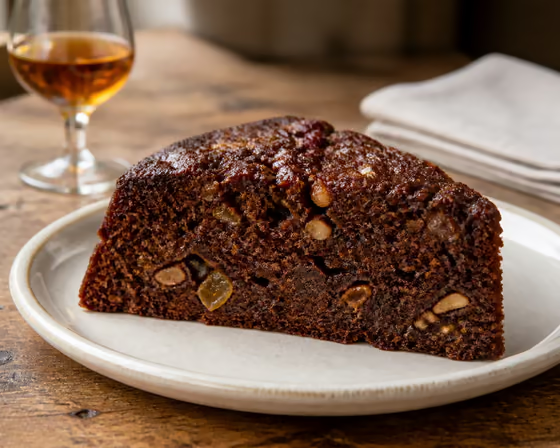
Madeira Black Cake — Produtos da Madeira Version
This formula published by Produtos da Madeira combines flour, butter, eggs, cane honey, dark Coral beer, milk, Madeira wine, spices and candied fruit or nuts. It is an attributed version: Cookidoo's formula for the same cake confirms the defining dark beer, Madeira wine, molasses, milk and spice profile, but adds sugar, lard, walnut, sultanas and lemon zest in its own proportions. The two are not merged.
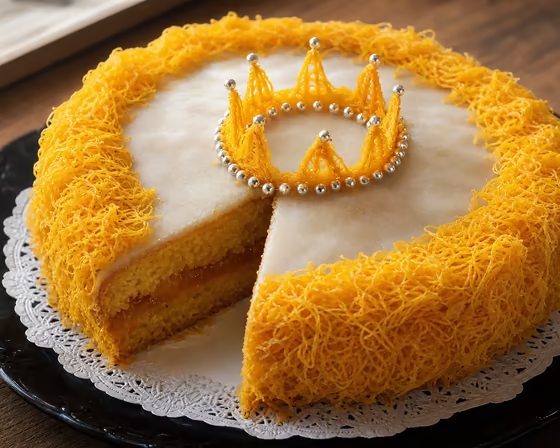
Viana do Alentejo Bolo Real — Margarida Ilhéu's Recipe
Margarida Ilhéu of Alcáçovas supplied this formula to “Recipes and Flavours of Rural Territories”. DGADR confirms the regional composition of sugar, almonds, eggs and gila. The decoration is described, but no quantities or parameters are published for the finishing elements or oven.
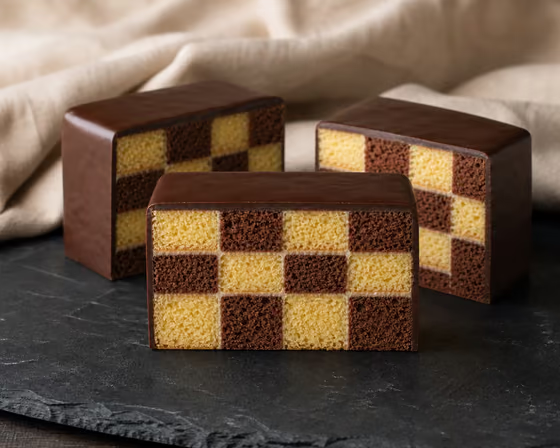
Bolo Xadrez — Felicia Sampaio's Version
This formula, published in Roteiro Gastronómico de Portugal by Felicia Sampaio, combines plain and chocolate batters with guava paste and a chocolate coating. Its checkerboard comes from alternating and reassembling strips; it is an attributed version distinct from the buttercream shop architecture documented by Fabrico Próprio.
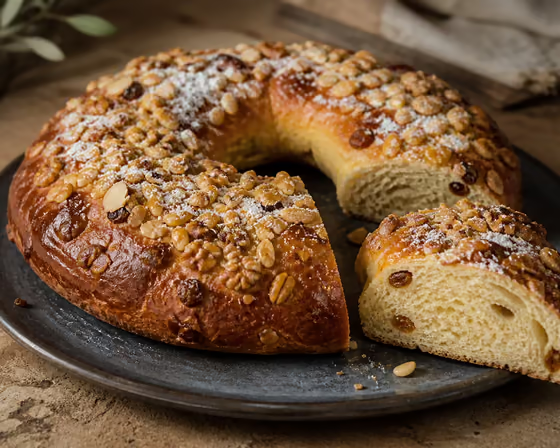
Bolo-Rainha — Nut and Chila Version
This published formula shapes a yeasted crown rich in nuts, raisins and sultanas, decorated with chila. It is an attributed Christmas version of Bolo-Rainha: it uses rum and aguardente, while other documented formulas favour Port and vary the assortment of nuts and dried fruit.
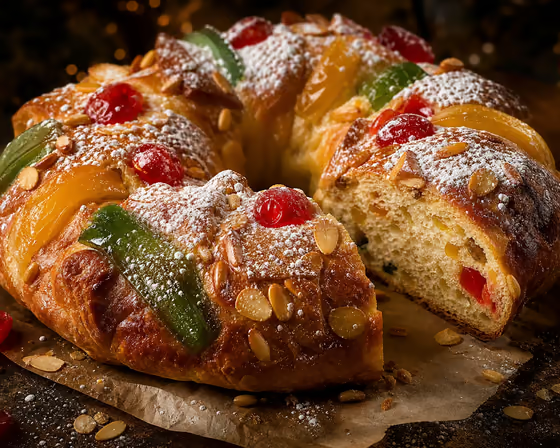
Bolo-Rei (King Cake)
Bolo-Rei is the quintessential Portuguese Christmas and Epiphany cake: a buttery enriched dough shaped into a crown, topped and filled with candied fruit and nuts. It demands patience for the proving, but the scent of butter, citrus and Port wine rewards every hour of waiting. By tradition, a dried fava bean and a small trinket are hidden inside.
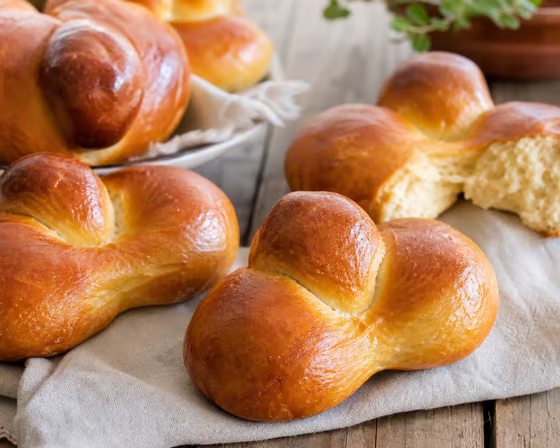
Bolos de Cabeça — Antónia Aguiar’s Bakery Formula Documented by MemóriaMedia
This is the professional-scale formula collected by MemóriaMedia in Torres Novas: 29 kilograms / 63.9 pounds of flour, 14 kilograms / 30.9 pounds of sugar and portions of about 200 grams / 7.1 ounces, mechanically mixed and raised overnight. The source suggests dividing ingredients by ten for home use, but its note inexplicably changes the sugar from 14 to 15 kilograms before scaling; we therefore publish the main batch without silently repairing the discrepancy.
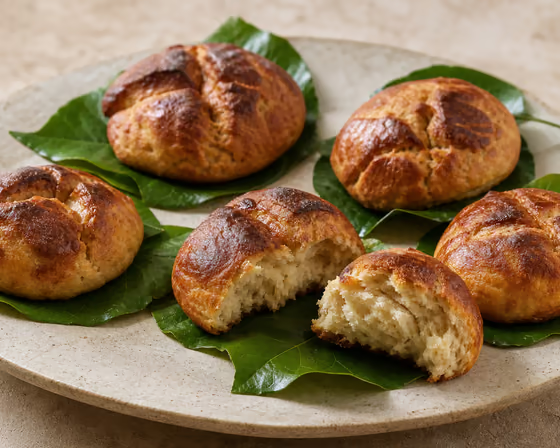
Cascais Christmas Buns — 2025 Municipal Formula
This is the formula published by Cascais Municipality in 2025: small raised buns made with flour, eggs, butter, milk, sugar and an infusion of lemon peel and cinnamon. They rise in two stages for about five hours, are shaped on lemon leaves, snipped with a cross and baked at 200°C. It is kept distinct from the larger family recipe published by the same municipality in 2016, which begins a starter the previous day and uses different proportions.
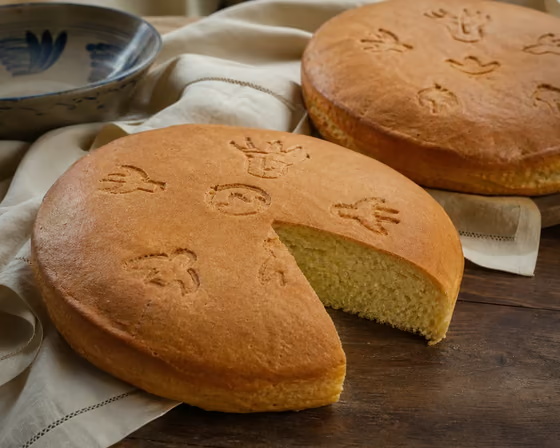
Bolos de Vésperas — Contemporary Pico Adaptation
This formula was published by a user of the Mundo de Receitas Bimby platform as a Pico-style version. Azores Tourism and an ethnographic study confirm the yeasted dough, low circular shape and stamping with chavões on Pico, but they do not certify this domestic adaptation or its proportions. It is published as an attributed contemporary recipe, not as a universal formula for Santa Maria, Pico and São Jorge.
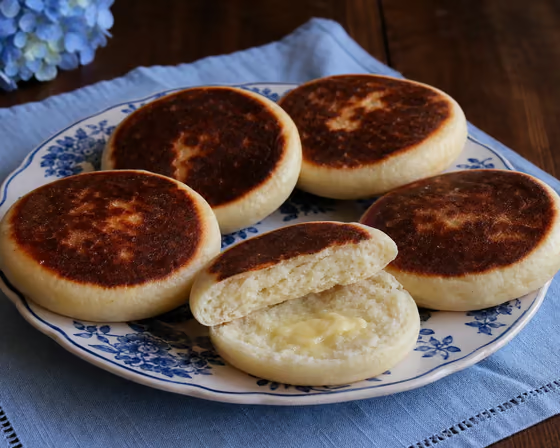
Bolos Lêvedos — a traditional Azorean formula
This recipe reproduces the quantities and method published by DGADR: an enriched dough of flour, sugar, butter, milk and eggs, with a first overnight prove and about four more hours after shaping. Regional documentation locates the modern tradition in Furnas on São Miguel; the DGADR record, however, contains a conflicting geographical reference to Faial, so that discrepancy is disclosed rather than erased.
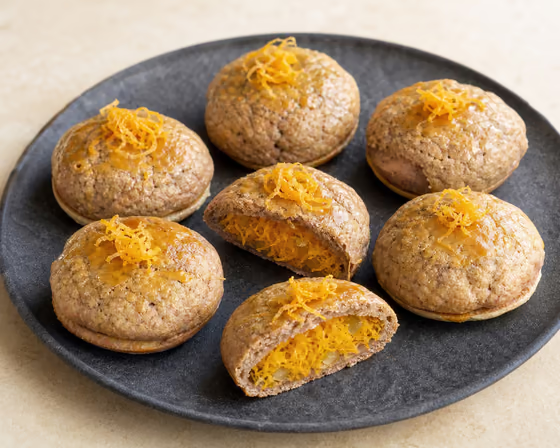
Bolos Reais de Cascais — Cascais FoodLab Formula
Cascais FoodLab publishes this formula based on O Livro de Receitas da Última Freira de Odivelas: discs of almond, yolk and cinnamon paste on wafer paper, filled with egg threads and citron and closed before a short bake. The source gives no yield and leaves the allocation of yolks between the paste and final brushing ambiguous; that gap remains explicit here.
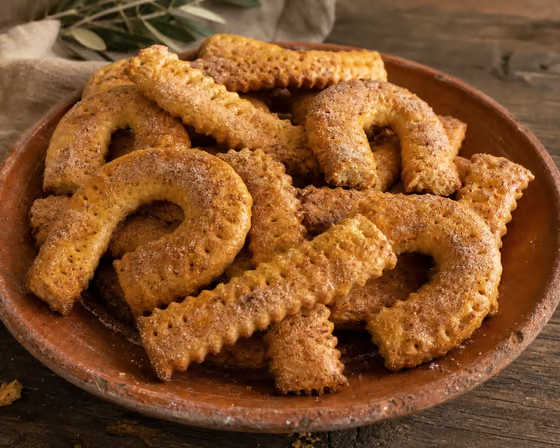
Idanha-a-Velha Borrachões — D. Felismina's Recipe
Historic Villages published this recipe transmitted by D. Felismina, presented as a living bearer of Idanha-a-Velha tradition. It is a large Easter batch with white wine, spirit and olive oil. Comments on the page document other local proportions; this version is not presented as unique.
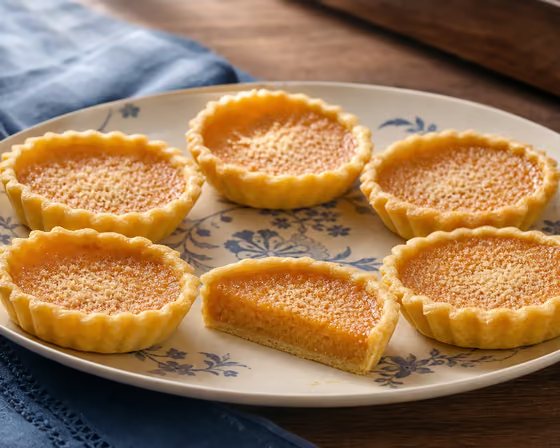
Figueira Almond Brisas
The regional formula makes an egg, almond and Port filling bound with syrup at pearl stage, inside small pastry-lined moulds. The publication fixes 45 minutes in a low oven but does not quantify the syrup water, pastry base, milk used to work it or yield.
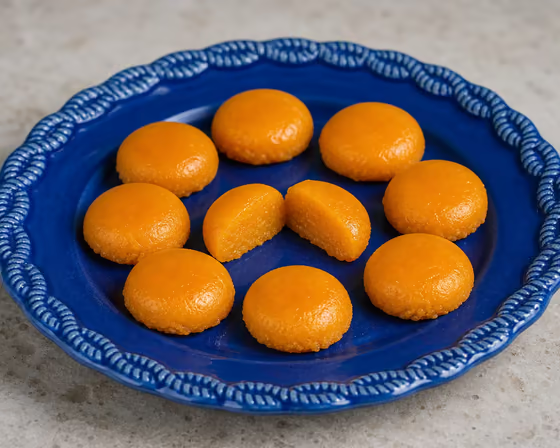
Brisas do Lis — Method Documented by DGADR
DGADR documents the traditional technique: sugar at a light pearl stage, whole eggs and yolks with ground almonds, buttered and sugared moulds, and moderate bain-marie baking. The source also says the genuine old Café Colonial recipe appears to have disappeared. This page therefore preserves the published method without inventing proportions, temperature or duration, and without presenting it as a recovered secret.
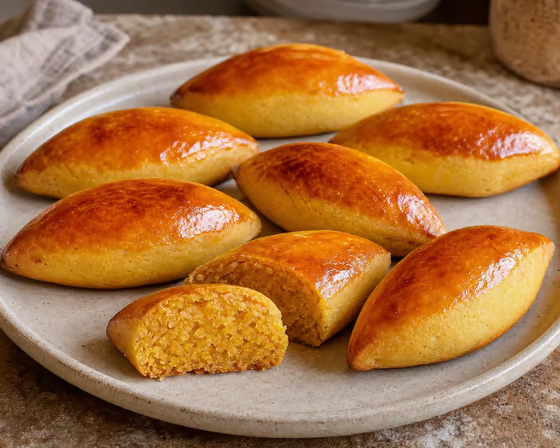
Broas Castelar — Lisbon School of Hospitality and Tourism Recipe
This is the formula published by Turismo de Portugal, supplied by the Lisbon School of Hospitality and Tourism and based on the traditional cooking of Maria de Lourdes Modesto. It combines sweet potato, maize and wheat flours, coconut, eggs, honey and citrus zest. DGADR's record confirms the traditional identity of Broas Castelar but describes almond rather than coconut; a Continente home recipe also uses almond and different proportions. This page therefore documents an attributed version, not one formula for every bakery.
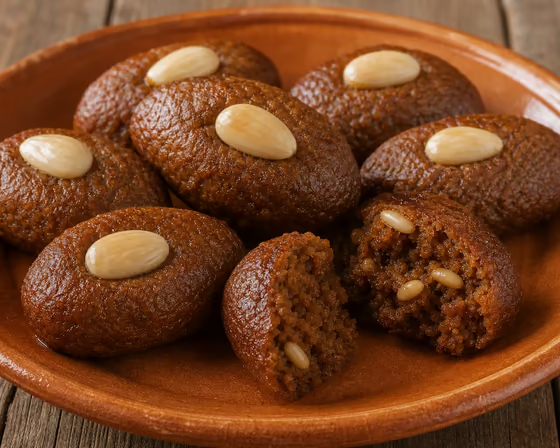
Broas de Almeirim — Updated MLM Archive Formula
The Maria de Lourdes Modesto archive publishes an old recipe and this update in modern measures, using three flours, honey, olive oil, pine nuts and almonds. Attribution to the named contributor is preserved; the formula is not presented as the only one used in Almeirim.
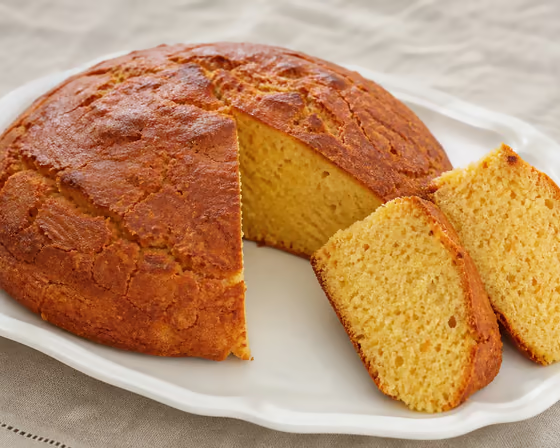
Broas de Batata de Arganil — Charter-Recorded Version
The Gastronomic Charter publishes this version collected in Arganil while recording that the old commercial recipe remains secret. Sweet potato, sugar, butter, wheat, white maize, cinnamon and anise form a dough shaped the following day. This is therefore an attributable public version, not any producer's proprietary formula.
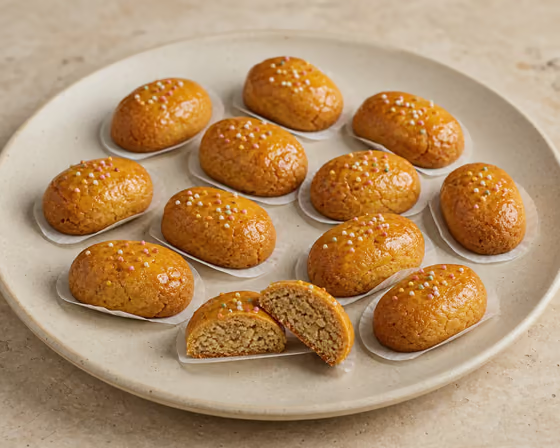
Broas de Espécie — Festas e Comeres do Povo Português Version
This Estremadura formula, published by Roteiro Gastronómico de Portugal from the book Festas e Comeres do Povo Português, combines sweet potato, almond, coconut, egg yolks and citrus zest. It is one documented family of Broas de Espécie, not a universal formula: DGADR's record under the same name describes much smaller cakes made with almond, pine nuts, sugar, eggs and flour, without sweet potato or coconut.
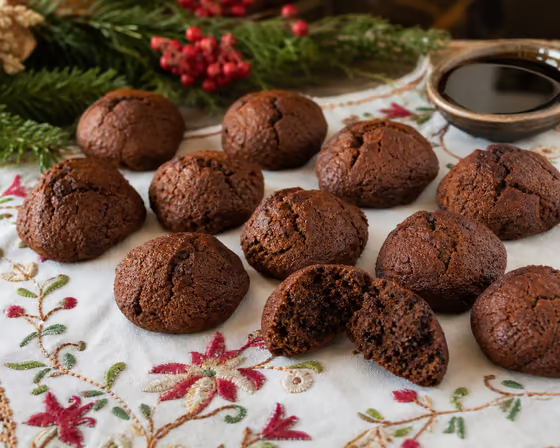
Madeira Sugarcane-Honey Biscuits
This formula was presented on RTP's Praça da Alegria and matches the documented Madeiran identity: biscuits flavoured with sugarcane syrup, cinnamon and lemon zest, made with butter and lard and rested overnight. The expression mel de cana da Madeira means the island's traditional sugarcane syrup, not bee honey.
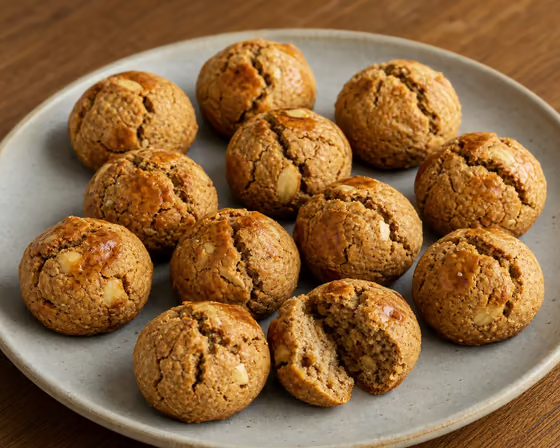
All Saints Broas — Contemporary Version
The contemporary formula published by pastry chef Francisco Moreira: egg-free broas made from wheat and maize flours scalded with water, olive oil and butter, flavoured with aniseed, cinnamon and cloves, and topped with an almond. It does not reproduce the sliced-almond, yolk and flour broa recorded by DGADR for Lisbon and the Tagus Valley; it documents another family circulating under the same name.
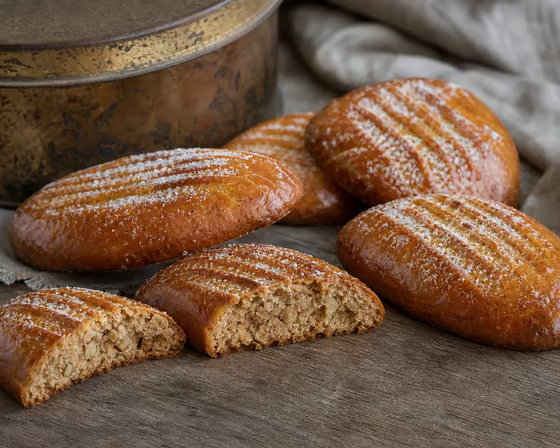
Ribatejo-Style Broas Fervidas — Formula Published by Ruralea
Ruralea publishes this version for thirty broas: 500 grams / 17.6 ounces of flour, one litre / 4.23 US cups of water, half a litre of honey and half a litre of olive oil, with sugar, walnut, fennel and cinnamon. The ratios may appear unusual, but they are preserved exactly; the source itself says that many household formulas exist and allows slightly reducing the olive oil or sugar.
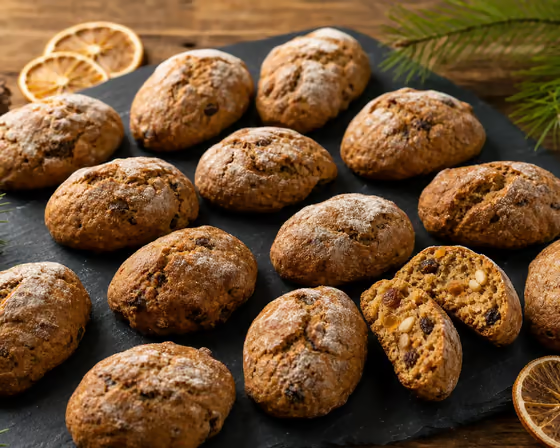
Christmas Broinhas — Pumpkin and Sweet Potato Version
This Pingo Doce food-processor formula combines pumpkin, sweet potato, walnuts, olive oil and cinnamon. It is an attributed Christmas version within a highly variable family: other broinhas use cornmeal, almonds, citrus or only one of the two purées.
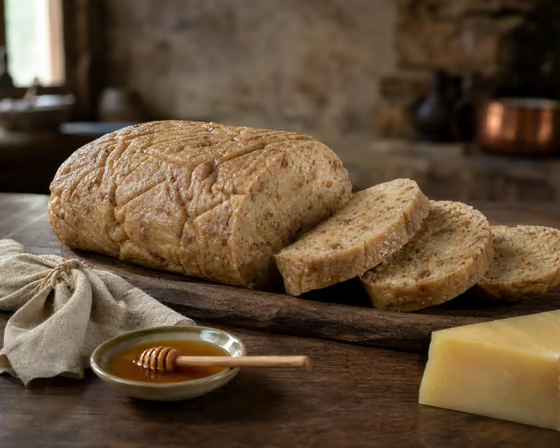
Bucho Doce de Melgaço — Gastronomic Weekends Formula
The formula currently published by Melgaço's Gastronomic Weekends programme uses bread, eggs, sugar, flour, milk, saffron, cinnamon and lemon. It is a modern municipal version distinct from the historical lard-and-pig-stomach formula described by heritage sources; the two have not been merged. The publication instructs cooks to boil the mixture inside plastic and cloth without specifying the material. For safety, this transcription requires a food-contact casing expressly rated for prolonged boiling, or the prepared stomach used in the tradition.
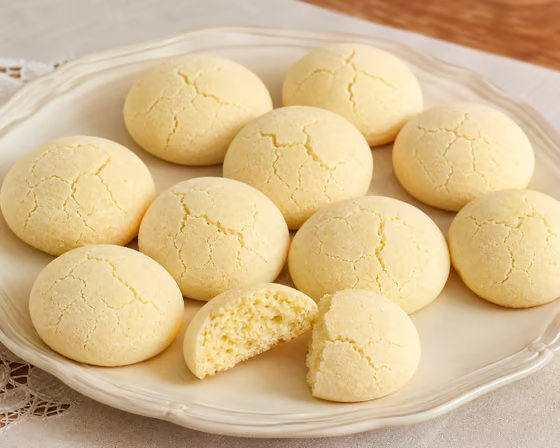
Caladinhos of Santa Maria da Feira — Clara de Sousa's Tested Version
Clara de Sousa began with a formula from the Union of Parishes of Feira, observed pastry cooks and published the adjustments from her own tests. The flour varies with egg size and the specified oven is fan-assisted. This is therefore an identified home reconstruction—not a pastry shop's secret recipe—checked against DGADR's official description: eggs, sugar, flour, rolled portions and slight flattening.
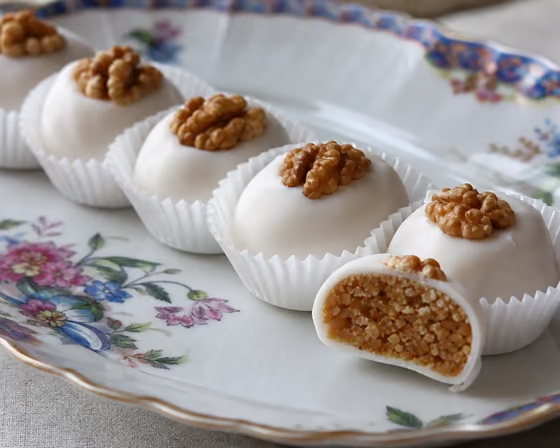
Terceira Camafeus — Cozinha Açoriana Published Formula
This formula published by Cozinha Açoriana prepares the walnut-and-egg paste, beaten-sugar coating and walnut-half finish. DGADR and an Angra cultural source document Camafeus within Terceira island's sweet repertoire; that contextualises the recipe but does not turn this published version into one unique historical formula.
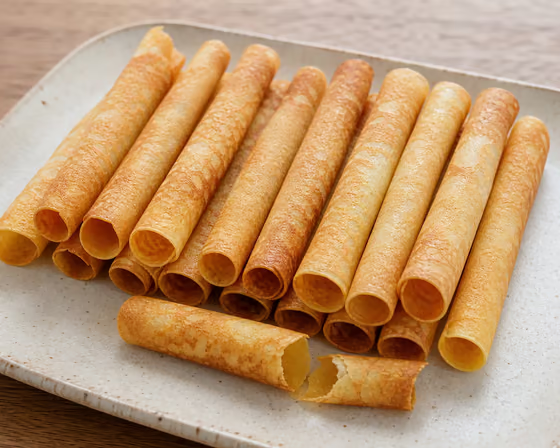
Peredo dos Castelhanos Canelões — Aida Rodrigues's Recipe
Aida de Jesus Rodrigues supplied this six-egg formula to “Recipes and Flavours of Rural Territories”. DGADR and Torre de Moncorvo Municipality confirm the ingredients and hot-iron technique. The DGADR record writes ‘Penedo’, but the official place name is Peredo dos Castelhanos; the recipe uses the correct geographical form.
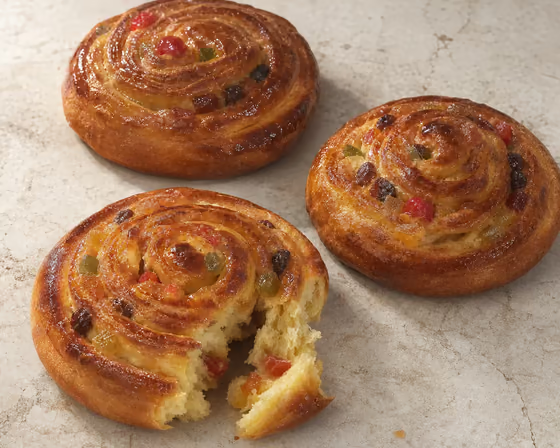
Candied-Fruit Caracol — Tradições Doces Formula
This formula published by Tradições Doces reproduces the pastry-counter caracol with sweet fermented dough, pastry cream, candied fruit and glaze. The dough is rolled, cut into spirals and proofed before baking.
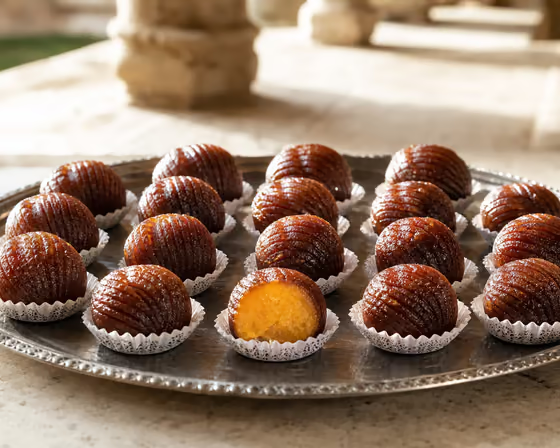
Castanhas de Ovos de Viseu — Teleculinária Version
This formula published by Teleculinária reduces the sweet to yolks, sugar and flour for shaping. It confirms the egg paste and fork-marked finish, but omits the glazing and flame-singeing over laurel described by other sources for the Viseu presentation. It is therefore an attributed home version, not the sole traditional formula.
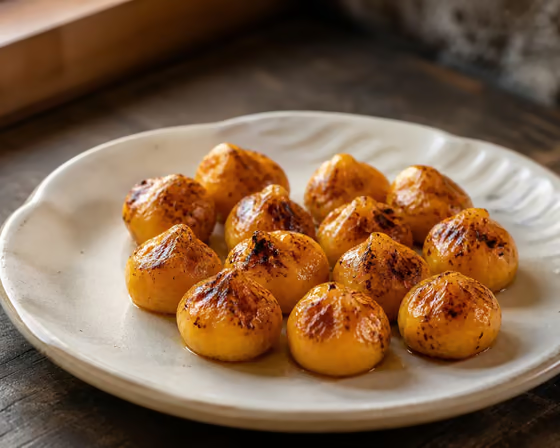
Arouca Sweet Chestnuts — Sabores Contados Formula
The institutional Sabores Contados book publishes this complete formula of 16 yolks, sugar and almonds: fifteen yolks go into the paste and the last browns the small chestnut-shaped sweets. DGADR separately documents their identity, form, Arouca tradition and former ember-toasting; the version transcribed here uses the hot oven specified by the book.
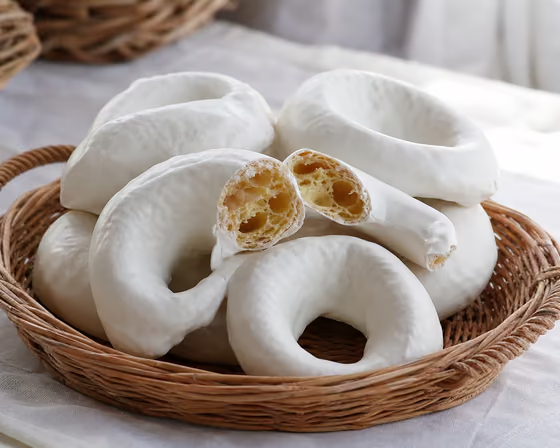
Cavacas das Caldas
This home recipe follows the quantities and temperatures published by Cascais FoodLab, which credits the formula to Teleculinária. DGADR's historical record confirms the intensely beaten batter, olive-oil-greased moulds and white egg-white-and-sugar coating, but describes an older formula containing aguardente and olive oil. The two records document genuine variation; this page does not merge them into a false single recipe.
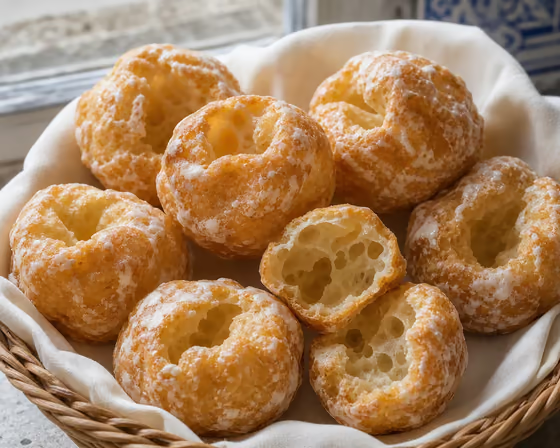
Cavacas de Luso — Gastronomic Charter Formula
The Gastronomic Charter of the Coimbra Region publishes this professional formula for about 160 cavacas, built chiefly from egg whites, a smaller share of whole eggs and low-acidity olive oil. It is a large batch; the quantities remain intact because scaling an already unusual formula without testing would change the source.
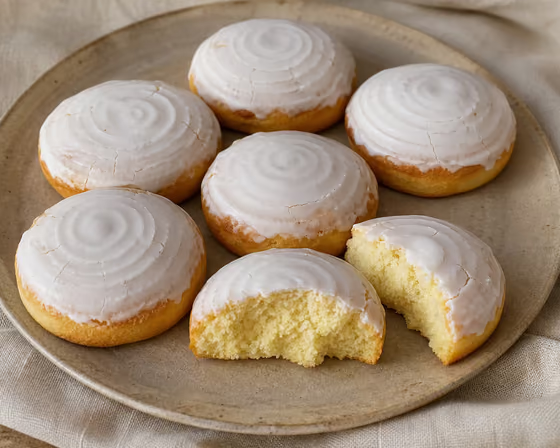
Cavacas de Margaride — Chef Paulo Cruz Adaptation
This is chef Paulo Cruz's adaptation published by the Pão de Ló Festival: fifty small whole-egg and yolk cakes scented with lemon and cinnamon, coated in egg-white icing and traced with the fingers. Felgueiras Municipal Council independently confirms Cavacas de Margaride as a local signature sweet and Seven Wonders of Portuguese Sweets finalist. The page header displays one hour in the oven, while the method instructs about ten minutes per batch; that contradiction is preserved.
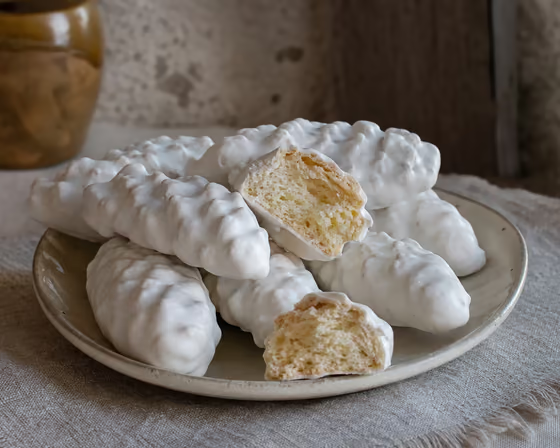
Cavacas de Pinhel — Published Regional Formula
Recipes and Flavours of Rural Territories publishes this large-batch formula, beaten for 75 minutes and baked in earthenware bowls. Municipal information confirms the identity of Cavacas de Pinhel. Its composition differs from commercial descriptions using yolks and lemon; this page preserves the published version without merging distinct traditions.
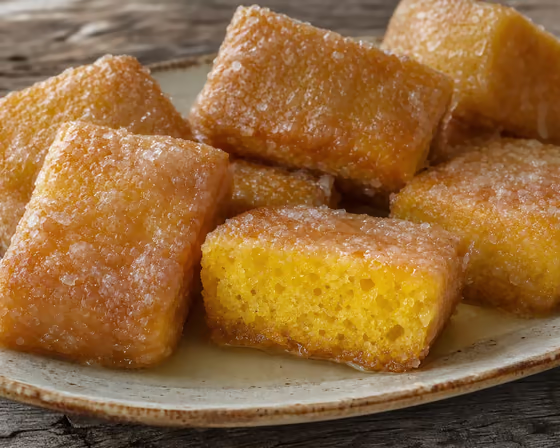
Cavacas de Resende — Formula Collected at Café Cova Funda
Maria de Lourdes Modesto collected this formula in Resende at Café Cova Funda, recording its transmission through D. Amélinha, D. Quitéria and the proprietor known as D. Leninha. The yolk-rich cake is cut, dipped in a light syrup and painted with a second opaque syrup.
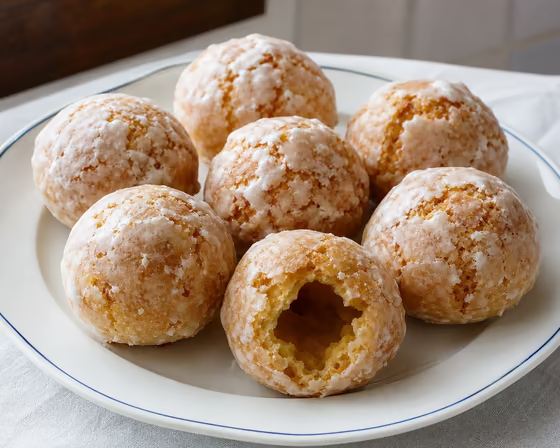
Cavacas de Santa Maria — Regional Version Published by ByAçores
This is the regional version published by ByAçores: an olive-oil, flour, egg and water batter cooked in small moulds until the cavacas become round and hollow, then coated in sugar syrup. The Azores tourism portal and Santa Maria Museum independently confirm the island identity, ball shape, hollow centre and white coating. The recipe gives no yield and does not define the capacity of its coffee and tea cups, so those measures are retained literally.
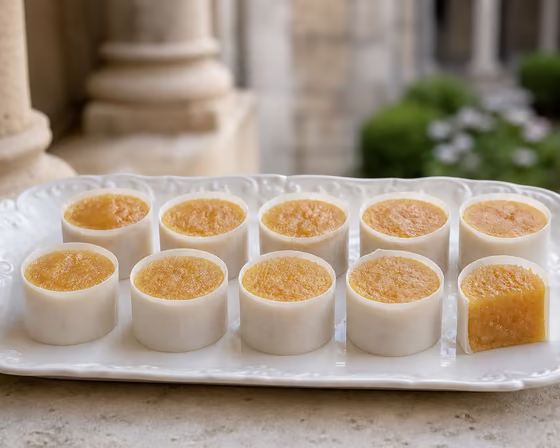
Celestes de Santarém — Formula Archived by Maria de Lourdes Modesto
This ACPP-archived formula divides 36 yolks between egg threads and an almond mixture, reunites both parts and finishes the cakes on wafer with a sugar-and-orange-blossom coating. Maria de Lourdes Modesto herself noted that the recipe was correct but confusingly described. Its structure differs from DGADR's general method for Celestes de Santa Clara; it is presented as a collected version, not a single or official formula.
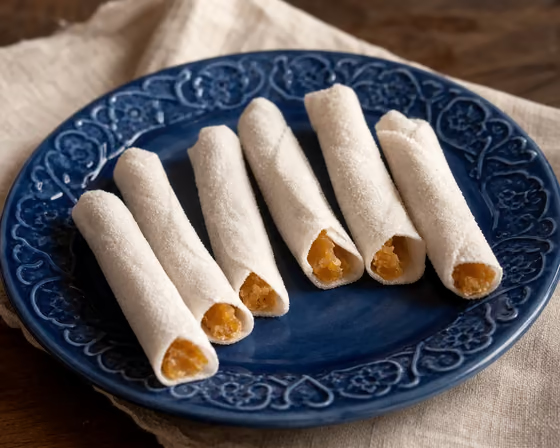
Charutos dos Arcos — Arcos Tourism's Published Version
Arcos de Valdevez Tourism publishes this almond, yolk, butter and lemon formula rolled in wafer. The same page explains that Doçaria Central's original recipe remains secret and that other producers make variants, so this is an attributable published version—not a reproduction of the registered commercial formula.
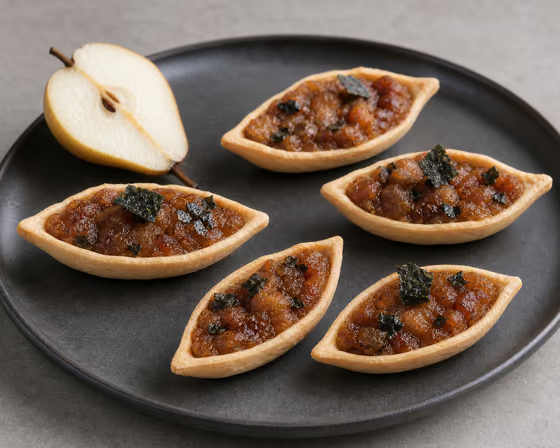
Cascais Chatas — Cláudia Silva Mataloto and Marco Ferreira’s Formula
Cascais FoodLab publishes this contemporary creation from Receitas de Reis e Pescadores: thin pastry in boat moulds, Rocha pear as purée and pieces, almonds, kaffir lime, lemon, Carcavelos wine and seaweed dried until crisp. The municipal recipe preserves its essential quantities and temperatures but leaves the dough rest, wine quantity, reduction duration and final baking time open; those gaps remain explicit.
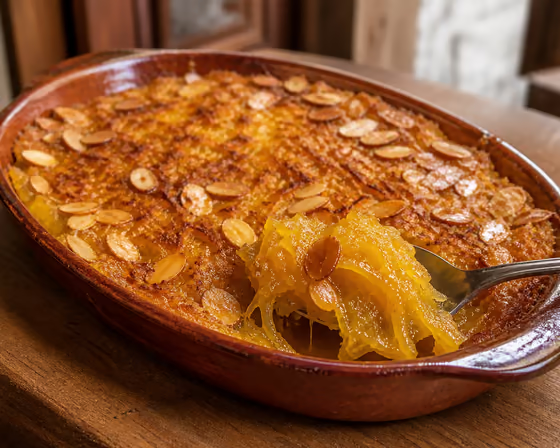
Ribeira de Pena Baked Chila — Published Regional Formula
The Fins de Semana Gastronómicos programme publishes a concise local formula for Ribeira de Pena: 800 g chila, equal household measures of water and sugar, ten yolks and cinnamon. The mixture is cooked on the stove, transferred to an oven dish and browned. The source preserves the measure ‘almoçadeira’ without defining its capacity and gives neither oven temperature nor baking time.
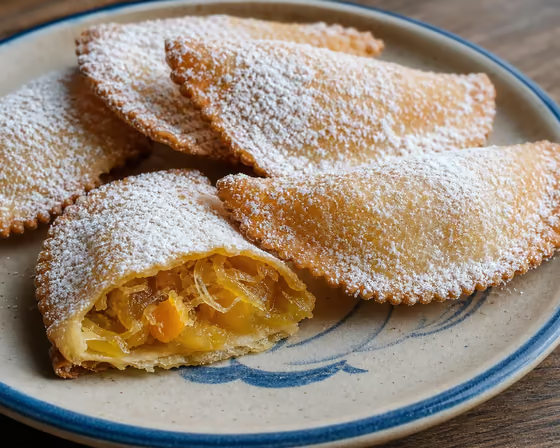
Clarinhas de Fão — Published Approximation
The historic Fão shop’s recipe remains oral and secret. Revista de Vinhos expressly published this formula as an approximation: a thin, thoroughly worked pastry, gila preserve and yolk filling, slow frying in beef fat and a generous icing-sugar coating. The distinction between editorial approximation and trade recipe is preserved throughout this page.
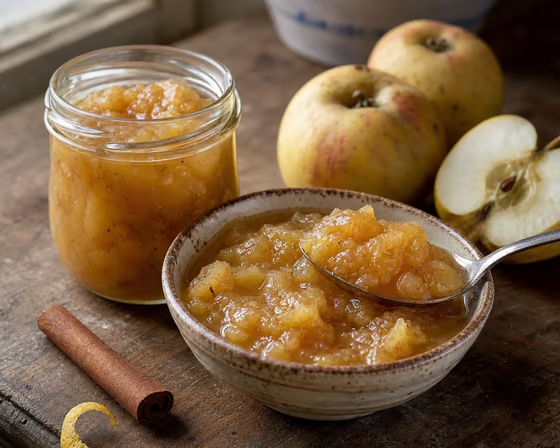
Bravo de Esmolfe Apple and Cinnamon Preserve
A short cook in a wide pan preserves the perfume of Bravo de Esmolfe DOP. Some apple is crushed to bind the preserve while some remains in small translucent cubes.
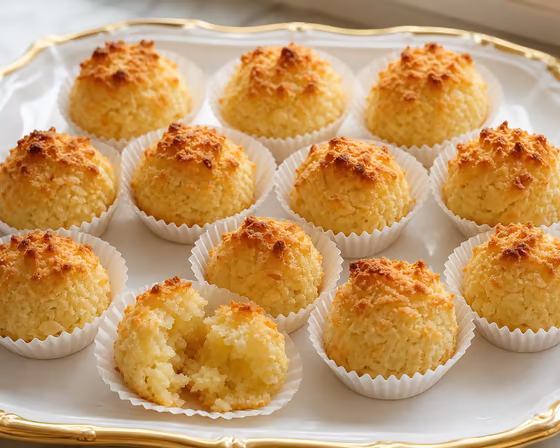
Coquinhos — Pearl-Stage Syrup Version
This Teleculinária formula first makes a sugar syrup at pearl stage, adds coconut and only then incorporates the eggs. It is one of two techniques documented in the catalogue entry: Continente's version directly mixes eggs, sugar and coconut without syrup.
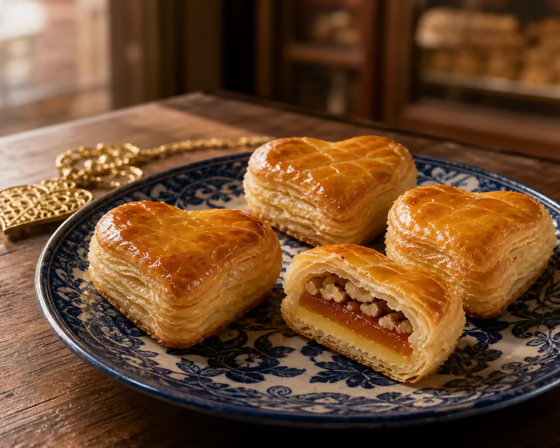
Coração de Gondomar — Published Official Assembly
The official Gastronomic Weekends guides publish the assembly of Coração de Gondomar: two puff-pastry hearts enclose pastry cream, egg cream, pumpkin preserve and walnuts before baking at 180°C and being glazed with pumpkin jelly. The source supplies no cream formulas, quantities, yield or baking time; this transcription makes those omissions explicit.
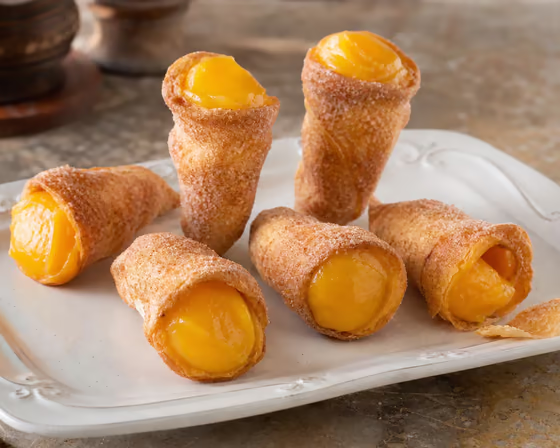
Angra do Heroísmo Cornucopias — Published Azorean Formula
This formula, supplied by Belinha Simões to Cozinha Açoriana, documents the Angra do Heroísmo family: pastry cones made with lard and butter, brushed with egg white, coated in almonds and breadcrumbs and filled with ovos-moles. It is a published Azorean variant, not the commercial formula used by Alcobaça confectioners. The source gives a 30-minute rest but publishes no yield, oven temperature or baking time.
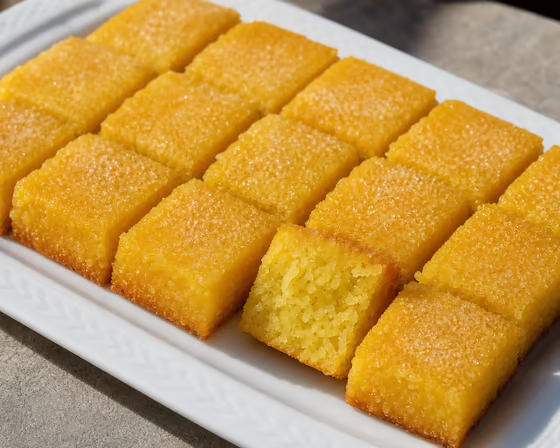
Cortadinhos de Alpiarça — Published Formula
This published recipe confirms the preparation described in the catalogue entry: a tray cake of whole eggs, sugar, flour and lemon, turned onto sugar and cinnamon and cut into squares or triangles. The 1942 account comes from the same culinary source and is not treated as proven chronology.
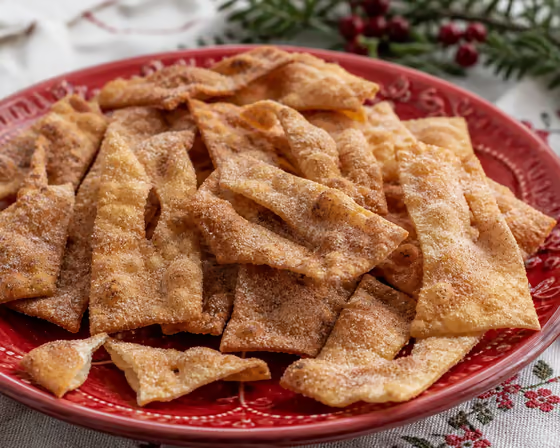
Portuguese Orange Coscorões
Very thin rectangles of orange-scented dough, slashed through the centre, fried until blistered and finished with cinnamon sugar. This representative formula follows Nestlé's unleavened version; Portuguese sources also document larger yeasted doughs and the addition of aguardente.
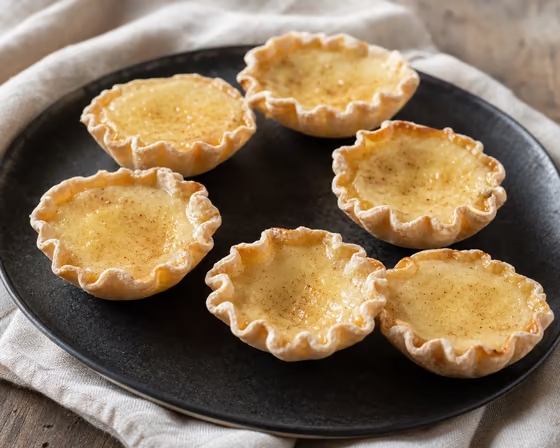
Graciosa Covilhetes de Leite — DGADR-Published Formula
DGADR publishes this formula attributed to the Portuguese Federation of Gastronomic Brotherhoods: deeply reduced milk custard bound with yolks, flour and cinnamon inside thin tender pastry. The source quantifies the filling and pastry fats but gives no yield, water for binding the pastry, oven temperature or baking time; those omissions remain visible rather than being filled by guesswork.
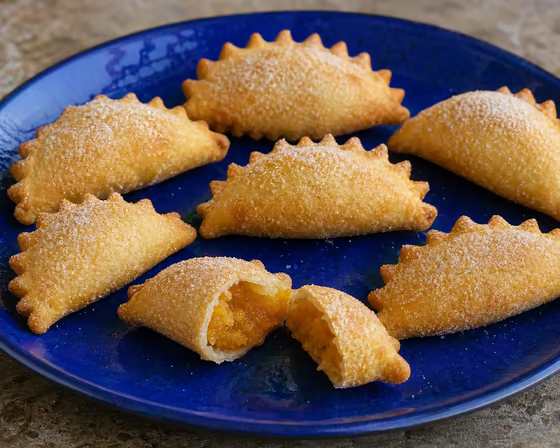
Cristas de Galo — Receitas e Menus Version
This formula published by Receitas e Menus reproduces the identifying features of Vila Real's Cristas de Galo: thin flour, lard and egg pastry; an almond, yolk, apple, cinnamon and pork-fat filling; and a pointed comb-like edge. DGADR documents the traditional sweet and its core ingredients but does not establish this home recipe as an official or exclusive formula.
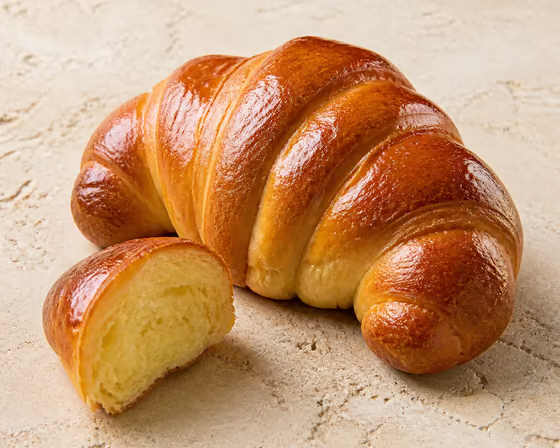
Porto-Style Brioche Croissant — Jeremiah Duarte Bills' Version
This Portuguese Baking School formula, adapted by Jeremiah Duarte Bills from Alexandre Mota, documents the brioche croissant associated with Porto and now widespread across Portugal. Unlike a French laminated croissant, it receives butter in a simple fold and, after baking, a cinnamon, orange and Port syrup.
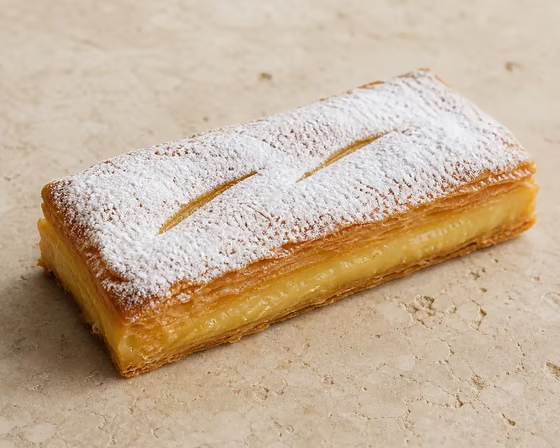
Delícia Puff Pastry — Teleculinária Pastry-Cream Version
This version published by Teleculinária retains Delícia's rectangular form, puff pastry and icing sugar but uses milk-based pastry cream made with egg and yolks. Fabrico Próprio's reference describes sweet egg cream, so this page presents the recipe as a documented contemporary variant, not a replacement for the reference formula.
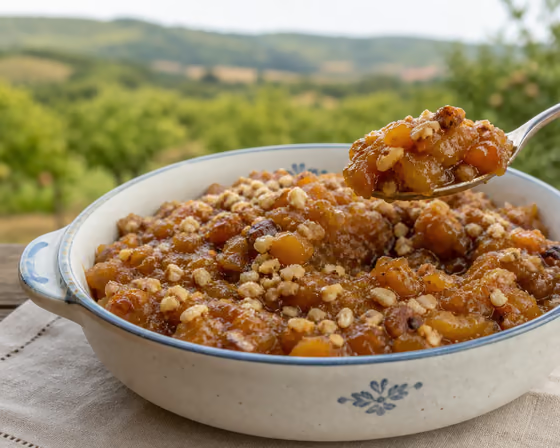
Delícias de Frei João — Published Fruit and Walnut Version
This published formula cooks one kilogram of ripe fruit with 700 g sugar and finishes it with chopped walnuts and optional cinnamon. The source divides the fruit into 500 g of peach, grapes, plums, melon and quince in unstated proportions, plus another 500 g of ripe fruit of choice. It is an attributable, reproducible version rather than a sole recipe: another public Alcobaça formula adds eight egg yolks.
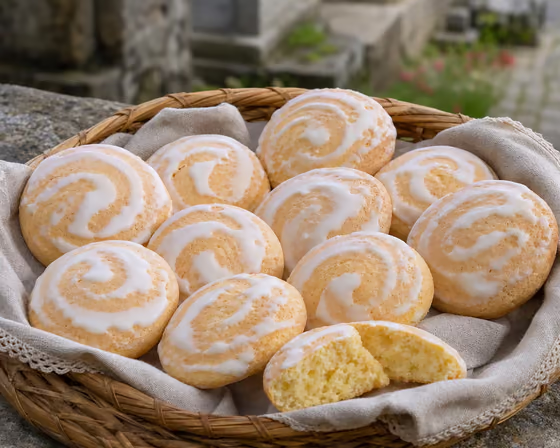
Doce Branco de Romaria — Home Formula Published by Receitas
This is a complete home formula published by Willianetavares on Globo's Receitas platform: small egg-and-lemon cakes baked in spoonfuls and covered with white icing marked by hand. The Visit Braga guide documents Doce Branco among the city's traditional specialities but publishes no official recipe. The culinary source states neither yield, individual portion size, cooling duration nor drying time.
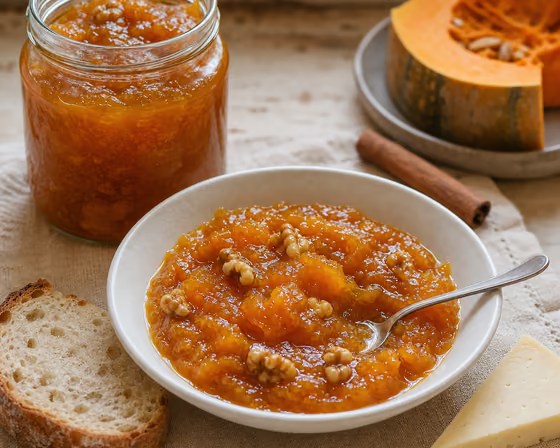
Portuguese Pumpkin and Walnut Preserve
Pumpkin, sugar, lemon and cinnamon cook slowly into a thick preserve; walnuts are added at the end to retain their texture. This version is intended for refrigerated home storage.
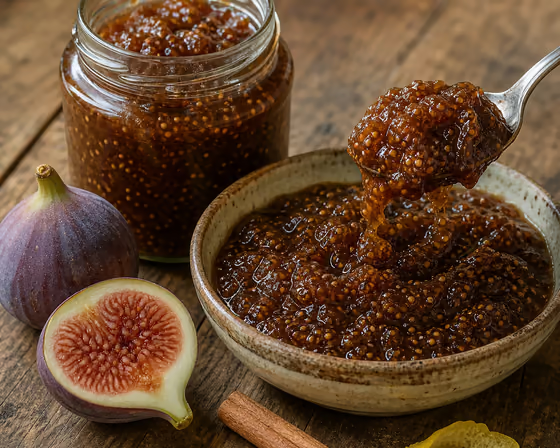
Traditional Portuguese Fig Preserve
Ripe figs cook slowly with sugar, lemon and cinnamon until the fruit breaks down and the syrup reaches a jam-like set. This formula retains pieces and seeds and is intended for refrigerated home storage.
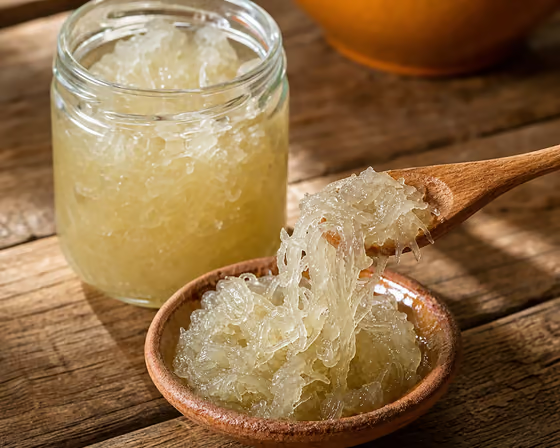
Doce de Gila — Official DGADR Method
DGADR documents a complete proportional formula: after the fig-leaf gourd flesh is boiled, soaked, drained and weighed, exactly the same weight of sugar is added. The record preserves the traditional metal-free technique but gives no starting weight, timings, water or salt quantities, final syrup stage, yield or storage instructions.
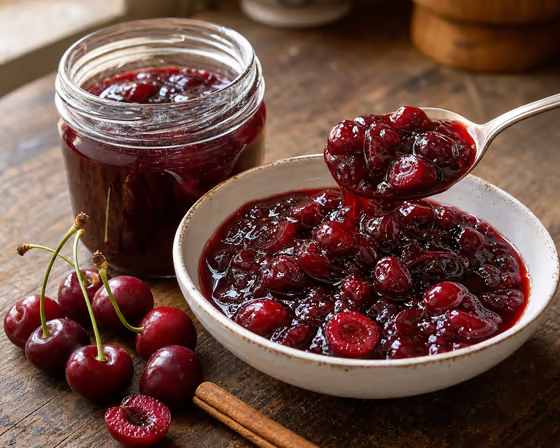
Traditional Portuguese Sour-Cherry Preserve
Sour cherries are pitted and slowly cooked with sugar until the fruit is tender and the syrup reaches a jam-like set. The longest task is removing the stones without losing too much juice.
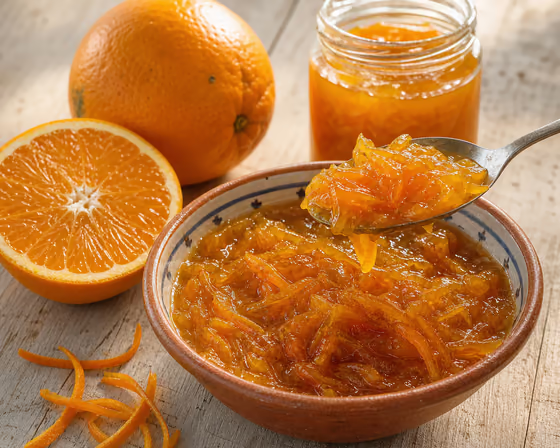
Algarve Orange Preserve
This preserve uses flesh, juice and a controlled amount of peel. Blanching the strips first reduces harsh bitterness without erasing citrus fragrance.
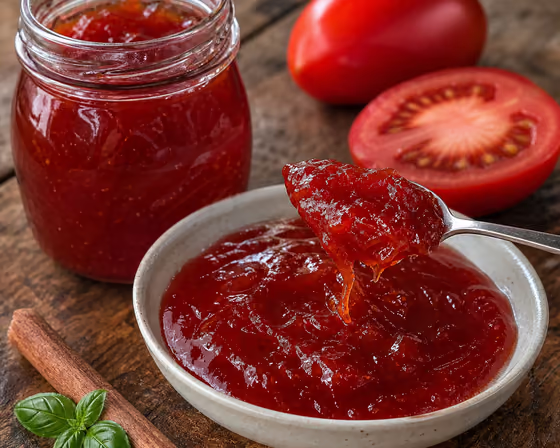
Portuguese Tomato Jam
Very ripe red tomatoes are peeled, drained and reduced with sugar and cinnamon. A wide pan encourages evaporation and produces a preserve rather than a sauce.
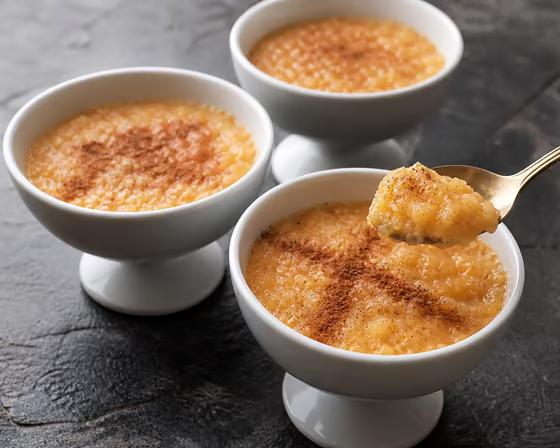
Terceira Doce de Vinagre — Cozinha Açoriana’s Formula
This version published by Cozinha Açoriana uses 1 litre / 33.8 fl oz whole milk, 500 g / 17.6 oz sugar, eight yolks, two whites, one spoonful of white-wine vinegar and a small cloth sachet holding one teaspoon of aniseed. Vinegar curdles the milk; after about 30 minutes with sugar and aniseed, the eggs enter off the heat and the sweet returns to the stove until a spoon exposes the pan. A transcription attributed to Augusto Gomes’s book adds fennel seeds, but that second formula has not been merged into this one.
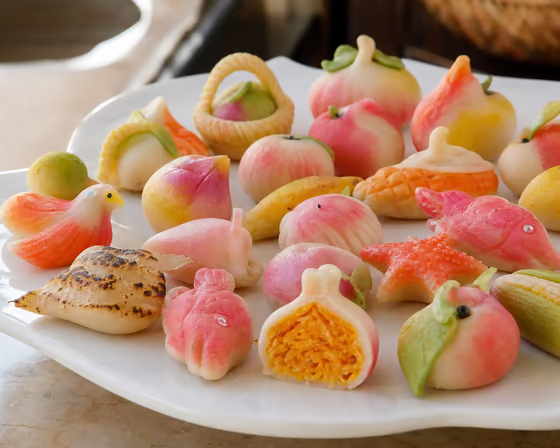
Algarve Doce Fino — Teleculinária’s Cooked-Paste Formula
This is the modern formula published by Teleculinária: equal parts almonds and sugar are bound with a briefly cooked syrup, kneaded and rested until the following day before shaping. DGADR’s historical record describes another technique in which egg white binds the paste and ovos moles fill it. The two versions remain explicitly separate; this recipe does not present the cooked paste as the sole traditional formula.
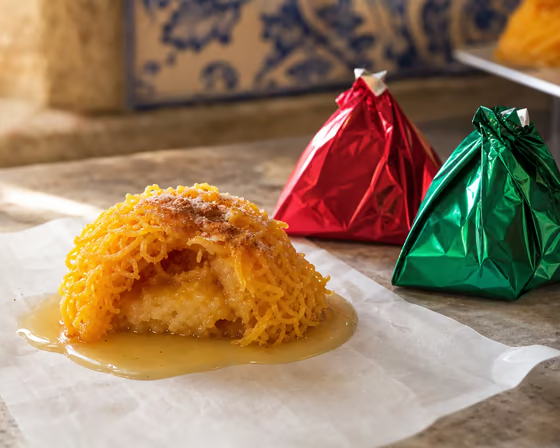
Dom Rodrigo do Algarve
Dom Rodrigo combines egg threads, almond-enriched ovos moles and cinnamon, but its decisive characteristic is pan-toasting in the syrup used for the threads. This recipe preserves that step from the official specification and makes the threads from scratch; it demands care with hot syrup and numerous yolks.
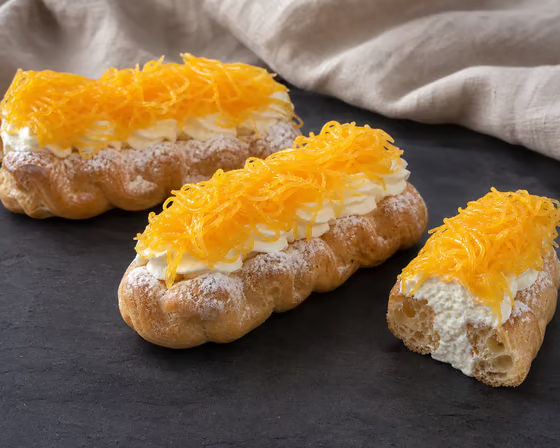
Duchesse — Cátia Goarmon's Formula
The recipe published by 24Kitchen pipes strips of choux, splits them once cold and fills them with chantilly, strawberry, pineapple and fios de ovos. It is a fruit-decorated variant of the Portuguese Duchesse documented by Fabrico Próprio; it retains the defining elongated choux, chantilly and egg threads but should not be presented as its only possible finish.
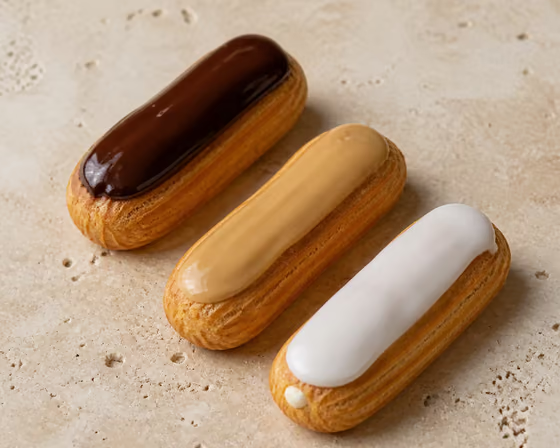
Coffee Éclairs — Francisco Moreira's Formula
Francisco Moreira publishes a complete coffee-éclair formula on 24Kitchen: choux pastry, coffee pastry cream and a coffee-flavoured crisp topping. Coffee is one of the classic flavours Fabrico Próprio documents for Portuguese éclairs, although this contemporary version uses a crisp layer rather than the smooth counter-style fondant.
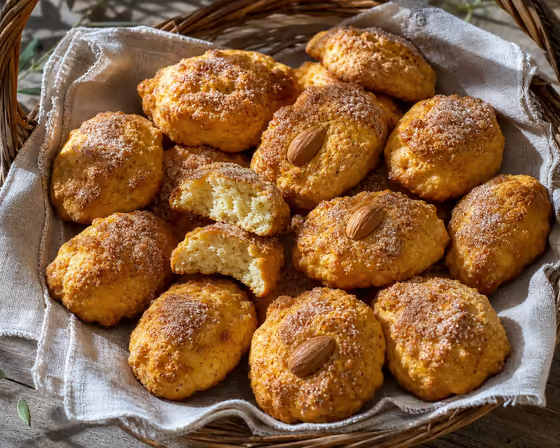
Almeida Económicos — Historic Villages Recipe
This formula was taught by local bakers at a Historic Villages of Portugal workshop in Almeida. It uses eggs, sugar, milk, orange, spirit and olive oil; on festive days it may receive an almond. The source itself notes that the sweet is not exclusive to the region and that related biscuits in Trás-os-Montes are called azeiteiros.
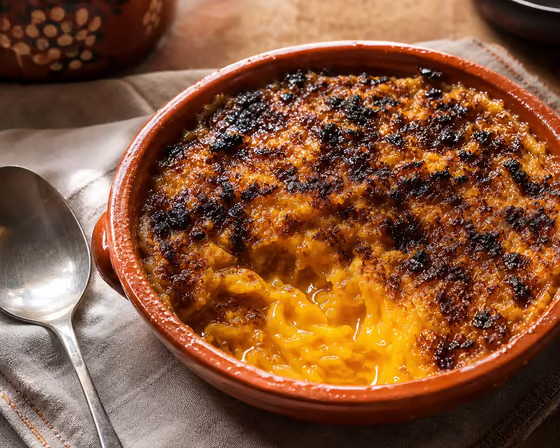
Encharcada de Ovos — Continente Version
This recipe follows the home version published by Continente: three whole eggs, eighteen yolks and a light syrup made with equal weights of sugar and water, finished with cinnamon. The source calls it a traditional Alentejo dessert, while Turismo de Portugal documents encharcada in regional dining. We do not add the scorched finish found in other versions of the family because it is absent from this published method.
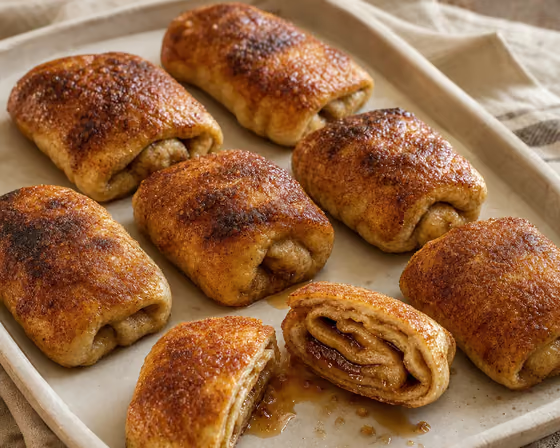
Condeixa-a-Nova Escarpiada
The regional formula begins with already-proved bread dough, coated with olive oil and repeatedly folded with brown sugar and cinnamon. A close-fitting tray contains the filling formed between the folds. The publication states no yield, oven temperature or baking duration.
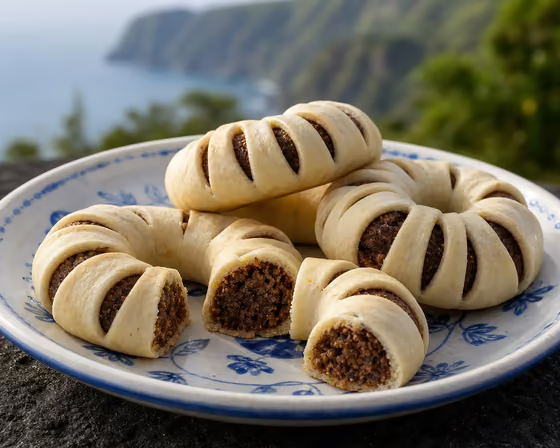
Espécies of São Jorge — Published Filling Formula
The formula published by ByAçores gives complete quantities for the aromatic filling, rested overnight, but begins with pastry dough already prepared. This page does not turn that omission into a falsely complete recipe: it documents the filling and horseshoe assembly and identifies the dough as a component whose proportions this source does not provide.
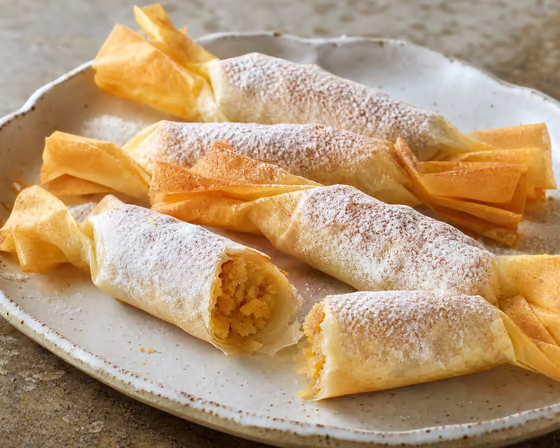
Azorean Esperanças — A Colmeia’s Modern Formula
This is the published modern formula for Esperanças from Confeitaria A Colmeia in Ponta Delgada. The bakery recovered the filling of the older Bolinhos da Esperança—bread, yolks, almonds and candied citron—and enclosed it in a thin crisp wrapper. Açoriano Oriental confirms directly with the producer that the outer pastry is an innovation while the filling remained faithful to the recovered family recipe; this record does not present the modern form as the original convent configuration.
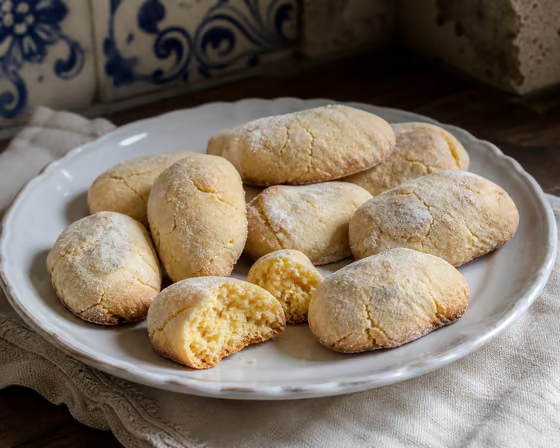
Esquecidos de Odivelas — Transcription from the Last Nun's Notebook
This is the historic formula presented by the Odivelas Monastery portal among the recipes transcribed from its last resident nun's notebook and rendered into current Portuguese without culinary adaptation. It therefore preserves everything the source states—eight yolks, two whites, 480 g sugar and about 750 g flour—and everything it does not: yield, oven temperature, baking time and the use of the cocoa powder named in the ingredients.
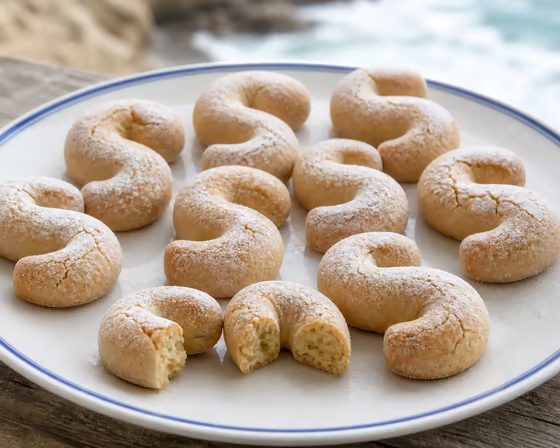
Esses de Peniche — the municipal recipe
Peniche Municipality publishes a complete formula for these S-shaped almond biscuits. Unlike an ordinary raw dough, the almonds, egg whites, sugar and butter are heated; flour is added afterwards and the mixture returns to the heat until it can be shaped. Virgílio Nogueiro Gomes confirms the same ingredients and the rest before shaping.
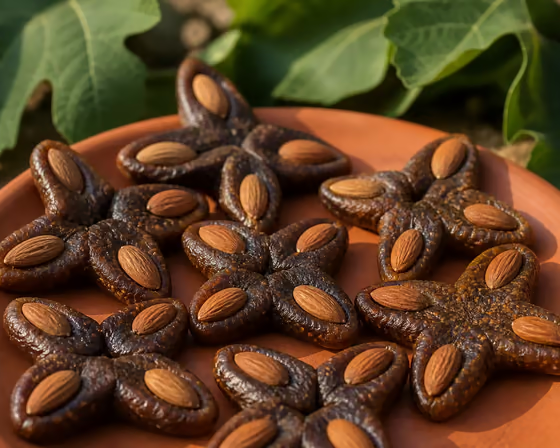
Fig-and-Almond Stars — Santa Rita Formula Collected by CCDR Algarve (2005)
CCDR Algarve published this formula from D.ª Margarete of Santa Rita in a 2005 regional collection: thirty dried white figs, one kilogram / 2.2 pounds of almonds and two tablespoons of chocolate powder for fifteen stars. The source calls for about thirty minutes at ‘moderate heat’, turning once, but does not translate that heat into a temperature.
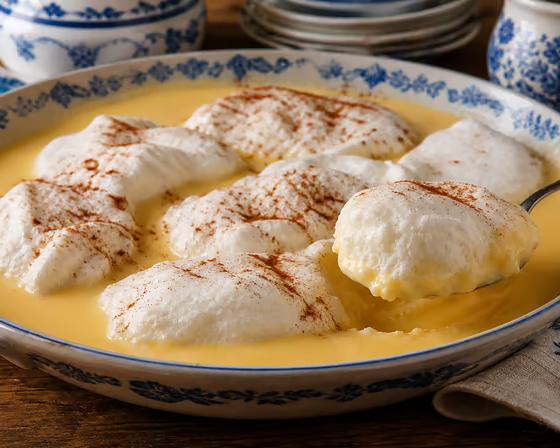
Farófias — Poached Meringues with Vanilla Custard
This published formula poaches spoonfuls of whipped egg white in lemon-scented water and serves them with a yolk-and-vanilla custard. It is an attributed version within two documented families: other farófias are poached directly in milk, changing both flavour and how the liquid is reused.
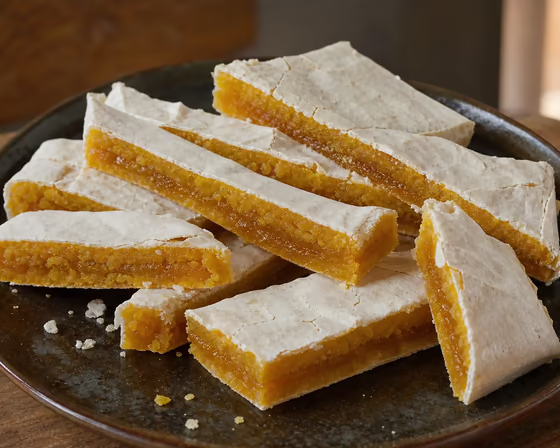
Fartes de Portalegre — RTP-Published Formula
RTP publishes a Fartes formula matching the convent sweet documented in Portalegre: almond, yolk and gila are layered on wafer, folded into thirds and dried briefly in the oven. The page lists 18 'eggs' but its method directs the use of 'yolks', and it later requires another soft-ball syrup without quantifying the coating sugar and water. Both ambiguities are preserved rather than repaired by guesswork.
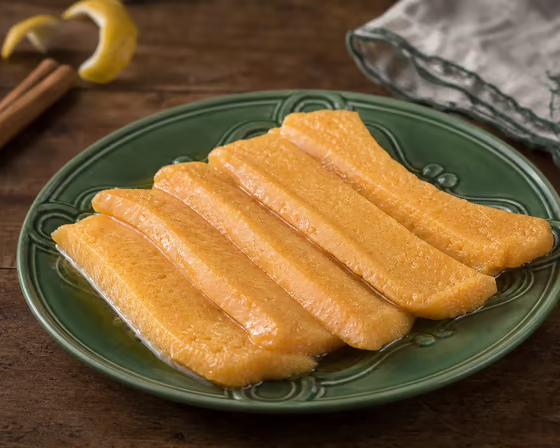
Fatias de Tomar Egg-Yolk Slices
Twenty-four yolks beaten at length, cooked for one hour in a bain-marie, then sliced and immersed in aromatic syrup. Tomar's chimney pan makes uninterrupted cooking easier; a tightly covered oval mould in a continuously boiling bain-marie reproduces the domestic principle documented by DGADR.
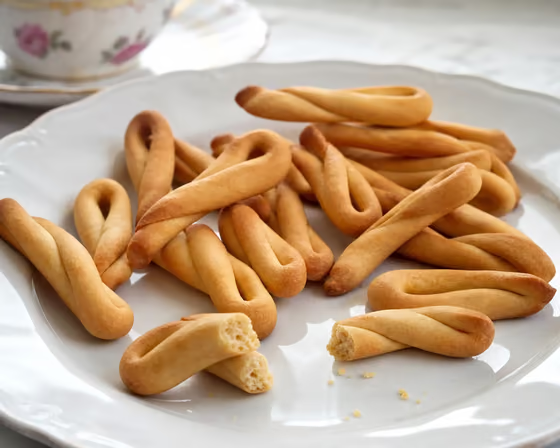
Fidalguinhos de Braga — Published Lemon and Cinnamon Version
This published formula realises DGADR's description: thin twisted biscuits made from flour, sugar, butter, eggs, lemon and cinnamon. Their crossed-leg shape satirises the fidalgos, while Braga tradition links them to the Convent of Nossa Senhora dos Remédios and the Easter table.
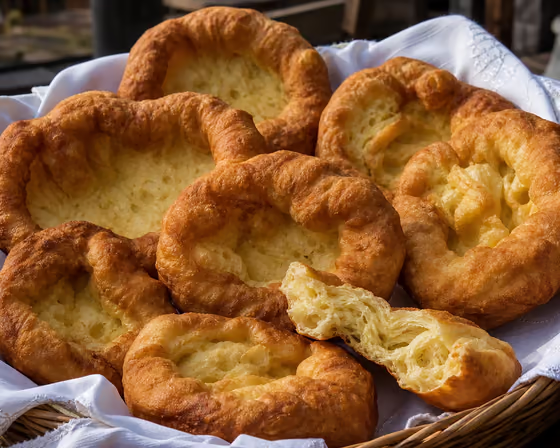
Pampilhosa Hand-Stretched Fritter
The regional recipe documents a rich dough of eggs, flour, sugar and yeast, flavoured with small streams of olive oil and aguardente. After proving for three to four hours, each portion is stretched with olive-oiled fingertips and fried. The warm water used to dissolve the yeast is not quantified.
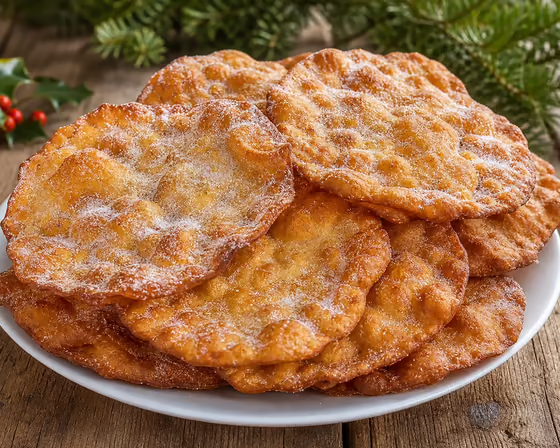
Filhós
Filhós are the quintessential fried sweet of the Portuguese Christmas: a light, yeasted dough scented with orange and aguardente, stretched by hand and fried in hot oil. They come out golden and crisp on the outside, soft within, and are dusted while still warm with sugar and cinnamon. No Christmas table is complete without them, and they are made in big batches to share.
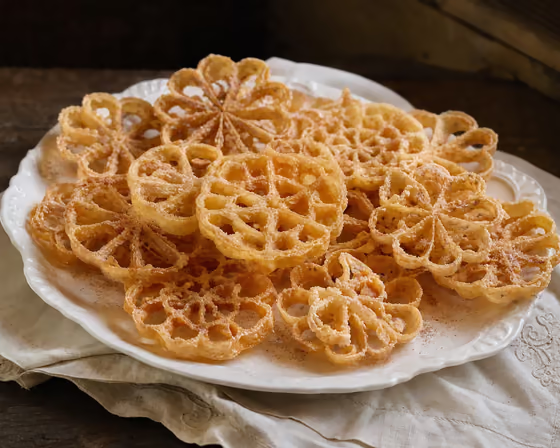
Filhós de Forma — Published Alentejo Variant
This quantified formula was published by the Alentejo food archive Hora da Buxa. DGADR officially confirms the soft batter, resting, lacy iron heated in the oil and cinnamon-sugar finish but records a broader composition that may include Port and water. This record preserves the published variant—with milk and orange juice, without Port—instead of averaging different recipes.
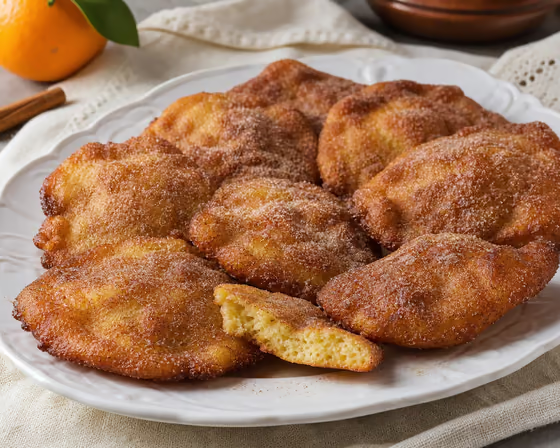
Loures Orange Filhós — Municipal Recipe
Loures Municipal Journal published this Carnival filhó from the municipality's food memories: flour, orange, aguardente, lard and eggs, rested before shaping and frying. The page itself contains a practical discrepancy: its list calls for lard for frying, while the method specifies olive oil at 180°C. Both instructions are documented rather than silently choosing one.
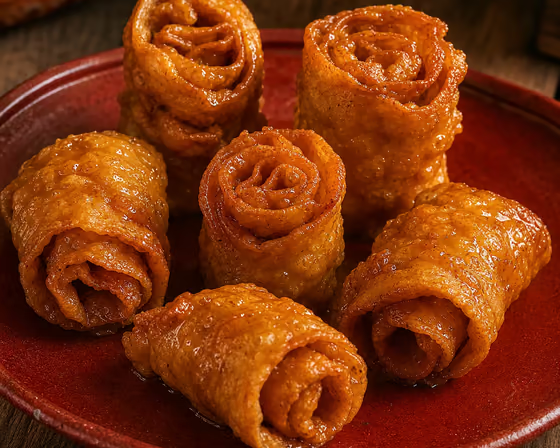
Alentejo Rolled Filhó — Published Formula
DGADR documents the Alentejo know-how: strips of elastic dough progressively wound around a long fork during frying and coated in syrup. The quantitative formula published by Iguaria supplies six eggs, small equal portions of lard, butter and sugar, aguardente and about 500 g flour; the two sources are presented separately.
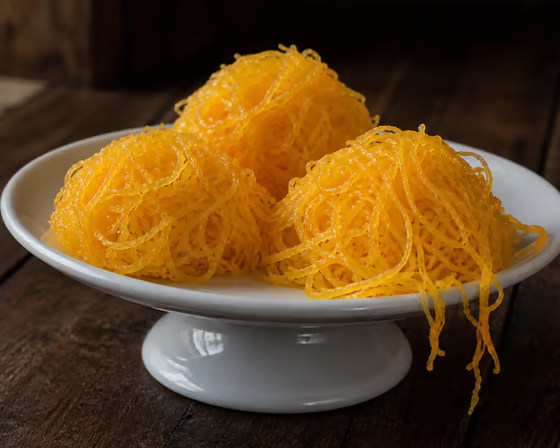
Fios de Ovos — Published Egg-Thread Funnel Formula
This published formula uses only yolks and sugar syrup: strained yolks fall through a purpose-made funnel in circles over boiling syrup and cook into threads. It is a foundational Portuguese confectionery technique, served as a sweet and used to build lampreias, trouxas and regional specialities.
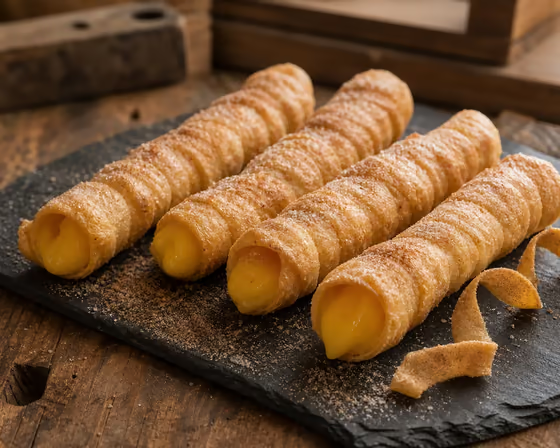
Cesar Carpenter’s Ribbons — Published Home Transcription
Producer Lindolfo Ribeiro does not publish his trade recipe. This home version was recorded by an author who says she watched the chef make the ribbons: flour, butter and warm-water dough, rested, cut into strips, wound around canes, fried and filled. RTP’s archive confirms Lindolfo’s television demonstration, while the producer’s page documents the history and the quince or yolk fillings.
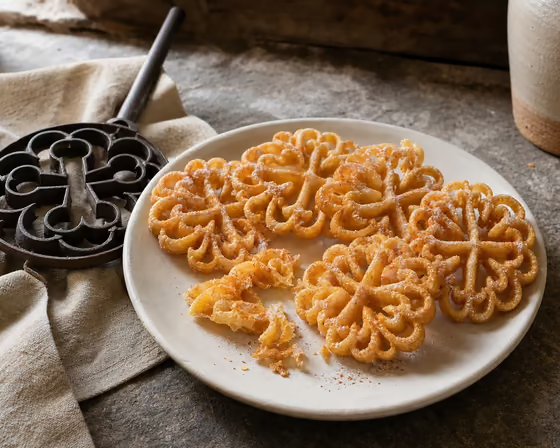
Flor de Escalhão — Portuguese Soul Published Formula
The formula published by Portuguese Soul uses twelve eggs per kilogram of flour, milk, sugar, cinnamon and salt. A decorative iron is heated in oil, dipped into the batter without covering its upper edge and returned to the oil until the thin flower releases and turns golden. Tourism sources confirm the speciality's connection with Escalhão and Figueira de Castelo Rodrigo; no yield is published.
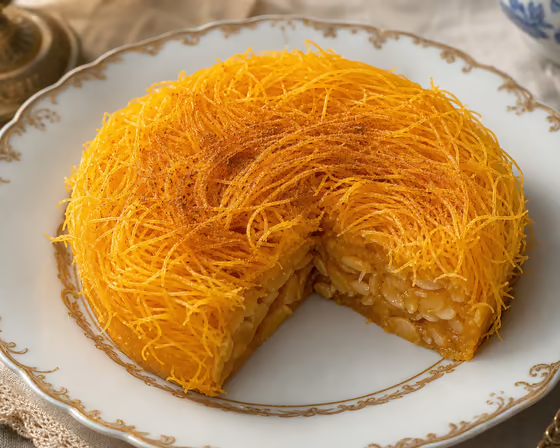
Florados de Lagoa — Published Regional Formula
The formula published by Turismo de Portugal makes bases from sliced almonds and sugar at strong-thread stage, rests them overnight and finishes them with fios de ovos. It is an attributed, documented version rather than a claim to one unique convent formula.
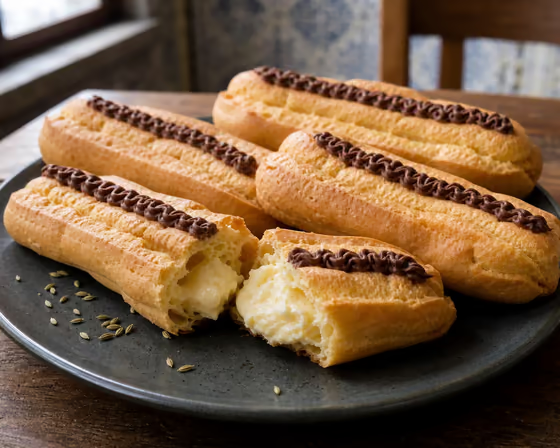
Fofas da Povoação — Formula Taught by Maria de Deus
This is the small batch published by the Portuguese Baking School, adapted by Jeremiah Duarte Bills from the formula Maria de Deus taught him at Café Restaurante Jardim in Povoação. It makes six to seven large Fofas: three-line choux pastry, vanilla cream and a stripe of chocolate buttercream. It is not presented as Dona Angelina's original recipe or as a universal formula for the village's bakeries. Unlike other local descriptions, this published version contains no fennel.
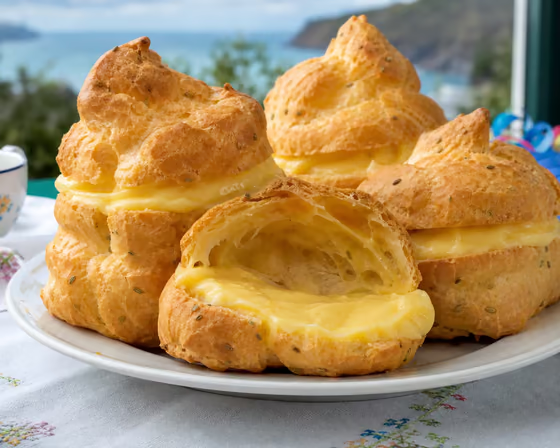
Fofas do Faial — Traditional Fennel-Choux Base
DGADR's inventoried formula scalds flour in a mixture of water, milk, butter and fennel, incorporates fifteen eggs and bakes spoonfuls in a hot oven. The record permits them plain or filled with lemon or vanilla cream; because it gives no cream formula, this recipe documents the base precisely without inventing a filling.
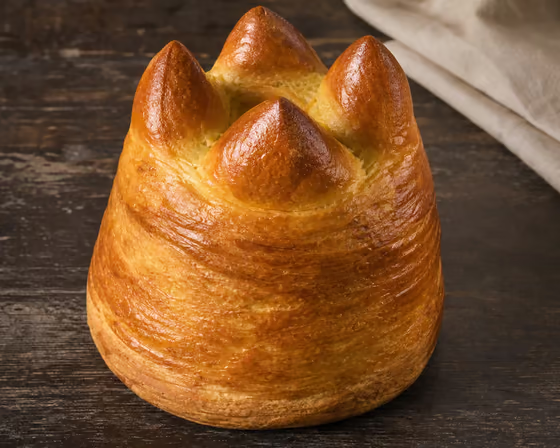
Fogaça da Feira — Formula Published by the Municipal Tourism Office
Santa Maria da Feira's tourism portal publishes this formula using 800 g / 28.2 oz flour, 3 eggs in the dough, butter, sugar, cinnamon, salt, lemon juice and zest, and a fresh-yeast starter. Its technique—winding the strip from the wide end into a cone, cutting four towers and opening them after 15 minutes in the oven—matches the expertise protected by the European specification. Making it at home is a way to study the form and dough, but does not confer Fogaça da Feira PGI status: every production stage of the protected product must take place within Santa Maria da Feira municipality.
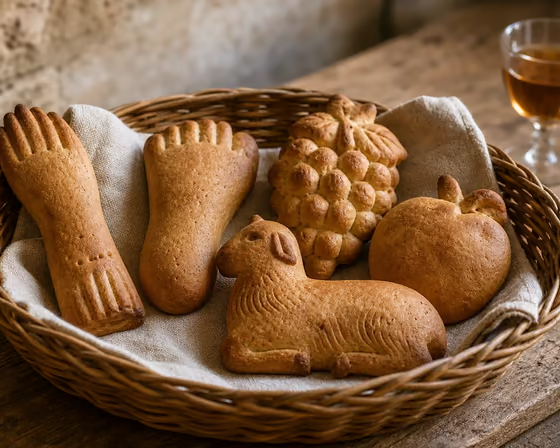
Fogaça de Palmela — Municipal Recipe
Palmela Municipal Council publishes this formula using bread dough, orange, lard, brown sugar, cinnamon and aniseed. The recipe belongs to the tradition of shaping votive offerings and taking them for Saint Amaro's blessing on 15 January; the forms are not merely decorative.
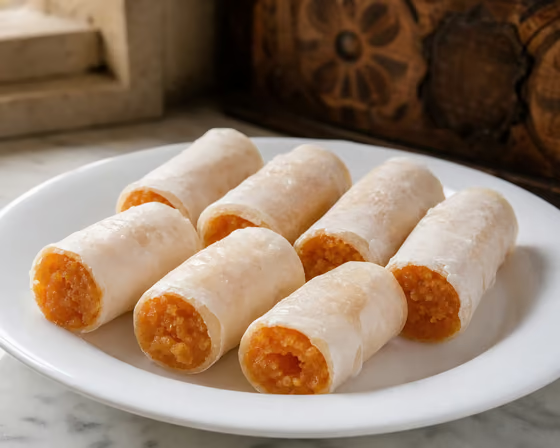
Foguetes de Amarante — Maria de Lurdes Modesto Formula
The Amarante Convent Sweets IGP application dossier transcribes this formula from Maria de Lurdes Modesto's Cozinha Tradicional Portuguesa. Its almond, two-egg and seven-yolk filling is rolled in 5.5 cm wafer squares, baked and dipped in pearl-stage syrup. The same dossier separately documents the current protected process.
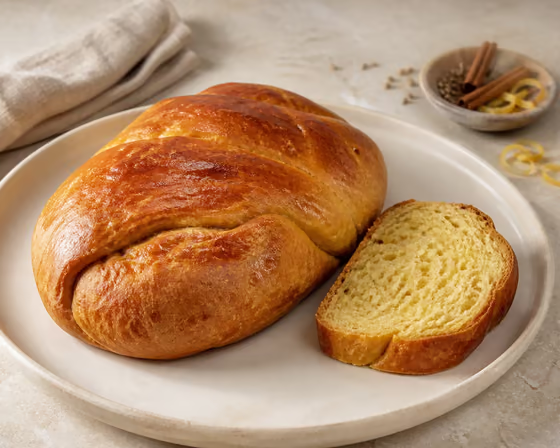
Poiares Easter Folar — Gastronomic Charter Formula
The Coimbra Region Gastronomic Charter publishes this Vila Nova de Poiares formula with seven eggs and 350 g sugar per kilogram of flour. Milk, aguardente, lemon, olive oil and butter enrich the dough, which rises for several hours before shaping and baking for 20 to 30 minutes. The same source explains that the present-day folar no longer carries the coloured boiled eggs used in the past.
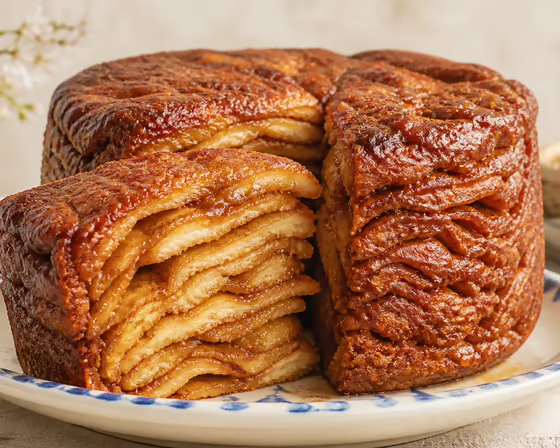
Rolled Folar de Olhão
This Algarve folar is more than sweet bread: orange dough is folded and rolled with butter, brown sugar and cinnamon to create moist leaves and a caramelised crust. Clara de Sousa's domestic formula is cross-checked here against a baker's Olhão recipe and sources documenting its regional identity.
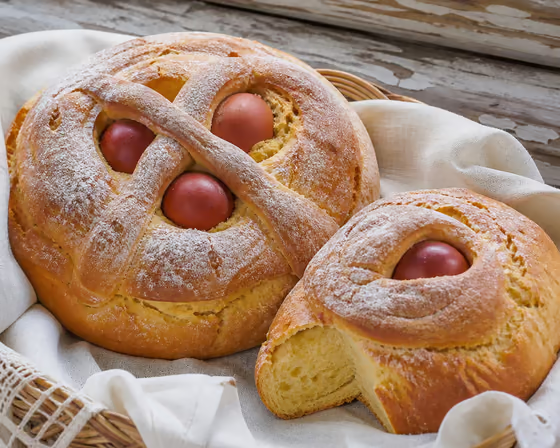
Folar de Vale de Ílhavo — Ílhavo Municipality Recipe
This formula published by Ílhavo Municipality starts with half the flour, water, salt and yeast, then adds sugar, five yolks, butter and cinnamon or lemon zest. It makes one medium folar decorated with four eggs or three small ones with one egg each. A family formula shared through Primor by Filomena Grave of Vale de Ílhavo uses 1.5 kg flour, three whole eggs and three yolks, more butter and a quantified overnight rise. The versions are documented separately.
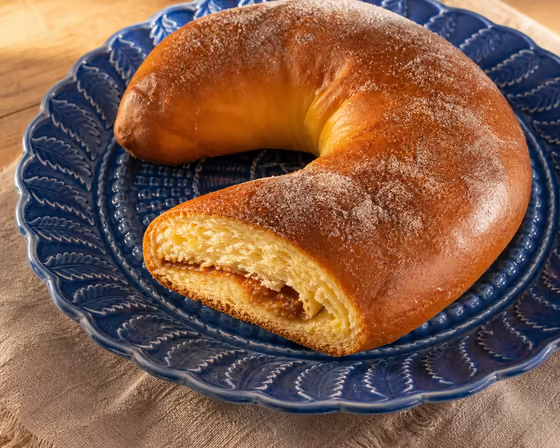
Folar de Vouzela — Household Version Published by Ruralea
This household version published by Ruralea uses 1 kg flour, ten eggs, 200 g sugar, 100 g butter and 60 g baker's yeast. After about two hours' rising, small mounds of butter and sugar are placed on the dough, which is folded without pressing and curved into the horseshoe that identifies Folar de Vouzela. Its shape, filling and Easter association agree with DGADR and Municipality of Vouzela records; the quantities belong to this published formula, not to every producer.
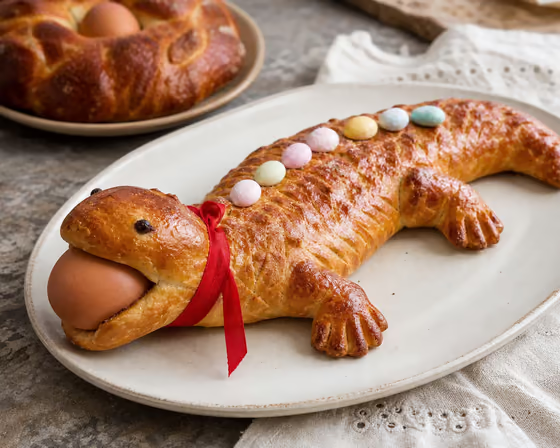
Easter Lizard Folares — Contemporary Formula with Castelo de Vide Shaping
An AEG cooking session publishes a complete dough and baking formula for ‘Folares Lagartos.’ MemóriaMedia separately documents the shaping practised in Castelo de Vide, but its historical formula omits the sugar amount. This record uses AEG's quantified dough and flags every point where the local record supplies shape and decoration; it does not present the combination as a recipe transmitted by a single confectioner.
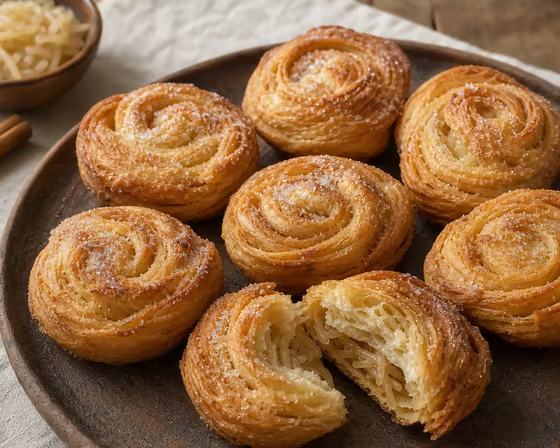
Vidigueira Folhados — Alentejo Formula with Gila
Hora da Buxa publishes this family formula for Alentejo layered cakes with gila: yeast dough scented with cinnamon and aniseed is rolled very thin, wound around a cane, cut with thread, filled and baked at 200°C. The method matches Vidigueira testimony, but the source does not assign the recipe exclusively to the town; it should be read as a documented Alentejo version of the same family.
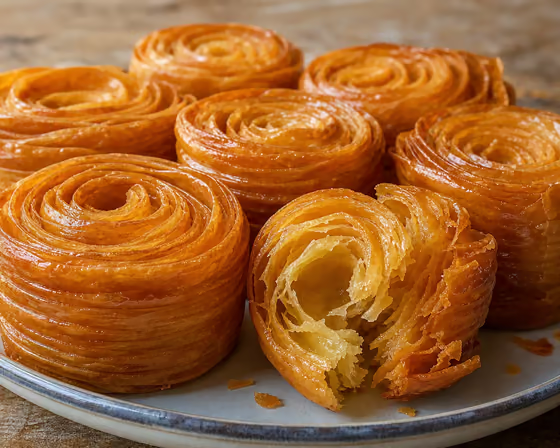
Folhados de Tavira — Vaqueiro Version
This quantified formula published by Vaqueiro makes ten pastries from a yeasted, margarine-rich dough rolled into strips and dipped in pearl-stage sugar syrup. DGADR confirms the traditional form and method but includes lard in the composition; this page follows the Vaqueiro version without adding lard. The source's 45-minute label conflicts with its own one-hour rise and is not used as structured duration.
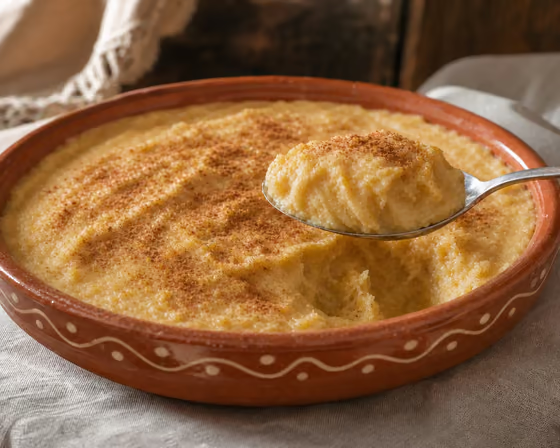
Cesar Christmas Bread Pudding
This recipe follows the published Cesar formula: two-day-old bread, milk, sugar, butter, honey, cinnamon, yolks and white wine. Unlike many northern mexidos recipes, it contains no nuts or raisins. It is very rich, so serve small portions.
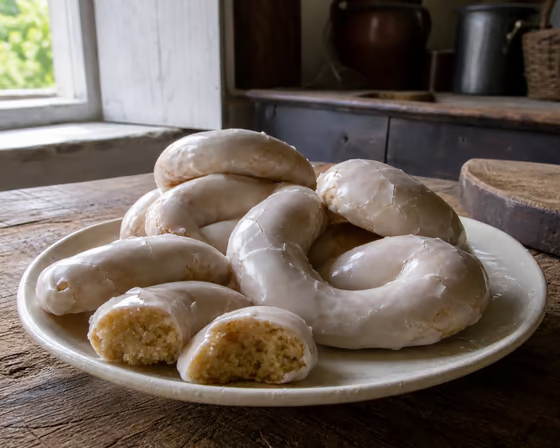
Fuzis de Águeda — A Arte de Cozinhar de Águeda Formula
This formula is an attributed transcription of page 109 of A Arte de Cozinhar de Águeda, coordinated by Uiara Martins and published by Edições ANATA in 2021. It quantifies flour, sugar, butter and almonds but omits the water for both syrups, the final sugar stage, temperature, time and yield.
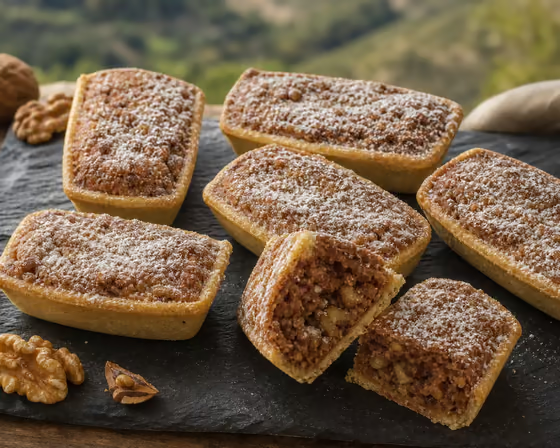
Gamelinhas de Góis — Published Municipal Formula
The formula shared by Padaria e Pastelaria Kentidoce and published by Góis Municipality and the Gastronomic Charter combines a very thin shell with chestnut, walnut, honey, eggs and cinnamon. The sweet and its shape are protected; this transcription documents the public recipe and does not grant permission for commercial production.
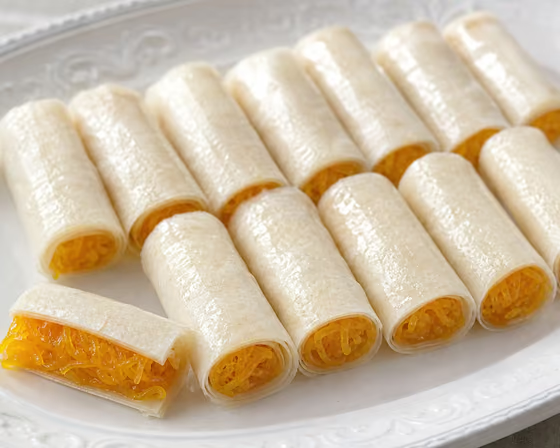
Gargantas de Freira from Covilhã — Published Formula
Roteiro Gastronómico de Portugal publishes, from Editorial Verbo's Cozinha Tradicional Portuguesa, a nine-piece formula: small rolls of prepared egg threads dipped in sugar syrup and wrapped in rectangles of wafer paper. The recipe starts with ready-made egg threads and does not teach how to make them.
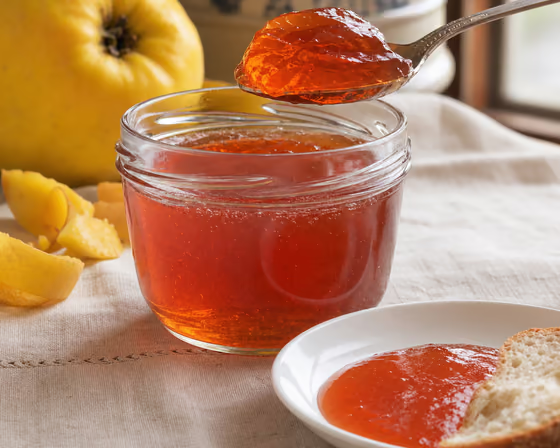
Traditional Portuguese Quince Jelly
Quince jelly uses peel, cores and pips left from marmelada. These parts release pectin while cooking; the liquid is then strained without pressure and cooked with sugar until it forms a transparent gel.
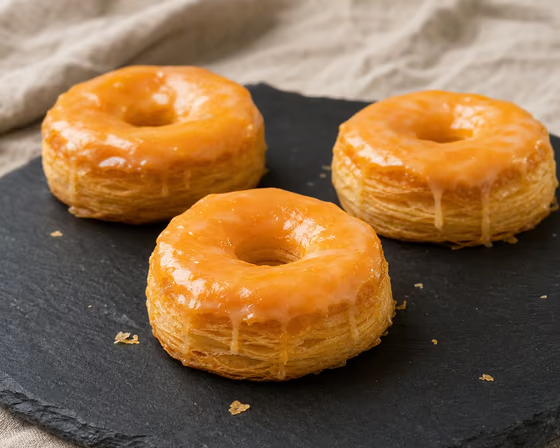
Glória — Yämmi Version with Lemon Icing
This is the formula published by Yämmi/Continente: puff-pastry rings are topped with sweet egg cream and an egg-white, icing-sugar and lemon glaze. It matches one documented Glória finish, but does not replace pastry-shop versions in which the baked ring is dipped in egg cream and sugar syrup. Glória's creator, date and first producer remain unestablished.
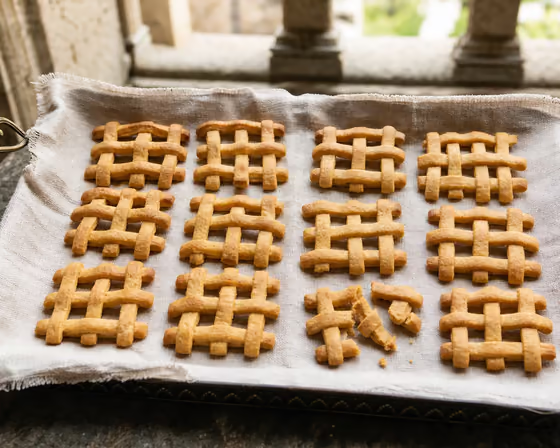
Grades de Lamego — Agros Version
Agros publishes this egg, sugar, butter and flour formula, shaped into interlaced rolls and baked for ten minutes. Another source uses different proportions and optional flavourings, so this is one published version—not a unique recipe or proof of the traditional convent attribution.
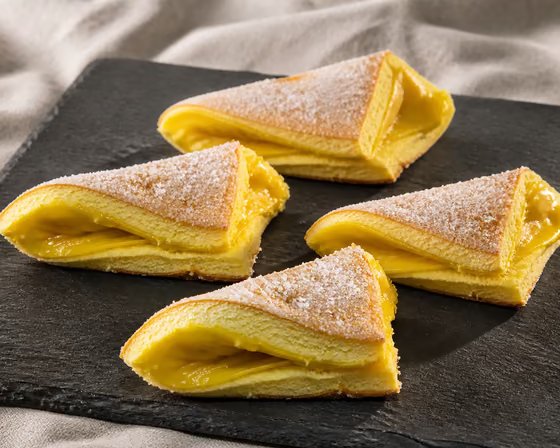
Guardanapos — Pastry-Cream Version
Cátia Goarmon's 24Kitchen formula makes a thin sponge sheet, spreads it with vanilla pastry cream and folds squares into triangles. It is one published version of the Portuguese guardanapo; other formulas use sweet egg-yolk cream instead of milk-based pastry cream.
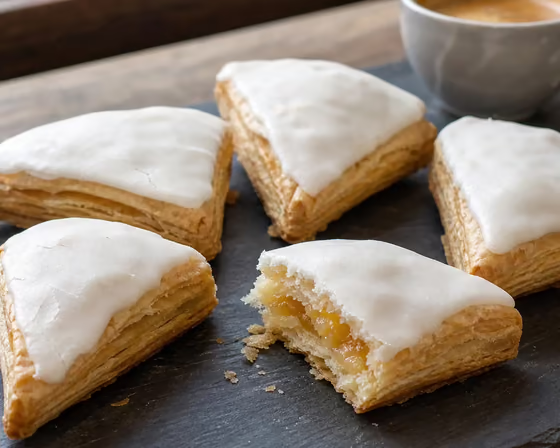
Jesuítas — Home Version with Sweet Egg Cream
This recipe reproduces the home version published by Continente: ready-made puff pastry, sweet egg cream, cinnamon, and egg-white-and-lemon icing. It is not presented as the recipe of Confeitaria Moura, the bakery historically associated with Santo Tirso's Jesuíta. The municipality confirms the sweet as a local speciality but does not publish the house formula; other modern versions, including Yämmi's, omit the filling. The result documented here is therefore an attributed, reproducible interpretation of a genuinely variable family.
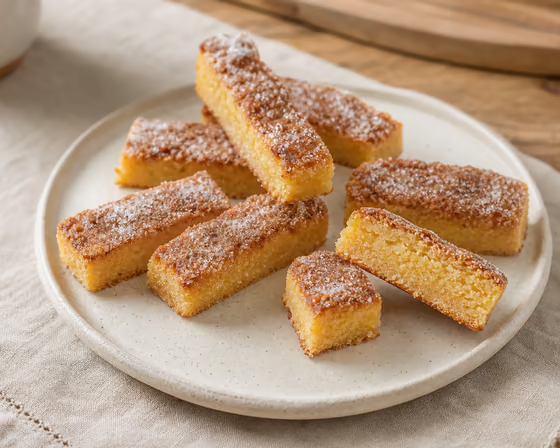
Joaninhas de Cascais — Cascais FoodLab Formula
Cascais FoodLab transcribes a formula published in Maria Odette Cortes Valente's Tesouro da Cozinha Regional Portuguesa: an almond, yolk and egg-white mixture baked as a slab, rested and cut into small sugared fingers. The source says it serves four and recommends cooling overnight, but gives no final piece count.
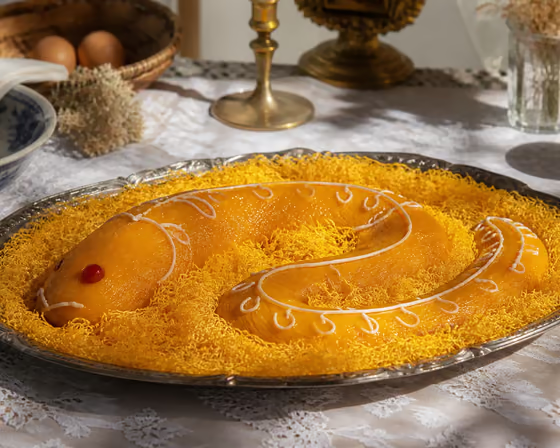
Lampreia de Ovos — Egg-Sheet, Thread and Yolk-Cream Version
This published formula builds the festive figure from yolk sheets cooked in syrup, fios de ovos and yolk cream, finished with almonds and a cherry. It is an attributed contemporary version: historical research identifies nineteenth-century examples and the earliest located recipe in 1903, but proves neither convent authorship nor one place of origin.
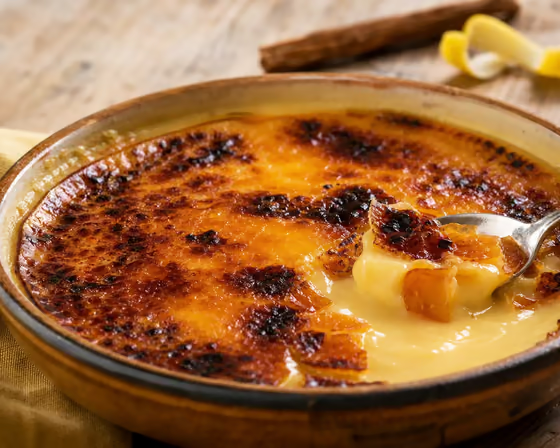
Portuguese Leite-Creme (Burnt Custard)
Leite-creme is one of Portugal's best-loved desserts: a silky milk-and-egg-yolk custard, scented with lemon peel and cinnamon, crowned with a crackling burnt-sugar crust. It is made entirely on the stovetop, with no oven, and the secret is to stir constantly and never let it boil once the yolks are in.
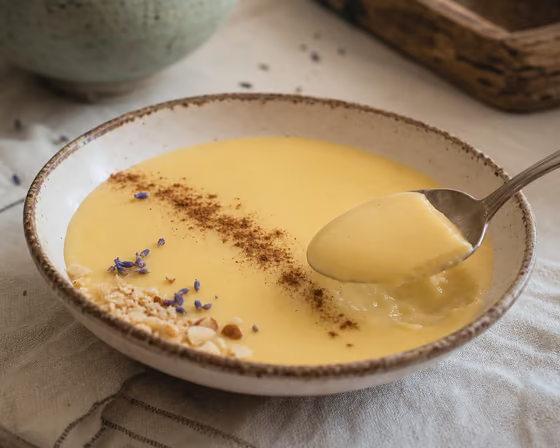
Maia Maize-Flour Custard — Lavender Version
This formula published by Maia's tourism authority thickens milk and yolks with yellow maize flour and scents them with lavender, vanilla, cinnamon and lemon peel. It remains an attributed municipal version rather than turning a documented local preparation into a falsely unique recipe for the entire municipality.
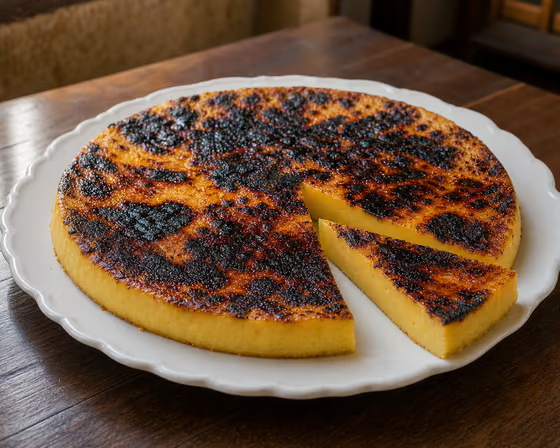
Leite-creme de Serafim — Teleculinária Version
Teleculinária publishes this bowl-served variant, thickened with wheat flour and flavoured with cinnamon. The Portalegre Leite Serafim documented by local sources uses rice flour and corn starch and sets firmly enough to cut with a knife. This is a useful identified home variant, but it must not be confused with that reference Portalegre presentation.
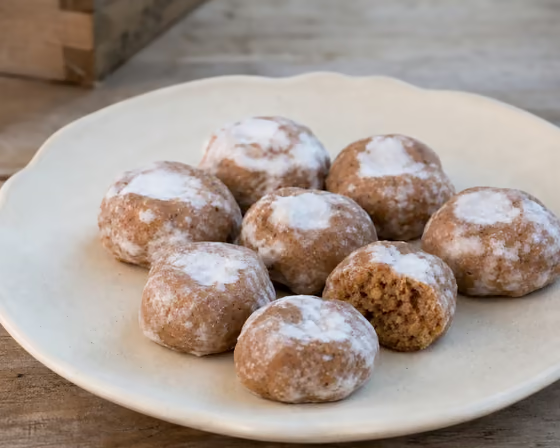
Lérias de Amarante — Published Alcino dos Reis Recipe
The Amarante Convent Sweets IGP application dossier transcribes a quantitative Lérias recipe and identifies it in a note as Alcino dos Reis's recipe, crediting him as the speciality's author and the person responsible for publishing it. The eggless paste combines almonds, dark sugar, flour and water; after baking in a low oven, it receives a pilé-sugar syrup.
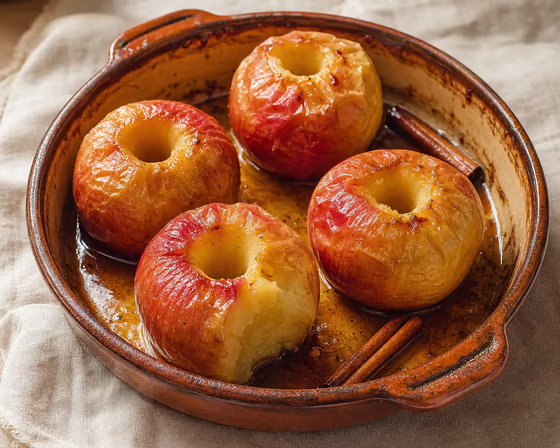
Portuguese Oven-Baked Apples
This published version keeps the apples whole and bakes them with sugar, water, cinnamon and orange. Lightly scoring the skin is part of the source method; this recipe assigns it no unverified technical function.
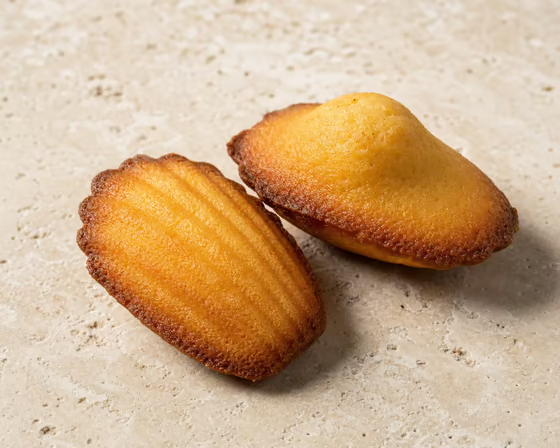
Vanilla and Honey Madalenas — Francisco Moreira's Version
Francisco Moreira publishes this shell-shaped version on 24Kitchen, flavoured with vanilla and honey. The batter rests for 24 hours before being piped into madeleine moulds and baked quickly.
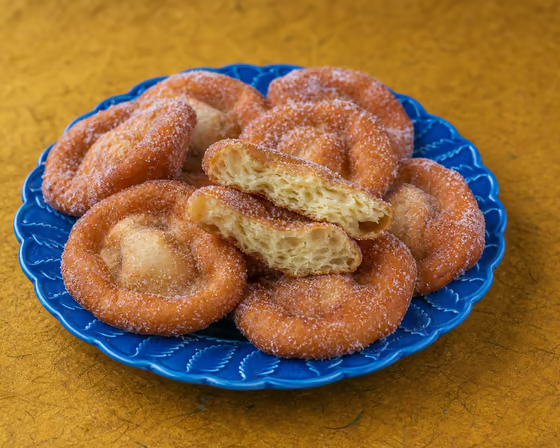
Azorean Malassadas
These malassadas follow the method recorded by DGADR: a soft dough of flour, eggs, sugar, milk and baker's yeast, thoroughly kneaded, proved, stretched by hand and fried. The domestic quantities come from an independent editorial formula; the Azorean identity, technique and Carnival association come from institutional documentation.
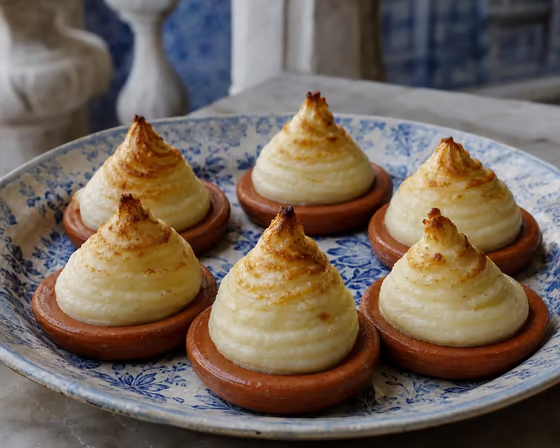
Coimbra Manjar Branco — Maria Figueiredo's Version
This formula from the Maria de Lourdes Modesto Archive, attributed to Maria Judith de Quadros Figueiredo, thickens rice flour with milk and sugar, scents it with orange-blossom water and browns portions on purpose-made earthenware discs. It is a local meatless version: it neither replaces nor erases the historical Portuguese manjar branco family that includes poultry.
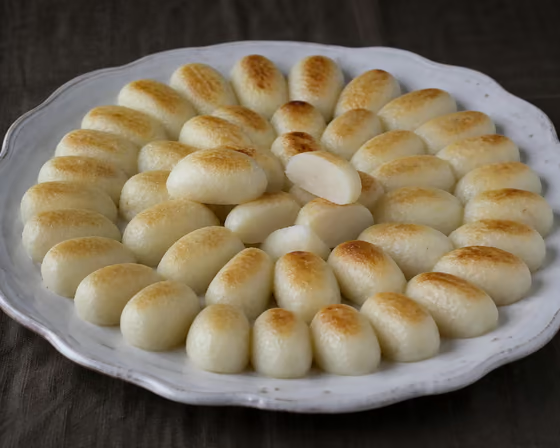
Portalegre Manjar Branco — Judite Cardoso Formula
Portalegre Municipal Council publishes this formula transmitted by confectioner Judite Cardoso through a programme preserving the Convent of Santa Clara legacy. Sugar, milk, rice flour and corn starch become a thick mixture, shaped with two spoons and browned as small cakes. DGADR separately confirms the identity, shape and hot-oven finish; neither source publishes a yield, temperature or duration.
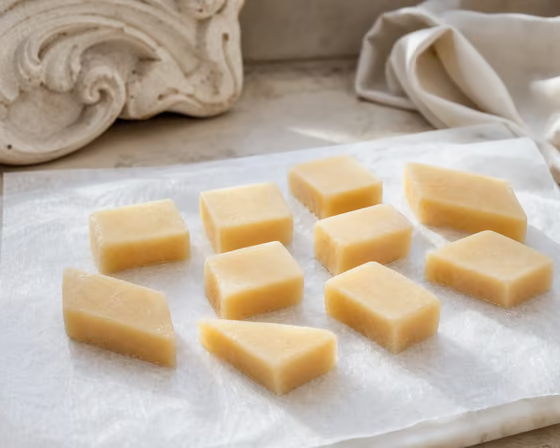
Odivelas White Quince Paste — Historic Formula in the PGI Specification
The official PGI specification transcribes the formula preserved in O Livro de Receitas da Última Freira de Odivelas: 480 g quince paste to 960 g sugar cooked to the high stage. This page executes that ratio within the current sequence also published in the specification—preparing the purée, syrup, mixing, setting and at least seven days of drying. Syrup water is shown as a transparent scaling of the PGI average of 250 ml per kilogram of sugar; it was not part of the historic transcription.
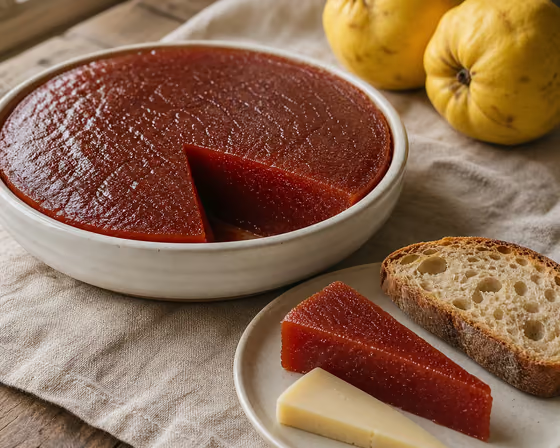
Traditional Portuguese Quince Paste
This traditional method turns ripe quinces and sugar into a fragrant, firm red paste. The final cooking needs attention: the marmelada is ready when it pulls away from the pan and holds the trail left by the spoon.
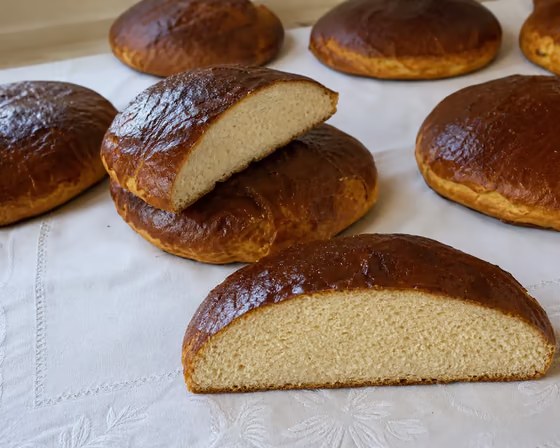
Azorean Massa Sovada Sweet Bread
A quantified Azorean formula for two loaves, using an overnight starter, an egg-, milk- and butter-rich dough, and three rising stages. The Azores Government stresses the wide diversity of recipes among islands and families; this version omits the sweet potato and cinnamon found in the Terceira formula recorded by DGADR.
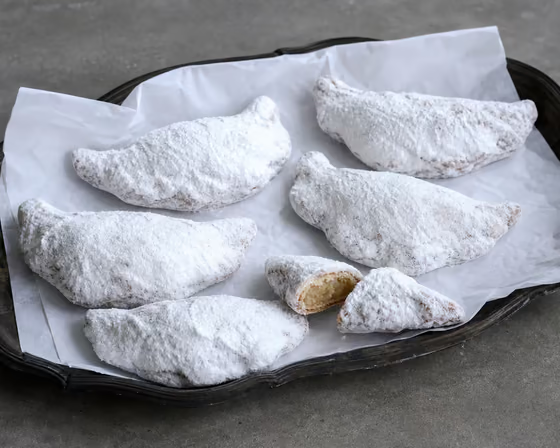
Meias-Luas de Viana — Published Municipal Formula
Viana do Castelo Municipality publishes this recipe attributed to A Boa Mesa do Alto Minho. Thin flour, butter and water pastry encloses an almond, yolk and cassava-flour filling before being cut into crescents and fried in butter. The source itself marks the quantities as approximate, and they remain so here.
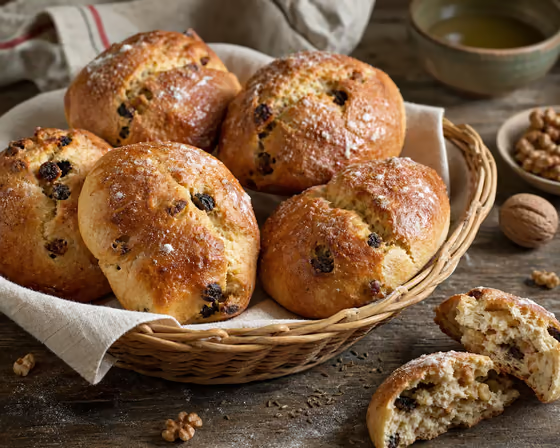
Leiria All Saints Merendeiras — Formula Attributed to Doces Regionais
Miluem reproduces this Leiria formula and attributes it to the former Doces Regionais website. Portugal Torrão Natal preserves a near-identical reproduction but is not independent confirmation. The recipe combines a yeasted dough of flour, eggs, olive oil, white and brown sugars, cinnamon, aniseed and lemon, with optional nuts or dried fruit. We publish it as a medium-confidence attributed version, leaving its yield, milk quantity and second-rise duration unresolved.
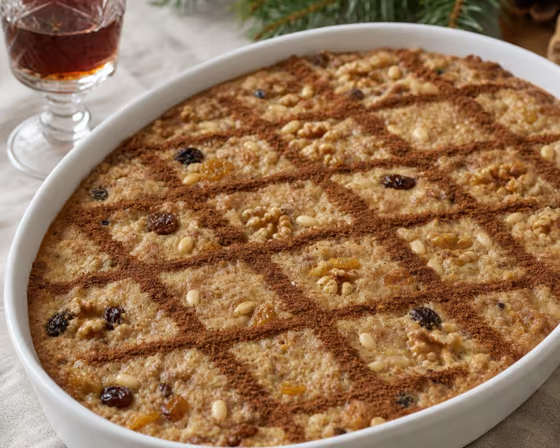
Douro Mexidos — Published Contemporary Formula
The formula titled “Mexidos do Douro” publishes quantities, four servings and a complete method; Peso da Régua's Seven Wonders entry confirms the regional name. It is a contemporary version with water, margarine and twelve yolks, not a universal formula for all mexidos or formigos. The page labels it 20 minutes, although its timed stages already total 20–25 minutes before the final yolk cooking.
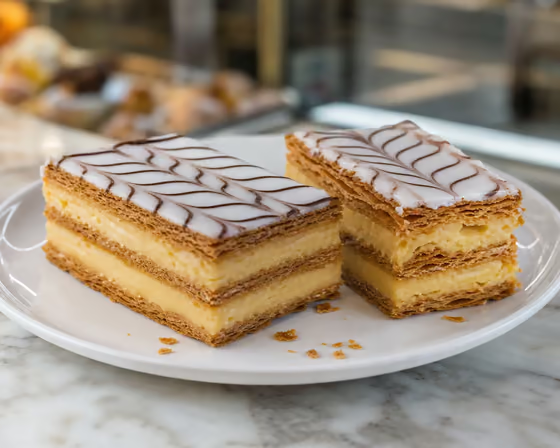
Napoleão Mil-folhas — Yämmi Version
Yämmi/Continente publishes this Napoleão version with puff pastry, sweet egg cream, dark chocolate and white-chocolate decoration. Its construction belongs to the Portuguese mil-folhas family documented by Fabrico Próprio; in Porto and the North, that source associates the name Napoleão with a chocolate finish. This is not a universal formula: fillings, finishes and names vary by region and producer.
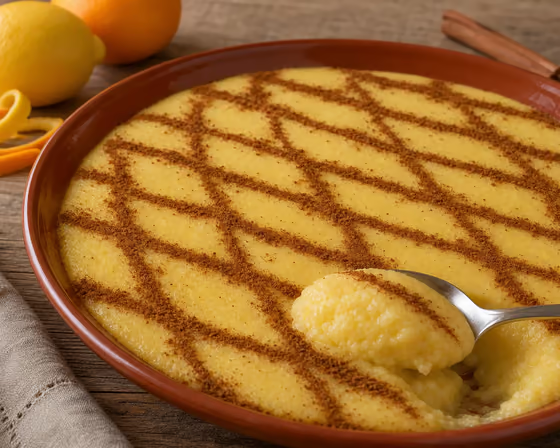
Milhos Doces — Gastronomic Weekends Formula
The official Gastronomic Weekends programme publishes this São João da Pesqueira version for ten people. Corn semolina first cooks in water with cinnamon, citrus peel and salt; milk is added gradually and brown sugar only at the end. Tourism sources repeat the same formula and preserve the dessert's association with Douro grain harvests.
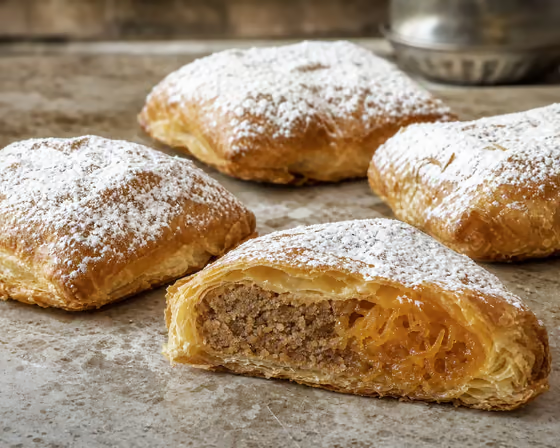
Mimo D’Ouro — Published Official Tourism Formula
The official 2019–2020 Gastronomic Weekends guide publishes all three components of Mimo D’Ouro: aromatic turnip preserve, walnut cake with Port and a laminated wrapper enclosing both. It is rare direct documentation of the Gondomar sweet, but includes no quantities, yield, thickness, timed rest or final bake.
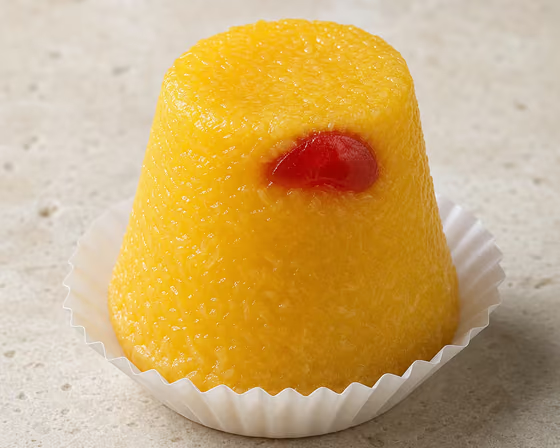
Vouzela Mimos — Technical Coconut-and-Yolk Formula
CFPSA's professional manual publishes this formula as Mimos de Vouzela. A second training source gives closely matching proportions, while Fabrico Próprio confirms the sweet's visual identity. The 114°C syrup and 250°C water bath are preserved exactly as published, with the missing time and yield made explicit.
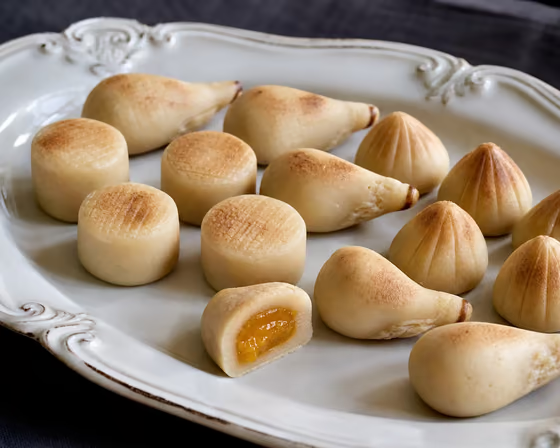
Portalegre Almond Miniatures — Municipal Queijinhos Base
Portalegre Municipal Council publishes the formula transmitted by Judite Cardoso under the name Queijinhos de Amêndoa and directs the confectioner to shape 'little cheeses and other forms' filled with sweet yolk cream. That instruction directly connects the same sugar-and-almond paste to Portalegre's miniature assortment without inventing separate formulas for cheeses, hams or chestnuts. Syrup water, yolk-cream quantity, yield and decorative technique are not published.
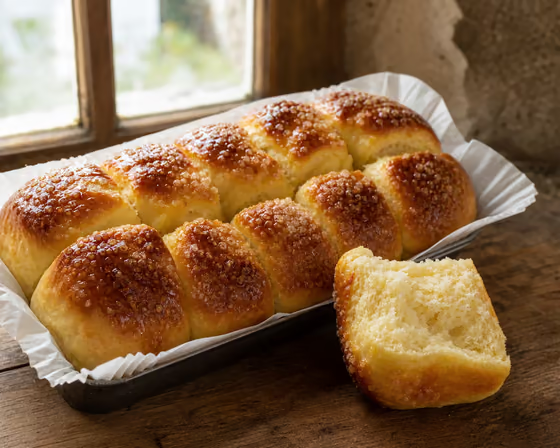
Moletinhos de São Vicente — Agros Published Formula
This formula published by Agros uses T55 flour, eggs, cream, milk, Port and fresh yeast. It includes the long maturation that distinguishes the process: a first rise of two to three hours, several hours of chilling after shaping and a final rise before baking. The Municipality and Visit Braga separately confirm the Moletinhos' connection with the Saint Vincent pilgrimage; the recipe source gives no yield.
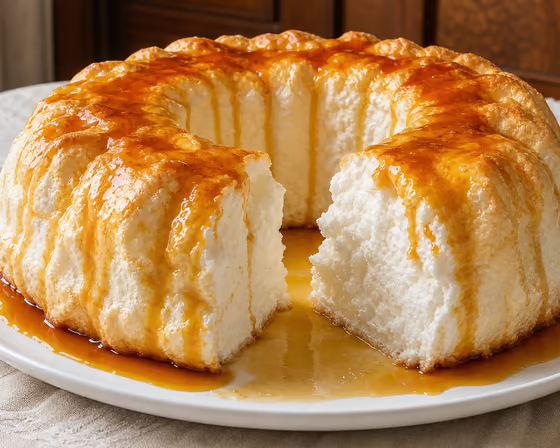
Molotof with Egg Cream and Almonds — Teleculinária Formula
Teleculinária publishes a formula using all twelve eggs: the whites form the pudding with 180 grams of sugar and caramel, while the yolks thicken with the other 170 grams of sugar and 200 millilitres of water for the topping. The page announces 55 minutes total but does not separate preparation from cooking or state a yield or mould size.
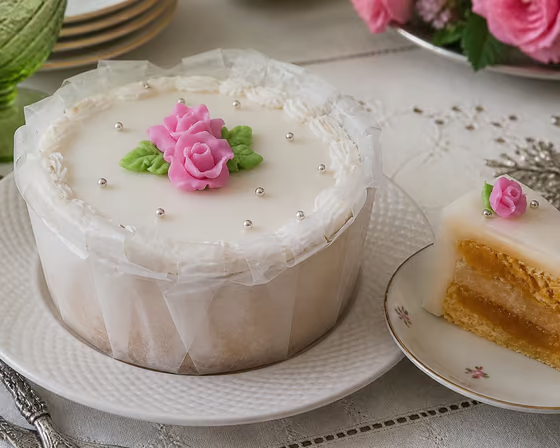
Morgado de Amêndoa — Algarve Gastronomes' Guild Version
This quantified formula is published by the Algarve Gastronomes' Guild and matches the structure documented by DGADR: a fine almond-paste ‘alcofa’ encloses gila preserve, egg threads and ovos moles. The source's gaps are retained: a ‘hot oven’ is not converted into an invented temperature, and neither preparation nor baking times are stated.
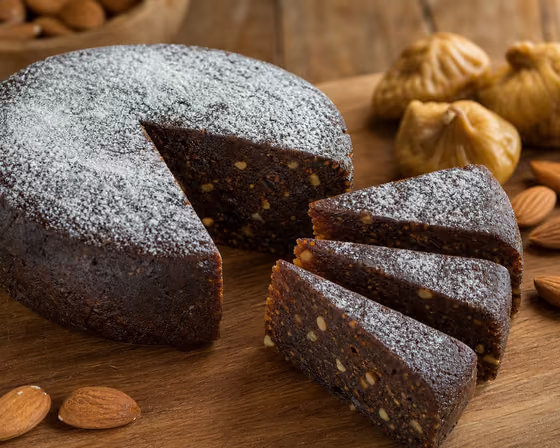
Morgado de Figo — Algarve Gastronomes' Guild Version
This quantified formula is published by the Algarve Gastronomes' Guild and matches DGADR's recorded traditional method: lightly toasted figs and almonds are bound with a syrup containing chocolate, cinnamon, fennel and lemon, then shaped. The assembled confection is not baked. Yield, total time and icing quantity remain unknown because the source does not state them.
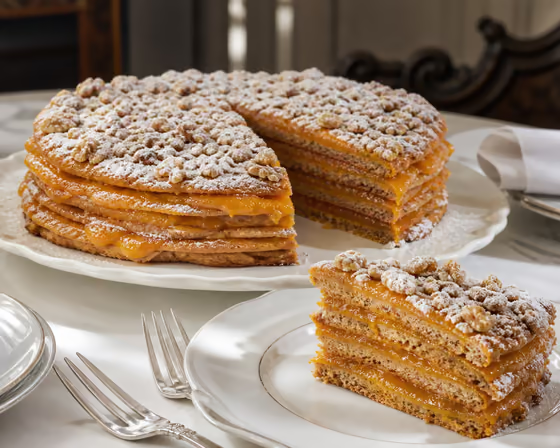
Morgado do Bussaco — Gastronomic Charter Formula
The Gastronomic Charter of the Coimbra Region publishes this layered version: honey-and-walnut meringue discs alternate with egg-yolk cream and finish with walnuts and icing sugar. The source itself notes that some production secrets remain; this page reproduces only the details made public.
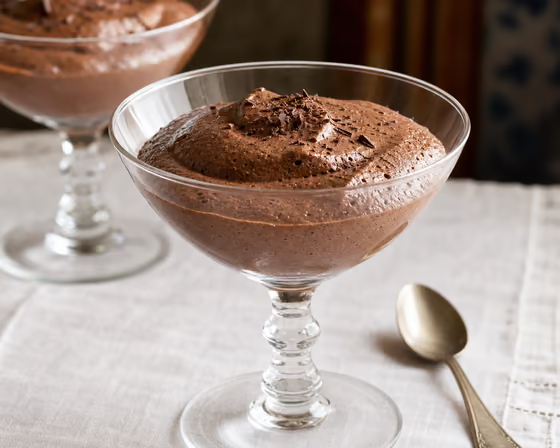
Portuguese-Style Chocolate Mousse
This chocolate mousse follows the home-style formula most familiar in Portugal: chocolate and butter, yolks and whipped whites, with neither cream nor gelatine. The key is to cool the chocolate slightly and fold in the whites without losing their air.
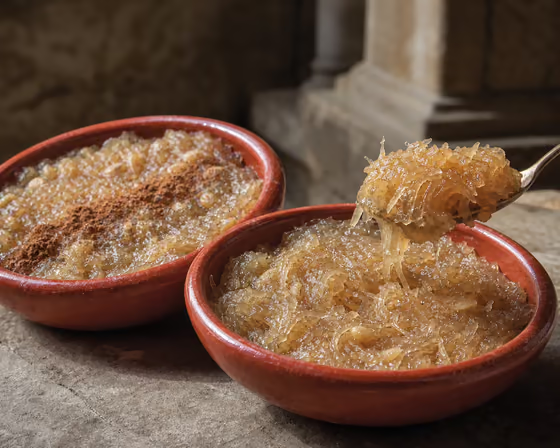
Semide Nabada — Published Historical Formula with Gaps
The Coimbra Region confirms Semide Nabada as an eggless sweet of turnip, sugar and almonds. The formula below comes from a local publication preserving older aromatics, but it omits the syrup water and does not define the spoonful of musk. This is a critical transcription for study and specialist testing, not a modernised domestic adaptation.
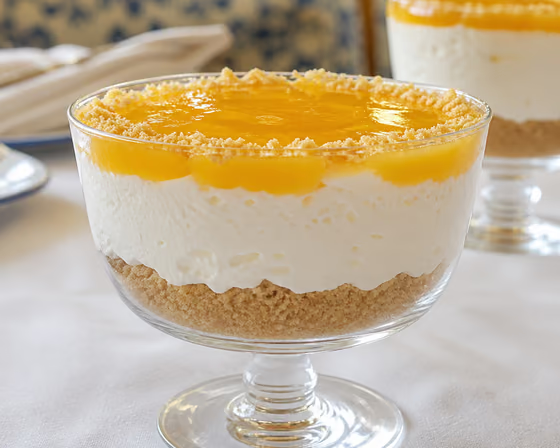
Traditional Portuguese Natas do Céu
Natas do Céu combines three textures: Maria biscuit, a very light cream-and-egg-white layer, and golden egg-yolk custard. Make the topping first so it can cool before assembly, and serve the dessert well chilled.
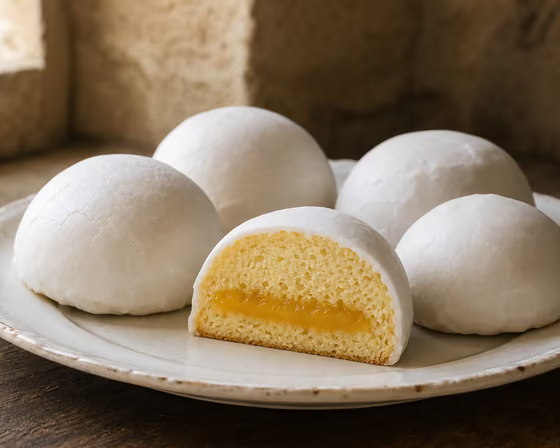
Penacova Snow Cakes
The 2025 regional cookbook documents Nevadas as small light cakes that are hollowed, filled with a yolk-and-crumb cream, and coated in two stages with egg white and sugar. The publication does not fix the amount of sugar for the sponge, filling or coating, so it remains ‘as needed’ in this faithful transcription.
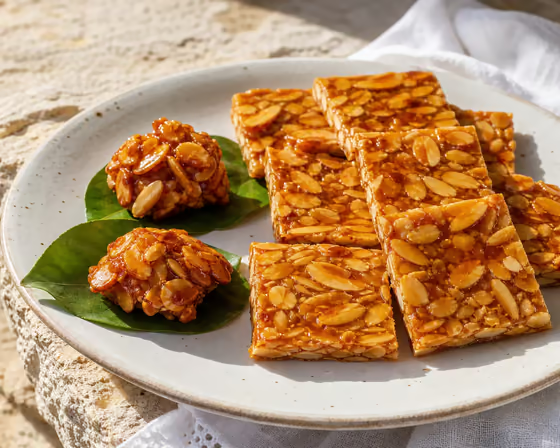
Algarve Almond-and-Honey Nógado
DGADR defines Algarve nógado with a simple, precise ratio: equal parts almonds and honey. This home-scale version preserves that relationship and the official method of boiling, browning, rolling thin and cutting while hot. Lemon leaves are an optional traditional presentation, not an ingredient in the mixture.
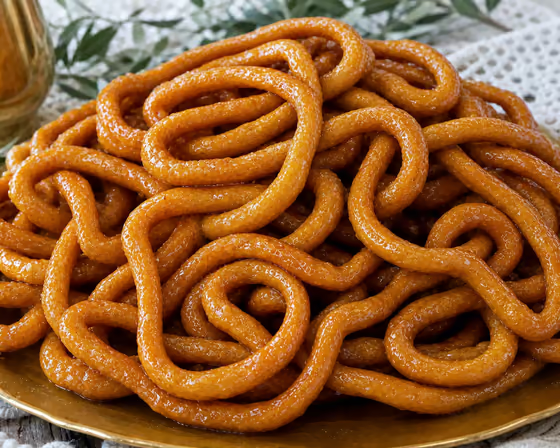
Vila Velha de Ródão Nógados — Regional Recipe
Turismo Centro de Portugal published this Vila Velha de Ródão formula: a yeasted dough rich in eggs, olive oil, orange, Port and aguardente is shaped into cords, fried and coated in honey syrup. The source’s imprecise cup, glass, small-glass and sugar-to-taste measures are retained without invented conversions.
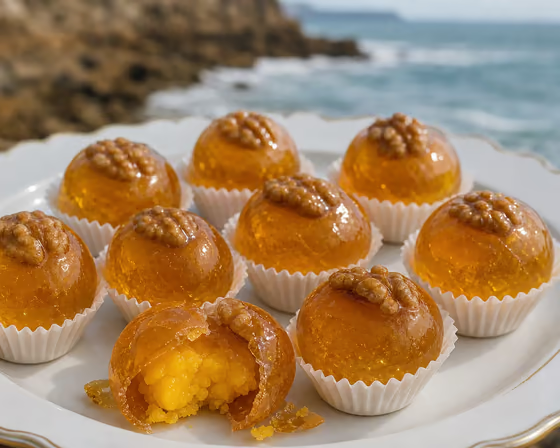
Nozes de Cascais — Cascais FoodLab Formula
Cascais FoodLab publishes this formula by chef Gilberto Costa, based on the work of Maria de Lourdes Modesto: a yolk-and-sugar paste shaped into balls, topped with half a walnut and dipped in a caramel glaze. The source says it serves four but gives neither a piece count nor preparation times.
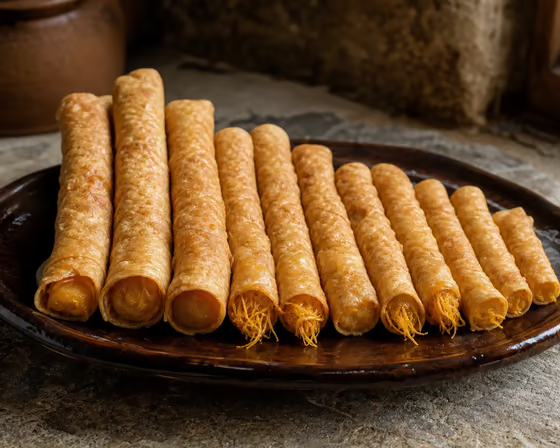
Órgão da Covilhã — Published Formula
This published formula builds Covilhã’s monumental sweet from fried tubes in six sizes, a yolk-and-almond filling and fios de ovos at their ends. The cookery source supplies quantities and assembly; independent regional sources confirm the identity and organ-like architecture.
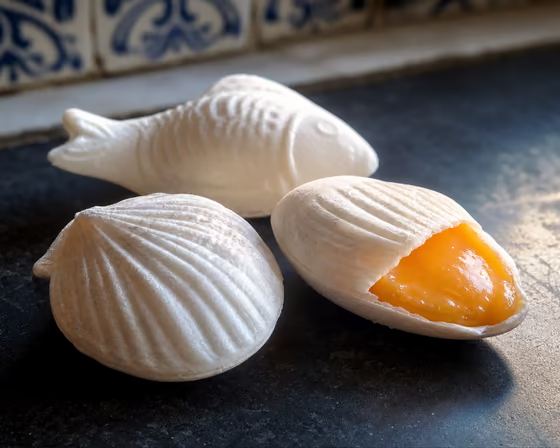
Ovos Moles
Ovos moles from Aveiro is a sweet, glossy cream made from just egg yolks, sugar and water, cooked slowly until thick. This is the spoonable version, served in a bowl without the wafer casing, perfect alongside coffee or as a filling for other convent sweets.
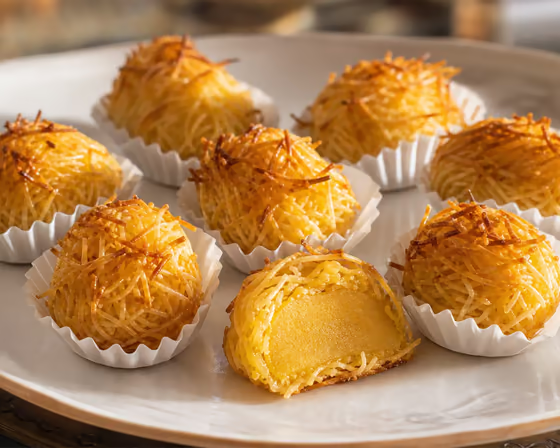
Palha de Abrantes — Published Home Version
Continente publishes this home version by Sónia and Diogo of The Healthy Sins: six wafer-paper circles are topped with yolk-and-almond cream, prepared egg threads and a light blowtorch finish. It is a reproducible six-serving formula, but uses a blowtorch instead of the traditionally documented very-hot-oven finish.
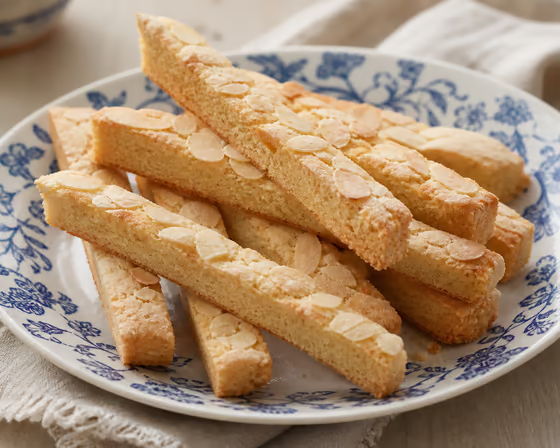
Cascais Almond Fingers — Receitas de Reis e Pescadores Version
Cascais FoodLab publishes this formula from Receitas de Reis e Pescadores, based on Laura Santos's A Mulher na Sala e na Cozinha. A thin lemon-and-almond cake is tray-baked, cooled, cut into fingers and returned to the oven until golden.
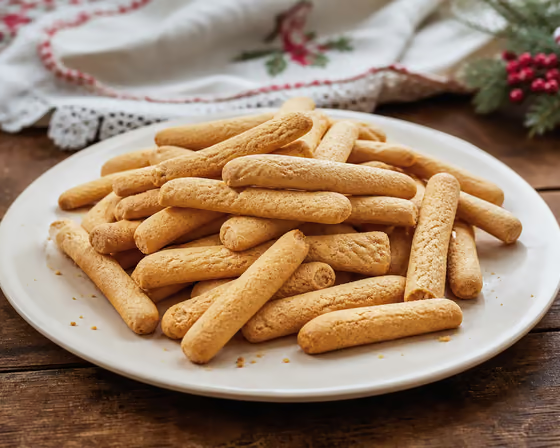
Madeira Beer Sticks — a Home Formula
A Biqueira publishes this formula taught to its author by a Madeiran neighbour: flour and baking powder receive melted butter and pale lager, the dough rests briefly, is rolled and cut into strips, coated in sugar and baked at 180°C. The page establishes the quantities and its accompanying video shows the complete method; Madeira Tourism separately confirms Beer Sticks in the island's sweet repertoire.
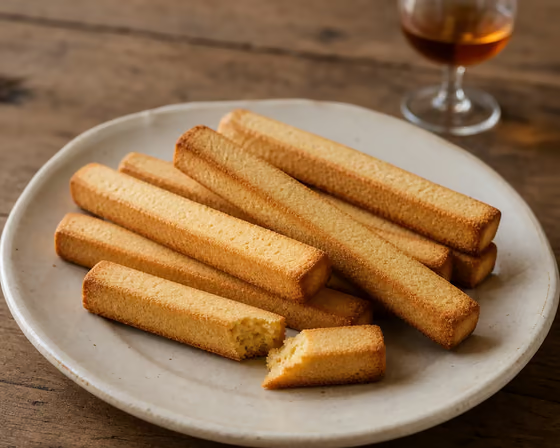
Palitos de Oeiras — Sandra Fernandes Morais Version
Food-heritage researcher Sandra Fernandes Morais publishes this version of the Oeiras biscuit, documented at least since the 1896 Ethnographic Exhibition and in early-20th-century cookbooks. The thin cake is baked, cooled, cut into strips and returned to the oven: that second bake turns the sheet into hard, crisp fingers.
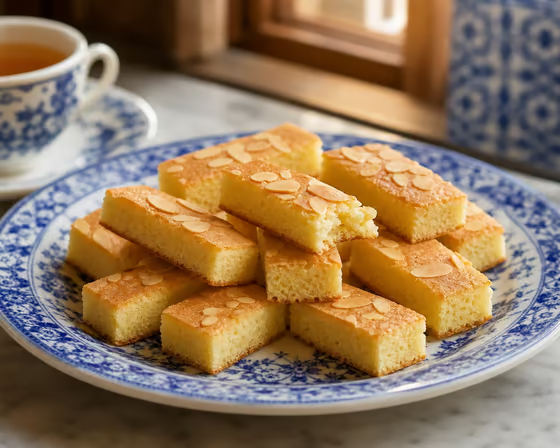
Palitos de Sabóia de Aveiro — Felicia Sampaio Formula
Felicia Sampaio publishes this quantitative egg, lemon and almond cake formula on Roteiro Gastronómico, cut into fingers after baking. University of Aveiro research documents two trips through the oven in the local tradition; Sampaio's recipe describes only one bake before cutting. The difference remains visible rather than merging incompatible sources.
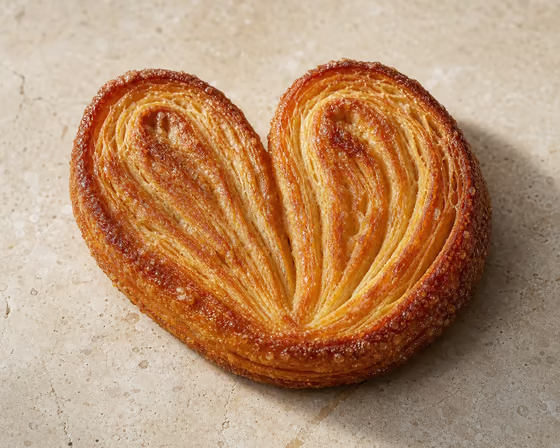
Plain Palmier — Published Home Version
Teleculinária publishes this 40-piece home version: ready-made puff pastry is sugared, rolled symmetrically, sliced 1 cm thick and brushed with aromatic syrup as it bakes. Cinnamon, cardamom, vanilla and lemon belong to this adaptation; in many Portuguese pastry shops the Plain Palmier identity is simply puff pastry and sugar.
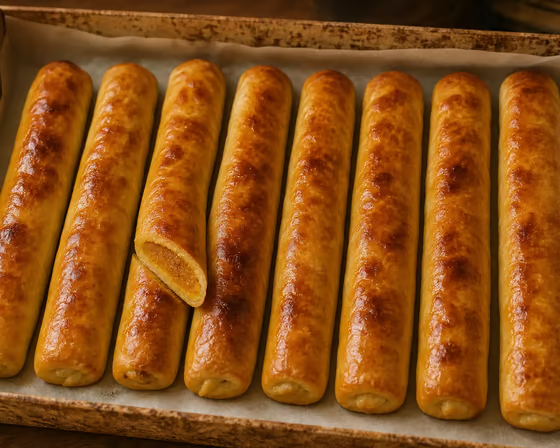
Pampilhos from Santarém — Published 20-Piece Formula
Receitas e Menus publishes this twenty-piece formula for Pampilhos: a rich margarine, sugar and egg pastry cut into rectangles, filled with ovos-moles and cinnamon, then rolled. The source quantifies the pastry and dimensions but publishes neither the amount or formula for the ovos-moles, the brushing yolk, nor oven temperature or time. Those gaps remain explicit.
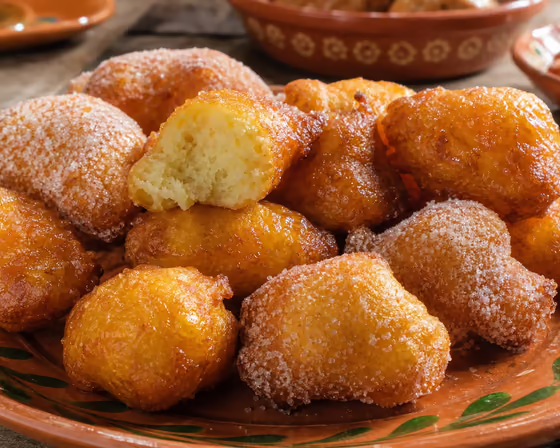
Vila Velha de Ródão Pantufas — Fratel Formula
A recipe expressly attributed to Vila Velha de Ródão publishes forty pantufas made from potato purée, eggs and a yeasted batter, spoon-fried and coated with honey or sugar. Municipal and regional documentation confirms the sweet’s link to Fratel; the ‘to taste’ measures and vague rising time are preserved.
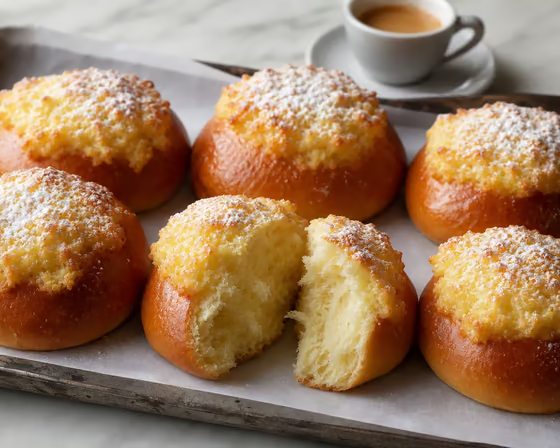
Pão de Deus — Continente Home Version
This is the home formula published by Continente: an enriched yeasted dough portioned into 80 g buns, with a coconut, sugar and egg topping. The Fabrico Próprio encyclopaedia confirms brioche, coconut paste and icing sugar as the three defining elements of Pão de Deus. The recipe is neither attributed to a historic bakery nor presented as Portugal's single definitive formula.
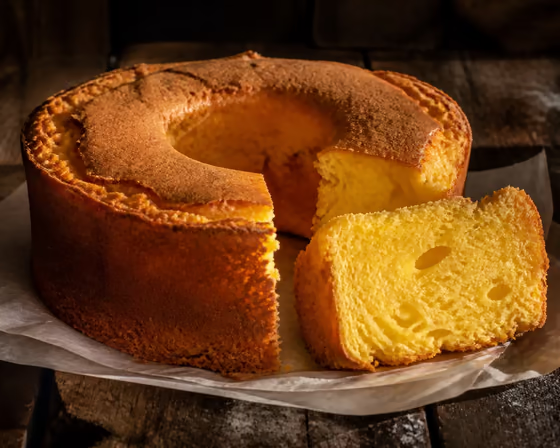
Pão de Ló
Pão de Ló is the oldest and simplest cake in Portuguese baking: just eggs, sugar and flour, with no raising agent. In the celebrated Ovar style, the trick is to pull it from the oven while the centre is still creamy and moist — the famous "pito" — held together by a thin, golden crust. Baked in a clay mould lined with paper, it is a festive sweet eaten with a spoon.
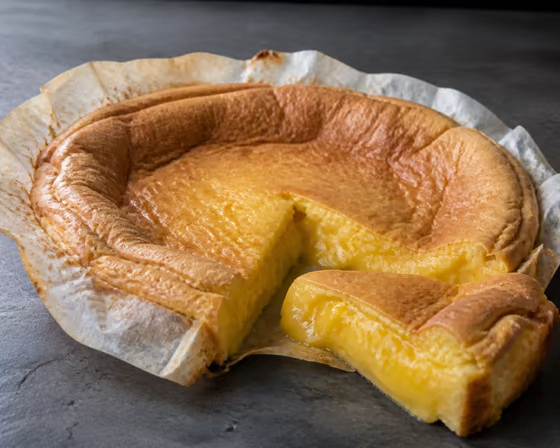
Pão de Ló de Alfeizerão — Branca de Neve / Revista Lusitana Version
This formula published by Branca de Neve, attributed to reader Alzira Alves and previously published in Revista Lusitana no. 20, uses two eggs, six yolks, 100 g sugar and 50 g flour. DGADR's product record includes wine brandy in the traditional identity; this formula does not, so we do not add it. DGADR records the association with Santa Maria de Cós Monastery as a belief, not a documentarily established origin. Its deliberately moist centre also creates a risk the published recipe does not discuss: ASAE warns that insufficiently cooked eggs may retain Salmonella.
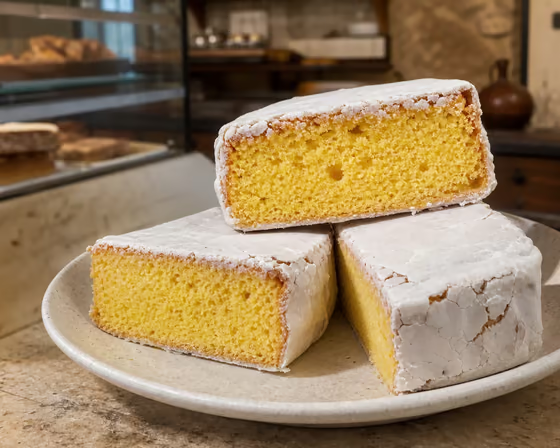
Pão de Ló de Arouca — Home-Style Round Version Published by Filomena Morais
This is the home-style round formula published by Filomena Morais and credited to A. Teixeira Pinto: fourteen eggs, sugar, flour and baking powder, slowly baked at 150°C. It does not reproduce Arouca's most distinctive commercial presentation as syrup-glazed slices, nor the simple eggs, sugar and flour list declared by a local producer. That distinction matters: this page documents one published home version and neither reveals nor claims the producers' formula.
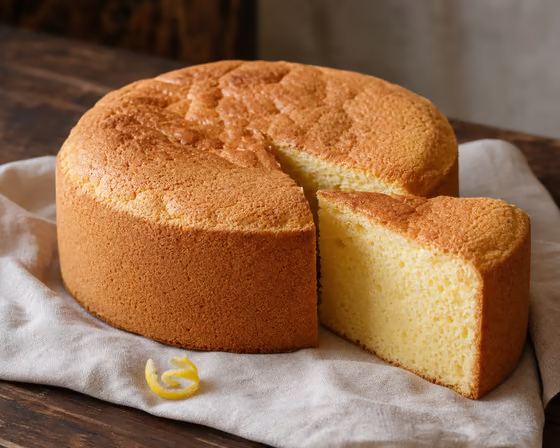
Pão de Ló de Guimarães — Teleculinária Version
This is the version published by Teleculinária: ten separated eggs, sugar, flour and the zest of one lemon, baked in a paper-lined ring tin. Guimarães Municipal Council and Turismo de Portugal independently confirm pão de ló and its lemon fragrance in the city's tradition. The recipe serves seven but gives no tin dimensions.
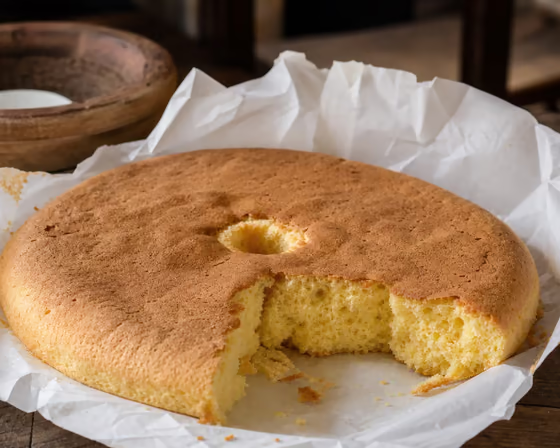
Pão de Ló de Margaride — Producer Cristina Teixeira Ribeiro's Formula
RTP published this formula identifying Cristina Teixeira Ribeiro as a producer of Pão de Ló de Margaride. Five eggs, twenty yolks, sugar and flour are beaten, placed by hand into a paper-lined earthenware mould and baked at 180°C. The geographical-indication record confirms the ingredient family, lined clay mould and traditional technique, although certified production remains governed by its specification.
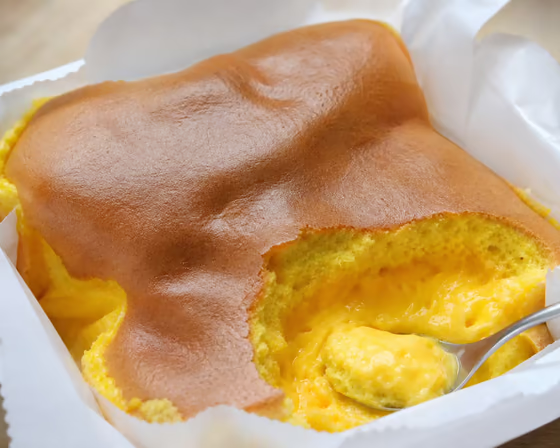
Pão de Ló de Ovar PGI — Maria de Lourdes Modesto Archive Formula
Maria de Lourdes Modesto's archive records this formula as authentic: eighteen yolks, five whites, sugar and flour, briefly baked to preserve the moist centre. The PGI name belongs to product made in the defined area under its specification; at home, this is an attributed reproduction, not a certified product.
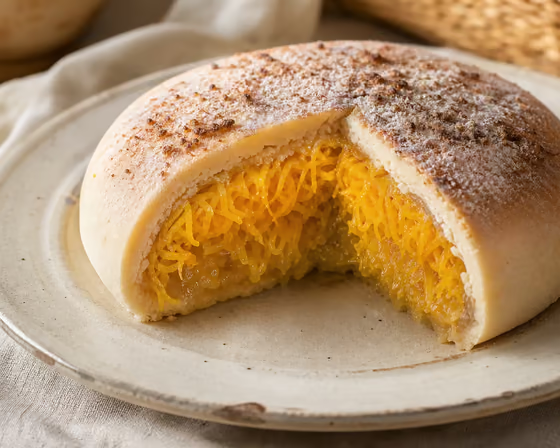
Pão de Rala
Pão de Rala is assembled like a small loaf: a cooked almond, sugar and yolk paste known as espécie encloses layers of egg threads, ovos moles and gila preserve. This domestic version reduces a published formula and uses ready-prepared filling components; its structure and method are those described by DGADR.
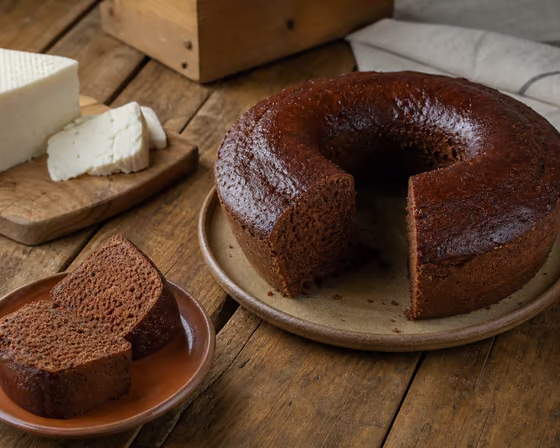
Pão Moreno — Mós Family Recipe
This formula was supplied by Maria Gentil Vaz, inherited through her family in Mós, Torre de Moncorvo, and collected by the municipality. DGADR publishes it as a specific expression of Moncorvo's Pão Moreno: a simple flour, egg, butter, sugar, cinnamon and aguardente cake, mixed by hand and baked in an olive-oil-greased mould. We retain the household measures and ‘very hot oven’ instruction exactly as recorded, without inventing volumes, temperature or duration.
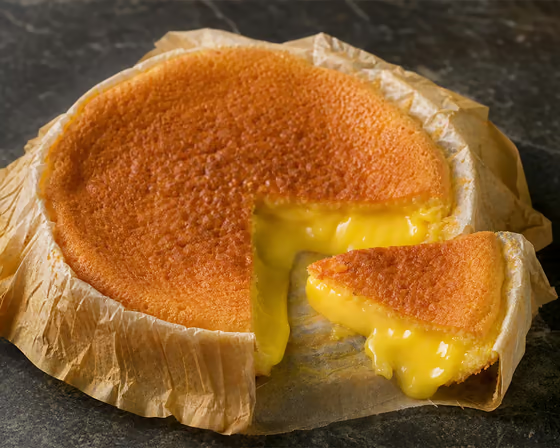
Pão-de-Ló de Alpiarça — Formula Published by Iguaria
This is the complete home formula published by Iguaria in 2013: fourteen yolks, four whites, sugar, flour and salt, beaten for a long time and baked only until the centre flows without remaining raw. Alpiarça Municipality and Turismo de Portugal corroborate the exceptionally soft local centre; the published total time is not converted into a baking duration that the source does not provide.
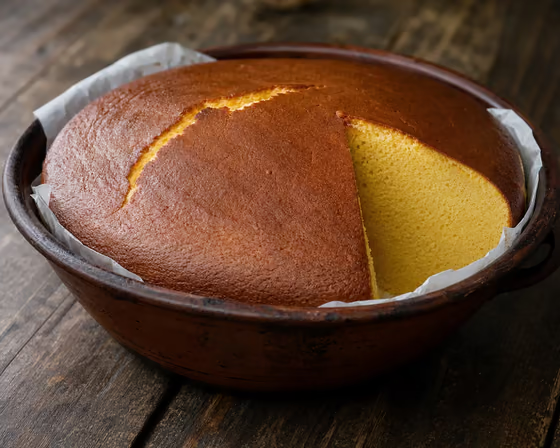
Pão-de-Ló de Fafe — Published Regional Formula
Recipes and Flavours of Rural Territories publishes this ten-yolk formula of sugar and flour and describes traditional baking in unglazed earthenware forms. The municipal guide confirms pão-de-ló and yolk sweets as historic Fafe specialities. Houses in Arões and Fornelos may preserve their own proportions.
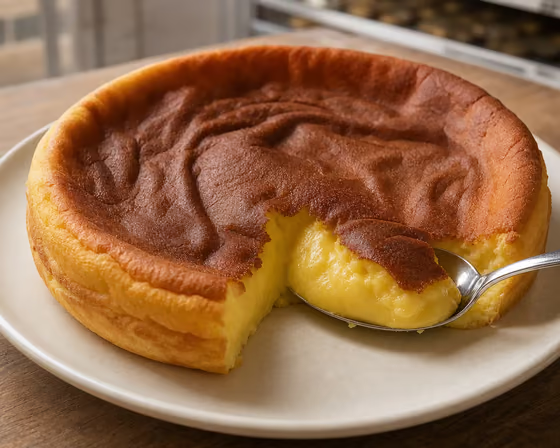
Pão-de-Ló de Rio Maior — Published Recipe
This recipe comes from the Ribatejo chapter of Recipes and Flavours of Rural Territories. DGADR confirms the Rio Maior identity, toasted exterior and creamy centre called ló. It is a public formula using four eggs and eight yolks; it is not presented as the local factory's commercial patent.
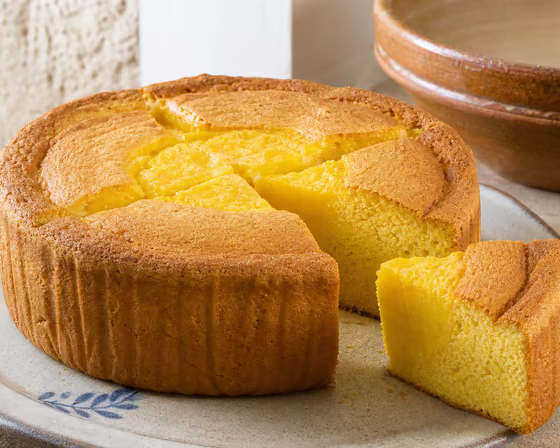
Pão-de-Ló de Soure — Published Traditional Formula
The Gastronomic Charter publishes the traditional 24-egg measure: six whole eggs and eighteen yolks beaten with sugar and a small amount of flour. A cross cut during baking creates the moister, yellower upper area that distinguishes Pão-de-Ló de Soure.
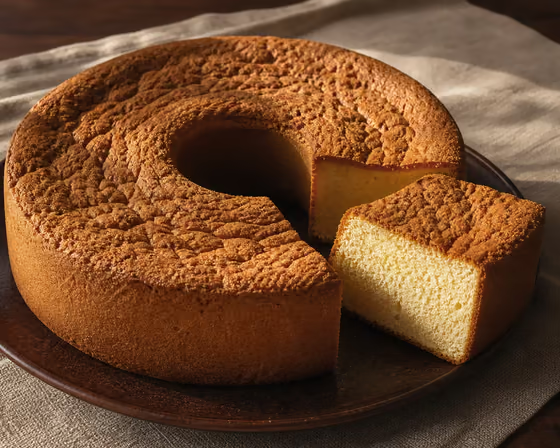
Pão-de-Ló de Tábua — Published Oral Formula
This formula was shared by one of Tábua municipality's oral storytellers and published in the Gastronomic Charter of the Coimbra Region. The cake contains only eggs, sugar and flour; whipped whites and slow folding create its texture without raising agent.
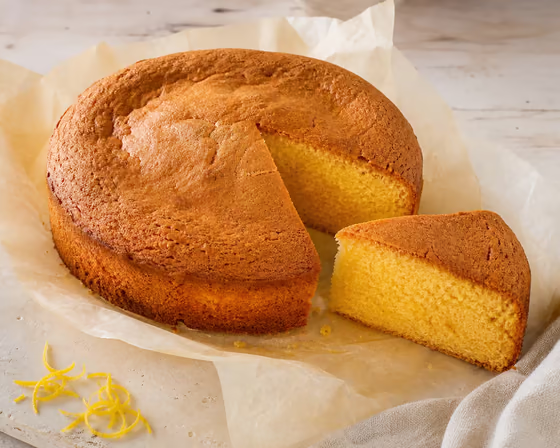
Porto Santo Sponge Cake — Sugar-Cane Spirit Formula
Gastronomia Madeira publishes this as a traditional Madeiran formula and identifies it directly with Porto Santo: eight eggs plus seven additional yolks, equal weights of sugar and flour, lemon and sugar-cane spirit, baked in a round tin lined with parchment. The list distinguishes ‘8 eggs’ from ‘7 yolks’, while the method directs beating yolks and whites separately; the steps below make that reading explicit without changing the published proportions.
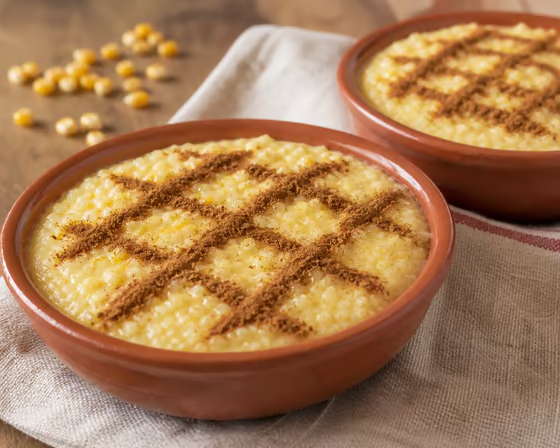
Beira Baixa Sweet Corn Porridge
A quantified five-serving formula: carefully washed cracked corn, first cooked in water and then finished with milk, sugar and cinnamon. The Terras da Beira Baixa heritage portal confirms the technique and strong Alcains connection but publishes a communal version with olive oil and only four spoonfuls of sugar; the two are not silently merged.
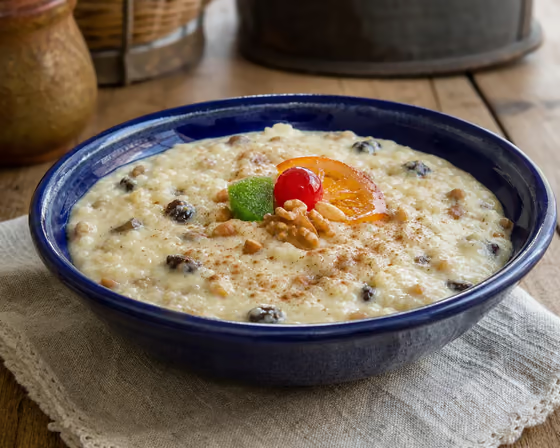
Rei's Corn Porridge — Version Published by Lídia Ribeiro
Evasões magazine published this version by pastry chef Lídia Ribeiro of Rei dos Leitões. It combines white-corn-semolina porridge with separately prepared crystallised fruit. The 2019 candidacy lists a richer composition; the two sources document house versions and have not been merged.
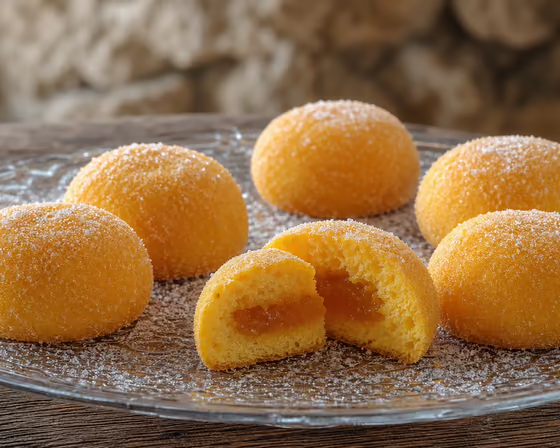
Papos de Anjo — Yämmi Syrup-Soaked Version
This is the nationwide syrup-soaked version published by Yämmi/Continente in the book É Doce, É Yämmi: beaten yolks and eggs baked in a bain-marie, then soaked in a sugar, cinnamon and lemon syrup. It is not the Mirandela variant described in the pastry record, which omits the syrup bath and uses fruit preserve. Turismo de Portugal confirms papos de anjo as a Portuguese convent-sweet family and an Amarante speciality; the formula reproduced here remains explicitly attributed to Yämmi.
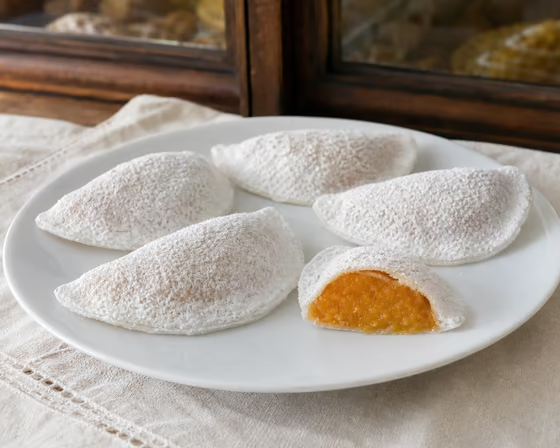
Amarante Papos de Anjo — Historical Formula Transcribed in the IGP Dossier
The IGP application dossier transcribes this quantitative sugar, almond and 24-yolk formula from Doçaria dos Conventos de Portugal, wrapped in wafer rounds and soaked with thread-stage syrup. The dossier also documents the current protected process but does not publish producers' commercial proportions; this page presents only the identified historical formula.
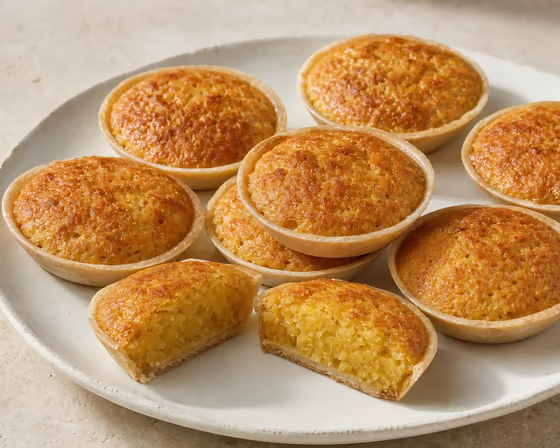
Pastéis de Águeda — Published Version
This published version makes a thin shell with flour, water, butter and lard and a filling of ten yolks, one white, sugar and almonds. The municipal guide confirms the pastry's identity and Águeda tradition but does not publish a formula, so the quantities and method below explicitly follow the cited practical version and are not attributed to the municipality.
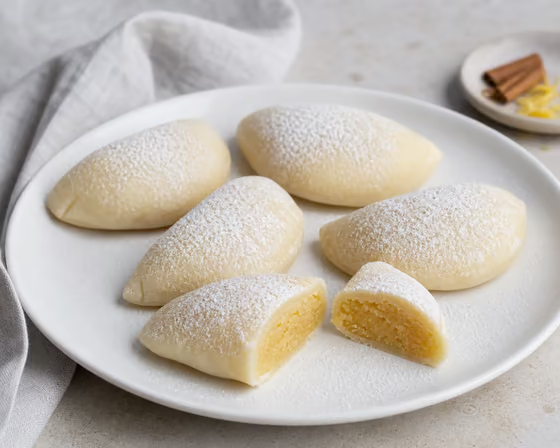
Graciosa Rice Pastries — Critical Cross-Source Reconstruction
Cookidoo's public page supplies yield, times and complete quantities but does not expose the method without service access. A separate traditional publication supplies the two-day sequence but no ingredient quantities. The record below places the first source's quantities alongside the second source's method because their composition closely agrees; they have not been proven to be the same recipe. Gaps in baking, tray preparation and finishing remain explicit.
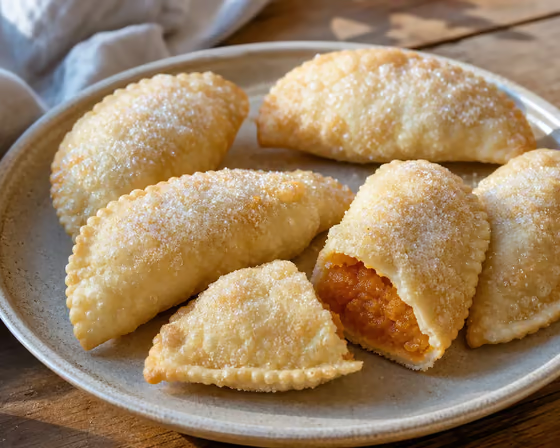
Aljezur Sweet-Potato Pasties — Reproduced Municipal Recipe
A food publication reproduces a recipe it attributes to Aljezur Municipality’s website: dough worked with egg, butter, lard, orange and medronho aguardente encloses a dry sweet-potato, sugar, lemon and cinnamon filling before frying. The filling’s sweet-potato and sugar quantities were not published and remain explicitly open.
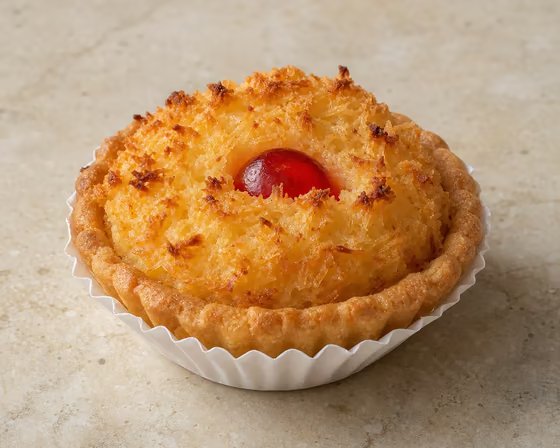
Puff-Pastry Pastéis de Coco — Tradições Doces Formula
This formula published by Tradições Doces corresponds to the puff-pastry variant of Pastel de Coco. The coconut filling is scalded with lemon-and-cinnamon syrup, rests before receiving the eggs and is piped into a ridged mound topped with half a cherry.
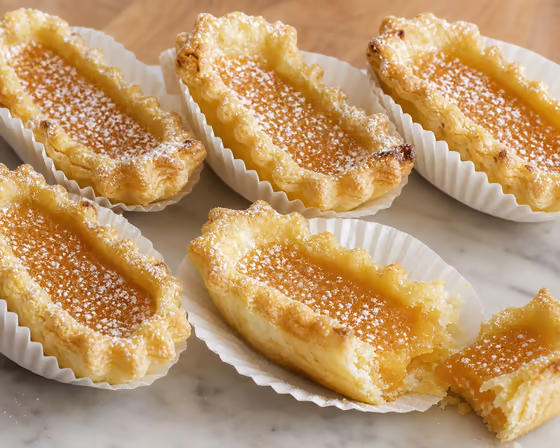
Viseu Bean Pastries — Henrique Sá Pessoa's Home Version
This is the home interpretation published by chef Henrique Sá Pessoa on 24Kitchen. It uses bought puff pastry, encloses the filling in small turnovers and adds lemon, butter and walnuts. It is not the production method documented by DGADR for Pastel de Feijão de Viseu, which describes margarine-laminated pastry, a scalloped oval form and an open filling. Keeping those records separate prevents a television adaptation from being presented as the city's exclusive or official formula.
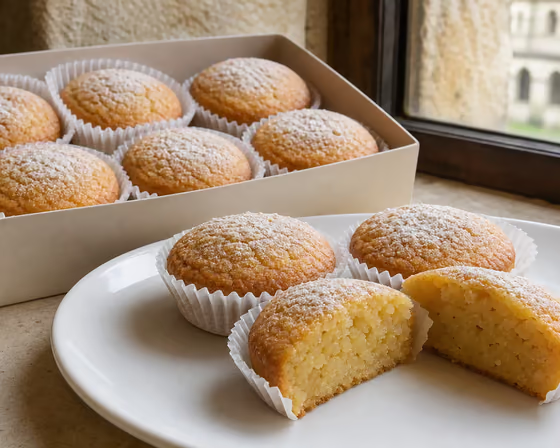
Lorvão Pastries
The formula in the 2025 regional cookbook combines almonds, yolks and whites with syrup at the traditional espadana stage, lemon and cinnamon. We preserve the instruction ‘moderate oven’ without a numerical conversion and assign neither a yield nor a duration absent from the source.
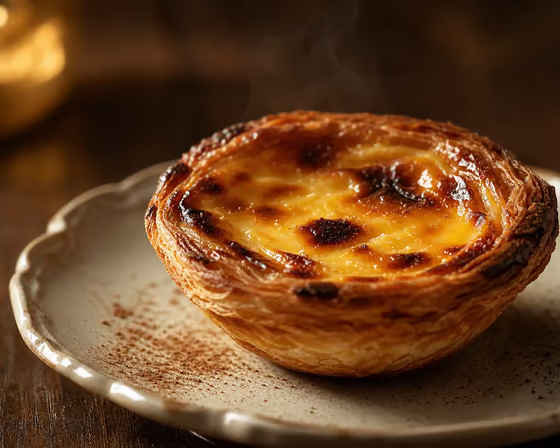
Pastéis de Nata
The pastel de nata is the star of Portugal's convent pastry tradition: a crisp puff-pastry shell holding a silky, egg-yolk custard scorched on top. The secret lies in two points: a sugar syrup taken to the thread stage and a very hot oven, which bakes the tart in just a few minutes and gives it those signature blistered spots.
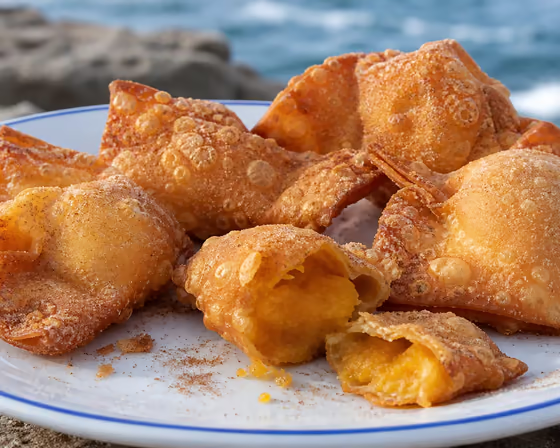
Pastéis de Peniche — Formula Published by Sofia Alves
This formula, published following research by Sofia Alves, gives full proportions for the tender pastry and almond-yolk filling. Its text ends after the dough rest; shaping as half-moons or squares, gentle frying and coating are documented separately by food historian Virgílio Nogueiro Gomes. The page is not presented as any particular confectioner’s secret formula.
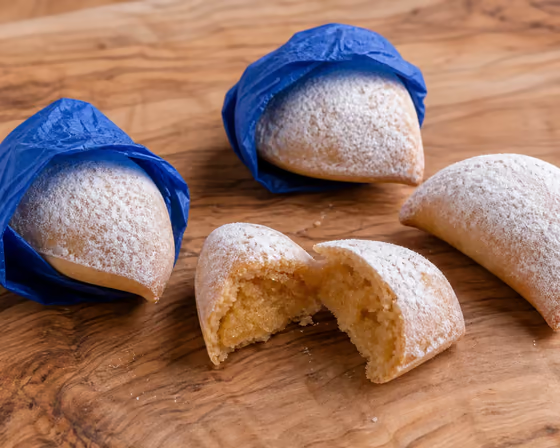
Coimbra Pastéis de Santa Clara — Published Version
This published version uses thin flour, butter and water pastry, an almond-and-yolk filling and oven baking. It matches the DGADR record for the Coimbra pastry; it should not be confused with modern fried versions or with Beja's distinct Pastéis de Santa Clara.
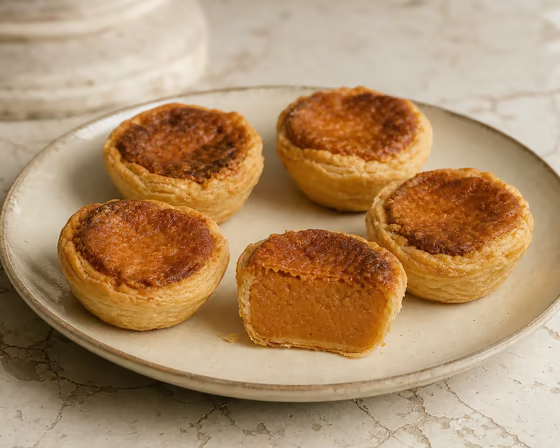
Convent of Esperança Bacon-Fat Pastries — Published Formula
The culinary formula published by LifeCooler matches the structure recorded by DGADR for Beja's Pastéis de Toucinho from the Convent of Esperança: desalinated bacon fat, almond, yolks, sugar and cinnamon inside small cases of butter-folded pastry. The source fixes the central weights and the pastry's three turns but publishes neither the volume of its glass of water nor a yield, oven temperature or baking time.
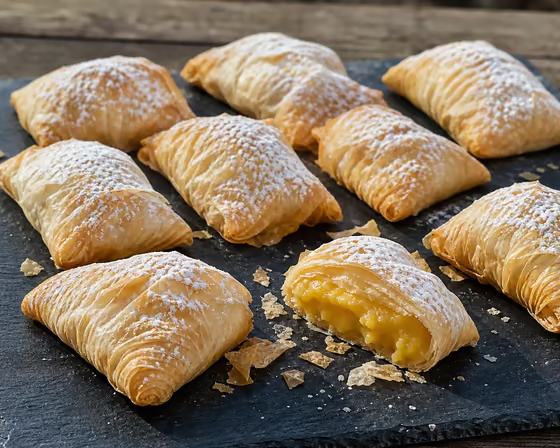
Pastéis de Vouzela — Published Regional Hand-Stretched-Dough Formula
This formula published by the Minha Terra Federation makes the dough with 1 kg / 2.2 lb flour and 500 ml / 16.9 fl oz water, rests it and stretches it over a cotton cloth until paper-thin. Each pastry receives six sheets and an egg-yolk filling made with 500 g / 17.6 oz sugar per 12 yolks. It is a published regional formula, not any producer's commercial recipe. The PTPT product record lists butter among Pastel de Vouzela's ingredients, but this formula neither quantifies nor uses butter; we preserve that discrepancy explicitly.
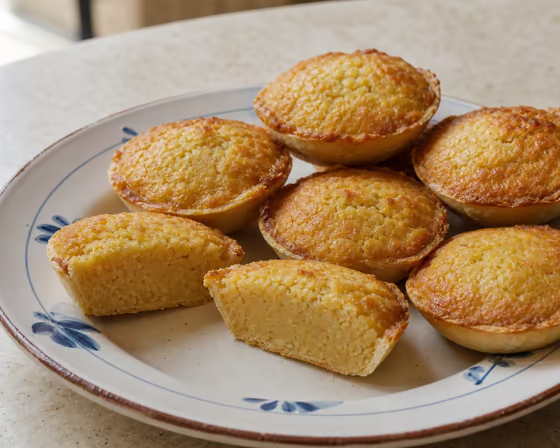
Pastel de Feijão — home interpretation
This home recipe follows the official identity of Pastel de Feijão de Torres Vedras: a thin flour-and-butter shell filled with white beans, almonds, sugar and egg yolks. The filling quantities and method are based on a formula published by Lifecooler; the pastry has been adjusted to the ingredients permitted by the product specification. Made outside the delimited area and its control system, it is not a certified PGI product.
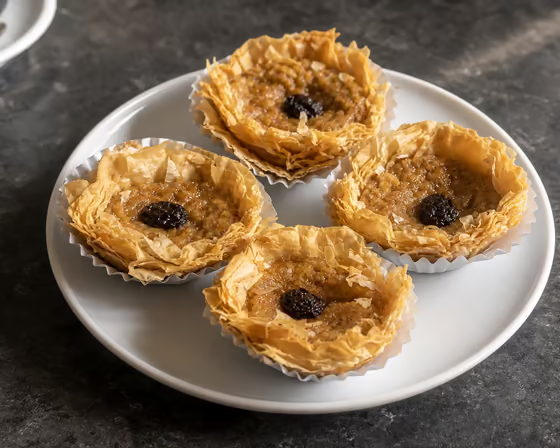
Moscatel Pastry — Nuno Gil Formula Published in Palmela
Palmela Municipal Council and the Setúbal Peninsula Wine Route Association published this formula by Nuno Gil: a flour-and-water pastry filled with syrup, almonds, eggs and Moscatel de Setúbal, then baked quickly in a hot oven. The collection gives no yield, mould size, pastry thickness or resting time.
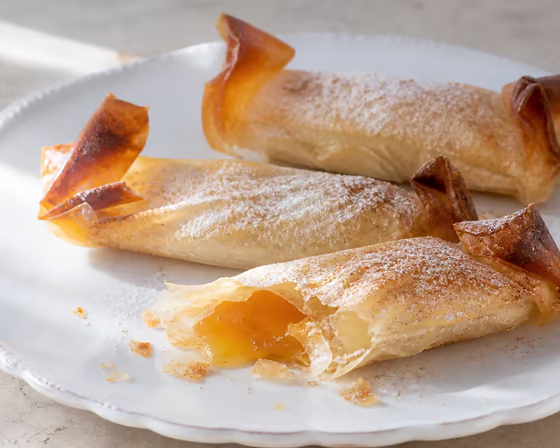
Pastel de Tentúgal PGI — Specification Method
This technical record summarises the protected method, not an imitation made with bought filo pastry. The flour-and-water dough must be worked and stretched to 0.06–0.15 mm; the filling combines egg with sugar syrup at pearl stage. The specification does not publish a domestic formula by weight, and the PGI name applies only to product made within the delimited area under the specification's remaining rules.
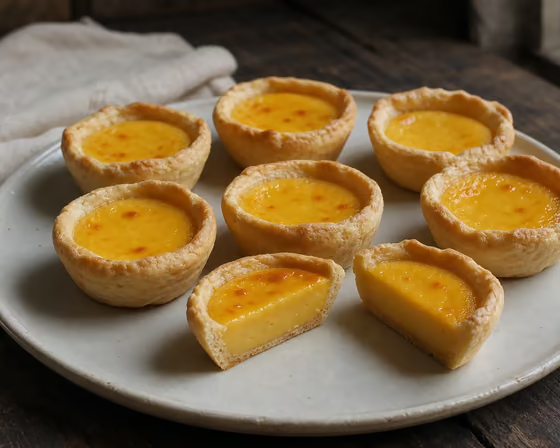
Little Egg Pastries of Marvila — Formula Printed in 1788
This page preserves the recipe printed on pages 174–175 of Arte nova, e curiosa, para conserveiros, confeiteiros e copeiros (1788), together with its internal reference to “ovos grossos” on pages 73–74. It does not convert ambiguous historical units, turn “ten réis” of cinnamon into a weight, or invent temperature, duration or yield.
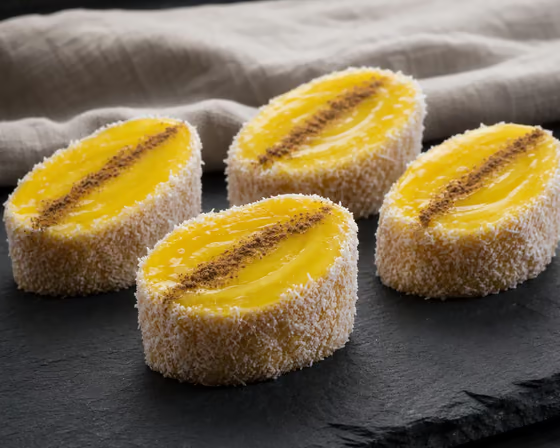
Pata de Veado — Tradições Doces' Modern Rolled Version
Tradições Doces distinguishes three generations of this pastry-counter cake: an older brioche form, a version made from thick sponge slices and the modern rolled version published here. The thin sponge roll is filled with sweet egg-yolk cream or pastry cream, soaked, coated with coconut and cut diagonally to suggest a hoof.
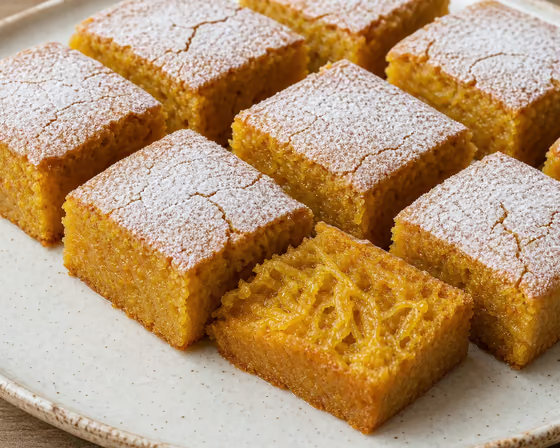
Patudos de Alpiarça — Published Municipal Recipe
This formula is credited to Alpiarça Municipal Council in “Recipes and Flavours of Rural Territories”. The printed version clarifies that the ingredient sometimes read as ‘pitina’ is pectin. It is a published municipal formula, not a claim of a universal household recipe.
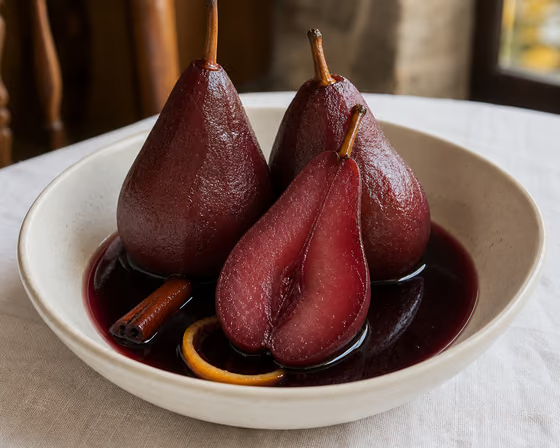
Portuguese Red-Wine Poached Pears
This reproduction follows Teleculinária's published formula: four whole pears, peeled but with their stems retained, gently cooked in red wine scented with sugar, cinnamon, cloves, star anise and orange.
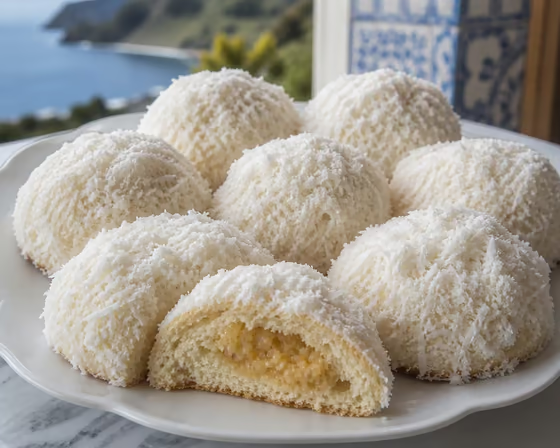
São Miguel Picos or Nevões — Leonor Santos's Formula
ByAçores publishes this formula by Leonor Santos for Picos, also called Nevões or Picos dos Açores: a sweet yeast dough is rolled, folded around two layers of coconut-and-yolk filling, cut, glazed and baked at 160°C. The page establishes the method and almost all quantities; the original video supplies the condensed-milk tin weight. It is an attributed household version, not a single official formula for every São Miguel bakery.
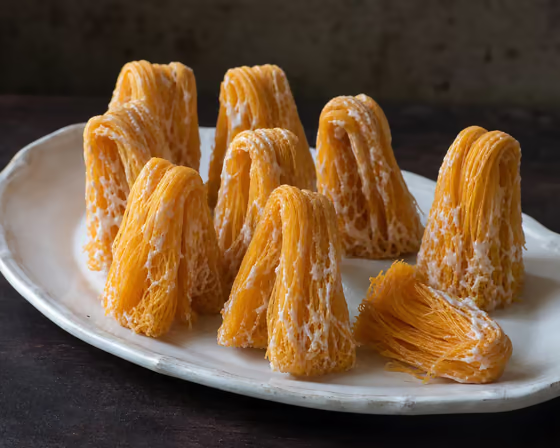
Pingos de Tocha — MLM Archive Formula
The Portuguese Association of Professional Cooks' MLM archive attributes this formula to Julieta Martins Gil Conde Corvelo: threads made with 15 yolks, one white and more syrup than usual are hung in groups on a greased wire and fixed with that same syrup taken to a very strong stage. The archive assumes that the reader already knows fios de ovos; the opening steps below separately identify the funnel technique published by a companion source.
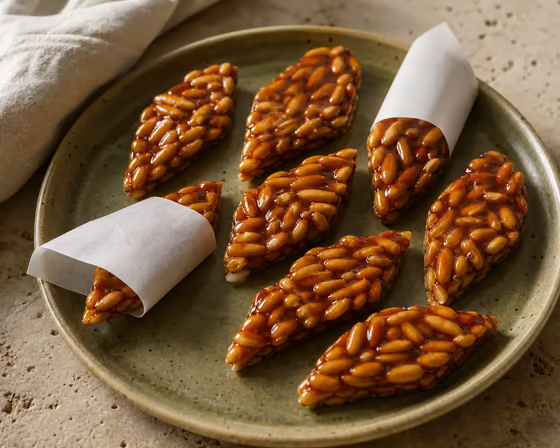
Pinhoadas — Municipal Formula from Cozinha Tradicional Portuguesa (1998)
Alcácer do Sal municipality publishes this formula, attributed to Cozinha Tradicional Portuguesa (Editorial Verbo, 1998), using one cup of honey to two cups of pine nuts. The transcription calls for working the sweet on a cold damp surface, cutting it into strips and serving it on wafer or orange leaves. It specifies no cup capacity, yield, time, temperature or objective test for the honey to ‘reach a slight stage’; those limits remain visible.
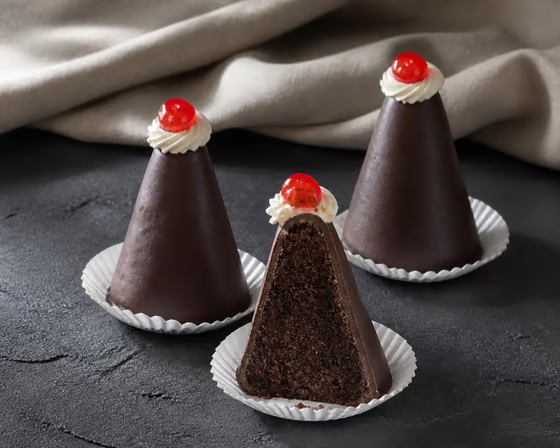
Pirâmides de Chocolate — Rita Nascimento's Formula
This is Rita Nascimento's zero-waste formula published by Bertrand: unfilled cakes gradually bound with syrup, cocoa and apricot jam, scented with fennel and cinnamon, shaped into cones and coated in chocolate. A published home test of the same recipe reports about eight pieces, but the author's version reproduced by Bertrand gives no yield. It also stops short of the chantilly-and-cherry finish documented for the pastry-counter archetype.
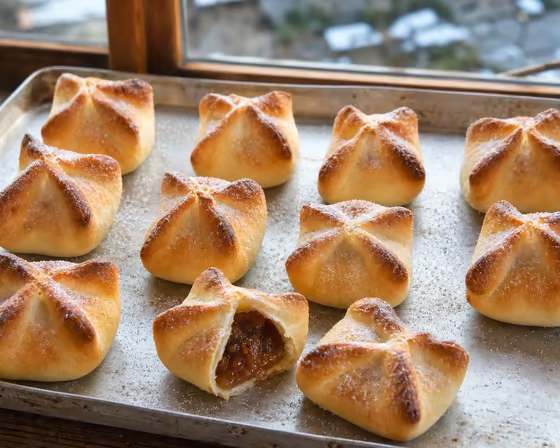
Vila Real Pitos de Santa Luzia
A published formula for the four-cornered parcels celebrated in Vila Real on 13 December: a flour, lard and milk dough filled with pumpkin jam thickened with egg yolks and baked. The culinary source incorrectly labels the region as Alentejo; DGADR and Vila Real Municipality unequivocally document the product and custom in Vila Real, Trás-os-Montes.
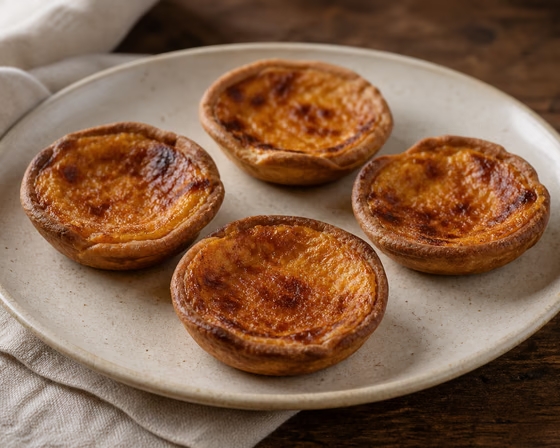
Chanfana Confraternity Poiaritos
The formula published by the Chanfana confraternity combines handmade thin pastry with a yolk-and-bread syrup scented with cinnamon and lemon and accompanied by honey, sultanas and liqueur. The source neither quantifies the dough water nor explains when to add the honey and liqueur; those gaps remain explicit.
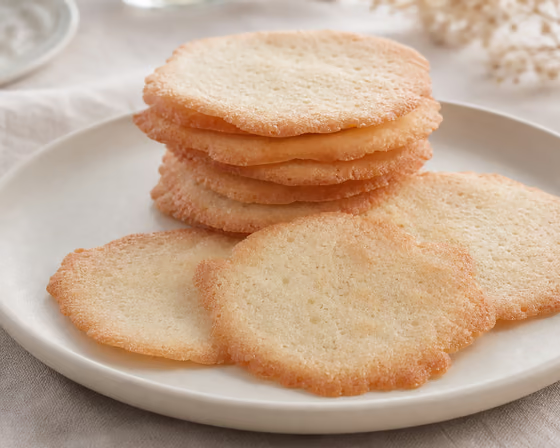
Pratas de Cascais — Receitas de Reis e Pescadores Version
Cascais FoodLab publishes this formula from Receitas de Reis e Pescadores, based on Alfredo Saramago and Maria Odette Cortes Valente. Whipped whites lighten a butter-rich mixture of sugar and flour, spread into very thin portions to make quick, crisp biscuits.
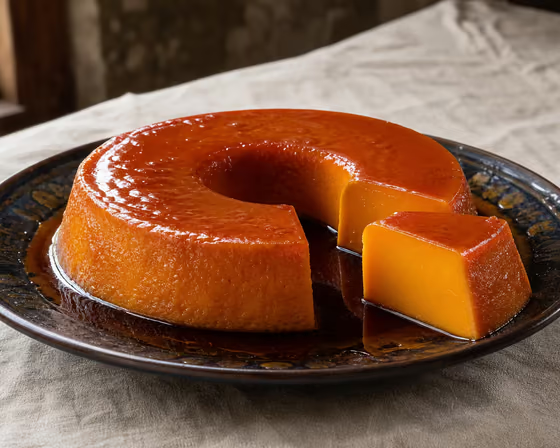
Abbot of Priscos Pudding
This Braga pudding combines yolks and syrup with Port wine and a small amount of pork fat that gives it its celebrated silkiness. The recipe below halves Turismo de Portugal's published formula; it remains a large, intensely rich pudding intended for thin slices.
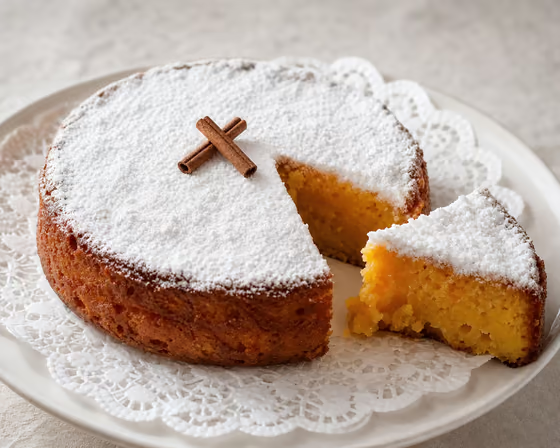
Pudim Conde da Praia — Formula Published by Cozinha Açoriana
This is the Terceira formula published by Cozinha Açoriana in 2019: 250 g / 8.8 oz potato, 1 kg / 2.2 lb sugar, 24 yolks, one white and 250 g / 8.8 oz Azorean butter, with cinnamon and lemon. The mixture twice reaches the stage at which a spoon exposes the pan before baking for about 35 minutes. The source gives no yield, water-cup capacity, mould size or stovetop durations; all those limits remain explicit.
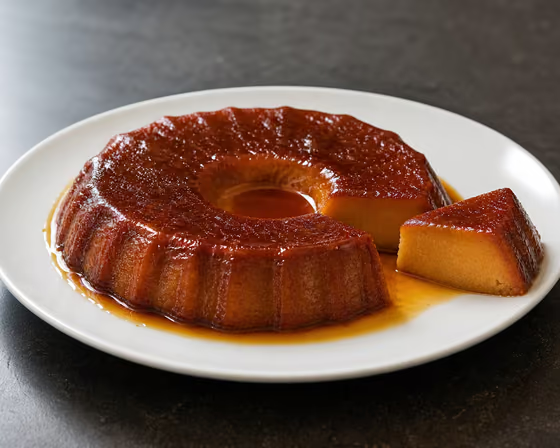
Countess Aldara Pudding — Winning Formula Published in 2022
The official 2022 Gastronomic Weekends guide publishes this formula for the pudding created by Confeitaria Algarve and winner of the 2018 municipal competition. It quantifies yolks, syrup, honey, cinnamon and Singeverga liqueur but leaves caramel, yield and temperature unstated.
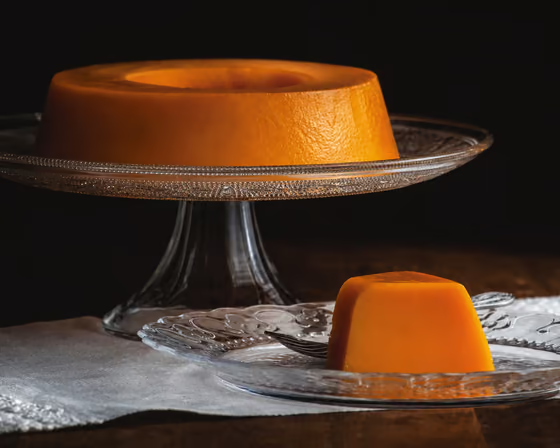
Coimbra Poor Clares' Pudding
The regional recipe published in 2025 combines sixteen yolks with sugar syrup at the weak pasta stage, butter and orange peel. It bakes in a water bath in a ring mould and is served cold; the source states no temperature, baking time, syrup-water quantity or yield.
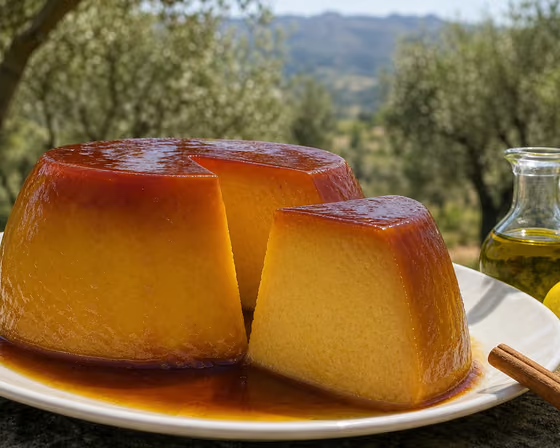
Mirandela Olive Oil Pudding — Published Version
This published version combines a cinnamon-and-lemon syrup with twelve yolks, six whole eggs and 150 ml olive oil, then bakes it in a water bath. Another documented Mirandela formula uses milk, condensed milk, Port and a different olive-oil proportion; it is a genuine variation and has not been silently merged into this recipe.
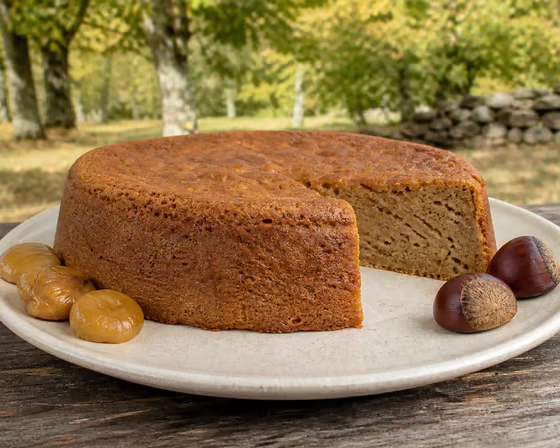
Bragança Chestnut Pudding
The formula published by Bragança municipality turns 500 g of sieved chestnut purée into a baked pudding without caramel, enriched with yolks, whipped whites, cinnamon and vinho fino branco. The source gives no temperature, baking time or serving count, so those details honestly remain open.
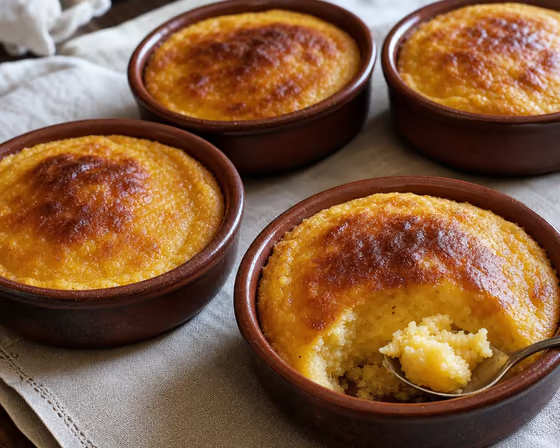
Cassava-Flour Pudding — Formula Printed in O Radical in 1913
The newspaper O Radical printed this formula on 5 July 1913. It proves Portuguese circulation of the name and preparation but mentions neither Peso da Régua nor Port. This page preserves it as a comparative historical recipe, not a reconstruction of the modern Douro commercial version.
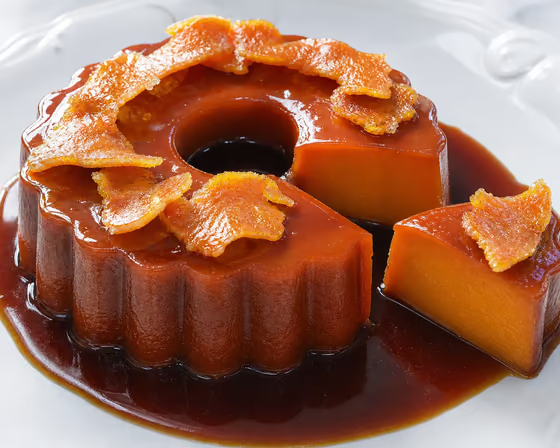
Amares Orange Pudding — Gastronomic Weekends Formula
The official Gastronomic Weekends programme has consistently published this three-ingredient formula, plus caramel for the mould, since at least 2014–2015. The teacup is left unconverted, and the source gives no yield, temperature or bain-marie duration.
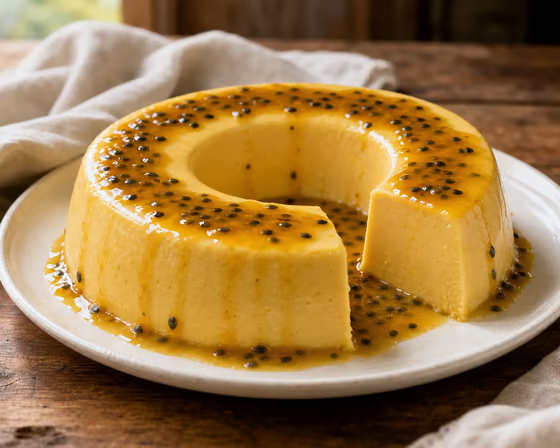
Madeira Passion Fruit Pudding
The baked version published by Teleculinária: natural passion fruit pulp with seeds, eggs and Madeira wine in a caramel-lined mould. The regional tourism authority includes the pudding among the island's traditional sweets; this is one documented formula, not an official specification or the cold-set gelatine version.
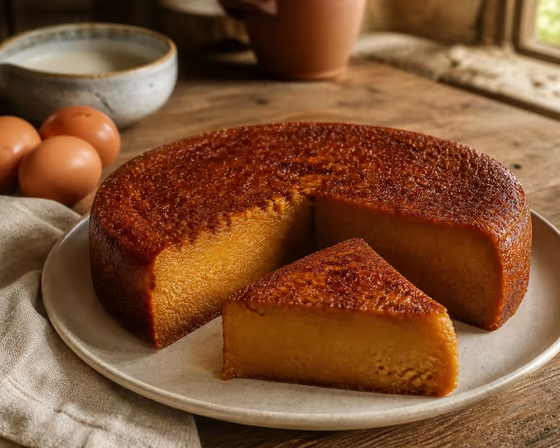
Monchique Honey Pudding
The formula attributed to cooks from Monchique beats whole eggs with honey, olive oil, sugar, lemon and cinnamon, then bakes the mixture in a lard-greased mould. The same composition appears in a CCDR Algarve traditional-recipe publication. We preserve the historical instruction ‘moderate oven’ without assigning a temperature the sources do not provide.
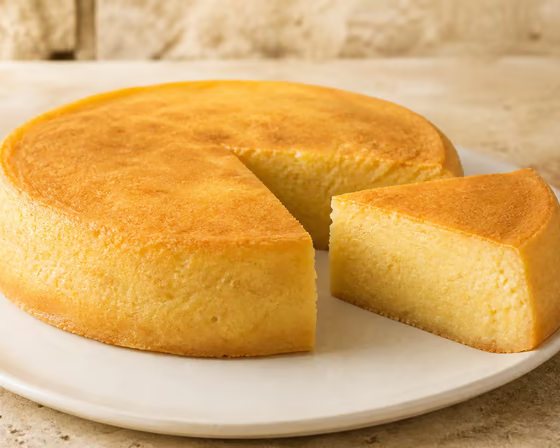
Valongo Bread Pudding — Regueifa Formula Published by the Confraternity
Valongo's Bread, Regueifa and Biscuit Confraternity publishes this family recipe, and Porto Metropolitan Area reproduces the formula. DGADR confirms both regueifa and the Valongo identity. The non-standard soup cups, two tin moulds and wood-fired oven are preserved without inventing volumes, temperature or duration.
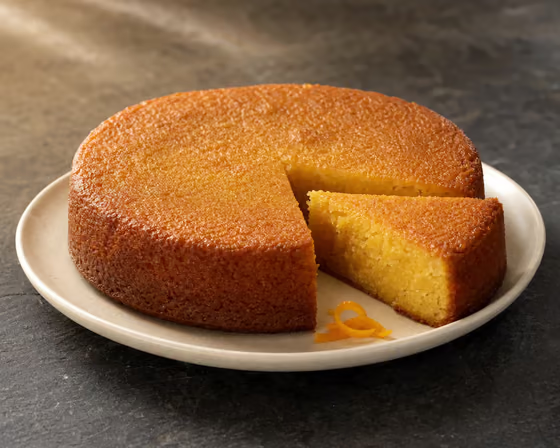
Pudim de Vila de Rei — Manuscript Formula
This recipe follows the transcription of a handwritten formula titled ‘Pudim de Villa Rei’. It preserves the original structure—unrefined sugar, almonds, ten yolks, two whole eggs and citrus zest—and uses the modern conversions for arrátel and quarta supplied by the transcription itself. The reference to the Convent of Graça belongs to the manuscript annotation and does not by itself prove a convent origin.
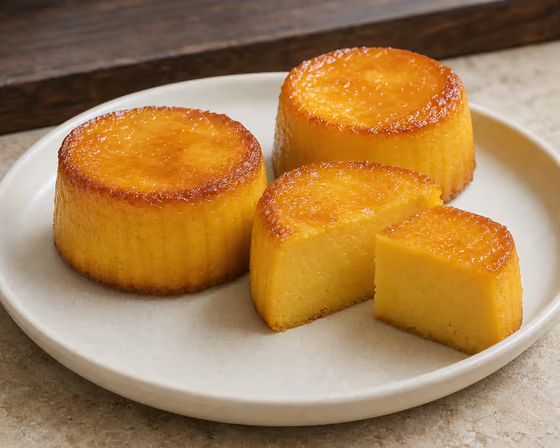
Alcobaça Friars’ Pudding — Formula Attributed to Maria de Lourdes Modesto
This is the formula attributed to Maria de Lourdes Modesto’s Cozinha Tradicional Portuguesa and reproduced by Globo/GNT: 1 kg / 2.2 lb sugar, 250 ml / 8.5 fl oz water, four whole eggs and fourteen yolks, with butter only for greasing. The source gives no mould size, yield, oven temperature or preparation duration. A study of Alcobaça production documents a different commercial version using margarine, a higher sugar stage, 150°C / 300°F and 50 minutes; those parameters have not been merged into this recipe.
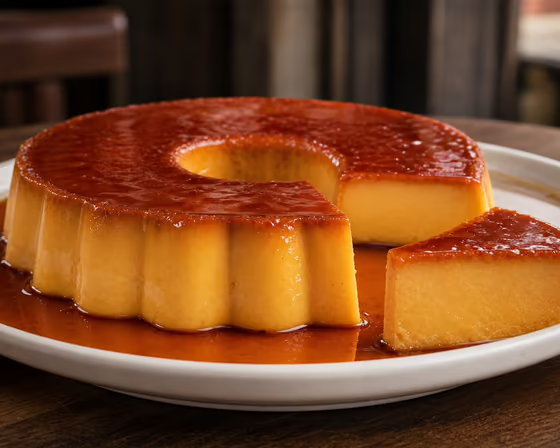
Traditional Pudim Flan — Teleculinária Formula
This is the complete formula published by Teleculinária: twelve eggs, one litre of milk, 450 grams of sugar divided among the caramel, milk and egg mixture, plus cornflour and lemon. The source card lists two hours total, one hour preparation and one hour cooking, while the oven direction specifies 45 minutes at 180°C / 356°F; that discrepancy remains explicit.
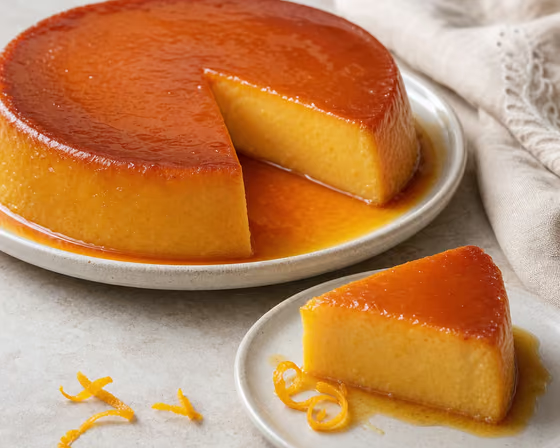
Ponte de Lima Franciscan Pudding — Contemporary Tangerine Formula
Alto Minho's institutional guide confirms “Franciscan or tangerine pudding” among Ponte de Lima's specialities. The formula comes from a contemporary page that attributes it to the Convent of Saint Francis; because the guide does not establish that provenance, it is published as an attributed version rather than a convent transcription.
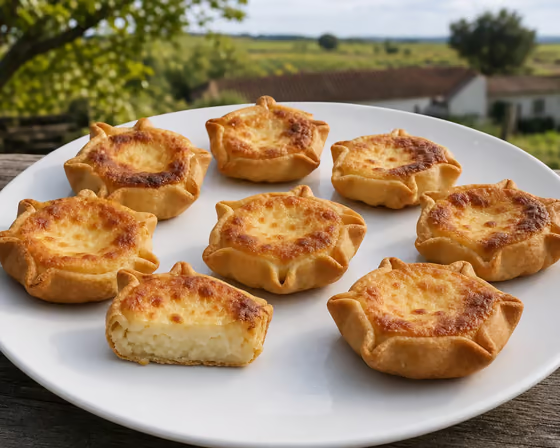
Pereira Queijada
This formula was published in 2025 in a Coimbra Region cookbook prepared by local-development associations, the Coimbra Region intermunicipal community and the Coimbra hospitality school. It preserves the traditional seven-point shaping and wood-fired baking without inventing a temperature, duration or yield.
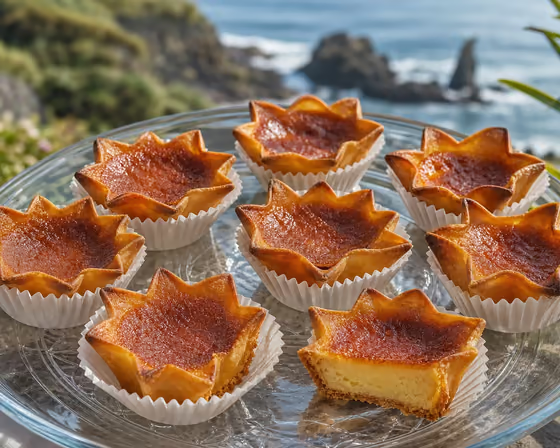
Graciosa Queijadas — Home Formula Published by I Love Azores
This is a complete home formula published by I Love Azores: a very thin case of flour, eggs, butter, sugar, salt and water filled with milk and sugar reduced for about two and a half hours, twenty yolks, butter and cinnamon. It is not the guarded commercial formula used by Maria de Jesus Félix's family. Its ingredients match the official producer's list, while the Azores Crafts and Design Centre confirms the star shape, crisp case, milk-and-egg filling and former name covilhete de leite.
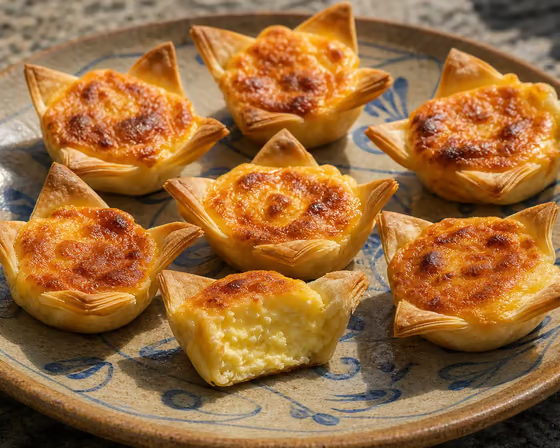
Madeira Curd-Cheese Queijadas
A domestic formula for 16 queijadas with wafer-thin pastry and a curd-cheese, sugar and egg filling. Use Requeijão da Madeira PGI when available. This version follows the flourless filling documented in a 1904 recipe; DGADR's 2001 record also documents a version with goat's curd and flour.
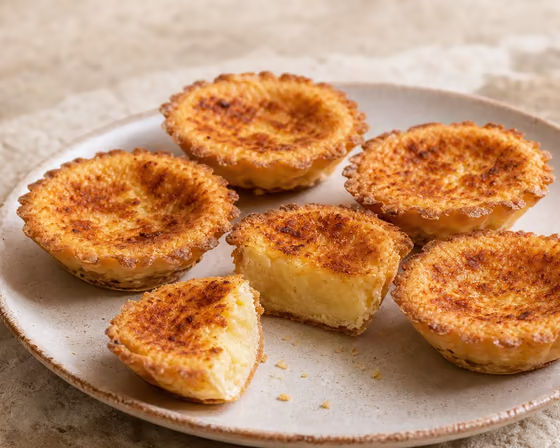
Évora Queijadas — Formula Published by Teleculinária
This is the complete domestic formula published by Teleculinária: thirty small queijadas with a thin case of flour, butter, water and salt, filled with unsalted fresh cheese, bread, sugar, whole eggs, yolks and butter. DGADR confirms the identity of the Alentejo family and specifies that the Évora variant uses fresh sheep's cheese instead of requeijão. The formula source says only ‘unsalted fresh cheese’, so its milk is not silently reassigned. Other published formulas differ in their proportions and thickeners; this page does not merge them into a false canonical recipe.
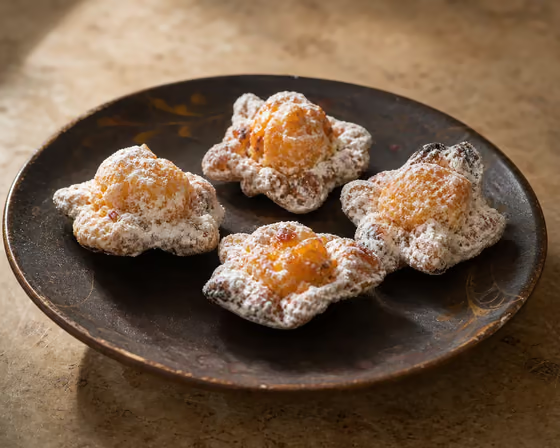
Murça Queijadas — Published Gila-and-Almond Formula
This published formula builds Murça Queijadas in three parts: thin pastry pinched at five points, a gila, almond and yolk filling, and sugar syrup applied first hot and then cold until opaque. The source gives a 30-minute rest but states no yield, oven temperature or baking time; its ‘half a glass’ of water also has no defined capacity.
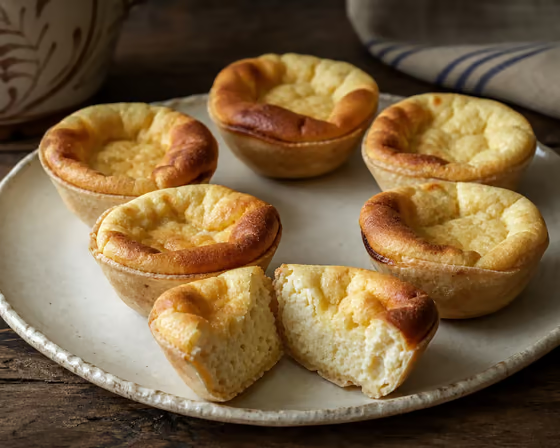
Beja Requeijão Queijadas — Home Formula Published by Iguaria
This is the complete home formula published by Iguaria in 2019: twelve queijadas with a thin flour, egg, butter and lard case and a filling of sheep's-milk requeijão, eggs, sugar, butter, flour and cinnamon. Its composition and technique match the Alentejo family described by DGADR. A larger regional formula published in 1994 by Serpa Municipality and the Beja School of Education, and reproduced by the Minha Terra Federation, corroborates the filling but omits the pastry liquid; the two versions are therefore not silently combined.
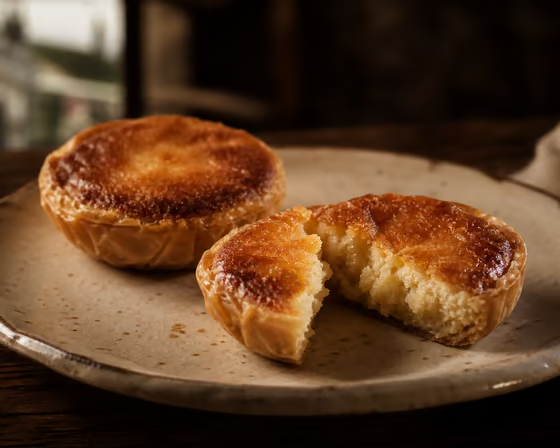
Queijadas de Sintra
Known since the Middle Ages, queijadas de Sintra are little cups of tender dough filled with fresh curd cheese, egg yolks and cinnamon. The secret lies in rolling the dough very thin — almost a casing — and in an aromatic filling that bakes to a golden, lightly cracked top.
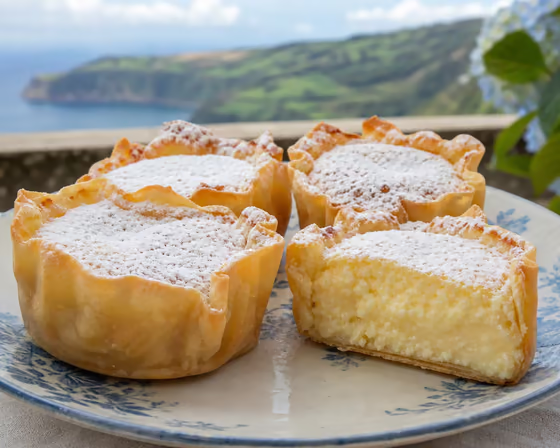
Vila Franca do Campo Queijadas — Pão de Ló Festival Version
This version published by the Pão de Ló Festival, an initiative of Felgueiras City Council, largely matches the formula published by ByAçores: the curdled-milk filling is prepared the day before and the thin pastry the following day. DGADR confirms the traditional structure and method but differs on some eggs and butter; this page therefore preserves one attributed formula rather than merging different versions.
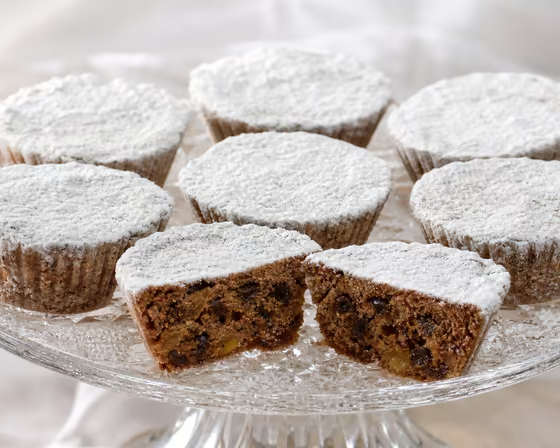
Dona Amélia Queijadas — Published Terceira Version
This published Azorean formula combines cane molasses, corn flour, butter, eggs, raisins, candied citron and spices. It matches the documented profile of Terceira's Donas Amélias but remains an attributed version: proportions and even the combination of flours vary between producers.
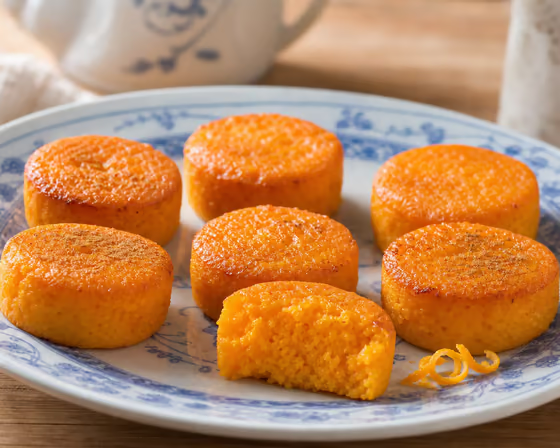
Oliveira de Azeméis Carrot Queijadinhas
This version follows the locally published formula: plenty of carrot, orange zest, only three spoonfuls of flour and separated eggs. Despite the name, it contains no cheese, coconut or pastry shell.
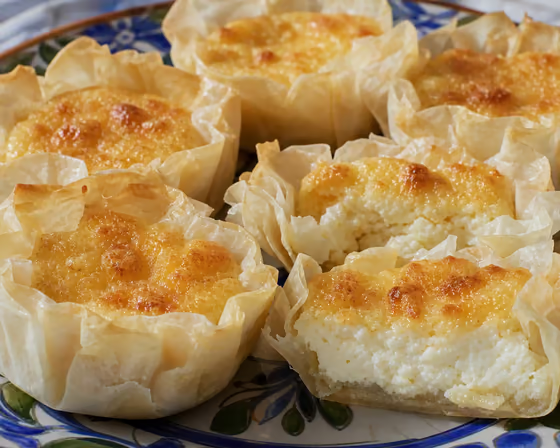
Queijadinhas de Estremoz — Historical Brados do Alentejo Formula
This is a transcription attributed to the newspaper Brados do Alentejo and preserved by As Receitas da Avó Helena e da Avó Eduarda. DGADR separately confirms that the Estremoz form of requeijão queijada came to use fresh sheep's cheese and that proportions vary. The historical formula combines twelve unsalted fresh cheeses, one requeijão, eggs, sugar and butter in a flour-and-water shell; it publishes no yield, temperature, duration or modern measure for its three handfuls of flour.
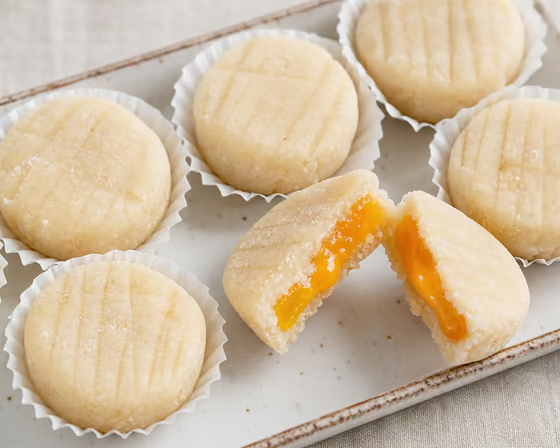
Algarve Almond Cheeselets — Algarve Gastronomes' Guild Version
This quantified formula, published by the Algarve Gastronomes' Guild and attributed to Editorial Verbo, shapes a paste of equal parts almond and sugar bound with egg white into small cases filled with ovos moles. DGADR confirms the composition, approximate scale and method. Neither source publishes a yield, temperature, heating duration or exact resting time.
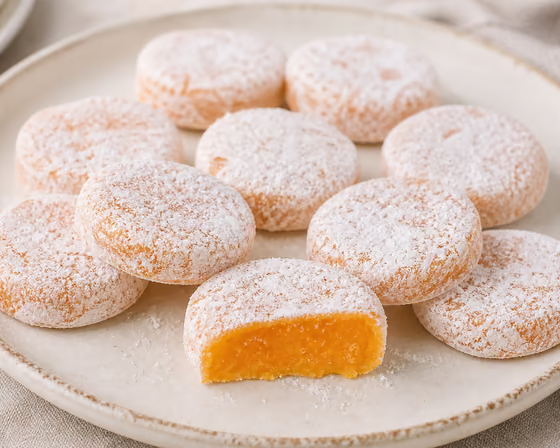
Queijinhos de Cascais — Cascais FoodLab Formula
Cascais FoodLab publishes this formula based on Alda de Azevedo's Cozinha Ideal: sugar syrup combined with yolks and almonds, cooked until it releases from the pan, cooled and shaped into small discs. The page contains an important anomaly—it labels 180°C as the ‘pearl stage’, a temperature incompatible with that stage—which is flagged here instead of being repeated as a safe instruction.
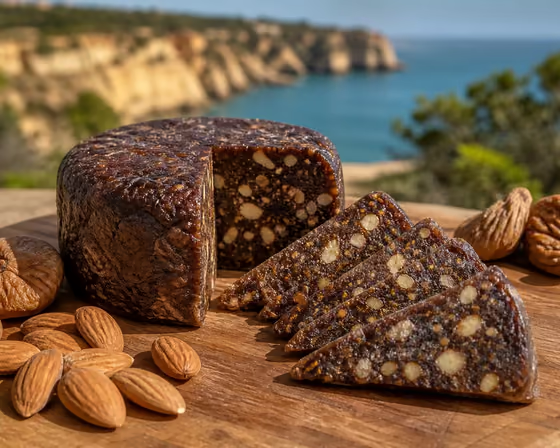
Queijo de Figo or May Cheese — Algarve Gastronomes' Guild Version
This formula published by the Algarve Gastronomes' Guild builds the sweet from layers of flattened dried figs and slivered almonds sprinkled with aguardente and pressed for months. DGADR confirms the structure, the name May Cheese and the May Day tradition, but describes peeled almonds; the Guild version expressly says they are neither peeled nor toasted. This page preserves that difference.
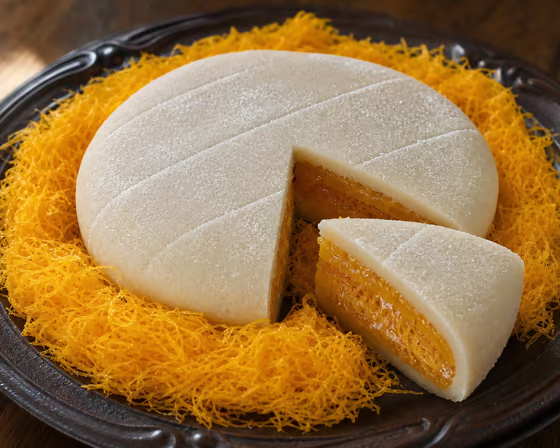
Portalegre Queijo Dourado — Judite Cardoso Formula
Portalegre Municipal Council publishes this formula transmitted by confectioner Judite Cardoso through a programme preserving the legacy of the Convent of Santa Clara. An almond-and-sugar paste encloses egg threads, sweet yolk cream and gila preserve before being shaped like a cheese. The page fixes the shell weights but publishes neither the syrup water nor the quantities of the three fillings, yield, dimensions or timings.
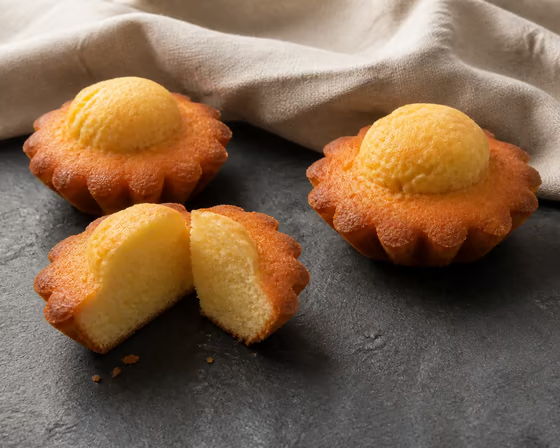
Traditional Queques — Lemon Version
This Teleculinária formula combines butter, milk, eggs and lemon zest in small greased moulds. It matches the plain queque documented in the catalogue entry but remains an attributed version among many pastry-shop variants.
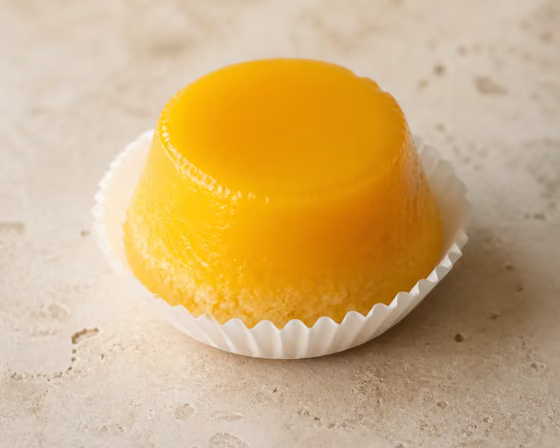
Coconut and Cherry Quindins — RTP Formula
This formula published by Portugal’s public broadcaster RTP makes fifteen quindins in cupcake moulds: coconut hydrated in coconut milk, sugar, butter and strained yolks, with one cherry in each mould. It includes two rests of about ten minutes and approximately forty minutes in a 180°C / 356°F water-bath oven.
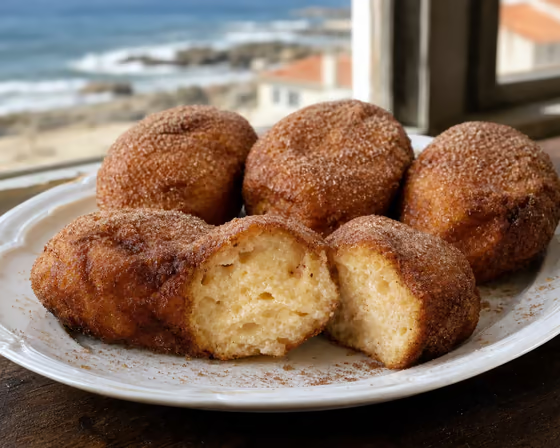
Rabanada à Poveira — Official Tourism Recipe
The Fins de Semana Gastronómicos programme publishes the Póvoa formula based on the local bread called trigo: stale bijou rolls, trimmed and halved, soaked in flavoured milk and egg, fried in abundant oil and coated in cinnamon sugar. The recipe is proportional—an average of one egg per roll—and leaves milk, sugar and spices as sufficient or to taste.
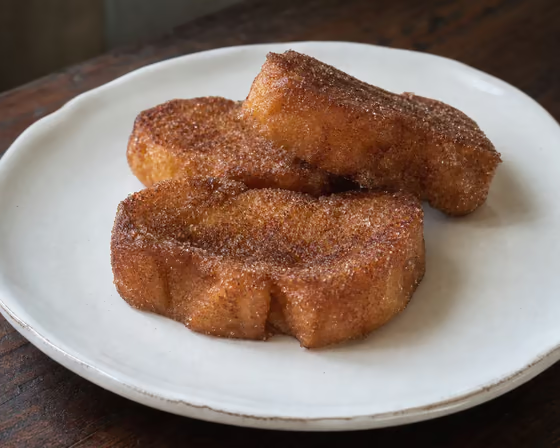
Paiva-Style Rabanadas — Published Regional Recipe
Castelo de Paiva’s tourism programme publishes this simple milk-free formula: wide slices of cacete bread are soaked in water syrup with sugar, lemon and cinnamon, dipped in egg, fried and dusted. The source fixes no proportions; this page retains that household character and introduces no measurements by analogy.
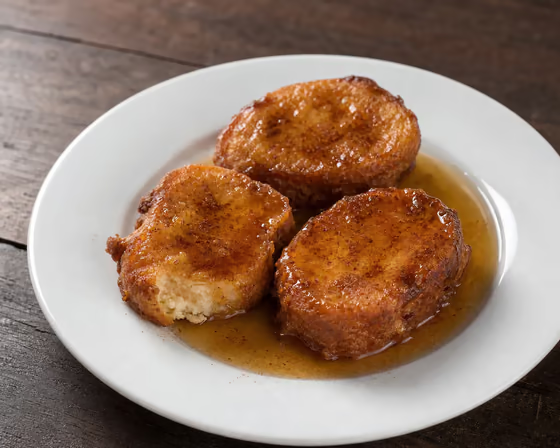
Rabanadas with Barroso Honey — Tourism Recipe
An official gastronomic guide published this Barroso formula: stale wheat bread is soaked in a hot syrup of equal parts milk and water with cinnamon, butter, lemon and Mel de Barroso, dipped in egg, fried in olive oil and served with more honey. Missing quantities remain explicitly marked.
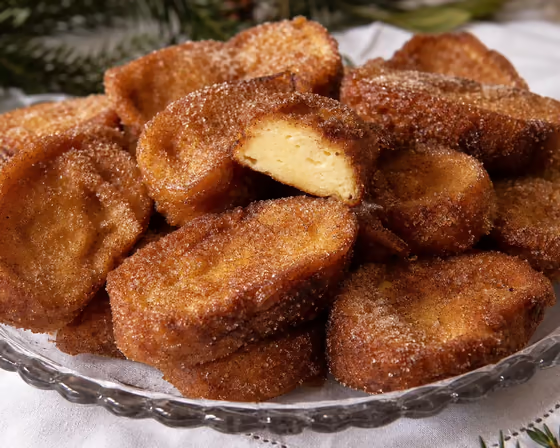
Traditional Portuguese Rabanadas
Portuguese rabanadas make use of two- or three-day-old cacete bread: first soaked in flavoured milk, then dipped in egg and fried until golden. Cinnamon sugar provides one documented finish; this recipe also includes, as an alternative, the sugar, cinnamon and lemon syrup published by RTP.
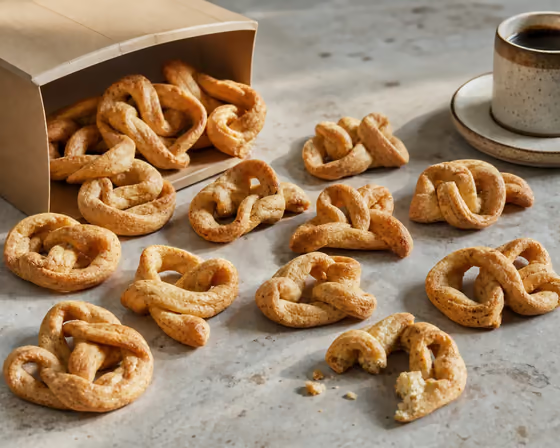
Aveiro Raivas — Published Formula
This published culinary formula shapes butter, sugar, eggs and flour dough into thin ropes and irregular designs. Cinnamon is optional in this version, consistent with the variation documented in the catalogue entry; it is not presented as a convent recipe or the sole formula.
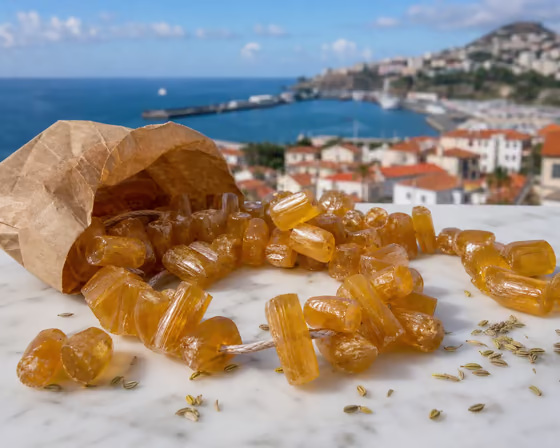
Fennel Sweets — Contemporary Formula Published in 2020
The identity and general method are corroborated by DGADR; quantities and the temperature range come from a domestic formula published by Ocean Retreat in 2020. That source states 125–140°C / 257–284°F and describes hard brittle threads, while DGADR uses the term “hard-ball stage”. The terminology discrepancy is preserved rather than resolved by choosing one temperature.
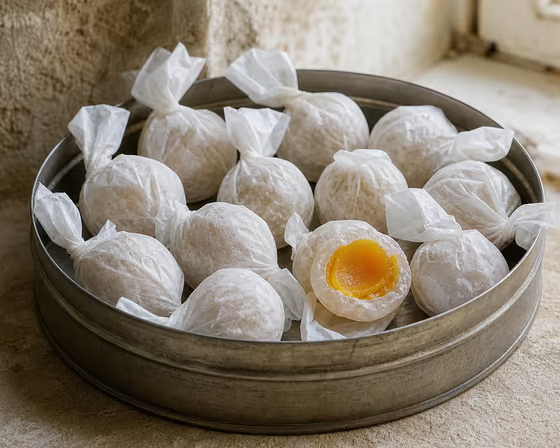
Portalegre Egg Sweets — Published Home Formula
Receitas para a Felicidade publishes a home formula by an author born in Portalegre and includes both food-processor instructions and a traditional method. This transcription preserves the traditional method: yolk paste shaped into balls, coated in icing sugar and dipped in a very pale glaze. It is a documented home version, not the commercial recipe used by Portalegre confectioners.
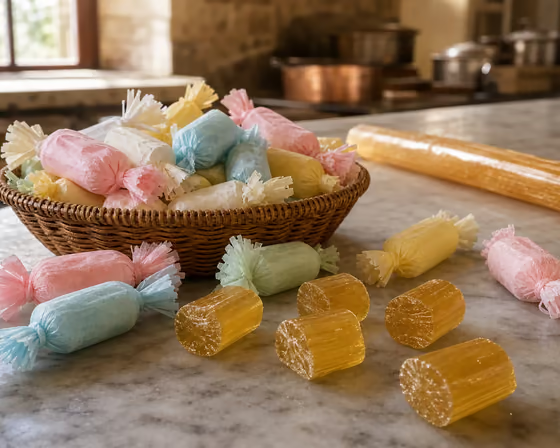
Rebuçados dos Arcos — Municipal Tourism Formula
The official Visitarcos portal publishes a sugar-and-water formula for Rebuçados dos Arcos, worked while still hot on a greased stone until smooth rods form. The page allows drops of lemon or orange in a home adaptation but states that the genuine product is unflavoured, so this transcription retains sugar and water only. Boiling sugar causes severe burns, making protection, a stable work surface and experience essential.
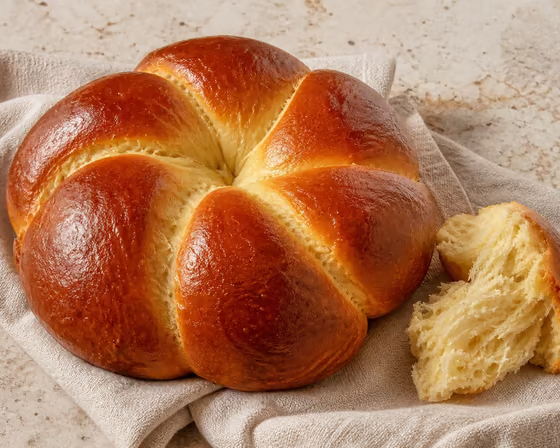
Easter Regueifa — Dona Judite's Municipal Version
Santa Maria da Feira's tourism portal publishes this Dona Judite version of Easter Regueifa. The source preserves its two-stage mixing, long rise and braided ring form, but contains an important ambiguity: it lists 450 g flour and adds that the total used reaches almost 1 kg. That note is retained openly rather than converted into a falsely precise ratio.
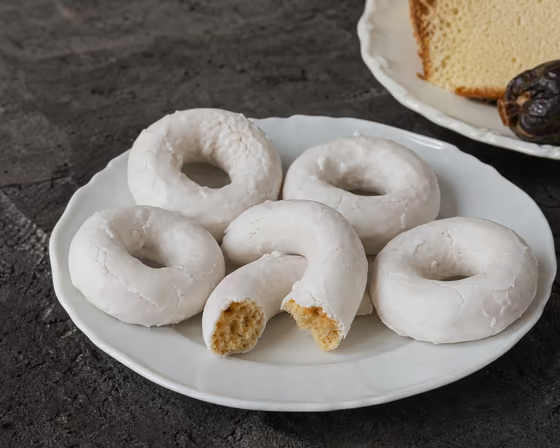
São Jorge Rosquilhas Brancas — 1988 Ethnographic Formula
An ethnographic study in Santo Antão recorded the quantities for a communal batch and its cooked-sugar finish in 1988. It did not publish yeast or liquid, mixing order, ring count and size, oven parameters or a coating formula. This is an annotated archival record that makes the historical scale searchable; it must not be mistaken for a complete domestic protocol.
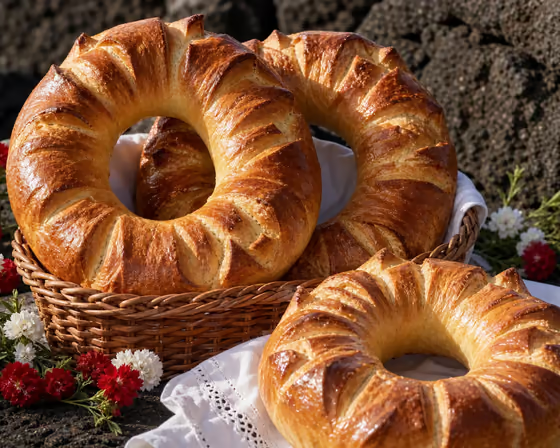
Holy Spirit Rosquilhas — Contemporary Pico Adaptation
This recipe was published by a user of the Mundo de Receitas Bimby platform as a Pico-style version. Its ring shape, enriched dough and connection to Holy Spirit festivals are corroborated by Azores Tourism and ethnographic research, but those sources also show very different historical proportions. This record preserves the modern adaptation with attribution and does not present it as Pico's canonical formula.
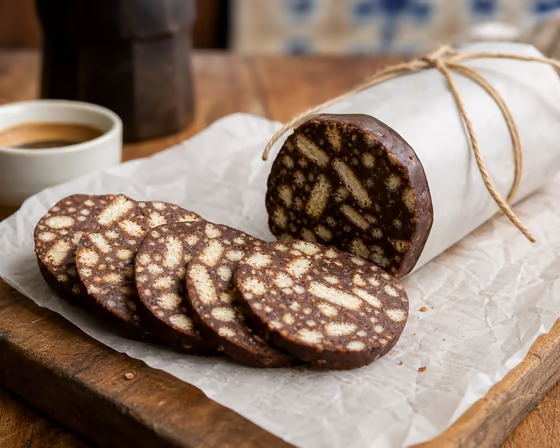
Portuguese Chocolate Salami
A chilled roll of chocolate and Maria biscuits, shaped so each slice resembles the marbling of salami. This representative formula follows published Portuguese recipes that agree on a base of butter, sugar, egg, drinking chocolate and biscuit pieces; it is not baked.
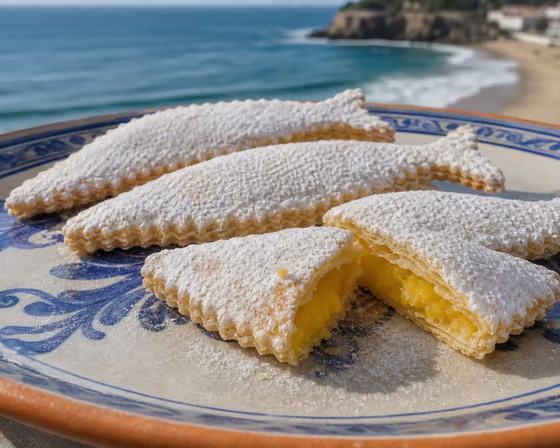
Sardinhas Doces da Nazaré — Felícia Sampaio's Version
This is the version published by Felícia Sampaio in Roteiro Gastronómico de Portugal: tender pastry made with flour, butter and lard encloses a yolk-and-gila filling and is cut into a sardine shape. Nazaré sources also describe the speciality as puff pastry with egg cream; that divergence is preserved. This formula documents one workable version, not a single specification followed by every pastry shop in town.
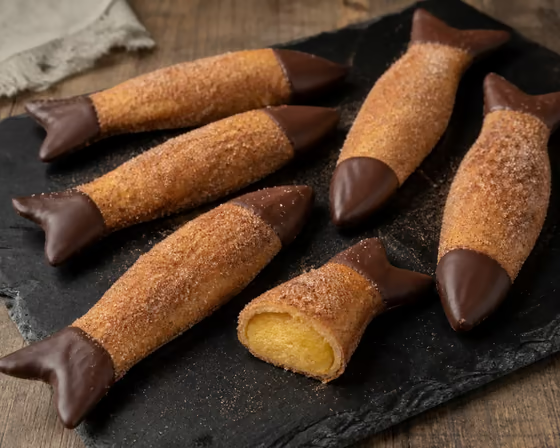
Sardinhas Doces de Trancoso — Historic Villages Recipe
This recipe was published by the Historic Villages of Portugal for the Trancoso sweet: olive-oil pastry cut into a sardine, almond-and-yolk filling, frying, and a chocolate-and-sugar coating. We preserve two gaps in the publication itself: water is given as ‘400g (0.5l)’ and no chocolate quantity is stated.
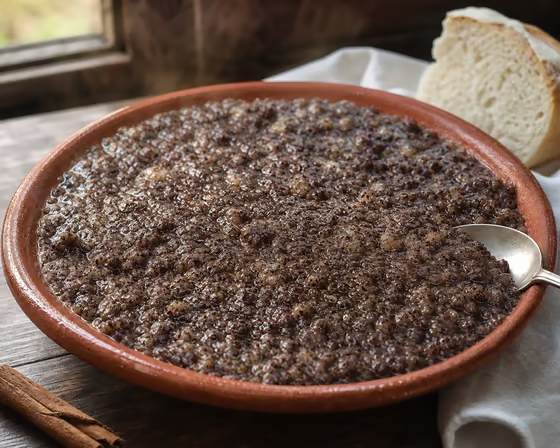
Caíde de Rei Sweet Sarrabulho — Household Formula Attributed to Adriana R.
The Parish Council confirms the identity and explains that the tradition is made “by eye” with Padronelo bread. The formula below was published by Jorge Silva in 2019, attributed to Adriana R., and uses ordinary bread rolls with quantities for twelve people. It is a locally identified household version, not the confraternity's official formula.
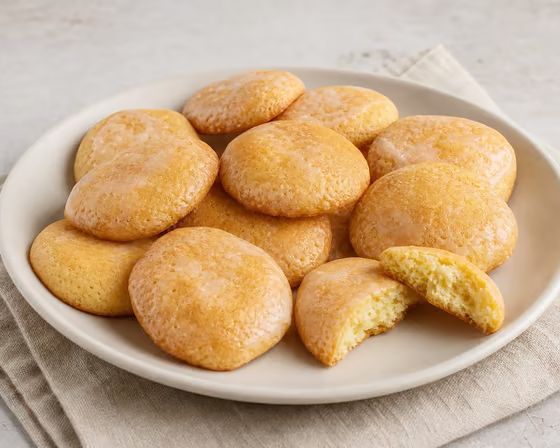
Sequilhos de Águeda — Teleculinária Version
This Teleculinária version combines a light egg, yolk, sugar and flour batter with a thread-stage syrup. The page contains a material error: it lists ‘200ml sugar’ for the coating although the method says water. We keep that conflict visible rather than inventing a correction.
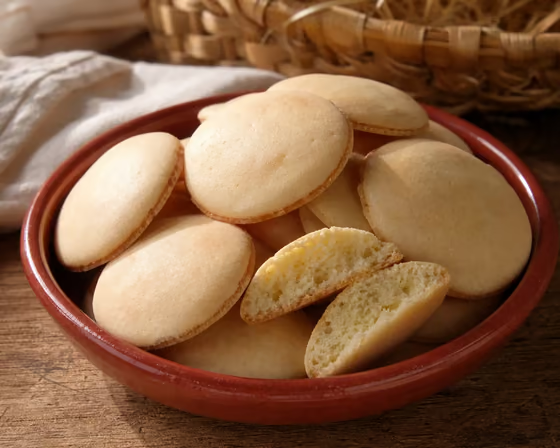
Arganil Sequilhos
The regional recipe, illustrated with a contribution from Arganil municipality, beats eggs and sugar, warms them gently over a water bath, then folds in flour before dropping small mounds. Cinnamon, lemon and salt appear without quantities. The oven is described only as moderate.
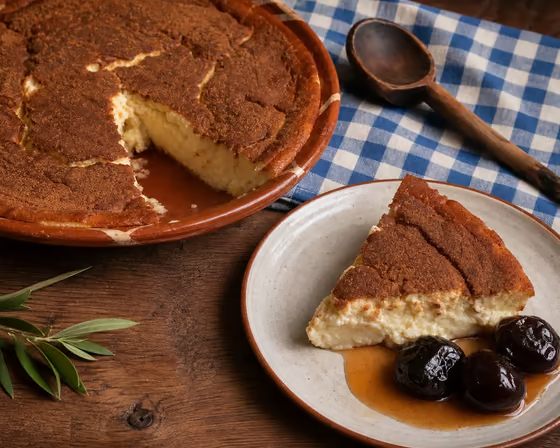
Sericaia
Elvas sericaia sits between a custard and a cake: milk and yolks provide richness, whipped whites supply lift, and a generous cinnamon coating opens into its characteristic cracks. This version halves the formula published by Turismo de Portugal while preserving the proportions of its Maria de Lourdes Modesto-based recipe.
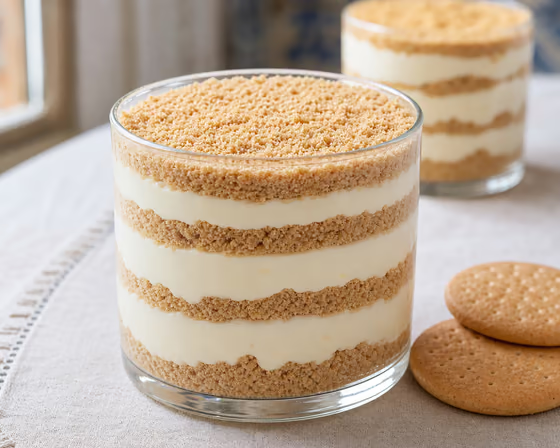
Portuguese Serradura (Sawdust Pudding)
Classic Serradura alternates finely crushed Maria biscuits with a chilled cream-and-condensed-milk mixture. It needs neither oven nor gelatine: refrigeration gives it body while preserving the layers that explain its “sawdust” name.
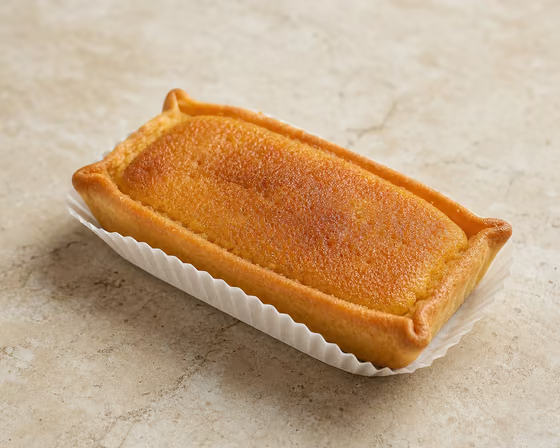
Sidónios de Viana — Teleculinária Puff-Pastry Version
Teleculinária publishes this version of Sidónios with puff pastry and a cooked filling of eggs, almonds, flour and lemon-scented syrup. It is a complete reproducible formula, but should not be treated as the pastry's sole construction: Fabrico Próprio's research also documents a sweet-pastry family.
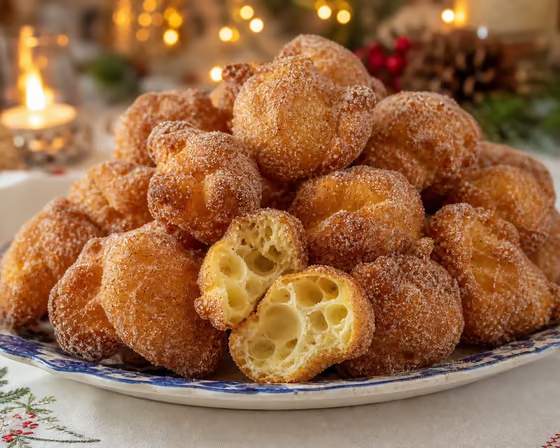
Portuguese Christmas Sonhos
Small balls of scalded dough that puff and become hollow during gentle frying, finished while warm with cinnamon sugar. This representative formula follows two independent Portuguese recipes that agree on a base of water, milk, butter, flour and eggs.
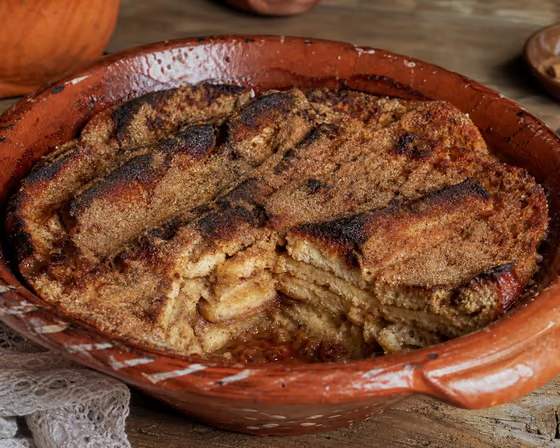
Douro and Tâmega Sopa Seca — Official DGADR Recipe
The DGADR record publishes this formula from the Confraria do Anho Assado com Arroz de Forno: stale bread layered with brown sugar and cinnamon, soaked with lemon syrup and baked in earthenware. Port appears in the ingredients and historical description, but the method never says when to add it; that omission is preserved instead of inventing a step.
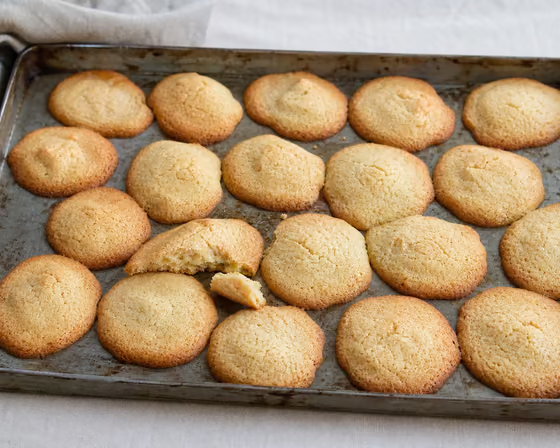
Súplicas de Bragança — Teleculinária Version
Teleculinária publishes this spare egg, flour and sugar formula, spooned onto trays and baked until golden. Other sources confirm the regional identity; the recipe remains attributed to the publisher and does not establish one proportion for every Bragança producer.
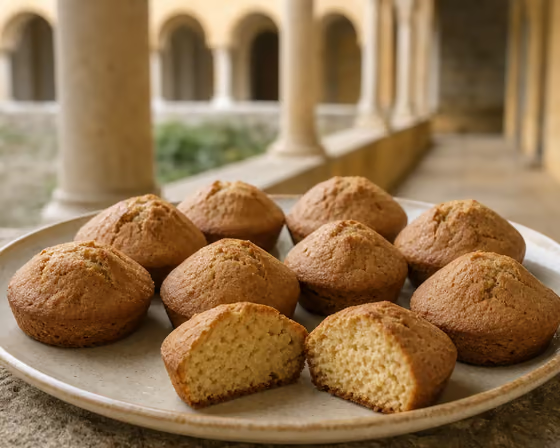
Súplicas de Miranda do Corvo — Gastronomic Charter Formula
The Gastronomic Charter of the Coimbra Region publishes this family formula for small egg cakes scented with cinnamon and lemon. It quantifies the batter and states fifteen minutes in the oven, but gives no temperature, mould size or yield; those gaps are preserved rather than filled by assumption.
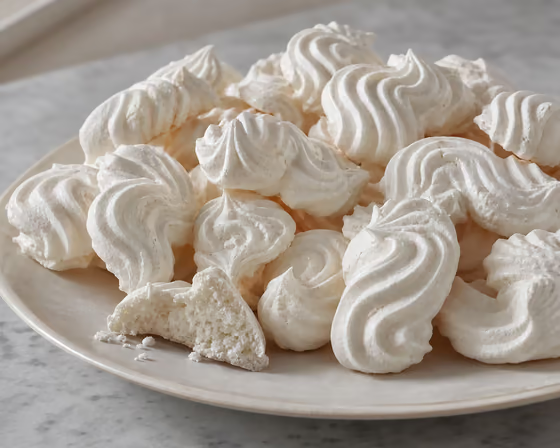
Suspiros (Meringues)
Suspiros are oven-dried meringues: light as a sigh, crisp outside and melting in the mouth. They take only egg whites and sugar, but they reward technique — whites at room temperature, fully dissolved sugar, and a low oven that dries rather than browns them. The traditional method warms the whites with the sugar over a bain-marie before whipping, for a firm, glossy meringue.
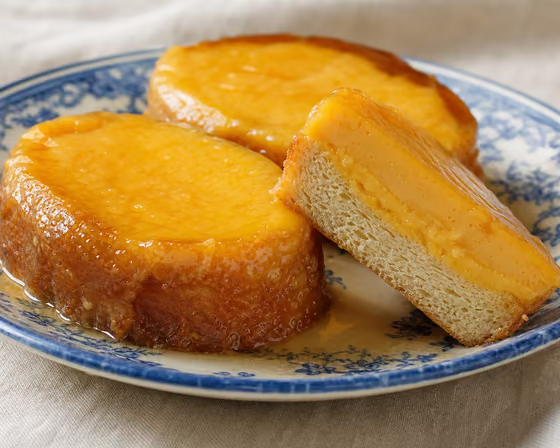
Talhadas de Príncipe — Coimbra Region Cookbook Formula
The regional cookbook A comer é que a gente se entende publishes Talhadas de Príncipe as a way to use a dried Coimbra Arrufada. Slices about two centimetres thick are covered with a sweet egg-yolk cream made from sugar cooked to 124°C / 255°F and 600 g yolks, then bathed in a second sugar syrup. The source quantifies the yolk cream but not the final syrup, yield or storage time.
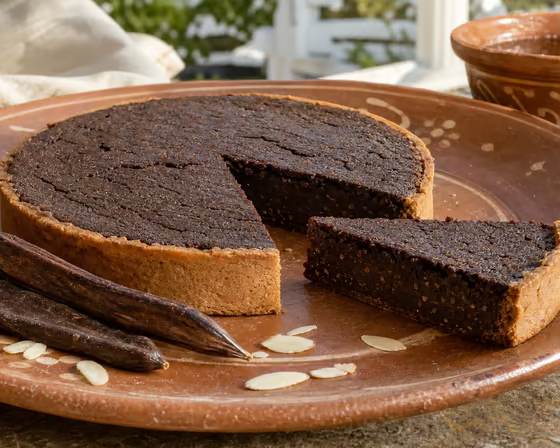
Carob Tart — Continente / The Healthy Sins Version
This formula published by Continente and credited to The Healthy Sins makes a carob-and-wheat base and a filling with egg yolks, brown sugar, carob, cocoa, almond, cinnamon, vanilla and lemon. It is a quantified contemporary interpretation, not a historical Algarve specification. Other published formulas omit cocoa and vanilla, use separated whole eggs and rely on shortcrust pastry; the versions are not merged.
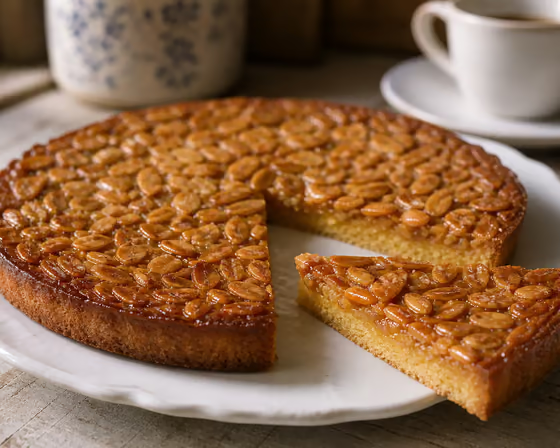
Almond Tart — Nestlé Saboreia a Vida Version
This formula published by Nestlé Saboreia a Vida makes a thin butter, sugar, egg and flour base topped with a warm mixture of brown sugar, butter, milk and flaked almond. It is an attributed Portuguese version, not an exclusive Algarve specification. Other recipes under the same name use radically different proportions, bases and sweeteners; they are not merged.
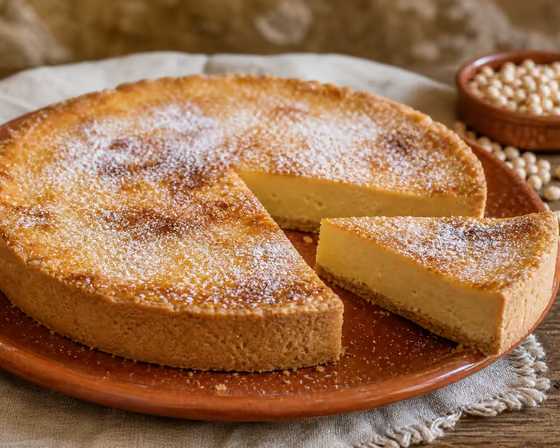
Alvaiázere Grass-pea Tart — Receitas e Menus Version
This formula, credited by Receitas e Menus to the As Melhores Receitas de Portugal collection, uses a biscuit base and a grass-pea, yolk and cream filling. It confirms the ingredient and Alvaiázere association but represents one editorial version, not an exclusive municipal specification.
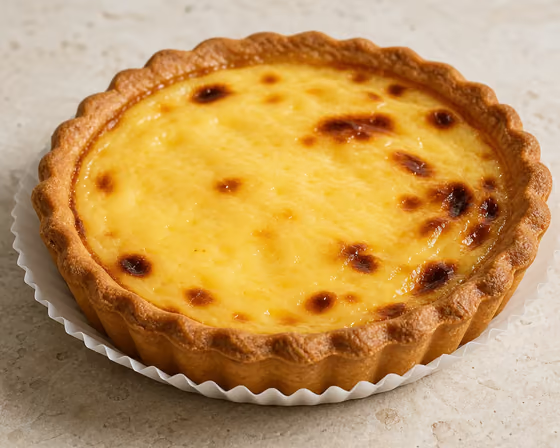
Portuguese Custard Tart with Butter Pastry
This recipe follows Nestlé's published 24 cm family formula, with butter pastry and a milk, cream, yolk and lemon filling. It does not claim to reproduce exactly the individual sweet-pastry tartlet described by Fabrico Próprio.
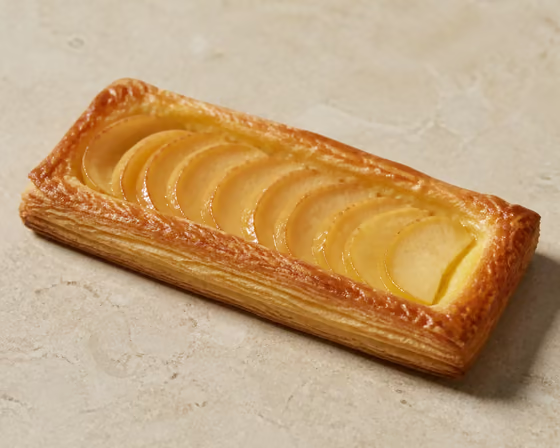
Puff-Pastry Apple Tart with Pastry Cream
This recipe reproduces TV Guia's published rectangular formula: open puff pastry, pastry cream, Golden apple and quince jelly. Jornal da Bairrada's round version is recorded in the notes as an independent variant.
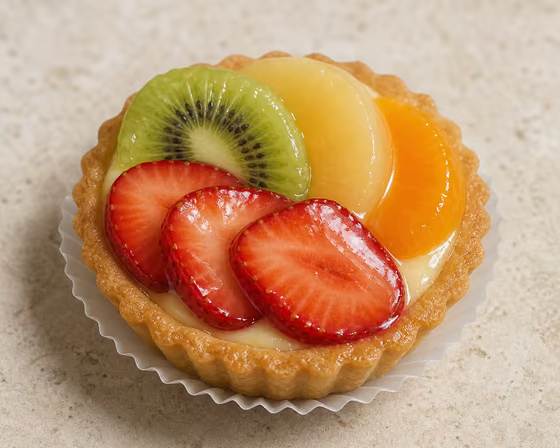
Fruit Tartlets — Joana Barrios's Formula
Joana Barrios's formula published by 24Kitchen builds the Portuguese tartlet from sweet pastry, pastry cream and assorted fruit, then protects the fruit with quince jelly diluted with water and aguardente. The author adds chocolate ganache and icing sugar; those are finishes specific to this variant, while Fabrico Próprio documents jelly-glazed fruit as the reference.
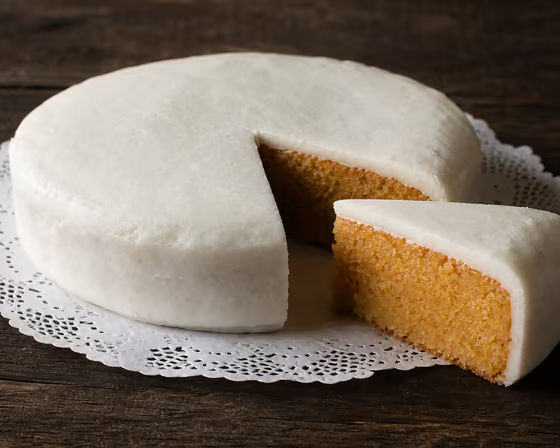
Crato Tecula-Meca — Published Cinnamon-Finished Home Version
This household formula published by TeleCulinária retains the core that DGADR documents for Tecula-Meca: sugar syrup, almonds, yolks and whole eggs, butter, lard and cinnamon. It uses a round tin, bakes for about 40 minutes at 180°C / 355°F and is finished with ground cinnamon. That presentation must be distinguished from the traditional Crato product described by DGADR, whose white surface is a sugar-and-egg-white coating.
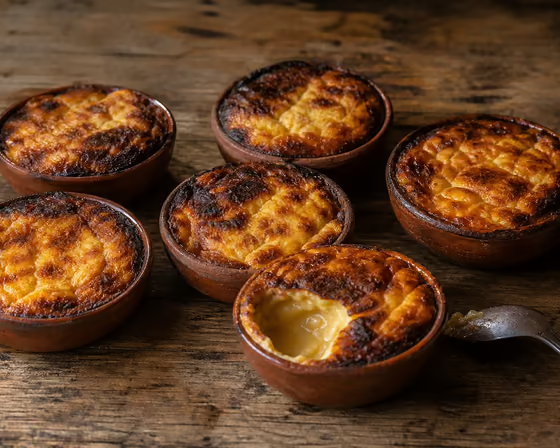
Beira Baixa Tigelada — CFPSA Technical Formula
CFPSA's training manual expressly identifies this formula as “Tigelada (Beira Baixa).” It is published separately from the recipes of Abrantes, Proença-a-Nova, Arganil and other places: this is one documented formula in the regional family, not a universal recipe or proof of a convent origin.
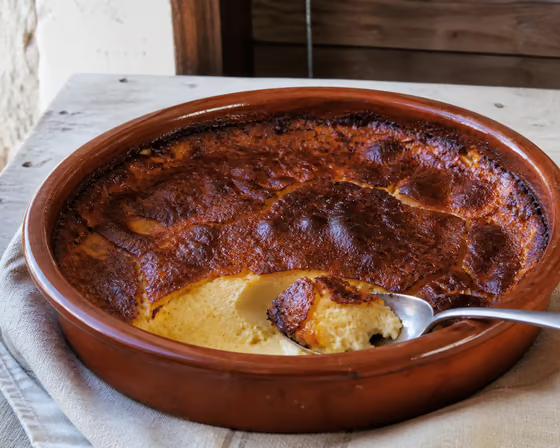
Arganil Tigelada — Municipal Recipe
Arganil Municipality's tourism portal publishes this formula of twelve eggs, milk, sugar, lemon and cinnamon, baked slowly in red glazed earthenware. Its technique and original spoon measures are preserved without inventing a temperature for the “very hot oven.”
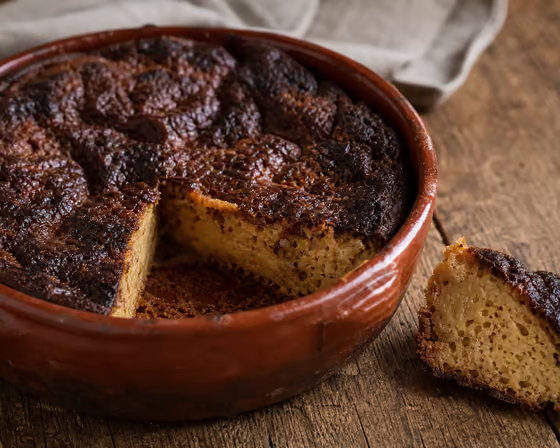
Tigelada de Proença-a-Nova — Hélio Loureiro's Yämmi Version
This is the formula published by Yämmi/Continente and credited to Hélio Loureiro: cow's or goat's milk, eggs, brown sugar, honey, flour, cinnamon and lemon poured into a scorching-hot dish. DGADR documents Honey Tigelada as an emblematic Proença-a-Nova sweet and highlights goat's milk and honey. The Yämmi version allows cow's milk and does not identify the honey as heather honey; it is therefore an attributed interpretation, not a universal formula for local makers.
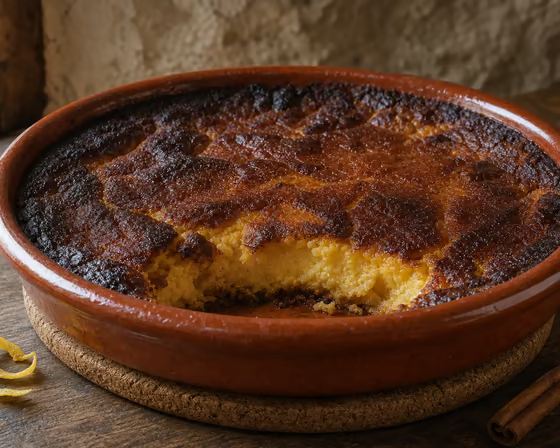
Torrozelas Tigelada
The recipe published for Torrozelas, in Oliveira do Hospital municipality, combines eggs, milk, sugar, lemon and one spoonful of flour. It bakes in an earthenware pot—ideally from Molelos—in a very hot oven, preferably wood-fired. We do not convert those directions into a temperature or duration absent from the source.
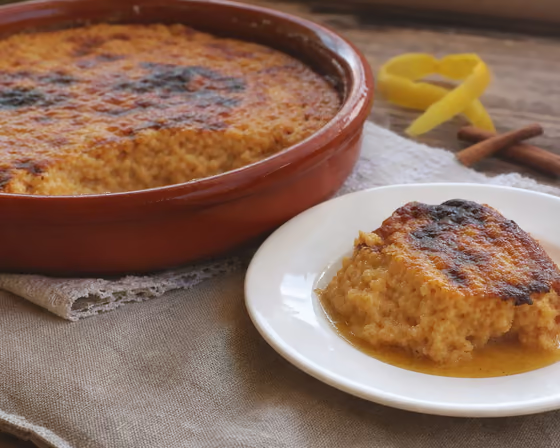
Lousã Tigelada — Recipe Published by Lousã Municipality
Lousã Municipality published this formula in 2022 and continues to identify tigelada among its local sweets. The original spoon measures, hot-oven direction and optional honey are preserved without converting measures or temperatures the source does not define.
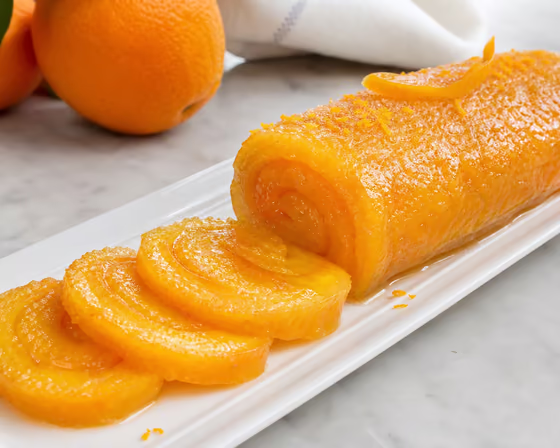
Portuguese Orange Roll
A thin, moist and intensely citrusy roll, shaped while still warm. This representative formula follows two independent Portuguese recipes that agree on the main proportions, while retaining their documented variation in starch and juice rather than claiming a single definitive version.
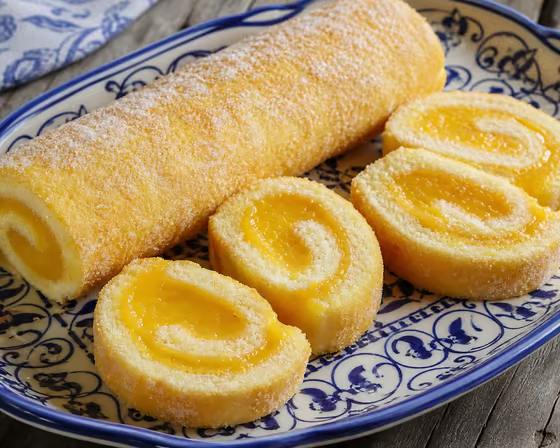
Torta de Viana — Henrique Sá Pessoa Version
Henrique Sá Pessoa published this version of Torta de Viana on 24Kitchen: a nine-egg sponge sheet filled with an eight-yolk cream thickened with starch and rolled while still warm. It is a named, complete cookery formula, not the technical specification of the recipe certified by Viana do Castelo Municipal Council.
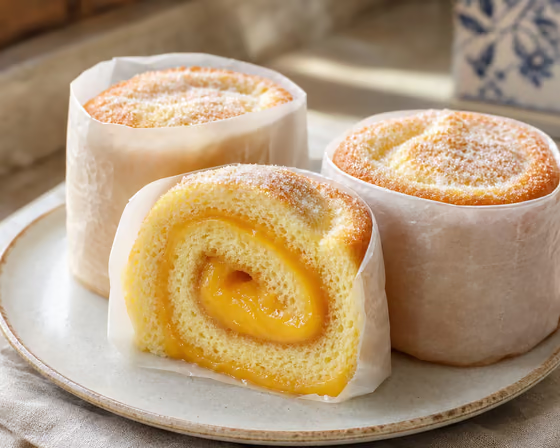
Tortas de Azeitão — Published Egg-Yolk-Cream Version
This published formula makes a very light egg-and-starch sheet, spreads it with egg-yolk cream and cinnamon, then cuts it before rolling the individual tortas. It is an attributed reproduction: DGADR documents the form, filling and Azeitão connection, while Pastelaria Regional Cego's commercial recipe remains the house's own heritage.
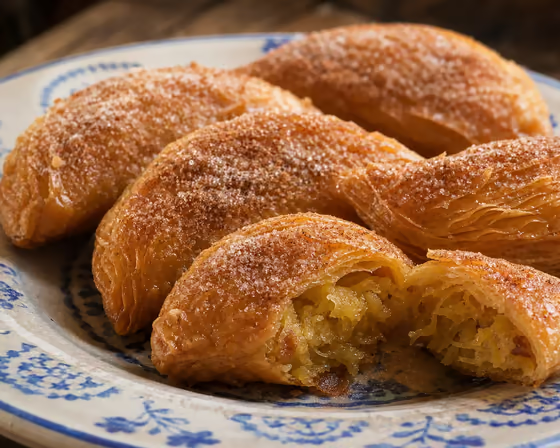
Tortas de Guimarães — Historical Formula Published by DGADR
DGADR's record transcribes a formula from the municipal work Doçaria Tradicional Vimaranense (2011): a firm flour-and-water dough laminated with pork dripping, an almond, twenty-yolk, cinnamon and citron filling, baking and a very quick syrup bath. The historical filling measures are retained; metric equivalents are reading aids, not a certified modernisation.
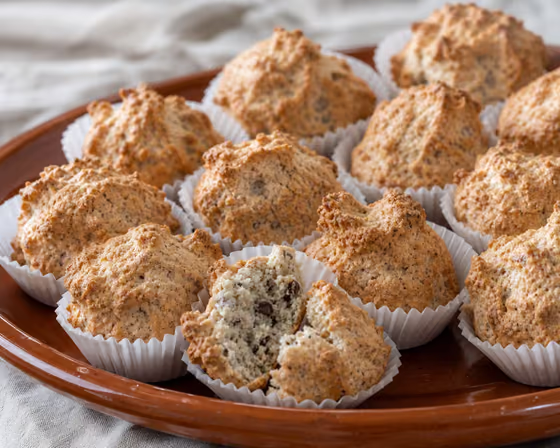
Tosquiados de Beja — Egg White and Almond Version
This published formula for Beja Tosquiados uses egg whites, sugar and ground skin-on almonds, shaped into small mounds and baked. It is one documented variant: another recipe tradition slices the almonds and binds them only with sugar syrup.
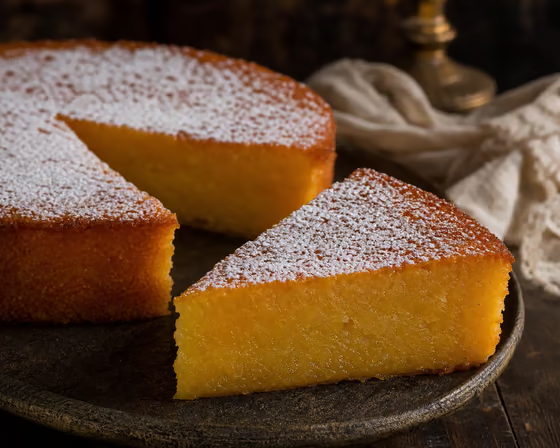
Toucinho do Céu
A dense, moist convent sweet made from ground almonds, sugar cooked to the pearl thread, and a generous amount of egg yolks. Deep golden in colour and almost fudgy in texture, it is one of Portugal's most celebrated egg-and-almond sweets, with famous versions from Guimarães and Murça.
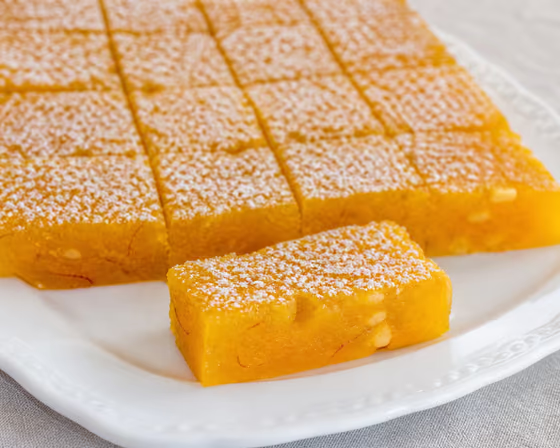
Murça Toucinho-do-Céu — Hélio Loureiro's Yämmi Formula
This is the domestic formula published by Yämmi and credited to chef Hélio Loureiro: four portions with skin-on almonds, sugar, water, gila preserve, flour, one whole egg and ten yolks. It is an adaptation for a cooking machine, not the guarded commercial recipe transmitted through the family associated with Casa das Queijadas. Its composition and sequence match the product and know-how recorded by DGADR.
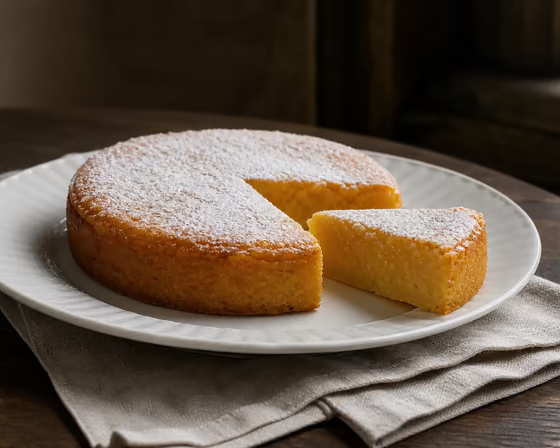
Portalegre Toucinho-do-Céu — 24-Yolk Formula
The Portalegre formula published by LifeCooler uses 24 yolks, sugar at the traditional espadana stage and toasted ground almonds. Once thickened on the stove, the mixture goes into a buttered mould and is baked only to brown. The municipality confirms Toucinho-do-Céu among the sweets attributed to Portalegre's Poor Clares; the formula publishes no syrup water, yield, mould size, temperature or duration.
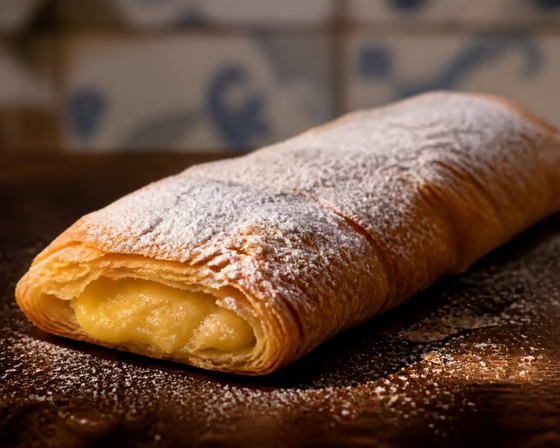
Travesseiros de Sintra (Sintra Pillow Pastries)
Also known in English as Sintra pillow pastries, travesseiros are little puff-pastry pillows wrapped around a silky cream of egg yolks and almond, scented with cinnamon. The secret lies in a syrup brought to the thread stage, a well-sealed pastry, and a hot oven that puffs it up golden and crisp. This is a home version inspired by the Casa Piriquita classic.
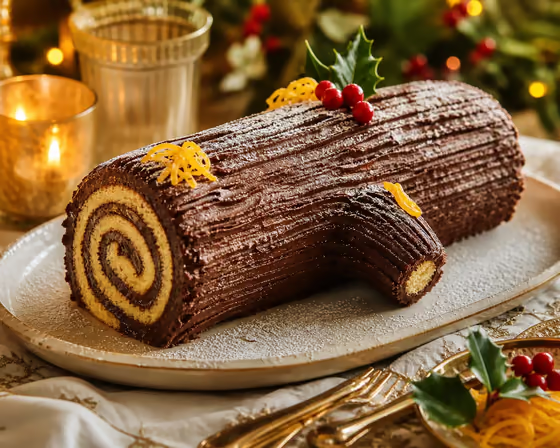
Tronco de Natal — Teleculinária’s Food-Processor Version
This recipe reproduces Teleculinária’s food-processor version: a six-egg flour-and-sugar roulade filled and coated with butter, chocolate powder and two egg yolks. It is one specific formula, not the definition of every Portuguese Tronco de Natal. 24Kitchen’s version uses almonds, brown sugar, seventeen eggs and an egg-yolk sweet, demonstrating that the name covers markedly different compositions.
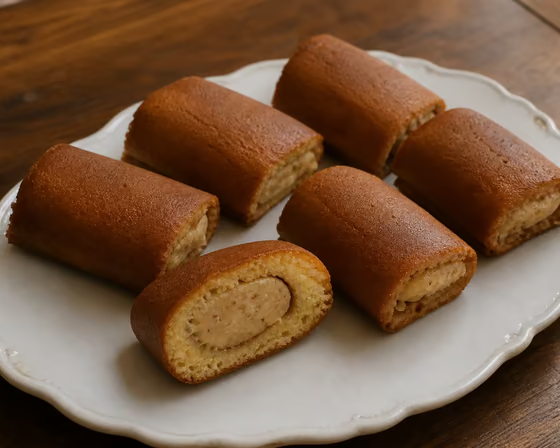
Trouxas da Malveira — Teleculinária Version
Teleculinária publishes this video formula for a light egg, sugar and flour sheet filled with an almond, milk and vanilla cream. DGADR and Mafra Municipality document the Malveira speciality, but this transcription remains a reproducible editorial version rather than the commercial formula of the business founded in 1906.
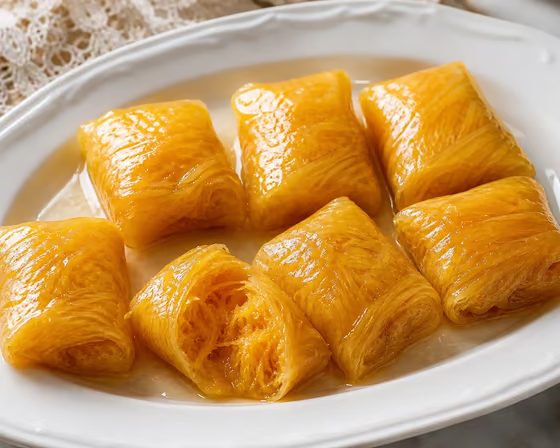
Caldas Egg-Yolk Bundles
A published three-ingredient formula using 24 yolks, sugar and water: portions equivalent to two yolks cook in syrup to form thin sheets, which cool, are folded into bundles and receive the remaining syrup. DGADR documents Caldas egg-yolk bundles as a traditional Oeste product; recipes attributed to the Convent of Cós show different household proportions and methods.
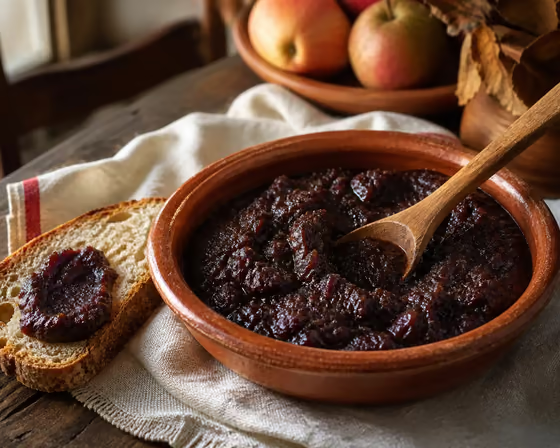
Uvada / Arroubo — grape-must and fruit preserve
This reproduction follows DGADR's published 1:1 ratio for the must-and-fruit preserve its record calls Arroubo or Uvada. It uses one kilogram of each component solely as a transparent home scale. Torres Vedras ethnographic research distinguishes this preserve, uvada, from plain arrobe—the reduced must before fruit is added.
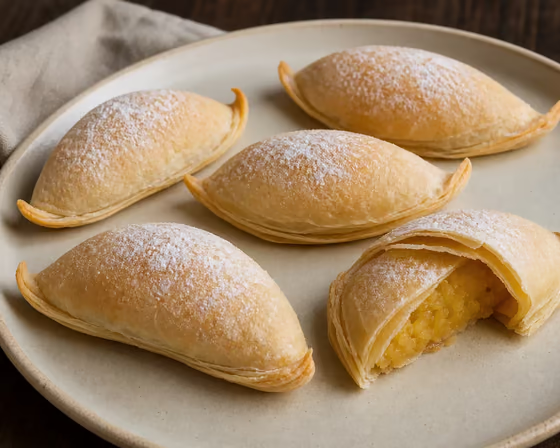
Vila Real Viuvinhas — Transcription Attributed to Maria Odette Cortes Valente
The local Escarpas do Corgo archive published this formula as an edited and adapted text from Maria Odette Cortes Valente’s Cozinha de Portugal — Trás-os-Montes. It uses 300 g / 10.6 oz flour, 40 g / 1.4 oz butter and 100 ml / 3.4 fl oz water in pastry stretched paper-thin, with an almond-and-egg filling. The source gives no yield, circle diameter, resting time, salt and laminating-butter quantities, oven temperature or exact baking duration; those limits remain explicit.
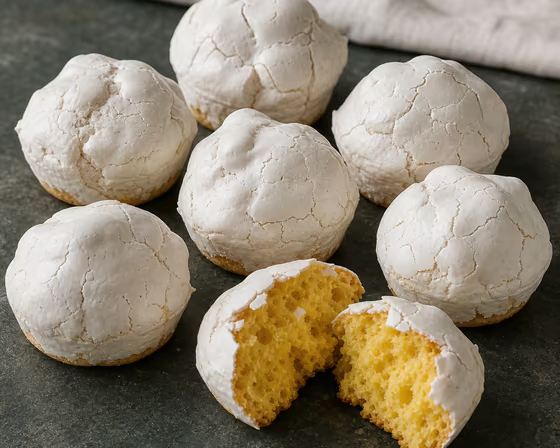
Oliveira de Azeméis Zamacóis
This home version preserves the elements confirmed by Oliveira de Azeméis municipality: a flour, sugar, butter and egg cake under an egg-white-and-sugar coating that dries into a crisp shell. The high proportion of yolks gives the crumb its characteristic colour and richness.
No recipes found
Try another name, region, category, or difficulty level.