Rebuçados dos Arcos — Municipal Tourism Formula
The official Visitarcos portal publishes a sugar-and-water formula for Rebuçados dos Arcos, worked while still hot on a greased stone until smooth rods form. The page allows drops of lemon or orange in a home adaptation but states that the genuine product is unflavoured, so this transcription retains sugar and water only. Boiling sugar causes severe burns, making protection, a stable work surface and experience essential.
- Yields
- 4 to 5 rods before cutting; number of sweets not stated
- Prep
- Not stated by the source
- Cook
- Not stated; determined by the syrup stage
Ingredients
- 1 kg / 35.3 oz White granulated sugar
- About 500 ml / 16.9 fl oz Water
- Amount not stated Unsalted butter or good-quality olive oil, for greasing
Method
Prepare a clean, stable marble slab, two heat-resistant knives and burn protection. Lightly grease the slab and knives.
Place 1 kg sugar and about 500 ml water in a sturdy pan. The source uses a copper or brass vessel.
Boil without touching the syrup until golden and at the stage where a drop placed in cold water hardens and snaps. Keep children and bystanders away.
Carefully pour the syrup onto the greased slab. Do not taste or touch it directly: the mass remains hot enough to cause severe burns.
Using the two greased knives, repeatedly pull the edges into the centre until the mass is cool enough to handle with suitable protection.
Divide into four or five portions and work each until smooth.
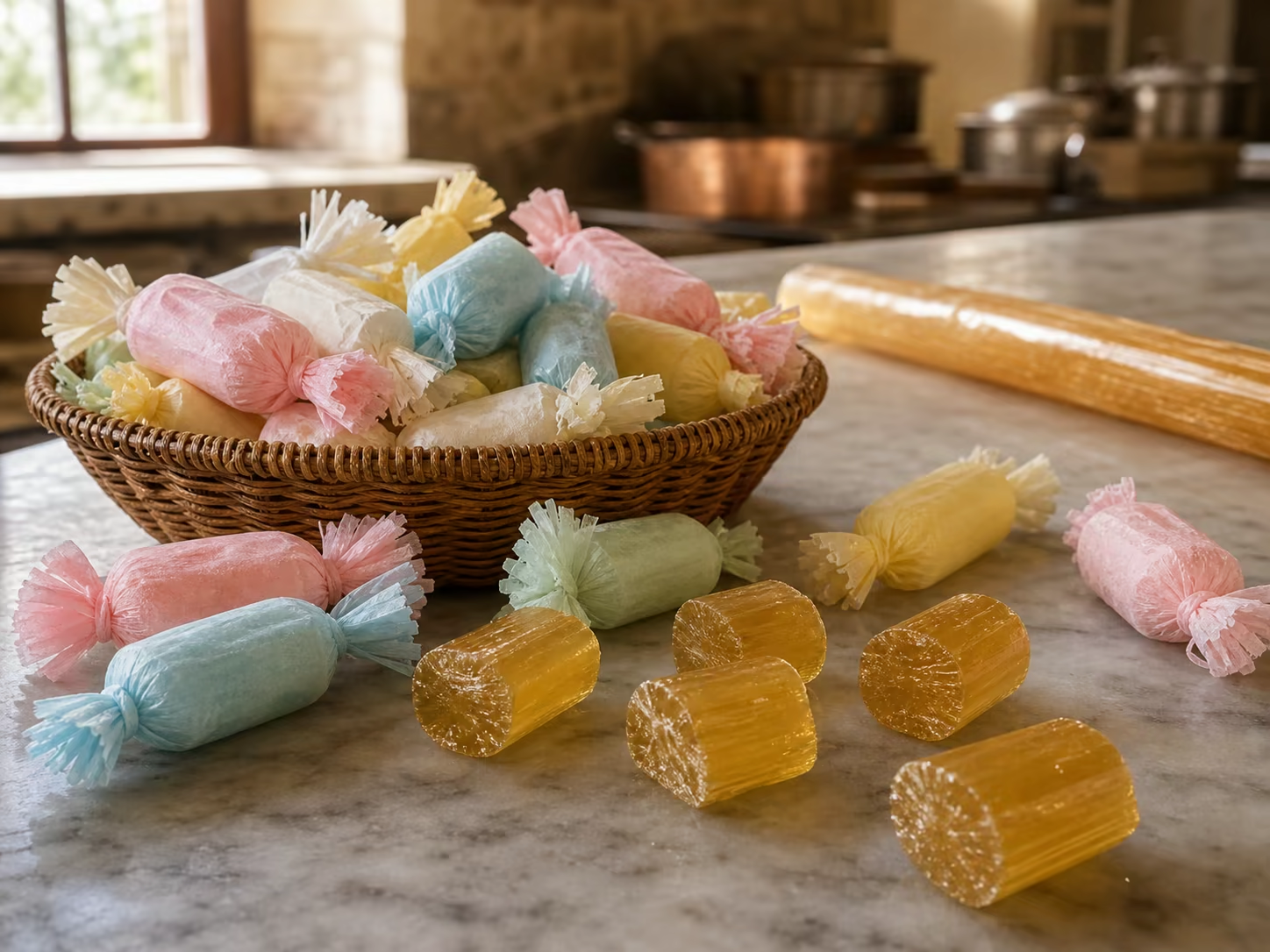
Roll each portion into a cylinder about 2.5 cm / 1 in thick.
Cut or strike the rods into pieces about 3 cm / 1.2 in long and leave to cool completely.
Wrap in tissue paper and store in an airtight container protected from humidity.
Sources for this recipe
The quantities and method were checked against the references below. Family recipes may vary; where no single official formula exists, we present a representative practical version and say so plainly.
Read the editorial policy →