Órgão da Covilhã — Published Formula
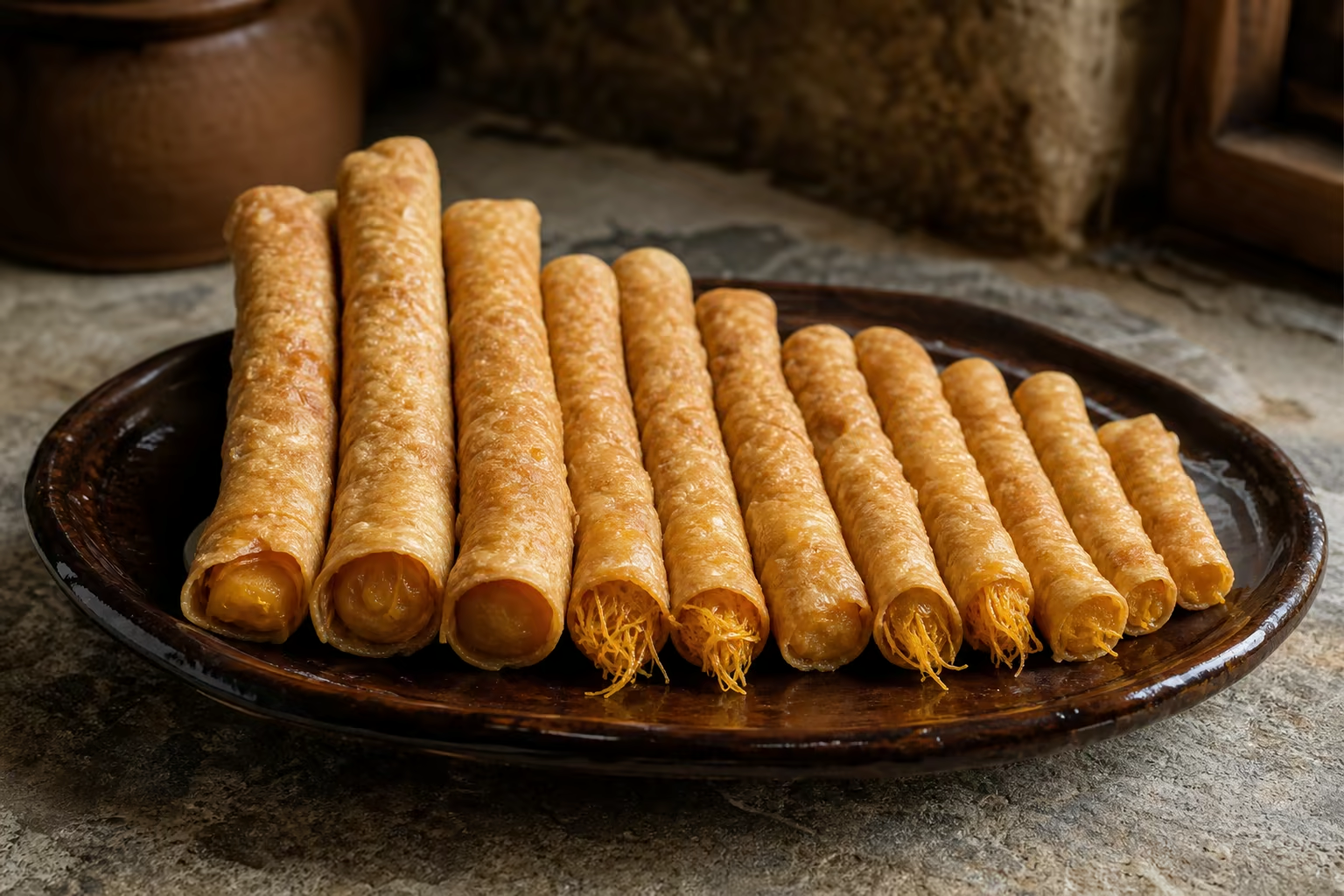
This published formula builds Covilhã’s monumental sweet from fried tubes in six sizes, a yolk-and-almond filling and fios de ovos at their ends. The cookery source supplies quantities and assembly; independent regional sources confirm the identity and organ-like architecture.
- Yields
- 91 tubes, according to the published support list, assembled as one organ
- Prep
- Not stated by the source
- Cook
- Not stated by the source
Ingredients
- 1 cup; capacity not stated Sugar for the dough
- 1 tbsp Aguardente
- 1 tbsp Butter
- 5 Whole eggs
- 750 g / 26.5 oz Wheat flour
- Quantity not stated Salt
- Quantity not stated Olive oil for frying
- 250 ml / 8.5 fl oz Water for the filling
- 750 g / 26.5 oz Sugar for the filling
- 250 g / 8.8 oz Blanched ground almonds
- 30 Egg yolks
- 250 g / 8.8 oz Fios de ovos
Method
Work the sugar, aguardente, butter, five eggs, flour and salt into a fine, elastic dough. The source gives no incorporation order, duration or resting time.
Roll out the dough and cut strips about 2 cm wide. Wind them spirally around tube moulds: one 22 cm, six 17 cm, twelve 13 cm, eighteen 11 cm, twenty-four 8 cm and thirty 6 cm long.
Fry the tubes in very hot olive oil and drain on absorbent paper. The source publishes no frying temperature or time.
For the filling, cook 750 g sugar and 250 ml water to hair-thread stage. Add the blanched ground almonds and boil briefly.
Remove from the heat, incorporate the thirty yolks and return to the heat until the mixture exposes the pan bottom when drawn through. Leave to cool.
Remove the moulds, fill the tubes with the cold cream and place fios de ovos at one end of each.
Stand the 22 cm tube upright in the centre, fios de ovos uppermost. Surround it successively with the six 17 cm, twelve 13 cm, eighteen 11 cm, twenty-four 8 cm and thirty 6 cm tubes, temporarily securing the layers and finishing with a ribbon.
Sources for this recipe
The quantities and method were checked against the references below. Family recipes may vary; where no single official formula exists, we present a representative practical version and say so plainly.
Read the editorial policy →