Pão de Ló
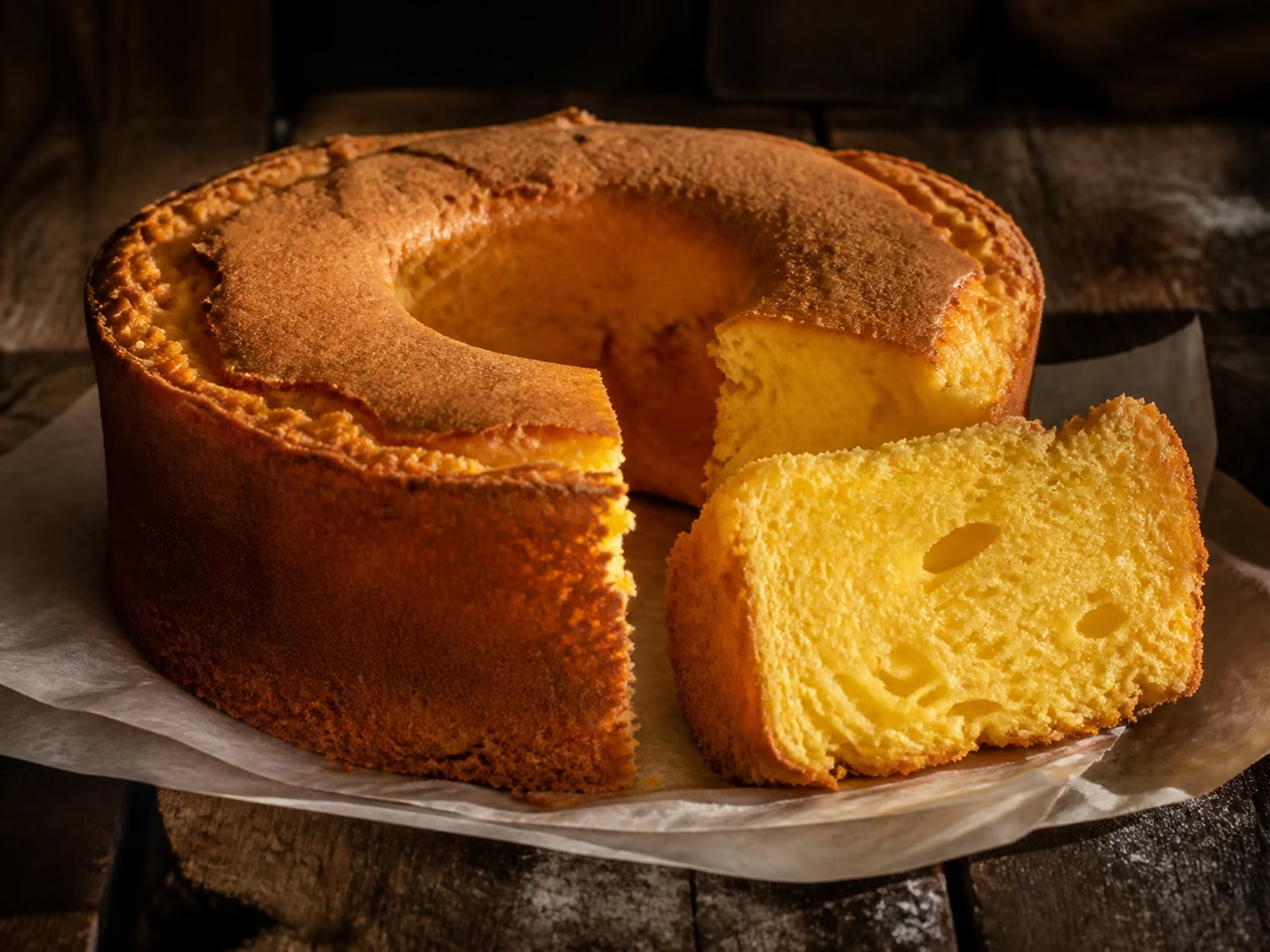
Pão de Ló is the oldest and simplest cake in Portuguese baking: just eggs, sugar and flour, with no raising agent. In the celebrated Ovar style, the trick is to pull it from the oven while the centre is still creamy and moist — the famous "pito" — held together by a thin, golden crust. Baked in a clay mould lined with paper, it is a festive sweet eaten with a spoon.
- Yields
- 1 pão de ló (deep 20-22 cm mould), 8-10 servings
- Prep
- 30 min
- Cook
- 35-40 min
Ingredients
- 12 yolks Egg yolks
- 4 eggs Whole eggs
- 250 g Caster (fine white) sugar
- 100 g Plain (all-purpose) flour, sifted
- 1 pinch Coarse salt
Method
Heat the oven to 180 °C (350 °F, no fan) and let it stabilise well; steady heat is essential to form the crust without drying the centre. Line a deep clay mould (caçoila) or a tall-sided 20-22 cm round tin with baking paper — do not grease — folding it so it rises well above the rim and hugs the base with no air pockets.
Combine the yolks, whole eggs, sugar and pinch of salt in a large bowl. Beat on high speed for 12 to 15 minutes, until very pale, thick and tripled in volume — it should fall from the whisk in a slow ribbon. This whisked-in air, not any raising agent, is what makes the cake light.
Sift the flour over the batter in three additions. Fold gently with a spatula in broad bottom-to-top strokes, just until the flour disappears. Do not beat: over-mixing knocks out the air and leaves the cake heavy.
Pour the batter into the lined mould, which should be about two-thirds to three-quarters full so it can rise without overflowing. Tap the mould lightly on the worktop once or twice to release any large bubbles.
Bake for 35 to 40 minutes. Ovar-style Pão de Ló should have a golden surface set firm at the edges but a centre that is still soft, wobbling gently when you shake the mould — start checking at 30 minutes. A skewer inserted near the edge comes out dry; in the middle it comes out moist and creamy. That is exactly the point you want.
Remove from the oven and let it cool completely in the mould, on a wire rack. As it cools the cake keeps cooking on residual heat and the centre "settles", sinking a little and firming up while keeping its moist heart. Ideally let it rest a few hours (or until the next day) before serving, so the texture stabilises.
Serve still in the paper, slicing the firmer edges or spooning out the creamy centre.
Sources for this recipe
The quantities and method were checked against the references below. Family recipes may vary; where no single official formula exists, we present a representative practical version and say so plainly.
Read the editorial policy →