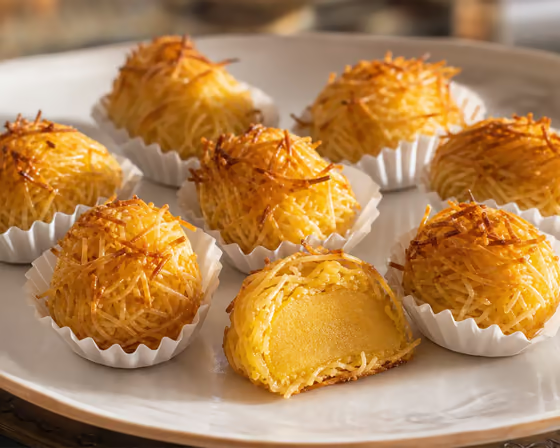
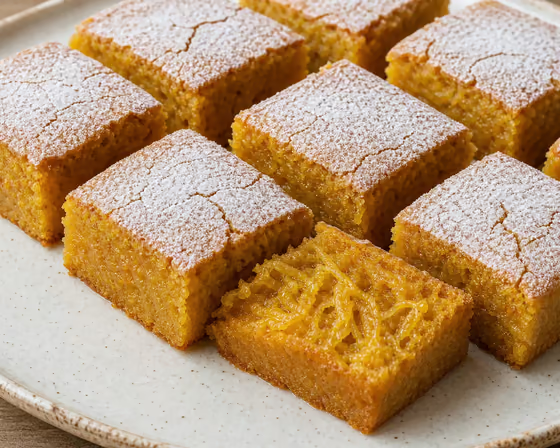
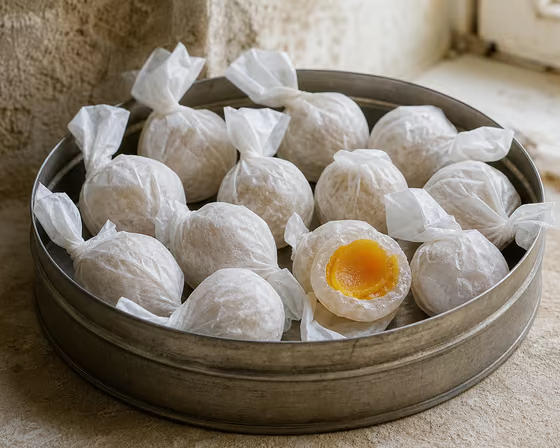
Bolo Fidalgo — Published Alentejo Formula
Revista Outsider publishes this ten-serving construction: thin sheets made in syrup from twelve yolks and one whole egg enclose an egg-yolk filling made with a further eighteen yolks. Casa Maria Vitória, a producer in Alcáçovas, confirms the structure of fine layers and egg-yolk filling but does not publish its formula. This page therefore documents the reproducible editorial version, not a trade secret.
- Yields
- 10 servings
- Prep
- 20 min, plus at least 4 h chilling
- Cook
- 35 min stated by the source
Ingredients
- 18 Egg yolks for the filling
- 450 g / 15.9 oz Sugar for the filling
- 375 ml / 12.7 fl oz Water for the filling
- 12 Egg yolks for the egg sheets
- 1 Whole egg for the sheets
- 250 g / 8.8 oz Sugar for the sheets
- 200 ml / 6.8 fl oz Water for the sheets
- Quantity not stated Cold water for receiving the sheets
- Quantity not stated Oil for greasing the tin
Method
For the sheets, pass the twelve yolks through a sieve, add one whole egg and mix until homogeneous.
Set a wide tray of room-temperature water beside the stove to receive the cooked sheets.
Heat 200 ml water with 250 g sugar to thread stage.
Without turning off the heat, pour a ladleful of egg mixture onto the syrup. Allow it to form a thin crepe-like sheet.
Carefully transfer the sheet to the tray of water and repeat until the egg mixture is used. Reserve the sheets.
For the filling, boil 375 ml water with 450 g sugar to pearl stage. Remove from the heat and leave to cool completely.
Pass the eighteen yolks through a sieve, beat them lightly and add them to the cold syrup, stirring with a whisk.
Return to the heat, stirring occasionally, until the filling reaches the road stage and exposes the pan bottom when drawn through. Remove and reserve.
Lightly oil a loose-bottomed ring tin. The source gives no diameter.
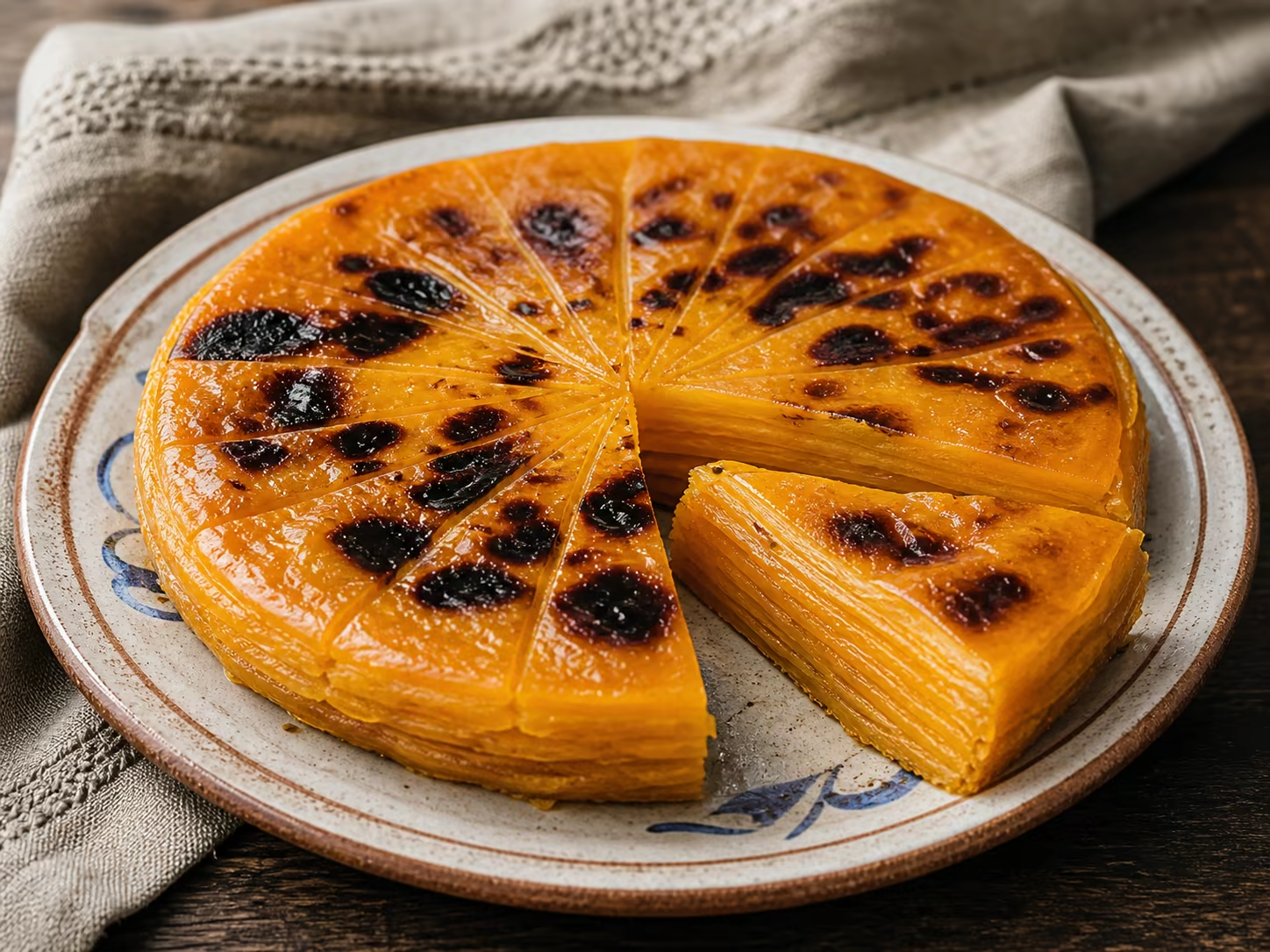
Line the tin with the egg sheets, leaving part of them overhanging to close the top.
Fill with the egg-yolk cream and fold the overhanging sheets over it until covered.
If desired, scorch the surface with a traditional hot iron as for leite-creme. Refrigerate for at least four hours and unmould carefully.
Sources for this recipe
The quantities and method were checked against the references below. Family recipes may vary; where no single official formula exists, we present a representative practical version and say so plainly.
Read the editorial policy →