Bolos de Cabeça — Antónia Aguiar’s Bakery Formula Documented by MemóriaMedia
This is the professional-scale formula collected by MemóriaMedia in Torres Novas: 29 kilograms / 63.9 pounds of flour, 14 kilograms / 30.9 pounds of sugar and portions of about 200 grams / 7.1 ounces, mechanically mixed and raised overnight. The source suggests dividing ingredients by ten for home use, but its note inexplicably changes the sugar from 14 to 15 kilograms before scaling; we therefore publish the main batch without silently repairing the discrepancy.
- Yields
- Not stated; portions of about 200 g / 7.1 oz
- Prep
- More than 35 minutes mixing, plus shaping; total not stated
- Cook
- About 10 minutes per oven load, after an overnight rise
Ingredients
- 29 kg / 63.9 lb Wheat flour, total
- 14 kg / 30.9 lb Brown sugar; the scaling note contradicts this quantity
- 100 g / 3.5 oz Baker’s yeast
- 1 L / 4.23 US cups Olive oil for the dough
- 500 g / 17.6 oz Butter; the method allows margarine
- 25 Lemons, juice and zest
- 4 tablespoons; volume not defined Bicarbonate of soda
- 4 tablespoons; volume not defined Cinnamon
- 4 tablespoons; volume not defined Fennel seed
- 100 g / 3.5 oz Salt
- as needed; unquantified Lukewarm water for the starter and dough
- as needed; unquantified Olive oil for coating the dough surface
- as needed; unquantified Flour for the bench and vegetable fat for the trays
- as needed; unquantified Beaten egg for glazing
Method
Prepare bakery equipment capable of handling this batch. The source uses a small mixer for the starter and a large mixer for the dough; it publishes no capacity, rotational speed or hand-mixing alternative.
For the starter, combine 4 kilograms / 8.8 pounds of the flour, all 100 grams / 3.5 ounces of salt, all 100 grams / 3.5 ounces of yeast and enough lukewarm water. Mix in the small mixer for 5 minutes, adjusting the water. The source neither quantifies the water nor defines its temperature.
Let the starter rise for ‘a few minutes’ until its interior looks lacy. The source gives no time, volume, dough temperature or other measurable criterion.
Transfer the starter to the large mixer. Add the remaining 25 kilograms / 55.1 pounds of flour, cinnamon, fennel, bicarbonate, all 14 kilograms / 30.9 pounds of sugar and the zest of 25 lemons. Mix briefly by hand.
Heat the litre / 4.23 US cups of olive oil with 500 grams / 17.6 ounces of butter—or margarine, according to the method—to boiling and pour it over the mixture. This step combines boiling fat with a very large batch: protect skin and eyes and prevent splashing and overflow.
Mix again to break up the lumps. Add the juice of all 25 lemons and enough water to begin mixing; the amount remains unspecified.
Mix on low speed for about 30 minutes, adding water gradually as needed. The published endpoint is dough slightly firmer than bread dough; the source supplies no hydration, temperature or instrumental test.
Move the dough to a large basin, coat its surface with olive oil, cover with plastic and let rise overnight in a warm place. No hours, temperature or target expansion are specified.
The next day, flour the bench and grease the trays with vegetable fat. Take a large piece of dough, form a thick rope and cut pieces of about 200 grams / 7.1 ounces.
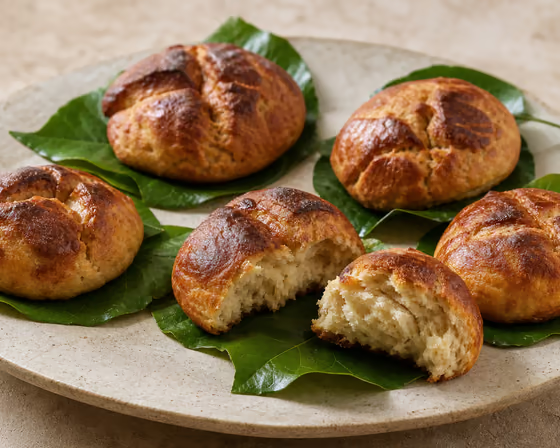
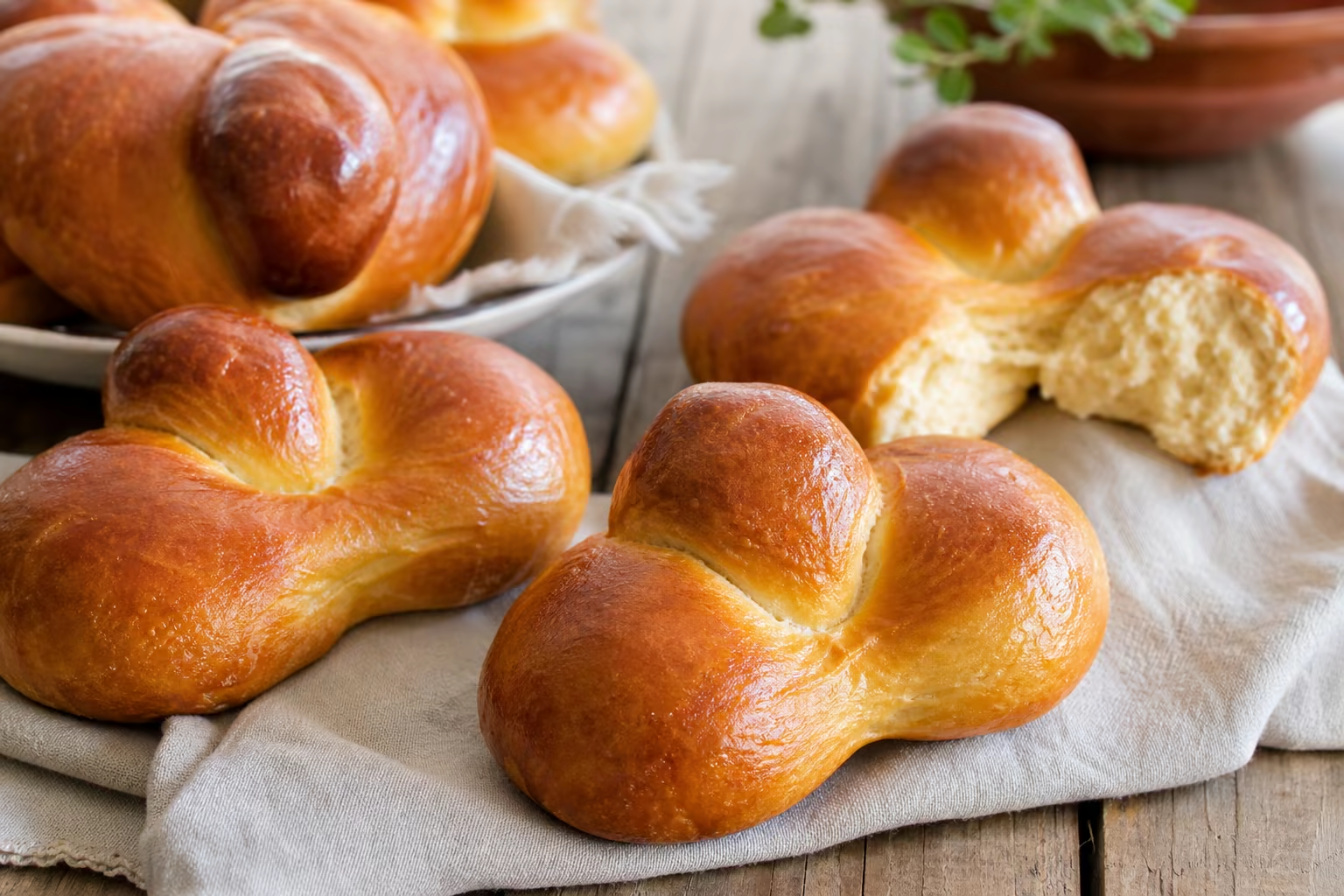
Roll each piece into a cylinder and flatten its ends with the palm. Pinch the centre with the edges of both hands to form two ‘heads’.
Fold the dough so the two heads overlap and pinch again to obtain four heads or a cross. Then overlap two heads and press with the fingers to join the upper and lower portions; the final shape should resemble two overlapping figure eights.
Arrange on the trays and brush with beaten egg. The source publishes no spacing, final proof or quantity of egg.
Bake in a very hot oven, about 250°C / 482°F, for about 10 minutes. The source gives no oven type, load, airflow, final colour or internal temperature; these values belong to the documented professional process and are not a guarantee for other equipment.
Sources for this recipe
The quantities and method were checked against the references below. Family recipes may vary; where no single official formula exists, we present a representative practical version and say so plainly.
Read the editorial policy →