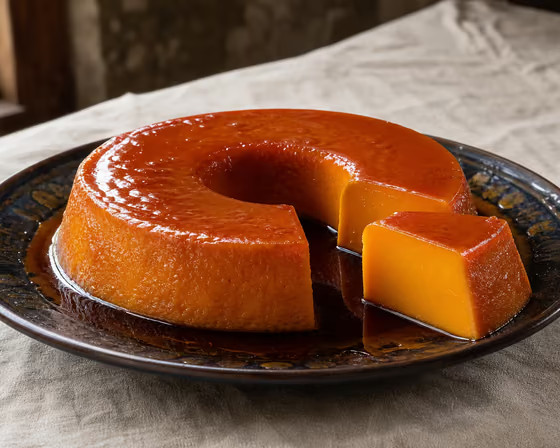
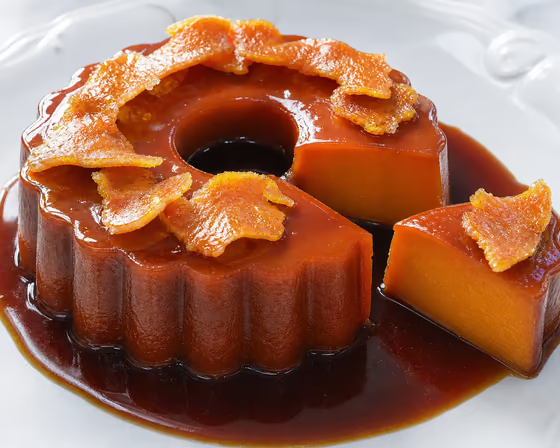
Ponte de Lima Franciscan Pudding — Contemporary Tangerine Formula
Alto Minho's institutional guide confirms “Franciscan or tangerine pudding” among Ponte de Lima's specialities. The formula comes from a contemporary page that attributes it to the Convent of Saint Francis; because the guide does not establish that provenance, it is published as an attributed version rather than a convent transcription.
- Yields
- 12 servings
- Prep
- Not separated; source states 1 hour 30 minutes total
- Cook
- 60 min

Ingredients
- 15 Whole eggs
- 500 g / 17.6 oz Sugar for the pudding
- 200 ml / 6.8 US fl oz Tangerine juice
- 150 g / 5.3 oz Sugar for the caramel
- 5 tablespoons Cold water for the caramel
- 1 coffee spoon; capacity not defined Ground cinnamon for the caramel
- To taste; listed but not assigned in the method Additional sugar and ground cinnamon
Method
Heat the oven to 180°C / 356°F.
Mix the fifteen eggs with 500 grams / 17.6 ounces of sugar. The source says “mix” and publishes no duration, tool or aeration endpoint.
Add 200 millilitres / 6.8 US fluid ounces of tangerine juice and combine thoroughly.
For the caramel combine 150 grams / 5.3 ounces of sugar, five tablespoons of cold water and one coffee spoon of ground cinnamon. Heat until caramel forms. The source defines no colour, temperature or duration.
Coat a pudding mould with the caramel. Its capacity and shape are not published.
Pour the egg mixture into the mould.
Bake in a water bath for one hour. The source gives no initial water level or temperature, cover or doneness test.
Leave to cool and unmould. The page states storage for up to four days but publishes no temperature, container or cooling protocol.
Sources for this recipe
The quantities and method were checked against the references below. Family recipes may vary; where no single official formula exists, we present a representative practical version and say so plainly.
Read the editorial policy →