Azorean Malassadas
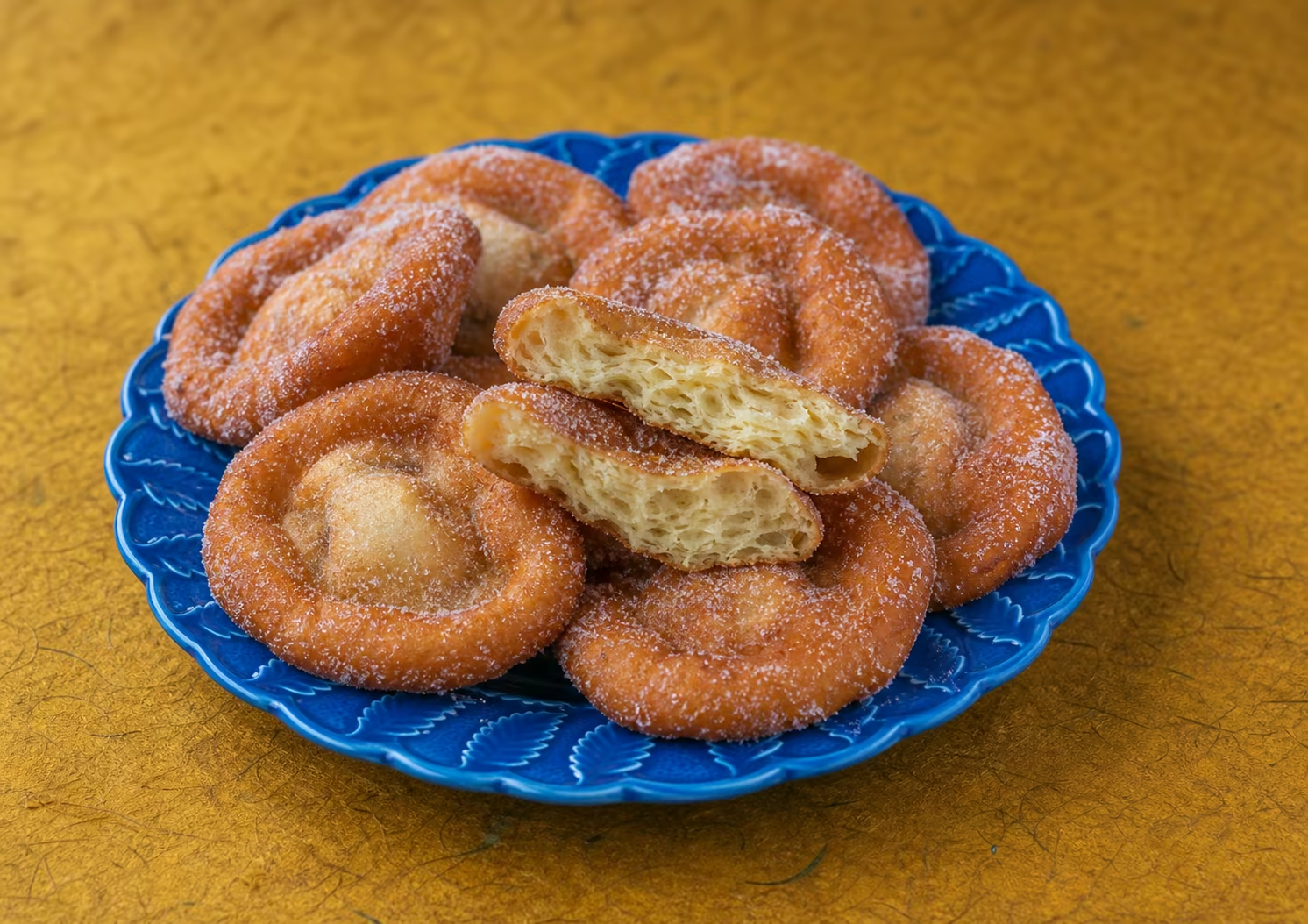
These malassadas follow the method recorded by DGADR: a soft dough of flour, eggs, sugar, milk and baker's yeast, thoroughly kneaded, proved, stretched by hand and fried. The domestic quantities come from an independent editorial formula; the Azorean identity, technique and Carnival association come from institutional documentation.
- Yields
- 20-24 pieces
- Prep
- 25 min plus 1 hr 15 proving
- Cook
- 25 min
Ingredients
- 500 g Plain wheat flour
- 10 g Dry baker's yeast
- 250 ml Lukewarm milk
- 3 Eggs
- 70 g Sugar
- 1/2 tsp Fine salt
- from 1 lemon Lemon zest
- about 1.5 litres, for frying Vegetable oil
- as needed for coating Sugar and cinnamon
Method
Mix the yeast with 100 ml of the lukewarm milk and a spoonful of the sugar. Leave for 10 minutes until foamy. The milk should be lukewarm, not hot.
Sift the flour into a large bowl. Add the remaining sugar, salt and zest. Make a well and add the activated yeast and beaten eggs.
Knead, gradually adding the remaining milk, to make a very soft, sticky dough. Beat or knead vigorously for 10-15 minutes, lifting and folding, until elastic and beginning to form bubbles.
Cover and prove in a warm place for about 1 hour, or until doubled. Timing depends on room temperature.
Heat 5-7 cm of oil to 170-175 °C / 340-350 °F. Prepare one tray with absorbent paper and another with cinnamon sugar. Never fill the pan more than halfway or leave hot oil unattended.
Wet or lightly oil your hands. Pull off a small piece of dough, stretch it with your fingers and open the centre without knocking out all the gas.
Fry only a few at a time, turning once, for 2-3 minutes until golden and cooked through. Keep the oil within the stated range.
Drain briefly, then coat in cinnamon sugar while still warm. Serve the same day.
Sources for this recipe
The quantities and method were checked against the references below. Family recipes may vary; where no single official formula exists, we present a representative practical version and say so plainly.
Read the editorial policy →