Bolo de São Marcos — Round Version Adapted from Alexandre Mota
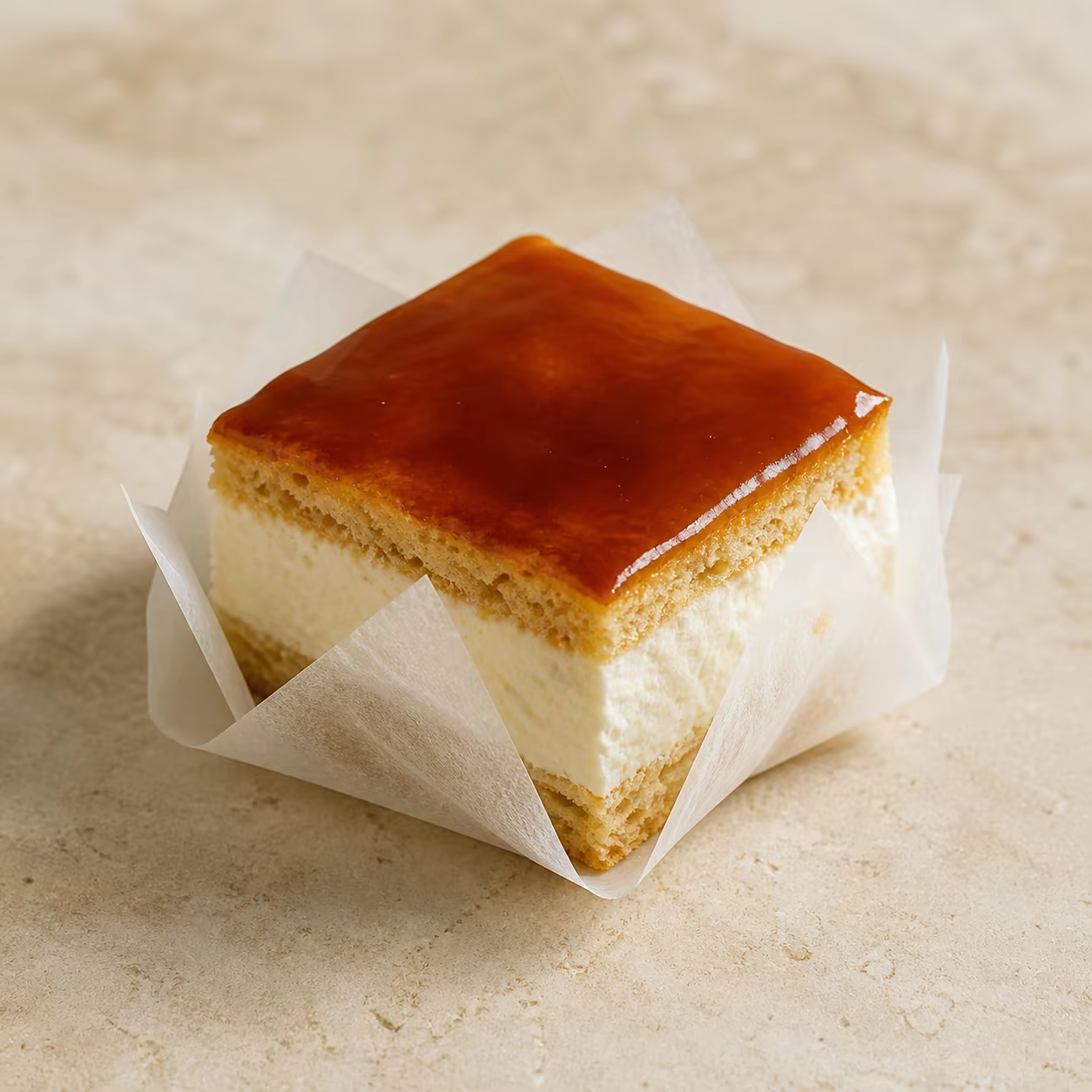
This is the formula published by the Portuguese Baking School, created by Jeremiah Duarte Bills from a recipe by Alexandre Mota. It turns the pastry-counter São Marcos—normally assembled in a tray and cut into squares—into a 23 cm round cake serving ten to twelve. It retains soaked sponge, a thick cream layer, sweet egg-yolk cream and burnt sugar, but uses neither the gelatine nor freezing that Fabrico Próprio documents for the commercial format.
- Yields
- 10–12 servings; one 23 cm / 9 in round cake
- Prep
- Total time not stated; a final rest of several hours or overnight is recommended
- Cook
- 20–25 min for the cake; stovetop stages have no published duration
Ingredients
- 30 g / 2 tbsp Water for the sweet egg-yolk cream
- 125 g / 1/2 cup plus 1/8 cup Sugar for the sweet egg-yolk cream
- 112 g (6 large yolks) Egg yolks for the sweet egg-yolk cream
- 1 pinch Fine sea salt for the sweet egg-yolk cream
- 150 g (5 large whites) Egg whites for the cake
- 94 g (5 large yolks) Egg yolks for the cake
- 150 g / 3/4 cup Sugar for the cake
- 1/2 tsp Fine sea salt for the cake
- zest of 1 lemon Lemon for the cake
- 150 g / 1 1/8 cups Cake flour, sifted
- as needed; type not stated Fat for greasing the pan
- 200 g / 1 cup minus 2 tbsp Water for the soaking syrup
- 200 g / 1 cup Sugar for the soaking syrup
- 1 pinch Fine sea salt for the soaking syrup
- 2 Cinnamon sticks for the soaking syrup
- 1–2 tbsp Spirit or liqueur for the soaking syrup, optional
- 480 g / 2 cups Heavy cream
- 1/2–1 tsp Vanilla extract for the cream
- 1 tbsp Powdered sugar for the cream
- 57 g / 1/2 cup Toasted sliced almonds for the sides
- as needed; quantity not stated Granulated sugar for caramelising
Method
Begin with the sweet egg-yolk cream. Heat the 30 g water and 125 g sugar, stirring until the sugar dissolves. Stop stirring and boil until the syrup reaches 109°C / 228°F; remove from the heat and cool slightly.
Whisk the six yolks with a pinch of salt. Gradually whisk in the syrup, return everything to the saucepan and cook over medium heat, stirring continuously, until thickened; the source states neither a duration nor final temperature.
Pass the sweet egg-yolk cream through a fine sieve, cover its surface directly with parchment or plastic wrap and refrigerate until slightly chilled and set.
Heat the oven to 180°C / 350°F, place a rack in the centre, grease the sides of a light-coloured 23 cm / 9 in round pan and line the base with parchment. The source does not identify the greasing fat.
Using a stand mixer with the whisk attachment, beat the 150 g whites, 94 g yolks, 150 g sugar, 1/2 teaspoon salt and lemon zest on high for 10 minutes, until light and fluffy and the sugar has dissolved.
Sift the flour over the batter in three additions, gently folding each before adding the next. Transfer to the pan and bake for 20–25 minutes, until a skewer inserted in the centre comes out clean. Cool completely in the pan on a rack.
For the soaking syrup, combine the 200 g water, 200 g sugar, a pinch of salt and two cinnamon sticks in a saucepan. Boil for one minute, switch off the heat and cool to room temperature. Whisk in the optional spirit or liqueur, if using, and remove the cinnamon only when assembling.
Whip the cream with the vanilla and one tablespoon powdered sugar on medium-low until stiff peaks form, taking care not to overwhip.
Unmould and split the cake horizontally into two even layers. Soak the underside of both layers with syrup. Fix the first layer to the serving plate with a little cream, soak its top and spread on a cream layer almost as thick as the sponge.
Add the second layer right side up and soak its top with the remaining syrup. Cover the sides with a thin layer of cream and refrigerate for at least 10 minutes to set.
Spread the sweet egg-yolk cream over the top and sprinkle it with a thin layer of granulated sugar. Caramelise it with a kitchen torch or hot branding iron; the recipe calls for sugar here but publishes no quantity.
Cover the sides with the toasted almonds. Transfer the remaining cream to a piping bag fitted with a star tip and decorate the top edge. Keep refrigerated and, to let the syrup distribute evenly, rest for several hours or overnight before serving.
Sources for this recipe
The quantities and method were checked against the references below. Family recipes may vary; where no single official formula exists, we present a representative practical version and say so plainly.
Read the editorial policy →