Fofas da Povoação — Formula Taught by Maria de Deus
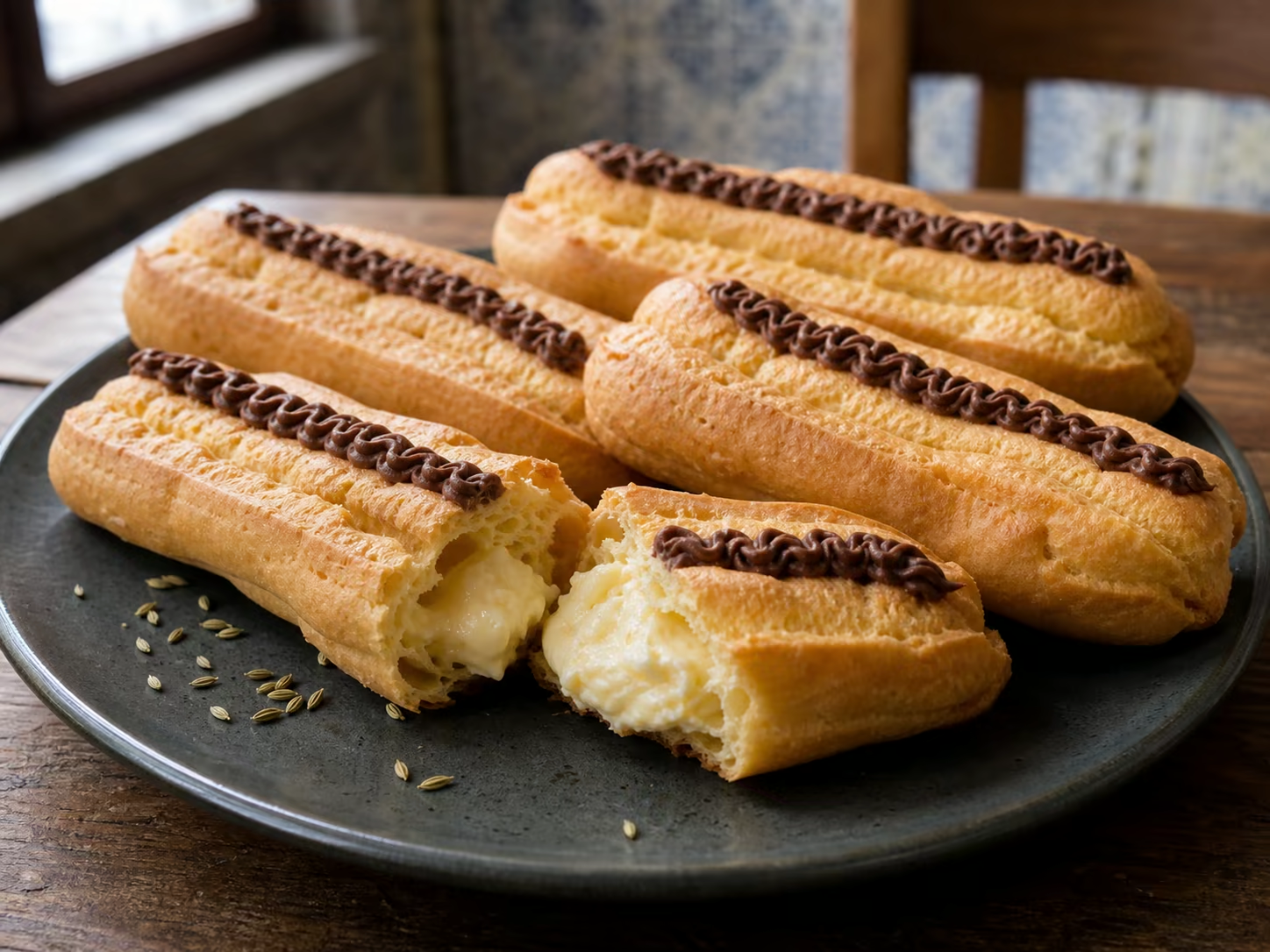
This is the small batch published by the Portuguese Baking School, adapted by Jeremiah Duarte Bills from the formula Maria de Deus taught him at Café Restaurante Jardim in Povoação. It makes six to seven large Fofas: three-line choux pastry, vanilla cream and a stripe of chocolate buttercream. It is not presented as Dona Angelina's original recipe or as a universal formula for the village's bakeries. Unlike other local descriptions, this published version contains no fennel.
- Yields
- 6–7 large Fofas
- Prep
- Total preparation time not stated
- Cook
- 35–45 min baking; 10–15 min drying in the switched-off oven
Ingredients
- 125 g / 4.4 oz Sugar for the vanilla cream
- 1/2 tbsp Cornstarch for the vanilla cream
- 1/4 tsp Fine sea salt for the vanilla cream
- 19 g (1 large yolk) Egg yolk for the vanilla cream
- 255 g / 1 cup plus 1 tbsp Whole milk for the vanilla cream
- 3/4 tsp Vanilla extract for the cream
- 130 g / 1/2 cup plus 1/2 tbsp Whole milk for the pastry
- 125 g / 1/2 cup plus 1/2 tbsp Water for the pastry
- 26 g / 2 tbsp Unsalted butter for the pastry
- 26 g / 2 tbsp Lard for the pastry
- 1/2 tsp Fine sea salt for the pastry
- 150 g / 1 1/8 cups Plain wheat flour for the pastry
- 200–225 g (4–4 1/2 large eggs) Eggs for the pastry
- 56 g / 4 tbsp Unsalted butter, softened, for the chocolate buttercream
- 50 g / 1/4 cup Powdered sugar for the chocolate buttercream
- 1 1/2 tbsp Heavy cream for the chocolate buttercream
- 25 g / 2 1/2 tbsp Dutch-process cocoa powder for the chocolate buttercream
- 1 pinch Fine sea salt for the chocolate buttercream
- 1/2 tsp Vanilla extract for the chocolate buttercream
Method
Make the vanilla cream first. In a saucepan, combine the 125 g sugar, cornstarch and 1/4 teaspoon salt; whisk in the yolk, then gradually add the 255 g milk while whisking to prevent lumps.
Cook the cream over medium to medium-high heat, whisking continuously, until thick and beginning to simmer. Keep it simmering for one minute while whisking, remove from the heat and add 3/4 teaspoon vanilla. Leave to cool, whisking occasionally; if storing it, cover the surface directly and refrigerate.
Heat the oven to 200°C / 400°F, place a rack in the centre and line a baking sheet with parchment or a silicone mat.
For the pastry, bring the 130 g milk, 125 g water, 26 g butter, 26 g lard and 1/2 teaspoon salt to the boil. The source lists lard among the ingredients but omits it from this instruction; adding it with the butter is an explicit editorial interpretation, not a detail stated in the published method.
Turn off the heat, add the 150 g flour all at once and stir continuously with a heatproof spatula or wooden spoon until the dough forms one mass and dries slightly in the residual heat of the pan.
Transfer the dough to a stand mixer fitted with the paddle and mix for about 30 seconds on medium-low to cool it slightly. Add 200 g egg gradually, allowing each addition to incorporate before the next, then beat for another 20–30 seconds.
Test the consistency with a spoon: the dough should droop slowly into a small triangle while still holding its shape. If it is much too stiff, gradually add up to 25 g more beaten egg.
Using a piping bag with a large star tip, pipe a line about 10 cm / 4 in long, double back with a slightly overlapping second line, then continue over the centre with a thicker third line. Form six or seven Fofas, leaving generous space between them.
Put the tray in the oven and immediately reduce the temperature to 180°C / 350°F. Bake for 35–45 minutes without opening the door, until deeply golden; pastries that remain too pale may collapse.
Cut a slit in the top of each Fofa to release steam. Switch off the oven, prop the door ajar with a wooden spoon and leave them to dry for at least 10–15 minutes. Remove and cool completely on the baking sheet.
For the chocolate buttercream, beat the 56 g butter until softened. On low speed, gradually add the 50 g powdered sugar and 25 g cocoa. Add the cream, a pinch of salt and 1/2 teaspoon vanilla; beat until smooth and transfer to a piping bag fitted with a small star tip.
Widen the lengthwise slit in the top of each Fofa and fill generously with vanilla cream. Cover the opening with a line of chocolate buttercream. Serve the same day; keep any leftovers covered in the refrigerator.
Sources for this recipe
The quantities and method were checked against the references below. Family recipes may vary; where no single official formula exists, we present a representative practical version and say so plainly.
Read the editorial policy →