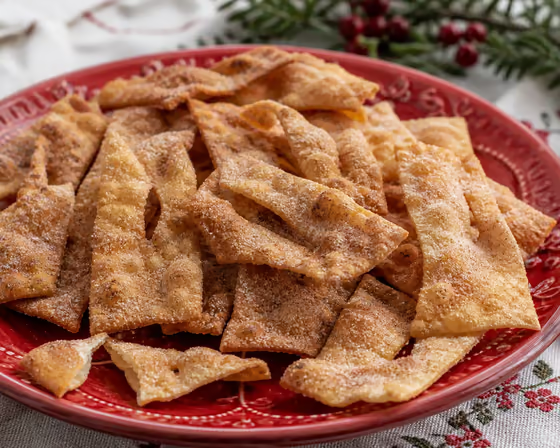
Traditional Portuguese Rabanadas
Portuguese rabanadas make use of two- or three-day-old cacete bread: first soaked in flavoured milk, then dipped in egg and fried until golden. Cinnamon sugar provides one documented finish; this recipe also includes, as an alternative, the sugar, cinnamon and lemon syrup published by RTP.
- Yields
- 8 rabanadas
- Prep
- 20 min
- Cook
- 15 min

Ingredients
- 8 slices, 2 cm thick Two- to three-day-old cacete or firm white bread
- 600 ml Whole milk
- 100 g Sugar, for the milk
- 3 strips of peel Lemon
- 1 Cinnamon stick
- 3 Eggs
- as needed Oil for frying
- as needed for coating Sugar and ground cinnamon
- 250 g Sugar, for the optional syrup
- 150 ml Water, for the optional syrup
- 2 strips of peel and 1 stick Lemon and cinnamon stick, for the optional syrup
Method
Heat half the milk with the sugar, lemon peel and cinnamon stick. Simmer gently for 10 minutes to infuse.
Remove the aromatics, add the remaining cold milk and pour into a shallow dish. The mixture should be warm, not boiling.
Beat the eggs in a second shallow dish. Prepare one plate with cinnamon sugar and another lined with kitchen paper.
Heat 2-3 cm of oil to about 175 °C / 350 °F. Working one slice at a time, soak the bread in milk until moist inside but not falling apart; drain briefly and coat in egg.
Fry only a few slices at a time for about 2 minutes per side until golden. Drain on paper, then coat in cinnamon sugar while still warm.
For the optional syrup, boil the sugar, water, lemon peel and cinnamon stick for 3 minutes; remove from the heat and let it cool until warm.
Serve the rabanadas plain or spooned with syrup. If using syrup, let them rest for a few hours so they absorb the flavour without losing all their structure.
Sources for this recipe
The quantities and method were checked against the references below. Family recipes may vary; where no single official formula exists, we present a representative practical version and say so plainly.
Read the editorial policy →