Bolo das Alhadas — Gastronomic Charter Household Version
The Gastronomic Charter of the Coimbra Region distinguishes Leonor dos Bolos' secret formula from this version, which it describes as common in many Alhadas households. It uses 1 kg flour, 300 g sugar, five eggs, lemon, cinnamon and either butter or olive oil, with about two hours' rising and half an hour in a wood-fired oven. This is a documented household recipe, not a reproduction of the family's protected commercial formula.
- Yields
- Not stated; the source gives neither number nor weight of loaves
- Prep
- About 2 hours' rising, plus mixing and shaping
- Cook
- About 30 minutes in a wood-fired oven
Ingredients
- 1 kg / 2 lb 3 oz Wheat flour
- 300 g / 10.6 oz Sugar
- 5 Eggs
- zest of 1 Lemon
- 50 g / 1.8 oz butter or 100 ml / 3.4 fl oz olive oil Melted butter or olive oil
- as needed Ground cinnamon
- 50 g / 1.8 oz Baker's yeast
- amount not stated; for dissolving the yeast Warm water or milk
- 1 pinch Salt
Method
Mix the flour, sugar, lemon zest, cinnamon to taste and pinch of salt.
Dissolve the 50 g / 1.8 oz yeast in warm water or milk. The source does not state the amount of liquid.
Make a well in the flour mixture. Add the dissolved yeast, five eggs and either 50 g / 1.8 oz melted butter or 100 ml / 3.4 fl oz olive oil. Knead thoroughly.
Cover and leave to rise in a warm place for about two hours or until doubled in volume.
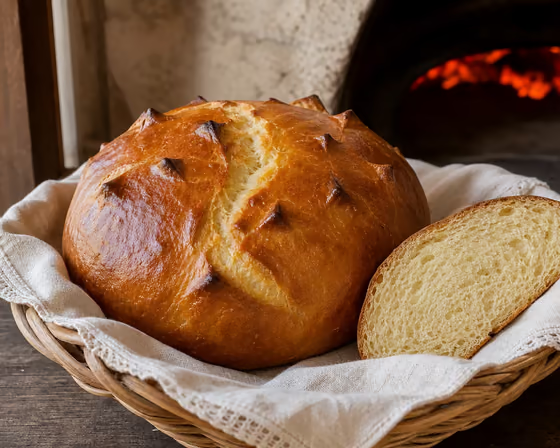
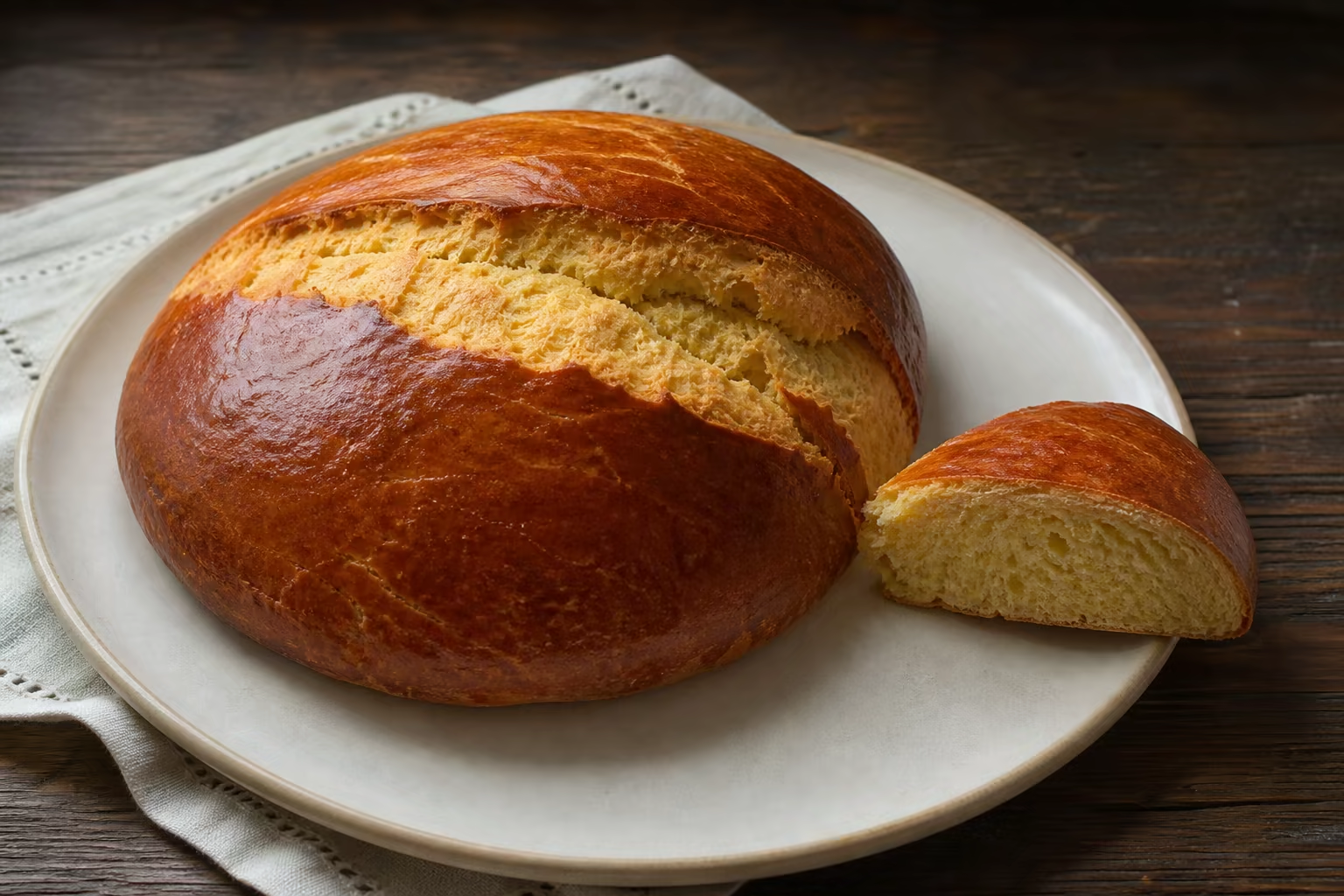
Shape round loaves. The source gives no number, weight or dimensions.
Bake in a wood-fired oven for about 30 minutes. The source publishes neither a temperature nor a domestic-oven adaptation.
Sources for this recipe
The quantities and method were checked against the references below. Family recipes may vary; where no single official formula exists, we present a representative practical version and say so plainly.
Read the editorial policy →