Bolo da Sertã — Azorean Version Published by byAçores
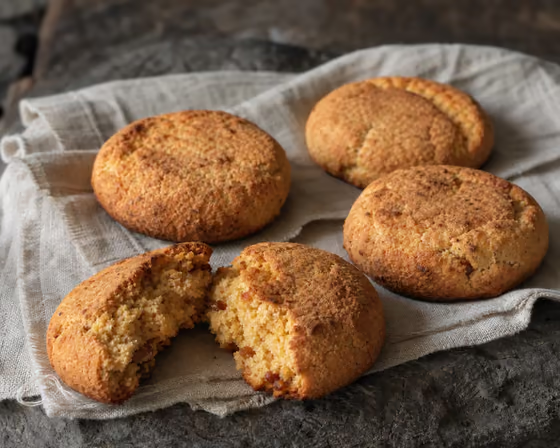
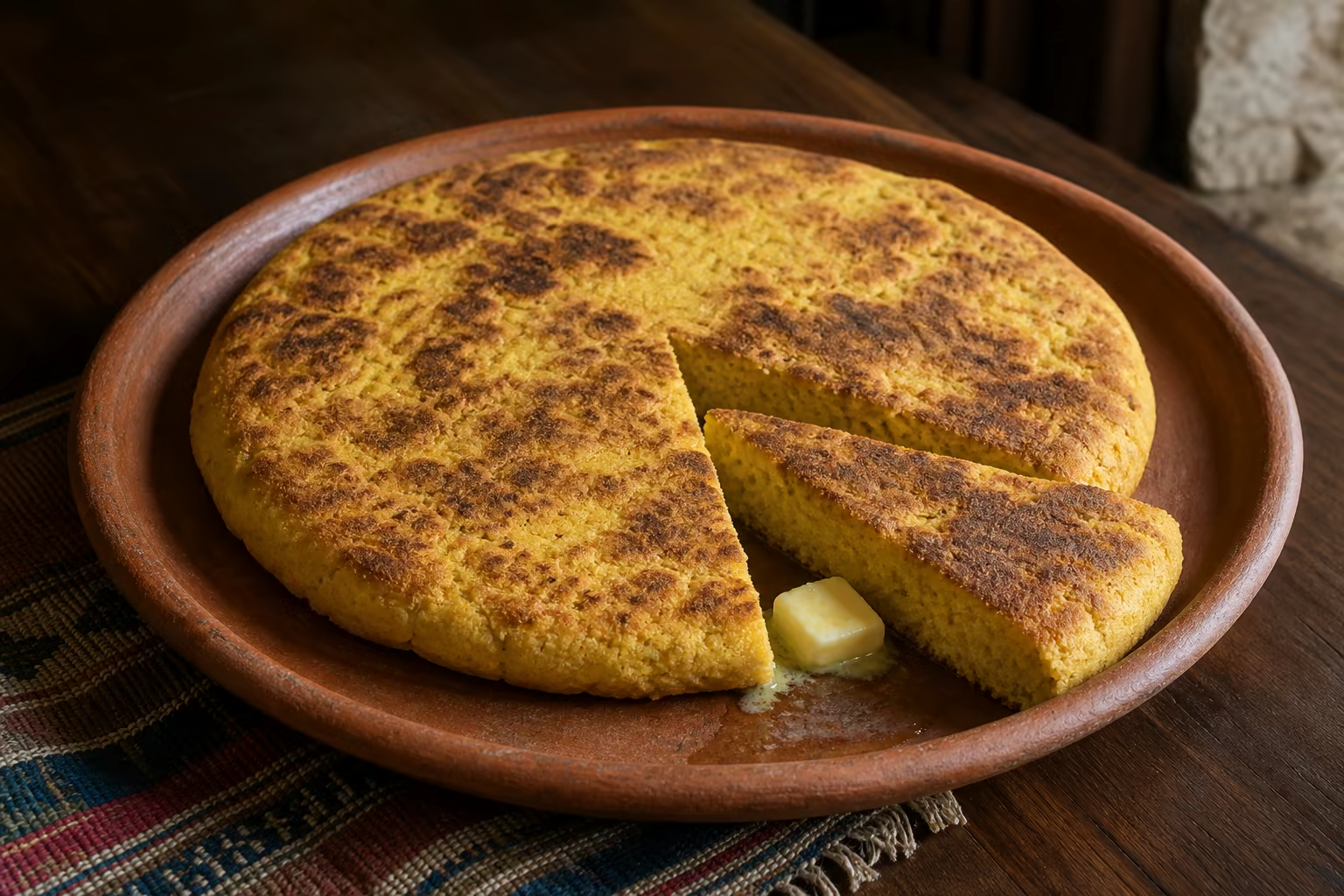
This formula published by byAçores turns 2 kg maize flour, 250 g wheat flour, boiling water and salt into unleavened rounds cooked on a very hot earthenware griddle. Its identity agrees with DGADR's record for São Miguel, São Jorge and Pico, but these proportions belong to this published version: Azorean practice varies between islands, households and cooking surfaces.
- Yields
- Not stated; several rounds about one finger thick
- Prep
- Not stated; includes scalding, cooling briefly, kneading and shaping
- Cook
- Not stated; brown on both sides on the griddle
Ingredients
- 1 heaped tablespoon Salt
- 1 litre / 1.1 US qt, boiling; plus warm water only if needed Water
- 2 kg / 4 lb 6.5 oz Maize flour
- 250 g / 8.8 oz Wheat flour
Method
Sift the 2 kg / 4 lb 6.5 oz maize flour into a sufficiently large bowl.
Dissolve the heaped tablespoon of salt in 1 litre / 1.1 US qt boiling water.
Gradually add the salted water to the maize flour, stirring continuously with a wooden spoon to scald it. At this stage, the source says the mixture should not be homogeneous.
Leave the mixture to rest and cool slightly. The source gives neither a duration nor a final temperature.
Sprinkle over the 250 g / 8.8 oz wheat flour and knead thoroughly until the dough becomes firmer and uniform. Add a little more warm water if needed; no quantity is stated.
Shape balls and flatten them into rounds about one finger thick. Make a small hole in the centre of each round with a finger to aid cooking. The source gives no number or diameter; DGADR describes the traditional product as about 25 cm / 10 in across and 3 cm / 1.2 in high.
Place the rounds on a very hot earthenware griddle. Let them brown, turn with a spatula and cook the other side. The source publishes neither temperature nor duration; serve preferably hot.
Sources for this recipe
The quantities and method were checked against the references below. Family recipes may vary; where no single official formula exists, we present a representative practical version and say so plainly.
Read the editorial policy →