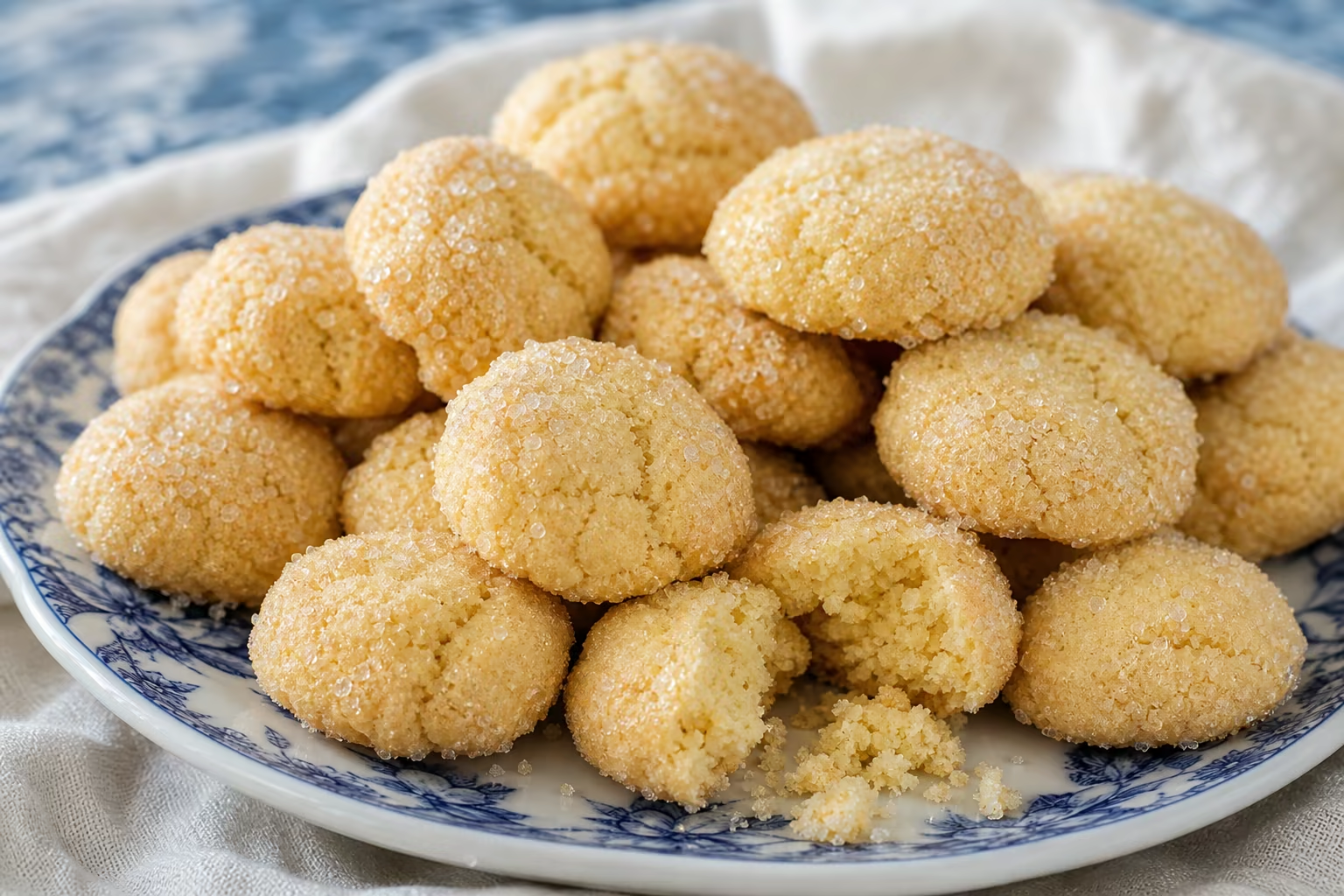
Cascais Sands
Also known as: Sands of Cascais · Cascais Sand Cookies
Beach sand that melts on the tongue.
- Origin
- Late 19th / early 20th century · Cascais
- Place
- Cascais
- Region
- Lisbon
- Category
- Cakes & Sweet Breads
- Season
- Year-round
- Evidence
- Well documented
Areias de Cascais are small, round shortbread biscuits so tender and friable that at the first bite they crumble into a cloud of fine crumbs — hence the name, which evokes the sand of the town's beaches. On the outside they come generously coated in sugar, which gives them a crystalline sheen and a lightly granular surface.
In the mouth there is no resistance: they dissolve almost instantly, leaving a trail of butter and citrus or cinnamon fragrance. They are unassuming little things, walnut-sized, made to accompany rather than to take centre stage.
They are served at room temperature, piled on plates or in bowls, in the mid-afternoon or after a meal, and usually several at once — because one is never enough.
- Butter (or lard, in the traditional version)
- Sugar
- Wheat flour
- Lemon zest
- Cinnamon
- Sugar for dusting
Crumbly and buttery, it melts in the mouth almost without chewing, carrying the crystalline sweetness of the sugar coating over a perfumed note of lemon and cinnamon.
The recipe published by Cascais FoodLab uses both butter and lard with lemon zest. Other recipes use only one fat and vary the flavouring with cinnamon, vanilla, citrus or spices; these documented differences do not justify an automatic hierarchy of authenticity.
You will find them in the traditional pastelarias and confectioners of Cascais town and the wider Lisbon region, often sold by weight in little bags. The best, made with real butter, tend still to be homemade.
They call for a strong coffee or an afternoon tea; they sit equally well beside a glass of Setúbal Moscatel or a sweet wine.
Municipal sources place references to Areias between the late nineteenth and early twentieth centuries. Alberto Pimentel mentions them in 'Cascaes', included in Sem Passar a Fronteira (1902), as a speciality of the Antiga Casa Faz-Tudo, without publishing a recipe. The first written recipe identified by the municipality appeared in 1933 in Manuel Ferreira's Cozinha Ideal.
Their connection with fishing families and food carried to sea forms part of the local tradition presented by Cascais FoodLab but is not an invention certificate. Nor is there a single formula: the municipality's current recipe combines butter and lard, while other versions change fats and flavourings. Documenting that evolution is therefore more accurate than declaring one modern version the sole original.
Well documented
Identity supported by institutional, specialist or corroborating sources.
- virgiliogomes.com/index.php/cronicas/371-areias-de-cascais (opens in a new tab)
- tradicoesdoces.com/post/areias-de-cascais (opens in a new tab)
- cozinhatradicional.com/areias-de-cascais/ (opens in a new tab)
- viagens.sapo.pt/saborear/gastronomia/artigos/areias-de-cascais-a-receita-deste-biscoitos-tradicionais-que-se-derretem-na-boca-e-sao-faceis-de-fazer (opens in a new tab)
- cascais.pt/noticia/areias-e-nozes-de-cascais-caminho-das-7-maravilhas-doces-de-portugal (opens in a new tab)
- foodlab.cascais.pt/pt-pt/areias-de-cascais (opens in a new tab)
- foodlab.cascais.pt/pt-pt/dia-mundial-da-pastelaria (opens in a new tab)
Pastries from here — Lisbon
 Catalogue image
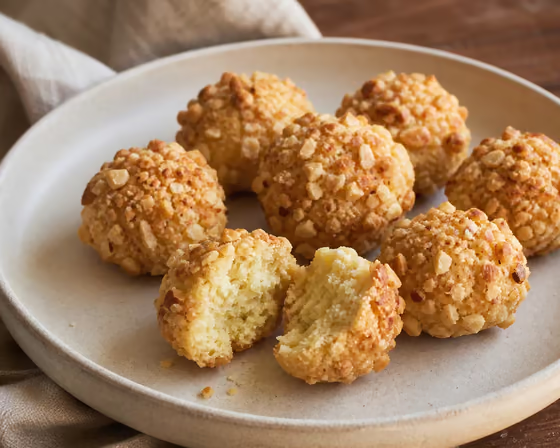
 Amendoados
Small dry, crumbly cakes, shaped by hand and crowned with coarsely chopped almonds.
Lisbon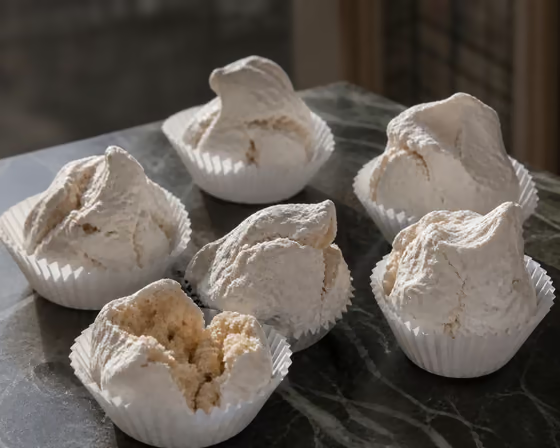 Catalogue image
 Azeitão Almond Meringues
Rustic hand-shaped almond meringues with a white, delicately cracked shell.
Lisbon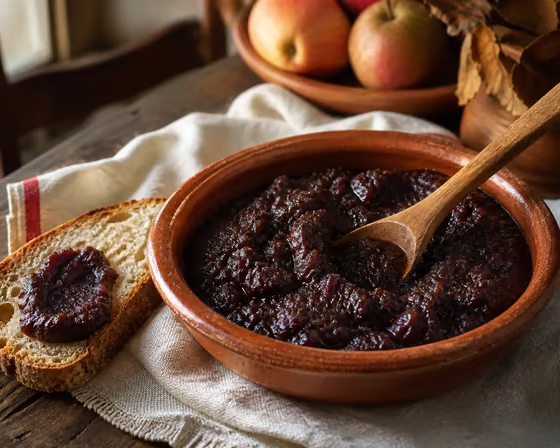 Catalogue image
 Arroubo Grape-Must Preserve
Must reduced slowly—alone as syrup or with fruit as uvada—in terminology that varies among sources and localities.
Lisbon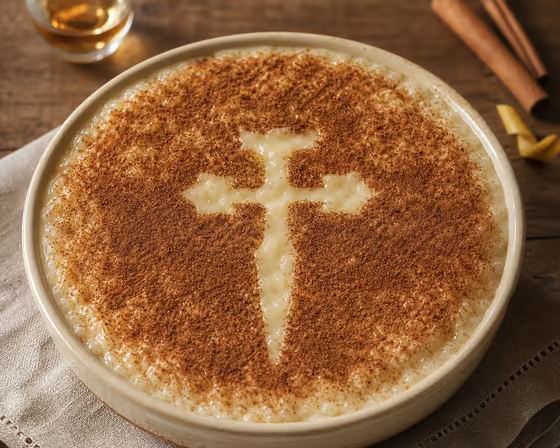 Catalogue image
 Palmela Sheep's-Milk Rice Pudding
Creamy sheep's-milk rice pudding marked with the sword of the Order of Santiago.
Lisbon