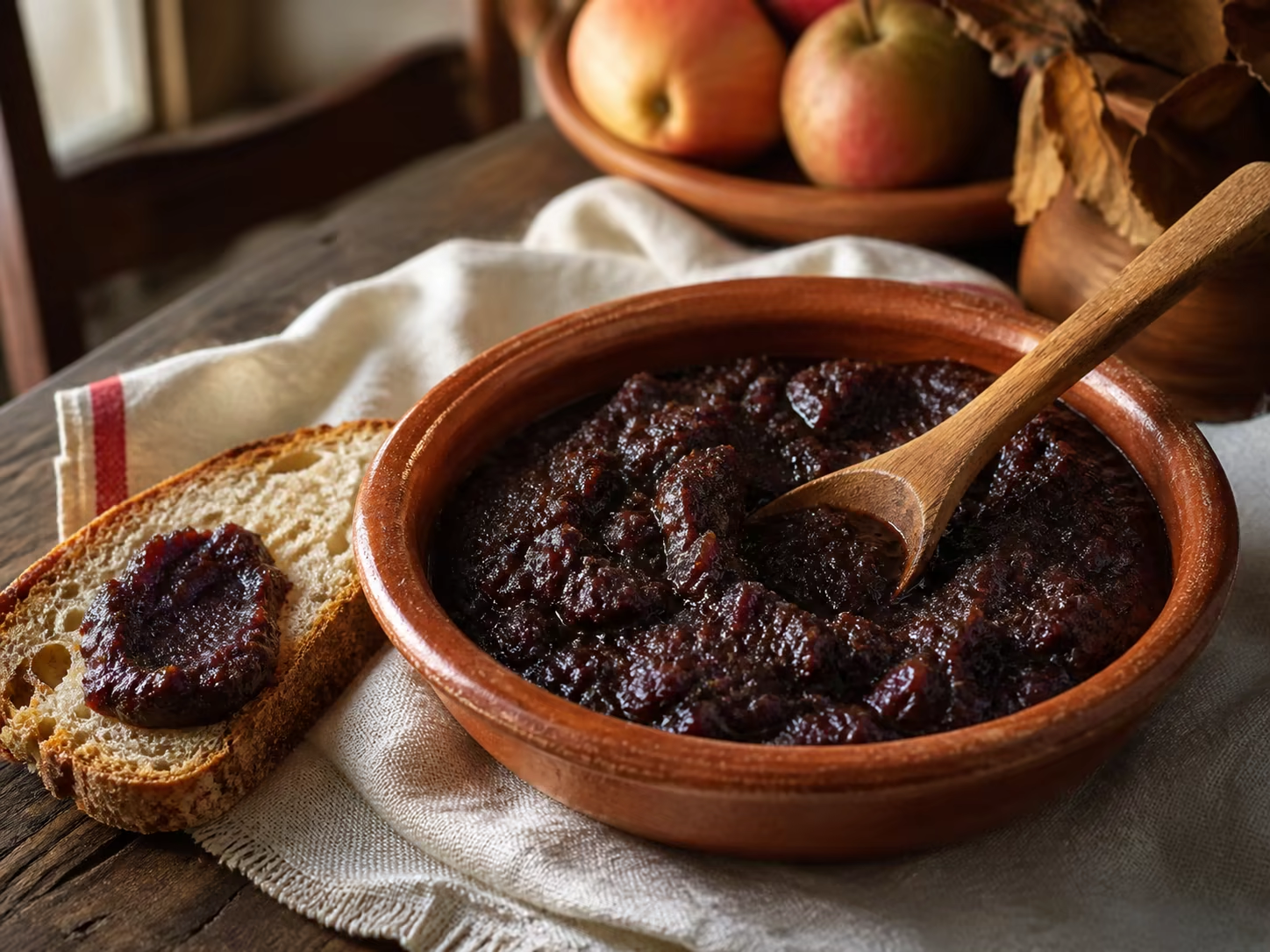
Arroubo Grape-Must Preserve
Also known as: Arroube · Arrobe · Arrobo · Uvada
Must reduced slowly—alone as syrup or with fruit as uvada—in terminology that varies among sources and localities.
- Origin
- Oeste region and other wine-growing territories · arrobe and uvada overlap, but are not always identical
- Place
- Lisbon and Tagus Valley
- Region
- Lisbon
- Category
- Fruit & Honey Sweets
- Season
- Made in autumn during grape harvest; stored and consumed later, including at Christmas in the Oeste
- Evidence
- Well documented
In its narrow sense, arrobe is grape must concentrated by heat to a syrup consistency. DGADR's inventory also uses Arroubo, Arroube, Arrobe or Uvada for a dark, grainy sweet made from equal parts must and seasonal fruit, without added sugar. The ethnographic study Uvada in Torres Vedras instead distinguishes the stages: arrobe is first produced by boiling and reducing must; fruit—most often apple or the locally distinguished pero—is then added to make uvada.
The lexical boundary is not rigid. DGADR itself cites a historical definition in which arrobe means both must syrup reduced to one third and the sweet made from that must with fruit. Contemporary practice documented in Torres Vedras reduces the must by varying amounts—to two thirds, half, one third or one quarter—and may flavour uvada with cinnamon. This page keeps the forms together to preserve historical naming, while always indicating whether a source describes the base syrup or the fruit preserve.
- Fresh ripe-grape must
- Apple or locally distinguished pero in the best-documented uvada
- Peach, pear, melon, quince, squash or other fruit depending on the recipe
- Cinnamon and, in specific records, cloves
- Usually without added sugar; some historical recipes allow it
Concentrated sweetness from must and fruit, a dark-brown to black colour and thick texture; acidity, aromas and graininess vary with grapes, fruit and reduction.
Plain arrobe is reduced-must syrup. Uvada adds fruit to that concentrate. DGADR publishes a 1:1 must-to-fruit formula; Torres Vedras fieldwork shows variable reduction ratios and apple varieties; the Lezíria do Tejo Gastronomic Charter records two arrobe recipes, one without sugar and another with sugar to taste.
The 2019 study documents contemporary producers in Torres Vedras and regularly associates uvada with several Oeste municipalities. Because makers and availability can change, confirm directly before travelling.
Torres Vedras research documents consumption on bread or with nuts; DGADR also records it as a dessert.
DGADR connects the sweet with grape harvest, the historical scarcity of sugar and farming households producing wine and fruit. It records memories of city residents who sought better food in villages during the Second World War and remembered domestic production. This documents twentieth-century practice; the general statement that it is ‘very old’ does not by itself provide a creation date.
Research coordinated in 2019 by Torres Vedras Municipal Council and Memória Imaterial interviewed producers, residents, schools and INIAV researchers, with consultancy from NOVA FCSH. It finds especially regular uvada documentation in Torres Vedras, Alenquer, Arruda dos Vinhos, Cadaval, Bombarral and Sobral de Monte Agraço, as well as other Oeste municipalities. It also records a 1939 response preserved in Alenquer's Municipal Archive, according to which peros, pears, winter squash or other fruits, cloves and cinnamon could be added to arrobe.
The same study compares grape-must reductions from classical antiquity and medieval al-Andalus rub recipes, but does not propose a simple documentary line from one specific ancient recipe to present-day uvada. Those analogies contextualize a long-lived technique; they do not prove single authorship or uninterrupted continuity.
Well documented
Identity supported by institutional, specialist or corroborating sources.
- tradicional.dgadr.gov.pt/pt/cat/doces-e-produtos-de-pastelaria/246-arroubo (opens in a new tab)
- memoriamedia.net/bd_docs/Saberes/UVADA_Torres%20Vedras_web.pdf (opens in a new tab)
- visitribatejo.pt/fotos/editor2/pdfs/Ribatejo/Carta_Gastronomica_vol_II.pdf (opens in a new tab)
- foodlab.cascais.pt/pt-pt/arrobe (opens in a new tab)
- infopedia.pt/dicionarios/lingua-portuguesa/uvada (opens in a new tab)
- oldwww.animar-dl.pt/site/assets/files/4651/receitas.pdf (opens in a new tab)
Pastries from here — Lisbon
 Catalogue image
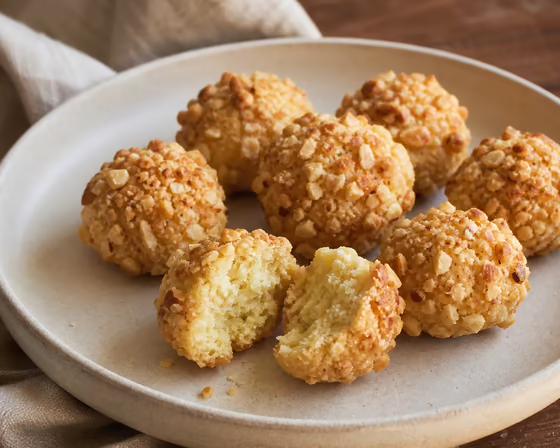
 Amendoados
Small dry, crumbly cakes, shaped by hand and crowned with coarsely chopped almonds.
Lisbon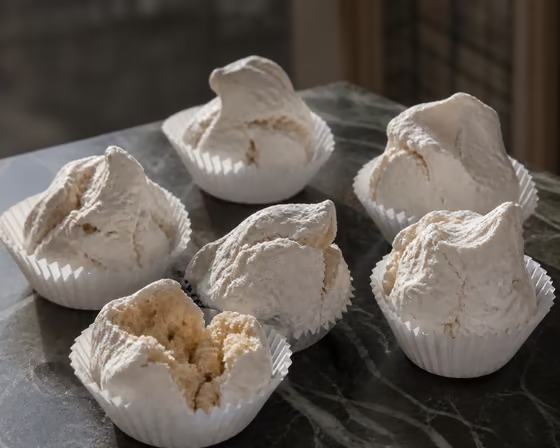 Catalogue image
 Azeitão Almond Meringues
Rustic hand-shaped almond meringues with a white, delicately cracked shell.
Lisbon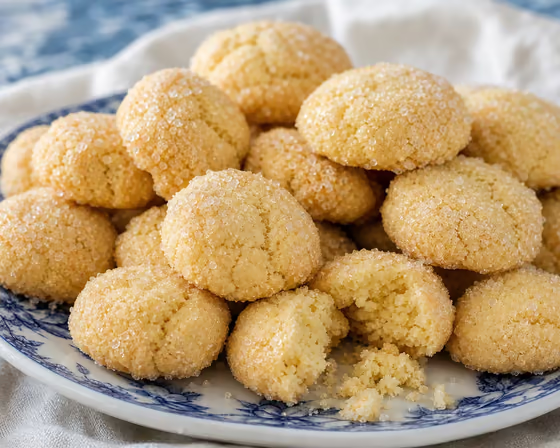 Catalogue image
 Cascais Sands
Beach sand that melts on the tongue.
Lisbon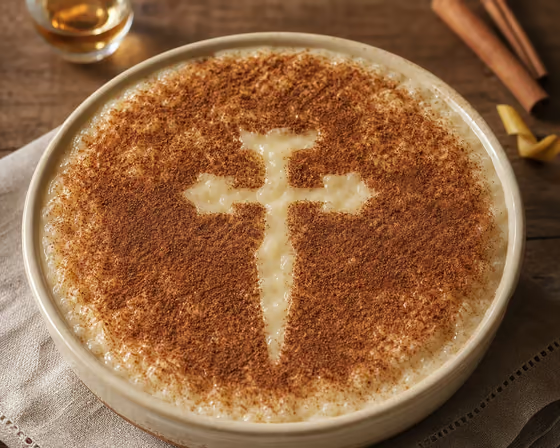 Catalogue image
 Palmela Sheep's-Milk Rice Pudding
Creamy sheep's-milk rice pudding marked with the sword of the Order of Santiago.
Lisbon