Amendoados
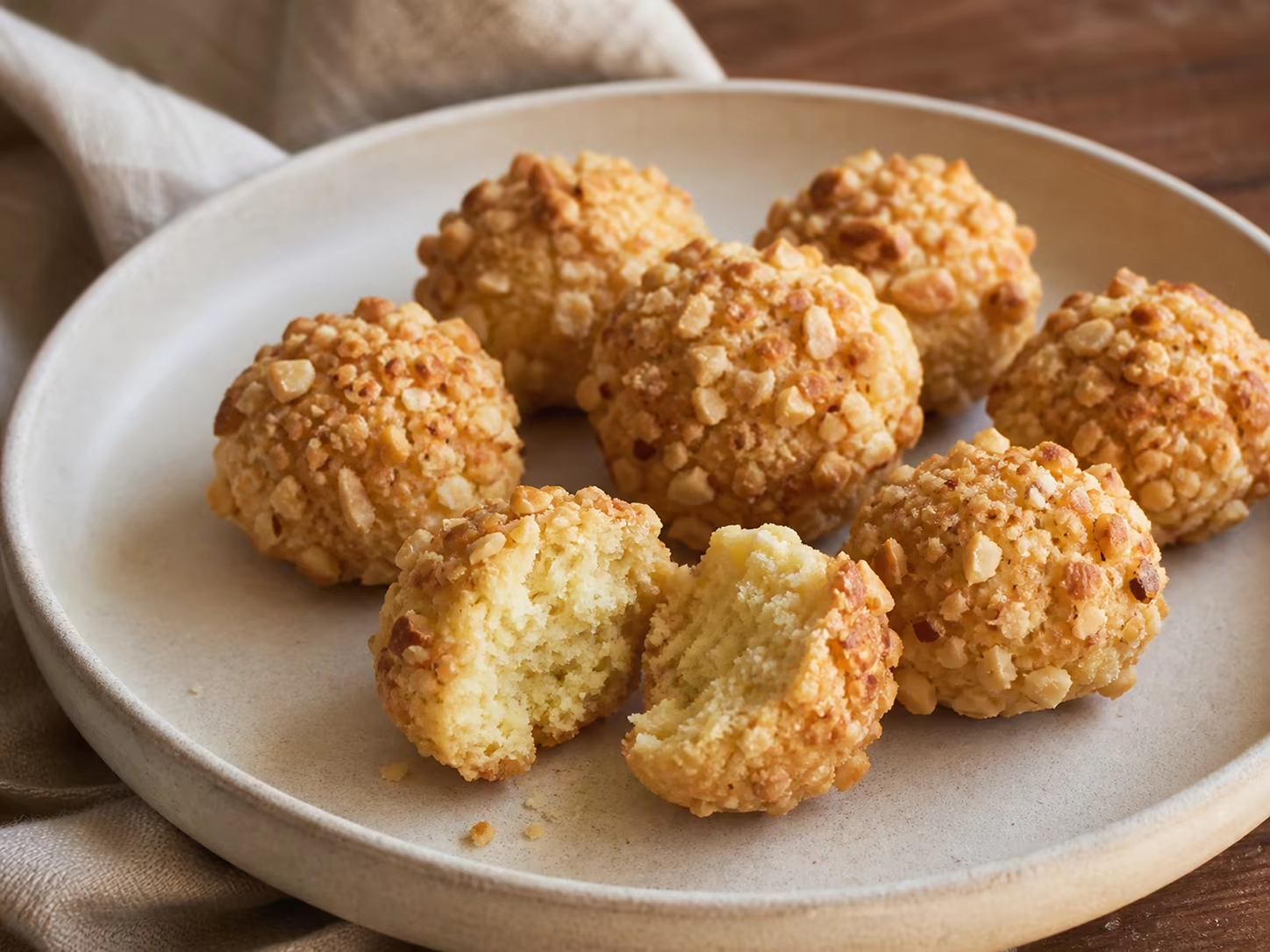
Small dry, crumbly cakes, shaped by hand and crowned with coarsely chopped almonds.
- Origin
- Lourinhã, Oeste region · family tradition attributed to the early nineteenth century
- Place
- Lisbon and Tagus Valley
- Region
- Lisbon
- Category
- Cakes & Sweet Breads
- Season
- Seasonality not specified in the reviewed sources
- Evidence
- Well documented
The Amendoados documented in Lourinhã are small, dry, ball-shaped cakes with a compact yet crumbly dough and a crown of coarsely chopped almond. DGADR's catalogue gives a diameter of about 2.5 cm and an approximate weight of 20 g for the product recorded in 2001; those measurements describe that specification, not every Portuguese cake called amendoado.
The published method beats butter with sugar and flour. Small balls are formed, passed through egg white to secure the almond and baked in a hot oven. The same source says that every operation, including skinning the almonds, was then performed by hand and that oven temperature governed colour, crumbliness and keeping quality. It publishes no quantities, temperature or duration, leaving insufficient evidence for a faithful reproducible recipe.
- Flour
- Butter
- Sugar
- Egg white
- Skinned, coarsely chopped almonds
Documentation characterizes the dough as compact and crumbly and emphasizes the almond crown; it publishes no more detailed tasting notes.
The generic name amendoado may appear elsewhere in Portuguese repertoires. This page specifically describes the small ball-shaped cake documented in Lourinhã, not every similarly named almond sweet.
The Union of the Parishes presents Amendoados among Lourinhã's most sought-after sweets. The reviewed sources do not confirm a specific current maker or shop; check locally before travelling.
The reviewed sources establish no specific traditional accompaniment.
Produtos Tradicionais Portugueses, published by the former DGDR in 2001 and now made available by DGADR, records a line of transmission from Zélia Pereira through her mother-in-law, the latter's mother and grandmother. It says that surviving handwritten recipe books allowed regional production to be placed at least in the early nineteenth century.
Those manuscripts are neither reproduced nor identified by an archival reference or analysed in a historical study among the reviewed sources. The age should therefore be read as the catalogue's documentary attribution based on family memory and private manuscripts, not as a proven creation date. The Union of the Parishes of Lourinhã and Atalaia repeats that production tradition goes back to the early nineteenth century and confirms the sweet's form and texture, but adds no primary documentation.
A 2013 tourism study from the Polytechnic of Leiria includes Amendoados among Lourinhã sweets passed down from generation to generation. This corroborates the present-day territorial association; it does not identify a creator, original workshop or year of creation.
Well documented
Identity supported by institutional, specialist or corroborating sources.
- tradicional.dgadr.gov.pt/pt/cat/doces-e-produtos-de-pastelaria/154-amendoados (opens in a new tab)
- lourinhaatalaia.pt/freguesia/gastronomia/ (opens in a new tab)
- iconline.ipleiria.pt/server/api/core/bitstreams/7695f25c-834e-45bb-b4cf-eda95e2653e1/content (opens in a new tab)
- pt.wikipedia.org/wiki/Lourinh%C3%A3 (opens in a new tab)
Pastries from here — Lisbon
 Catalogue image
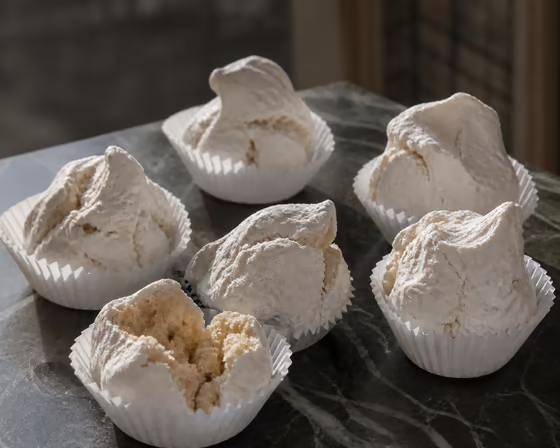
 Azeitão Almond Meringues
Rustic hand-shaped almond meringues with a white, delicately cracked shell.
Lisbon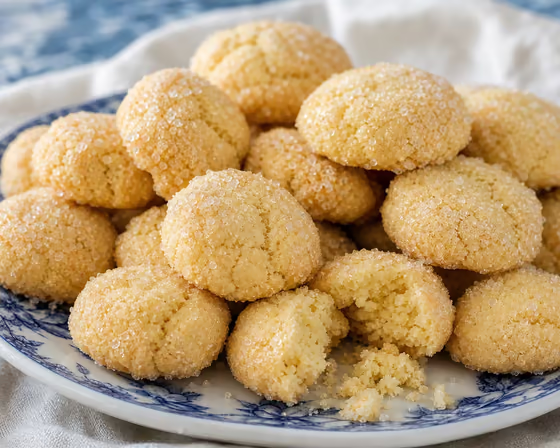 Catalogue image
 Cascais Sands
Beach sand that melts on the tongue.
Lisbon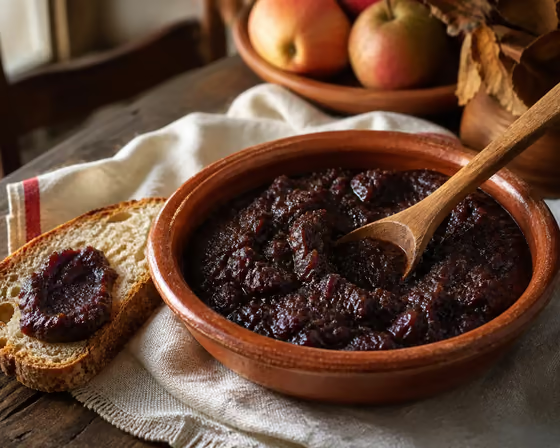 Catalogue image
 Arroubo Grape-Must Preserve
Must reduced slowly—alone as syrup or with fruit as uvada—in terminology that varies among sources and localities.
Lisbon Catalogue image
 Palmela Sheep's-Milk Rice Pudding
Creamy sheep's-milk rice pudding marked with the sword of the Order of Santiago.
Lisbon