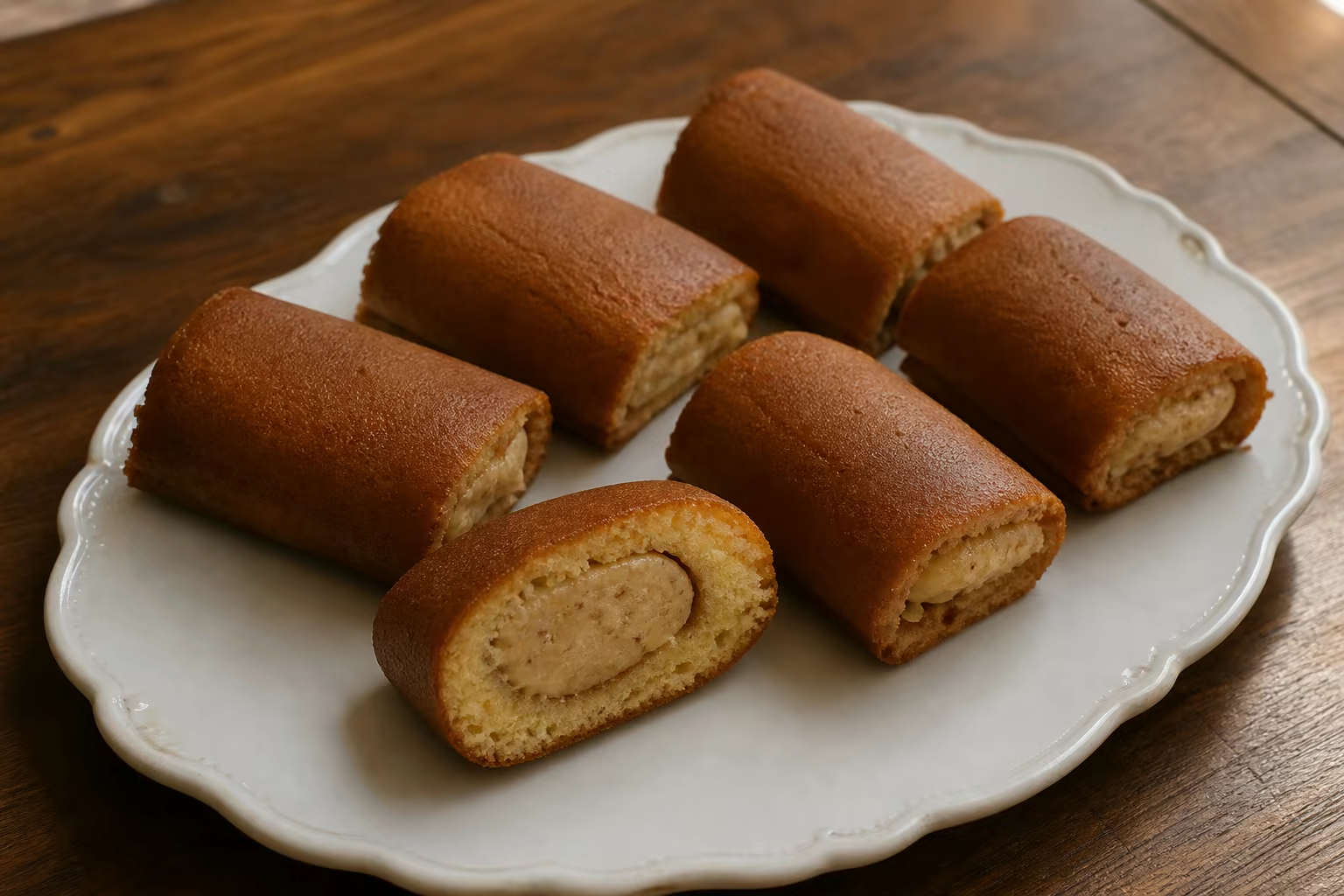
Malveira Trouxas
Also known as: Malveira Tortas · Soft Pillows
Small sponge-cake pillows rolled around vanilla and almond cream.
- Origin
- Malveira · Mafra
- Place
- Malveira · Mafra
- Region
- Lisbon
- Category
- Cakes & Sweet Breads
- Season
- Year-round
- Evidence
- Well documented
Trouxas da Malveira are soft sponge-like rectangles about 8.5 by 5.5 centimetres, 8 millimetres thick and roughly 80 grams. Each piece wraps a cream of milk, eggs, flour, vanilla and nuts, especially almonds.
The surface is golden and soft, sometimes dusted, and a cut piece reveals cake curled around a pale filling. They are sold individually or in boxes of four or six.
- wheat flour
- corn flour
- eggs
- sugar
- milk
- vanilla
- almonds and other nuts
Soft sweet sponge with milky vanilla cream and gentle almond texture.
DGADR records Tortas da Malveira and Travesseiros Fofos as associated names. The municipal record identifies lemon, nuts and vanilla but publishes no proportions, so almond should not be presented as the only possible nut.
At bakeries in Malveira and around Mafra.
Coffee, tea or milk.
Mafra municipality documents a convent-rooted recipe brought from Odivelas Convent by the founder of the Trouxas factory, who had worked for the nuns, and produced in Malveira since 1906. According to the same source, the Trouxas name appeared in 1952 through the founder's goddaughter, inspired by Saloio washerwomen carrying bundles of laundry on their heads. This municipal chronology is more precise than the generic account of 'two women'.
Well documented
Identity supported by institutional, specialist or corroborating sources.
- tradicional.dgadr.gov.pt/pt/cat/doces-e-produtos-de-pastelaria/222-trouxas-da-malveira (opens in a new tab)
- cm-mafra.pt/pages/1578 (opens in a new tab)
- cm-mafra.pt/pages/878 (opens in a new tab)
Pastries from here — Lisbon
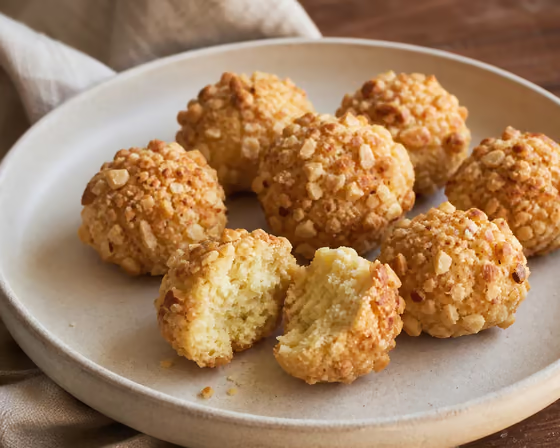 Catalogue image
 Amendoados
Small dry, crumbly cakes, shaped by hand and crowned with coarsely chopped almonds.
Lisbon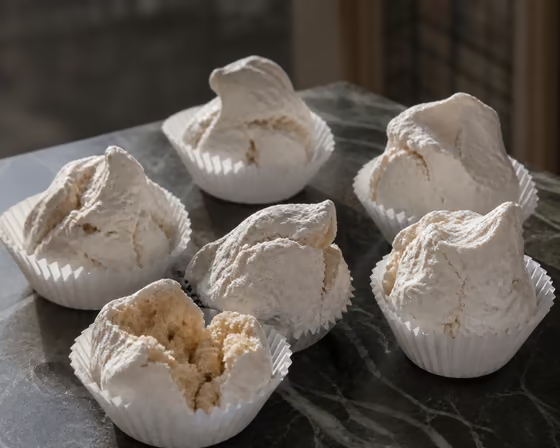 Catalogue image
 Azeitão Almond Meringues
Rustic hand-shaped almond meringues with a white, delicately cracked shell.
Lisbon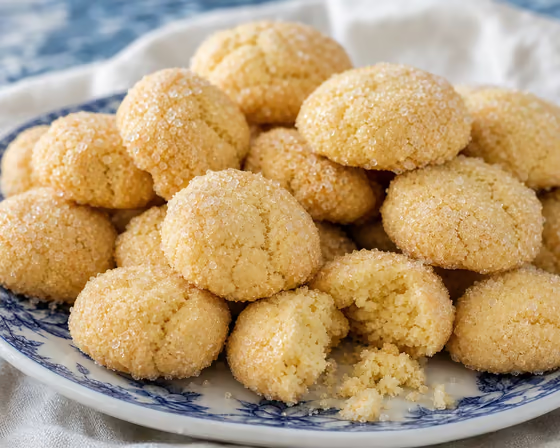 Catalogue image
 Cascais Sands
Beach sand that melts on the tongue.
Lisbon Catalogue image
 Arroubo Grape-Must Preserve
Must reduced slowly—alone as syrup or with fruit as uvada—in terminology that varies among sources and localities.
Lisbon