Portuguese Garibaldi Chocolate Cake
Also known as: Portuguese Garibaldi cake · Lisbon Garibaldi chocolate cake · Almada Garibaldi pastry
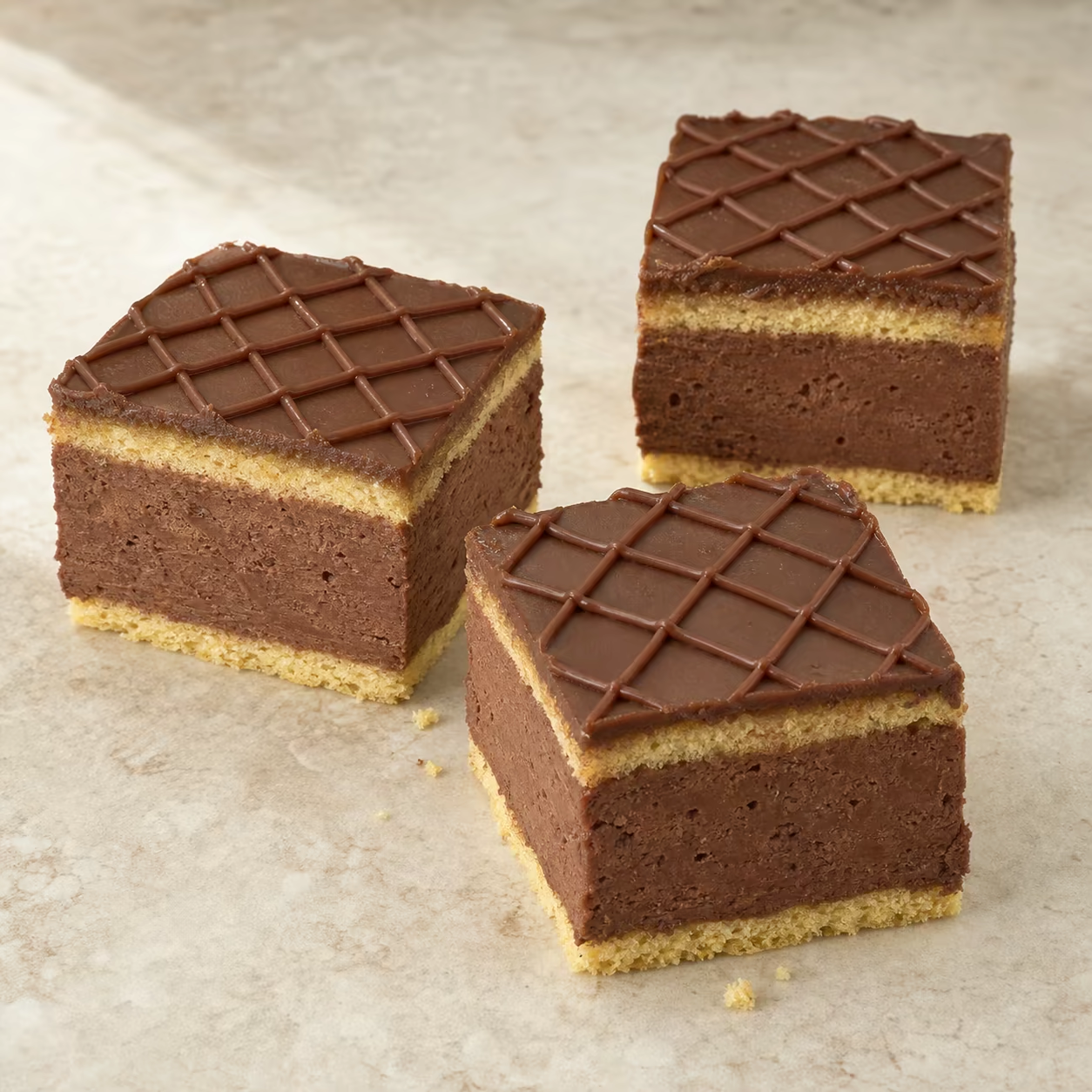
Two thin sponge sheets enclosing a wall of chocolate beneath a crosshatched fondant cap.
- Origin
- Lisbon and Almada pastry tradition · recipe predating 1969, creator not established
- Place
- Lisbon and Almada
- Region
- Lisbon
- Category
- Cakes & Sweet Breads
- Season
- Year-round, served chilled
- Evidence
- Well documented
The Portuguese Garibaldi is a small square of fine counter pastry in which chocolate accounts for nearly all the height. A paper-thin sponge sheet forms the base; above it sits a thick block of chocolate buttercream, mousse or chocolate meringue; a second thin sponge sheet closes the filling. Chocolate fondant or cream finishes the top, often piped with a diamond crosshatch.
Its side profile is the identifying mark: yellow, brown, yellow and then a much thinner brown cap. This is neither a brownie nor a conventional layer cake because the sponge serves chiefly as support for a chilled centre that is both dense and aerated. Large trays are cut into precise individual portions.
- Thin sponge-cake sheets
- Chocolate
- Egg whites
- Sugar
- Butter, cream or ganache, depending on the version
- Chocolate fondant or cream for the topping
Intensely chocolatey, sweet and cool, with a centre that is both firm and aerated. Sponge provides only a light, dry pause while the thin topping adds a smoother, more concentrated layer. Mousse versions are less rich than the older buttercream form.
Fabrico Próprio’s classic formula uses fresh chocolate buttercream and fondant. Later shops replace the middle with mousse or ganache. The version documented at Condestável uses whipped egg whites with cocoa and rests under refrigeration for 24 hours. The top may carry diamonds, zigzags or a plain smooth layer.
Pastelaria Condestável in Almada continues to sell Garibaldis and is the best-documented historic address. Pastelaria O Capote in Costa da Caparica has also reported making them with sponge and chocolate. In Lisbon they were emblematic of the former Central da Baixa and still appear occasionally at other own-production shops; check before travelling because they are no longer a daily counter item in many bakeries.
A short unsweetened espresso.
The public history of Garibaldi requires an important correction. For years it was attributed to pastry chef Álvaro Pereira, who opened Pastelaria Condestável in Almada in 1969 and made the cake famous there. In 2026 his son Pedro Pereira told Guia Repsol that the recipe already existed and had been passed to his father by a colleague at Lisbon’s Pastelaria Mexicana. The year 1969 therefore documents its popularisation in Almada, not a proven invention.
Its name also calls for caution. The Priberam dictionary connects garibáldi with the Italian general Giuseppe Garibaldi, while Fabrico Próprio’s research could not historically confirm that dedication for the cake itself. What is certain is that the speciality survived for decades in Lisbon and south-bank pastry culture. Condestável still makes it, although current sales are far below the hundreds sold on busy weekends in the 1970s and 1980s.
Well documented
Identity supported by institutional, specialist or corroborating sources.
- fabricoproprio.net/enciclopedia/garibaldi/ (opens in a new tab)
- guiarepsol.com/content/repsol-guia/pt/home/soletes/pasteleria-almada-bolos-condestavel.html (opens in a new tab)
- dicionario.priberam.org/garib%C3%A1ldi (opens in a new tab)
- gastronomias.com/doces/doce0713.htm (opens in a new tab)
- amensagem.pt/2024/04/02/garibaldis-condestavel-alvaro-almada-quem-inventou/ (opens in a new tab)
Pastries from here — Lisbon
 Catalogue image
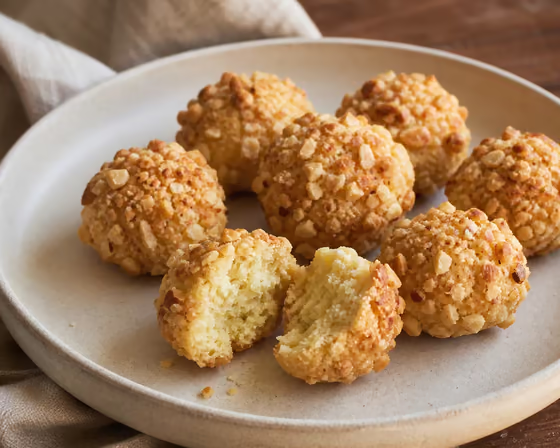
 Amendoados
Small dry, crumbly cakes, shaped by hand and crowned with coarsely chopped almonds.
Lisbon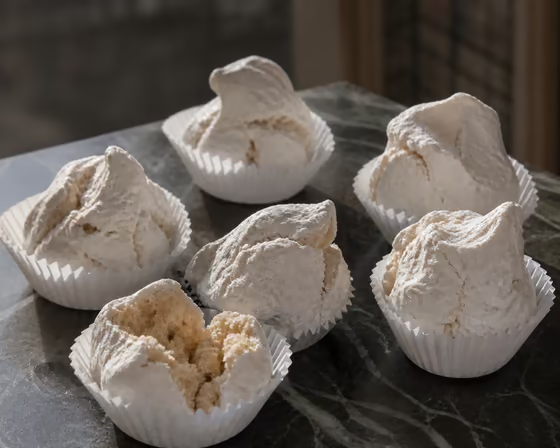 Catalogue image
 Azeitão Almond Meringues
Rustic hand-shaped almond meringues with a white, delicately cracked shell.
Lisbon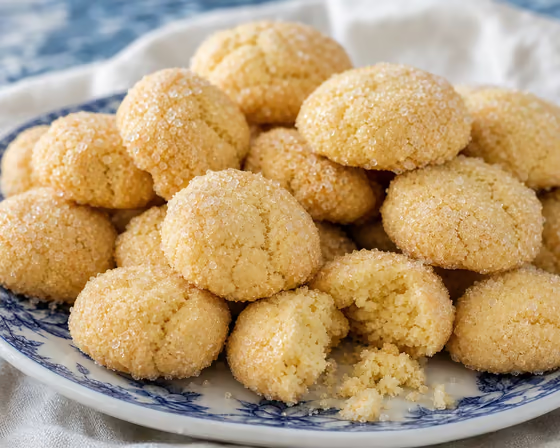 Catalogue image
 Cascais Sands
Beach sand that melts on the tongue.
Lisbon Catalogue image
 Arroubo Grape-Must Preserve
Must reduced slowly—alone as syrup or with fruit as uvada—in terminology that varies among sources and localities.
Lisbon