Setúbal Moscatel Chocolate
Also known as: Setúbal Moscatel Chocolate · Moscatel Bonbon
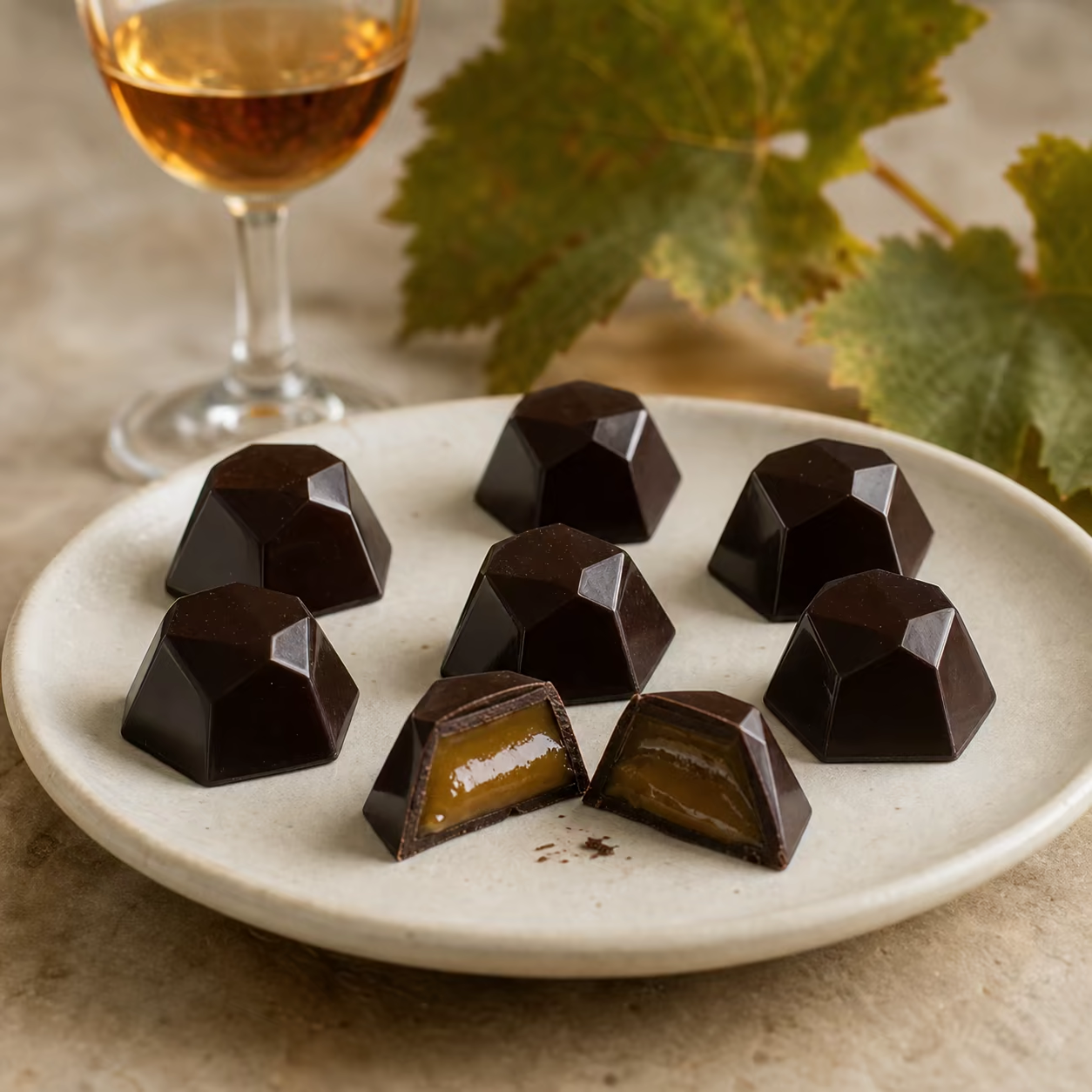
A dark-chocolate gem with a Moscatel de Setúbal heart.
- Origin
- Palmela · Setúbal Peninsula
- Place
- Palmela · Setúbal Peninsula
- Region
- Lisbon
- Category
- Cakes & Sweet Breads
- Season
- Year-round, with production limited in hot weather
- Evidence
- Well documented
Bombom de Moscatel de Setúbal is a small chocolate created in Palmela to concentrate two symbols of the peninsula in one bite: fine chocolate and the local fortified wine. Nuno Gil's version, made at Confeitaria S. Julião, uses Moscatel supplied by Quinta do Piloto and has a faceted appearance that its creator associates with a diamond.
A Moscatel filling sits beneath the chocolate shell. Alcohol makes the confection technically demanding: fluidity, aroma and stability must be balanced without sacrificing the snap of the coating. It is served as a small after-dinner sweet or alongside the same wine in guided pairings.
- dark chocolate
- Moscatel de Setúbal
- creamy chocolate filling
Intense dark chocolate followed by the aromatic, citrusy, vinous sweetness of Moscatel.
Other regional chocolates use Moscatel, Moscatel Roxo or grape spirit; they should not be conflated with Nuno Gil's Seven Wonders entry.
In Palmela, notably at Retiro Azul and Setúbal Peninsula Wine Route events; availability can be seasonal because chocolate is heat-sensitive.
Lightly chilled Moscatel de Setúbal or espresso.
Palmela was already exploring the union of Moscatel and chocolate when, in 2012, the municipality unveiled a purple jewel of dark chocolate and Moscatel Roxo developed by chef Nelson Félix and ESHTE. The commercially established specialty that reached the Seven Wonders of Portuguese Sweets was created by Nuno Gil of Confeitaria S. Julião in partnership with Quinta do Piloto. In 2019 it became one of Setúbal district's seven finalists, in the Innovation Sweets category. It continues to feature in municipal Moscatel tastings and menus.
Well documented
Identity supported by institutional, specialist or corroborating sources.
- cm-palmela.pt/cmpalmela/uploads/writer_file/document/561/boletim129_2012.pdf (opens in a new tab)
- cm-palmela.pt/viver/noticias/noticia/docaria-de-palmela-selecionada-na-1-fase-eliminatoria-das-7-maravilhas-doces-de-portugal (opens in a new tab)
- cm-palmela.pt/cmpalmela/uploads/writer_file/document/10307/boletim_municipal_web_160.pdf (opens in a new tab)
- diariodistrito.sapo.pt/chef-nuno-gil-o-ingrediente-secreto-e-colocarmos-amor-e-paixao-no-que-fazemos/ (opens in a new tab)
- cm-palmela.pt/viver/noticias/2021/noticia/fins-de-semana-gastronomicos-com-aroma-a-moscatel-de-setubal (opens in a new tab)
- caruspinus.pt/wp-content/uploads/2019/05/LISTA_7MDOCESP_140_NOMEADOS_2ELIMINATORIA.pdf (opens in a new tab)
Pastries from here — Lisbon
 Catalogue image
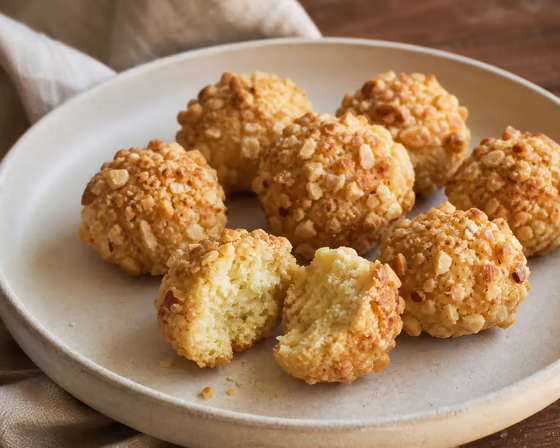
 Amendoados
Small dry, crumbly cakes, shaped by hand and crowned with coarsely chopped almonds.
Lisbon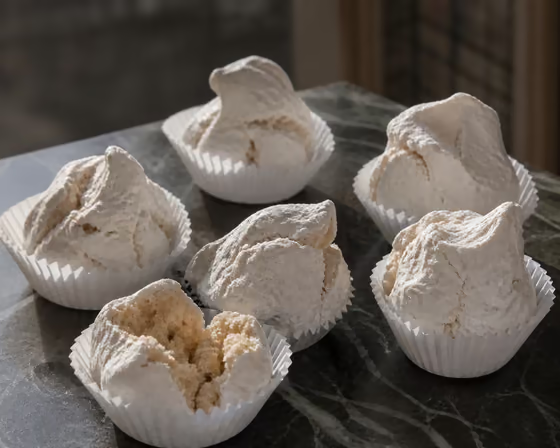 Catalogue image
 Azeitão Almond Meringues
Rustic hand-shaped almond meringues with a white, delicately cracked shell.
Lisbon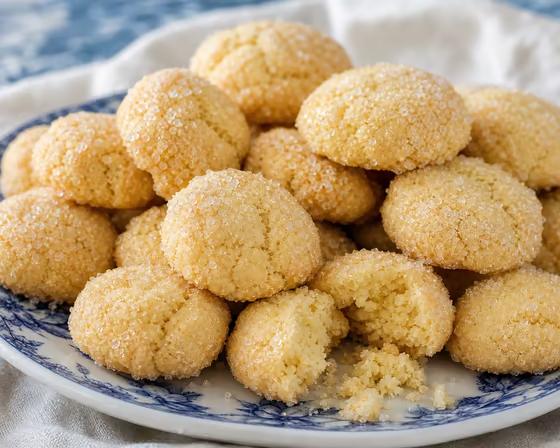 Catalogue image
 Cascais Sands
Beach sand that melts on the tongue.
Lisbon Catalogue image
 Arroubo Grape-Must Preserve
Must reduced slowly—alone as syrup or with fruit as uvada—in terminology that varies among sources and localities.
Lisbon