Setúbal Piedade Biscuit
Also known as: Piedade Biscuit · Sant’Iago Fair Biscuit
The thin, hard, aromatic biscuit associated with Setúbal’s Sant’Iago Fair since the nineteenth century.
- Origin
- 1855 · Piedade family · Setúbal
- Place
- Setúbal
- Region
- Lisbon
- Category
- Cakes & Sweet Breads
- Season
- Sant’Iago Fair · traditionally July and August
- Evidence
- Well documented
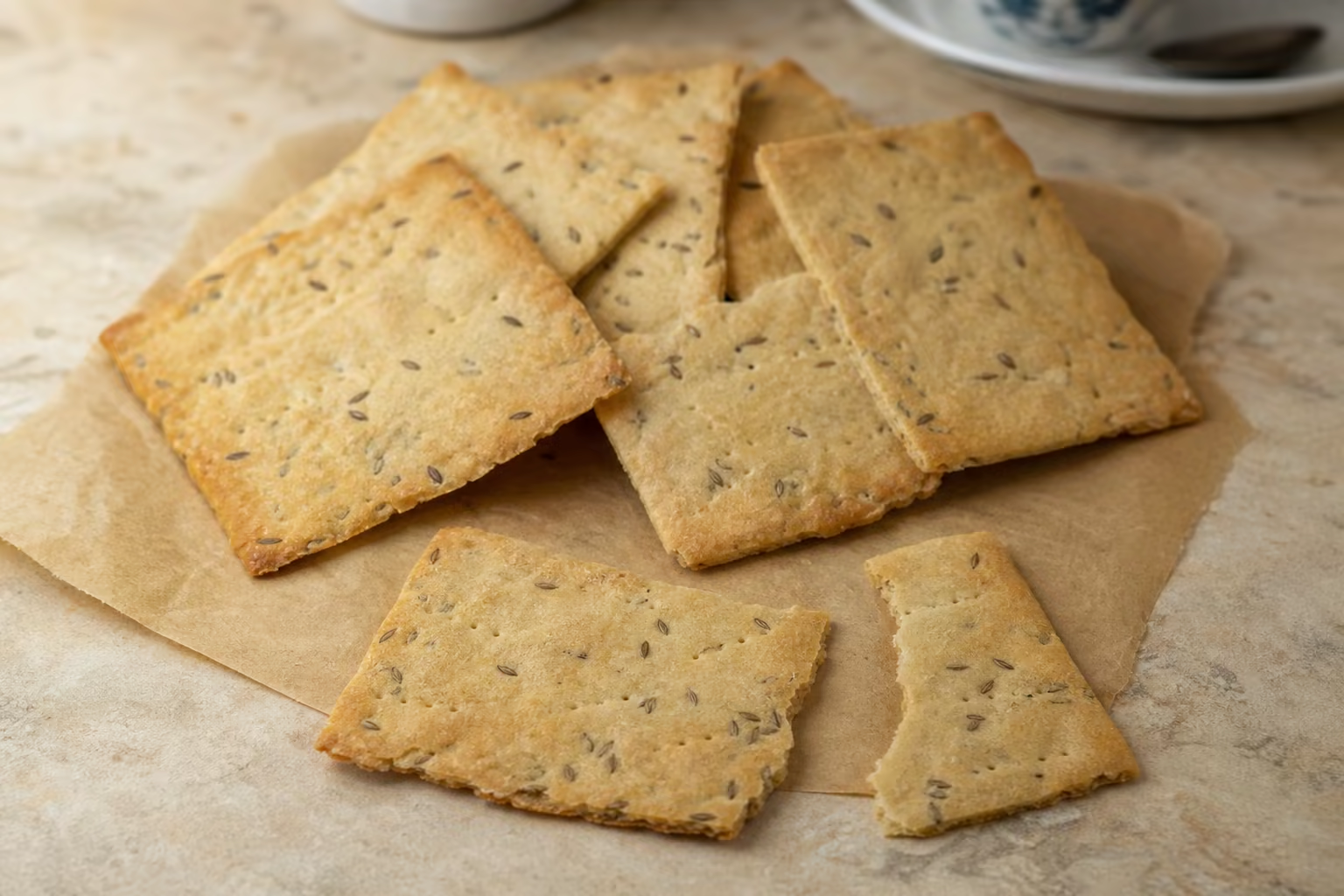
Bolacha Piedade is a thin, dry and exceptionally crisp handmade biscuit cut into slightly irregular squares and rectangles. Anise seeds remain visible in the golden dough, producing its distinctive aroma and a balance of sweet, savoury and aniseed notes.
The complete formula remains a Piedade family secret, passed orally among the family’s women. Public sources identify flour, sugar, animal fat and anise seeds but do not publish proportions or every preparation detail; this page therefore does not present a reconstructed formula as the original recipe.
- Wheat flour
- Sugar
- Animal fat
- Anise seeds
- Remaining formula and proportions unpublished
Gently sweet, dry and very crisp, with persistent anise and a subtle savoury note.
Earlier biscuits were described as thicker; the family later rolled the dough thinner in response to customers. Related products may be called “fair biscuits”, but they should not automatically be treated as the Piedade family’s secret formula.
The tradition is most closely associated with Setúbal’s Sant’Iago Fair. The historic Avenida Luísa Todi shop announced its closure at the end of March 2026, so confirm production, retailers and participation in the latest fair before visiting.
Coffee, black tea or a small glass of Moscatel de Setúbal.
The Union of Setúbal Parishes records Bolacha Piedade from 1855: it was carried on trays to the docks and sold to maritime workers, benefiting from its dry texture and long shelf life. The tray-carrying boy became part of the business's visual identity.
The biscuit grew inseparable from the Sant’Iago Fair, where families bought enough to store for months. Production retained handmade practices—rolling dough on stone and placing pieces by hand—even after wood-fired ovens gave way to electric equipment. The local source attributes Setúbal's City Medal to it in 2002; municipal documents confirm the bakery's participation in public initiatives but are not the primary medal record. The Avenida Luísa Todi shop announced closure at the end of March 2026, making it prudent to confirm current production and sales points.
Well documented
Identity supported by institutional, specialist or corroborating sources.
- mun-setubal.pt/wp-content/uploads/2020/11/Doces_Mesa_Listagem_25Nov.pdf (opens in a new tab)
- mun-setubal.pt/wp-content/uploads/2023/12/EBOOK-NATAL-DOCE-v2.pdf (opens in a new tab)
- uf-setubal.pt/sabados-com-historia/1155-uma-bolacha-com-sabor-a-setubal (opens in a new tab)
- visitsetubal.com/sabores/ (opens in a new tab)
- newinsetubal.nit.pt/comida/bolacha-piedade-a-tradicao-setubalense-mais-antiga-da-feira-de-santiago (opens in a new tab)
- newinsetubal.nit.pt/fora-de-casa/iconica-bolacha-piedade-fecha-apos-23-anos-mas-deixa-uma-promessa (opens in a new tab)
Pastries from here — Lisbon
 Catalogue image
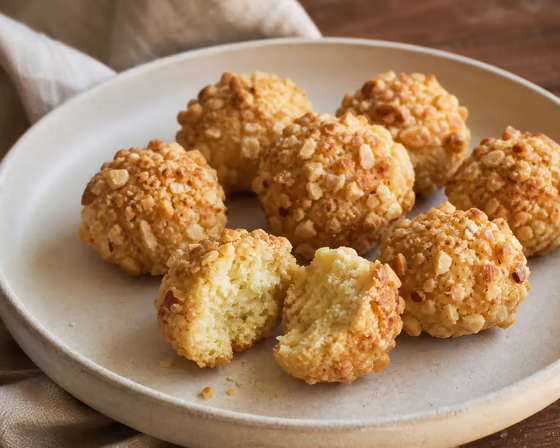
 Amendoados
Small dry, crumbly cakes, shaped by hand and crowned with coarsely chopped almonds.
Lisbon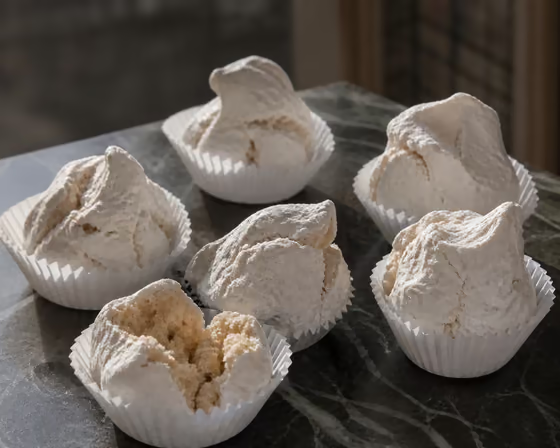 Catalogue image
 Azeitão Almond Meringues
Rustic hand-shaped almond meringues with a white, delicately cracked shell.
Lisbon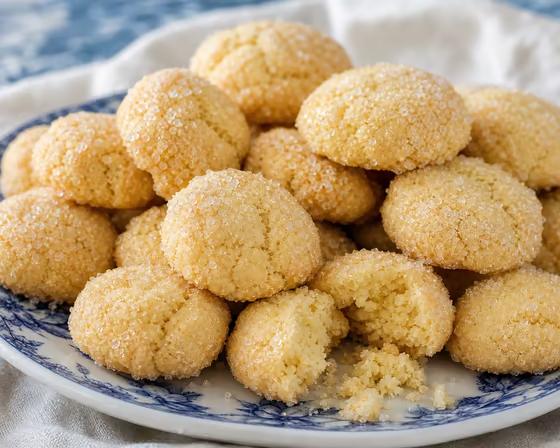 Catalogue image
 Cascais Sands
Beach sand that melts on the tongue.
Lisbon Catalogue image
 Arroubo Grape-Must Preserve
Must reduced slowly—alone as syrup or with fruit as uvada—in terminology that varies among sources and localities.
Lisbon