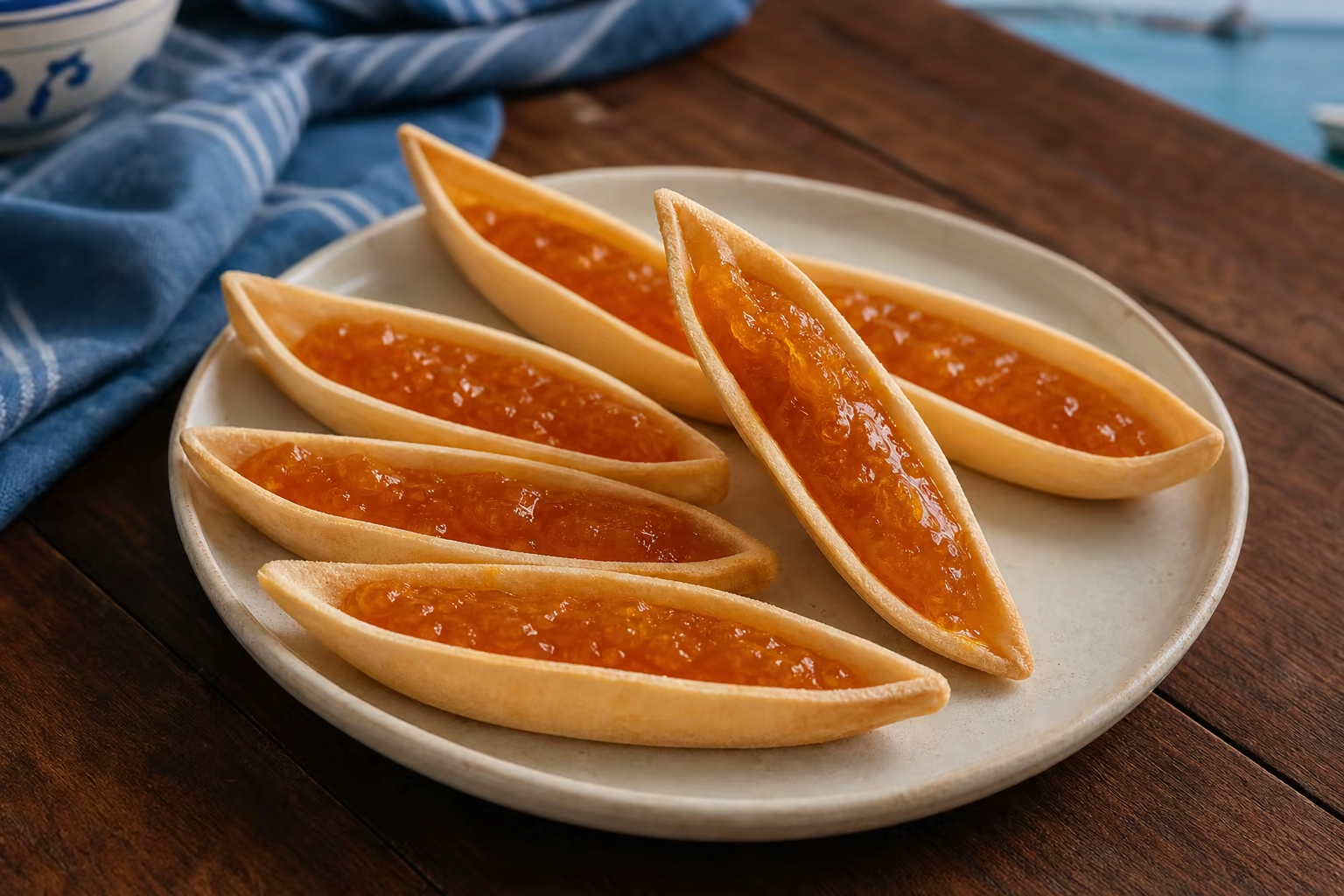
Setúbal Wafer Boats
Vanilla-wafer boats filled with bitter-orange preserve.
- Origin
- Setúbal · Lisbon and Tagus Valley
- Place
- Setúbal
- Region
- Lisbon
- Category
- Cakes & Sweet Breads
- Season
- Year-round
- Evidence
- Well documented
Barquilhos de Setúbal turn the city's fishing tradition into confectionery: small vanilla-wafer shells, about 12 centimetres long, are shaped like boats and filled with bitter-orange preserve. The crisp wafer frames a thick, bittersweet and intensely citrusy centre.
Each piece weighs roughly 35 grams. They are traditionally sold in boxes of twelve arranged in two layers, and can also appear as small wafer pots.
- vanilla wafer
- bitter-orange peel
- sugar
- water
Thin crisp wafer followed by a soft citrus filling that is sweet with a pleasant bitter edge.
Besides the elongated boats, the orange preserve may be presented in small wafer pots.
Look for them in traditional confectioners and regional-product shops in Setúbal.
Black tea, coffee or Setúbal muscatel.
The filling is tied to the old orange groves of the Setúbal peninsula and to an orange preserve associated with Palácio Cabedo. Pastelaria Havaneza advertised the preserve in the early twentieth century, and Confeitaria Triunfo, founded in 1922, later expanded production. The boat-shaped presentation is more recent and makes the city's connection to the Sado estuary and the sea explicit. A national list of traditional products for valorisation and qualification independently registers Barquilhos de Setúbal in its bakery, pastry, confectionery and biscuit class.
Well documented
Identity supported by institutional, specialist or corroborating sources.
- tradicional.dgadr.gov.pt/pt/cat/doces-e-produtos-de-pastelaria/247-barquilhos-de-setubal (opens in a new tab)
- eubrdialogues.com/sites/default/files/acoes/documentos/049xlix_lista_de_produtos_tradicionais_portugueses_v_19_0.pdf (opens in a new tab)
Pastries from here — Lisbon
 Catalogue image
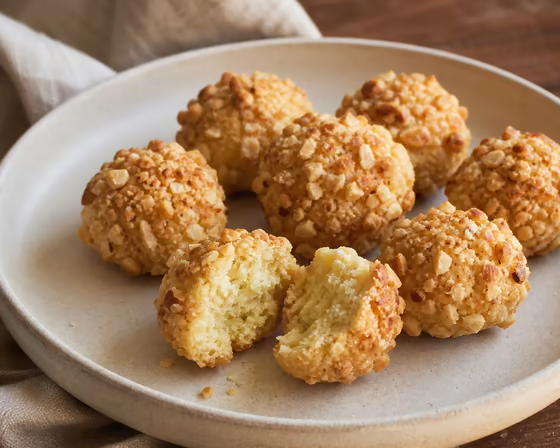
 Amendoados
Small dry, crumbly cakes, shaped by hand and crowned with coarsely chopped almonds.
Lisbon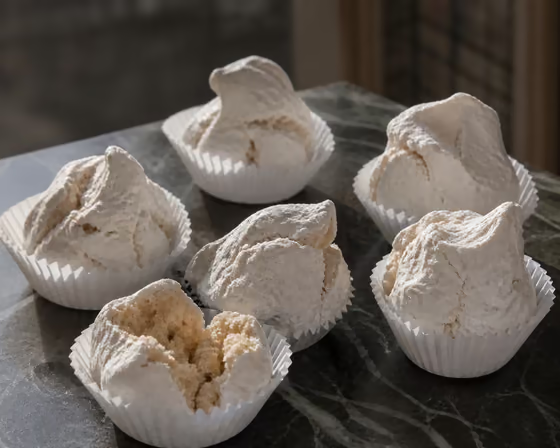 Catalogue image
 Azeitão Almond Meringues
Rustic hand-shaped almond meringues with a white, delicately cracked shell.
Lisbon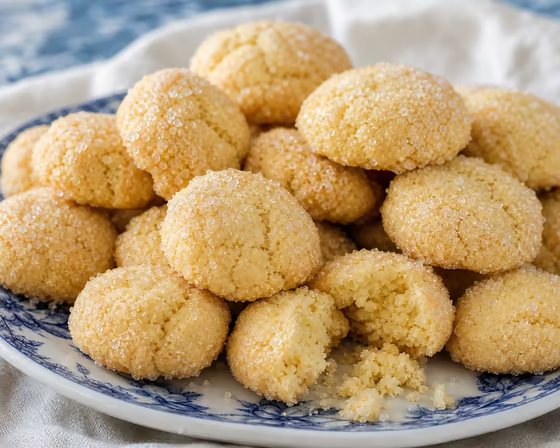 Catalogue image
 Cascais Sands
Beach sand that melts on the tongue.
Lisbon Catalogue image
 Arroubo Grape-Must Preserve
Must reduced slowly—alone as syrup or with fruit as uvada—in terminology that varies among sources and localities.
Lisbon