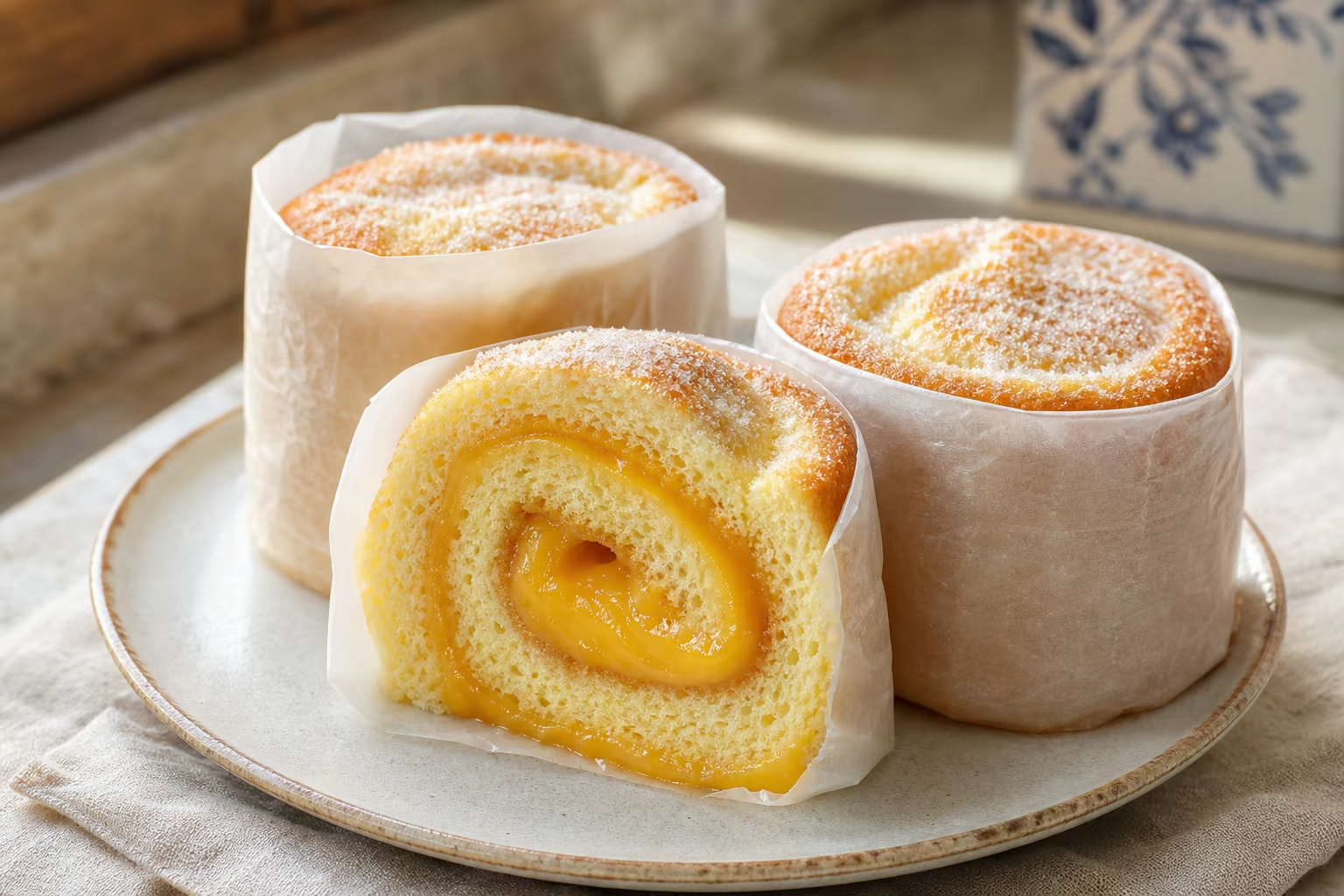
Azeitão Roll
Also known as: Tortas de Azeitão · Azeitão Egg Roll
A maize-sponge roll wrapped around golden egg cream, dusted with cinnamon.
- Origin
- Azeitão, early 20th century — a recipe brought from Fronteira (Alentejo) and established at the Pastelaria Cego ("O Cego"), opened in 1901
- Place
- Azeitão
- Region
- Lisbon
- Category
- Egg-Yolk Sweets
- Season
- Year-round
- Evidence
- Well documented
The Torta de Azeitão is a small rolled cake, glossy and golden, about a hand-span long. Outside, a thin, supple sponge; inside, a generous layer of creamy egg sweet, with a whisper of cinnamon warming every bite.
What sets it apart from Portugal's other rolled cakes is the sponge: made with maize flour instead of wheat, which gives it a moister crumb and a deep yellow. It is rolled while still warm so the cake won't crack, then served at room temperature.
It was first sold in slices, cut from one large roll; only later did it take the individual form you now find in every bakery in the village.
- Maize flour
- Eggs
- Egg yolks
- Sugar
- Almonds
- Water
- Cinnamon
Very sweet but balanced: the egg cream is soft and silky, almost melting, and the cinnamon cuts the sugar. The maize sponge is moist and faintly grainy without being dry, yielding instantly to the bite.
The recipe is remarkably consistent from bakery to bakery, given its tie to Azeitão. Differences come down to the set of the egg cream and the hand with the cinnamon; some home versions add a touch of lemon to the filling.
In Azeitão itself, at the Pastelaria Cego ("O Cego"), considered the original house. The tortas are sold throughout the village and the Setúbal area, often wrapped individually in paper. Be wary of versions made with wheat flour — the real thing uses maize.
It calls for a short espresso to offset the sweetness. For something slower, it pairs beautifully with a Moscatel de Setúbal, the sweet fortified wine of the Azeitão region itself.
The recipe is said to have been born in Fronteira, in the Alentejo, in the late 1800s, reaching Azeitão through people connected to the Pastelaria Cego, a shop opened in 1901. Its name comes from Manuel Rodrigues, known as "o Cego" ("the blind man") because he was blind; it was his wife, Maria Albina, an accomplished confectioner, who fixed and perfected the recipe. The house is still in business — it passed to the Pinto family in 1975 — and is regarded as the origin of the genuine tortas de Azeitão, whose secret is handed down from generation to generation.
Unlike so many of Portugal's convent sweets, the Torta de Azeitão has a secular and relatively recent origin, tied to a single bakery — a rarity in the national repertoire. It is listed in the inventory of Traditional Portuguese Products, though (unlike the Queijo de Azeitão cheese) it holds no DOP or IGP certification.
Well documented
Identity supported by institutional, specialist or corroborating sources.
- en.wikipedia.org/wiki/Torta_de_Azeit%C3%A3o (opens in a new tab)
- tradicional.dgadr.gov.pt/pt/cat/doces-e-produtos-de-pastelaria/218-torta-de-azeitao (opens in a new tab)
- historiccafesroute.com/pastelaria-regional-cego/ (opens in a new tab)
Pastries from here — Lisbon
 Catalogue image
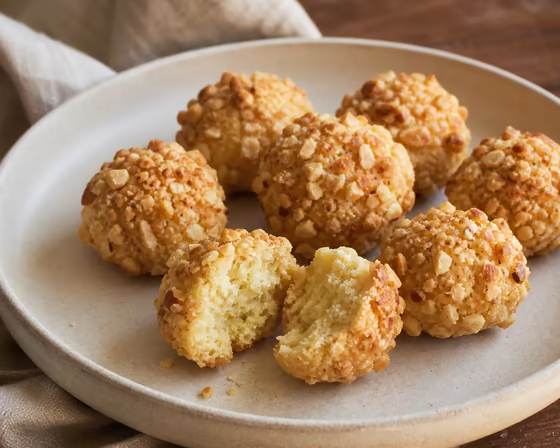
 Amendoados
Small dry, crumbly cakes, shaped by hand and crowned with coarsely chopped almonds.
Lisbon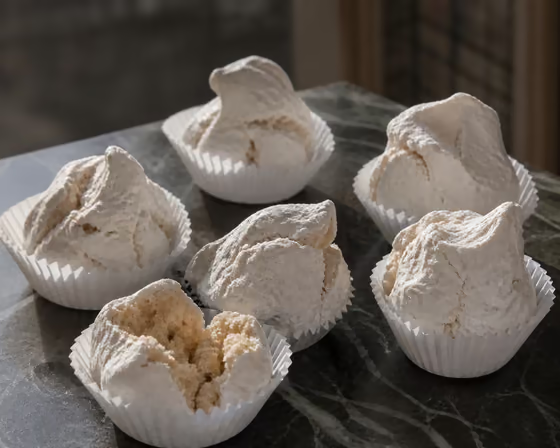 Catalogue image
 Azeitão Almond Meringues
Rustic hand-shaped almond meringues with a white, delicately cracked shell.
Lisbon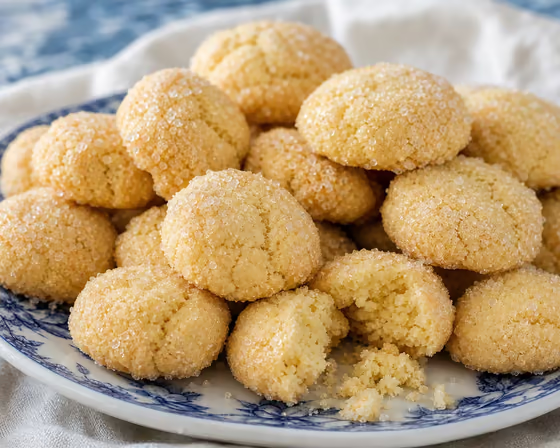 Catalogue image
 Cascais Sands
Beach sand that melts on the tongue.
Lisbon Catalogue image
 Arroubo Grape-Must Preserve
Must reduced slowly—alone as syrup or with fruit as uvada—in terminology that varies among sources and localities.
Lisbon