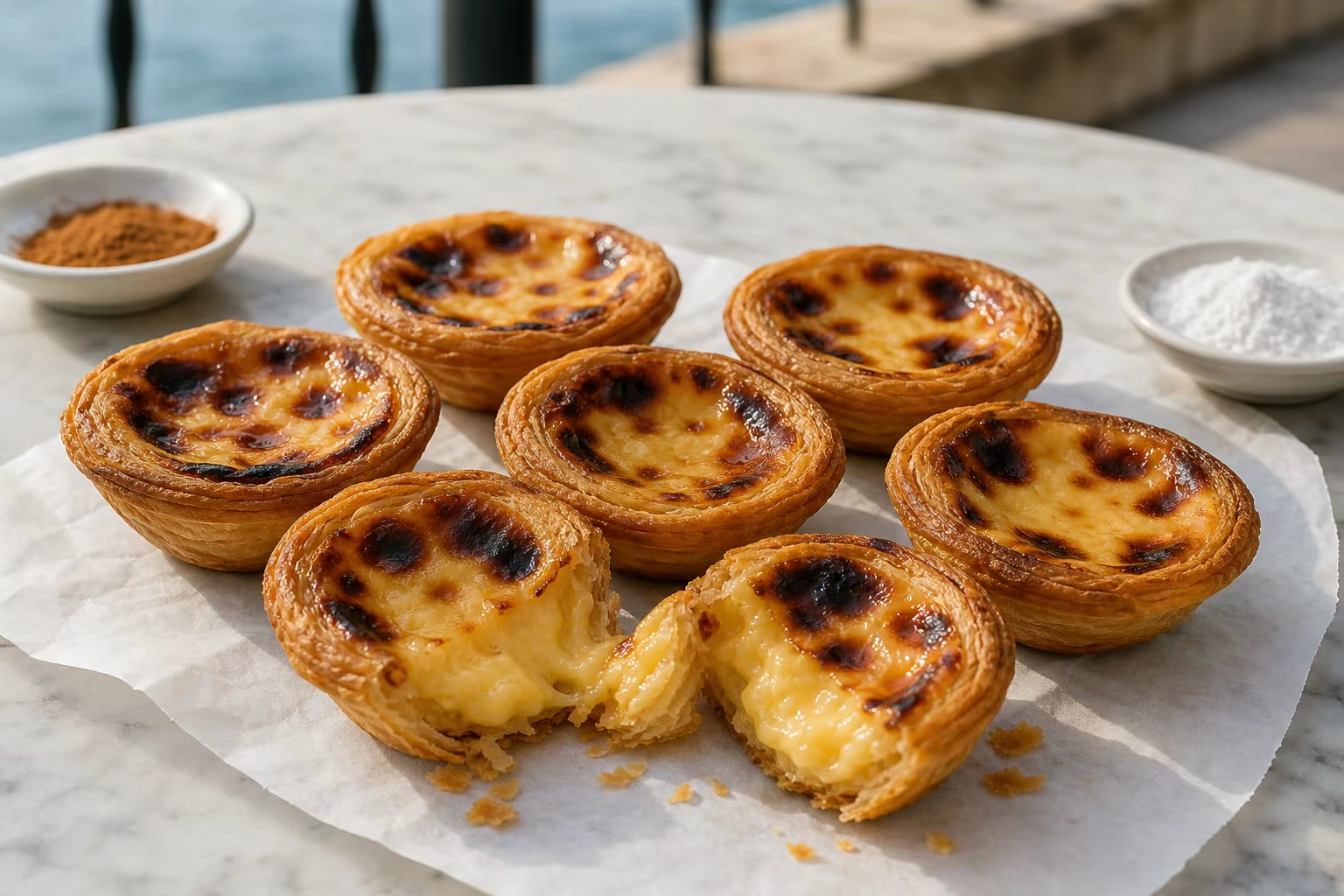
Pastéis de Belém
Belém's 1837 speciality of laminated pastry and egg custard.
- Origin
- Belém · Lisbon
- Place
- Belém · Lisbon
- Region
- Lisbon
- Category
- Custards & Creams
- Season
- Year-round
- Evidence
- Well documented
Pastéis de Belém are individual tarts roughly 7 centimetres wide, made by the historic Belém confectionery. A shell of finely laminated crisp pastry holds a mild custard of yolks, milk, sugar, flour, water, cinnamon and lemon, while the exact formula remains secret.
The dough is spread and thumb-pressed into moulds by hand, filled and baked in an extremely hot oven until the custard is golden with toasted patches. They are eaten warm, plain or dusted at the table with icing sugar and cinnamon.
- wheat flour
- margarine
- water
- egg yolks
- whole milk
- sugar
- cinnamon
- lemon zest
Very crisp pastry, mild egg-and-milk custard, caramelised top and optional cinnamon aroma.
Pastel de nata names the nationwide family; Pastéis de Belém identifies the speciality made by the historic Belém house.
At the Pastéis de Belém confectionery beside the Jerónimos Monastery, ideally fresh from the oven.
Espresso, cinnamon and icing sugar.
The house dates the start of production in buildings adjoining the former sugar refinery beside Jerónimos Monastery to 1837. The company and Lisbon Tourism present the recipe as coming from the monastery after the dissolution of the orders; DGADR, however, stresses that this culinary lineage lacks documentary proof. The firm fact is production identified with the house since 1837, not monastic authorship of the secret formula.
Well documented
Identity supported by institutional, specialist or corroborating sources.
- tradicional.dgadr.gov.pt/pt/cat/doces-e-produtos-de-pastelaria/204-pasteis-de-belem (opens in a new tab)
- pasteisdebelem.pt/historia/ (opens in a new tab)
- visitlisboa.com/pt-pt/locais/pasteis-de-belem (opens in a new tab)
- imovel.patrimoniocultural.gov.pt/detalhes.php (opens in a new tab)
Pastries from here — Lisbon
 Catalogue image
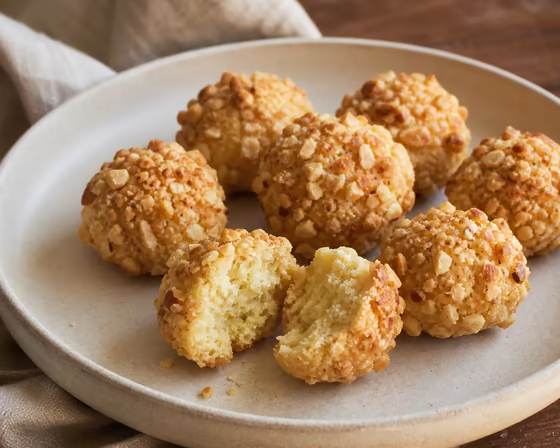
 Amendoados
Small dry, crumbly cakes, shaped by hand and crowned with coarsely chopped almonds.
Lisbon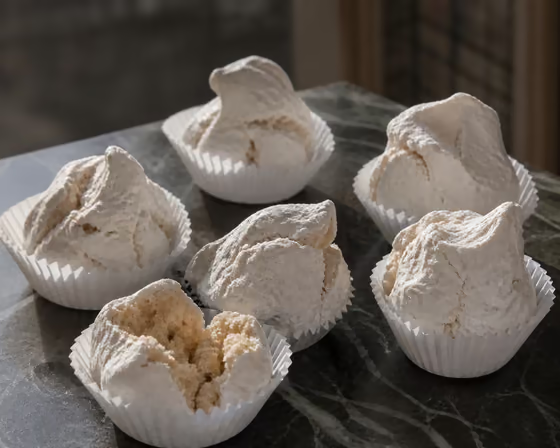 Catalogue image
 Azeitão Almond Meringues
Rustic hand-shaped almond meringues with a white, delicately cracked shell.
Lisbon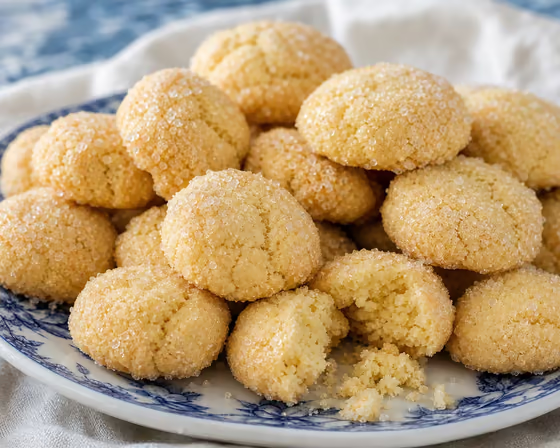 Catalogue image
 Cascais Sands
Beach sand that melts on the tongue.
Lisbon Catalogue image
 Arroubo Grape-Must Preserve
Must reduced slowly—alone as syrup or with fruit as uvada—in terminology that varies among sources and localities.
Lisbon