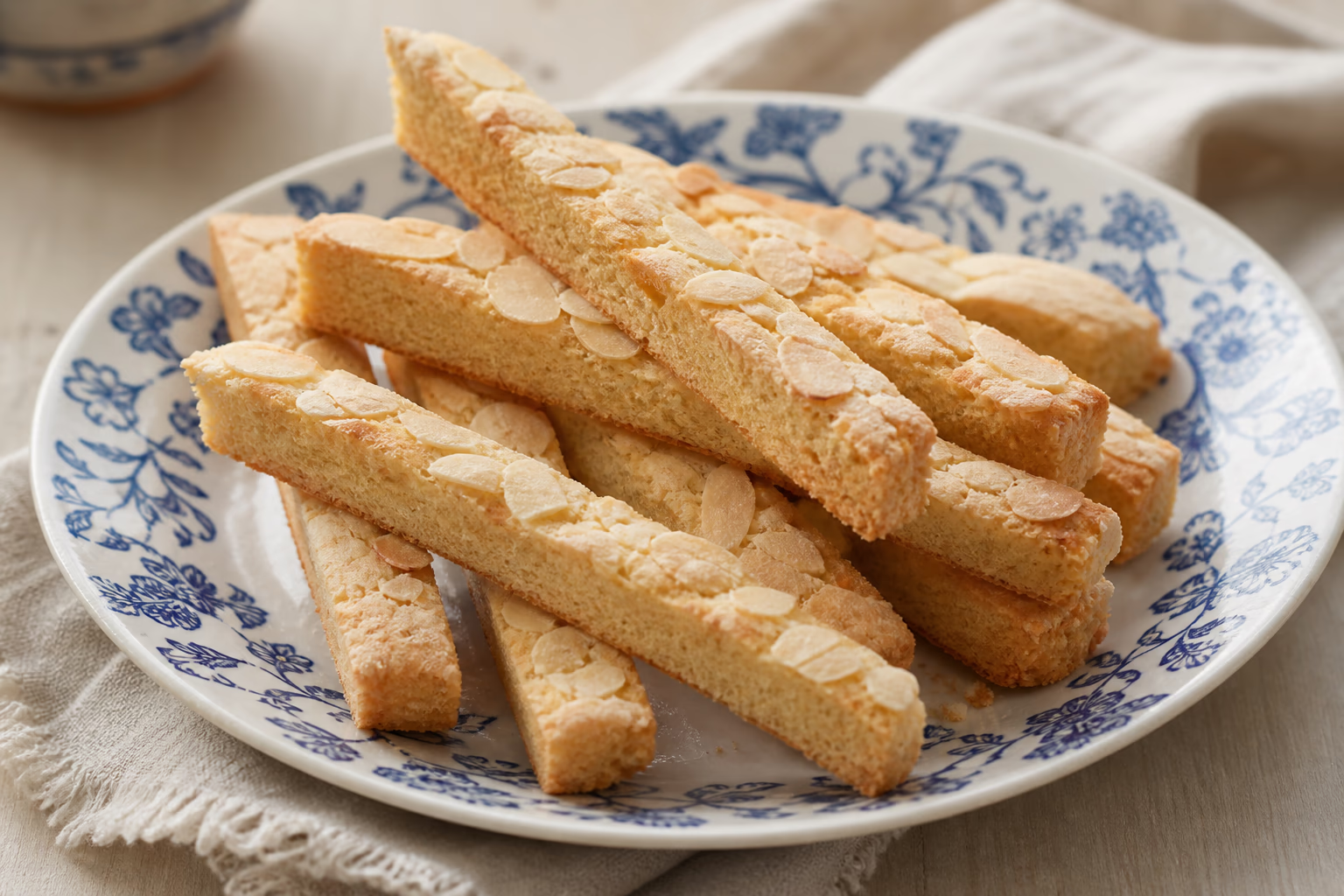
Cascais Almond Fingers
Also known as: Cascais Almond Fingers
Almond-cake fingers cut and returned to the oven.
- Origin
- Cascais · commercial specialty documented in the early 20th century
- Place
- Cascais
- Region
- Lisbon
- Category
- Cakes & Sweet Breads
- Season
- Year-round
- Evidence
- Well documented
Palitos de Amêndoa de Cascais begin as a low slab cake made with eggs, sugar, flour, raising agent, lemon and ground almonds. Sliced almonds cover the surface before the first bake.
The slab is then cut into long narrow strips and returned to the oven to dry. The result sits between cake and biscuit: light and porous within, toasted at the edges, crisp and covered in almonds.
- Eggs
- Sugar
- Flour
- Raising agent
- Lemon zest
- Ground almonds
- Sliced almonds
Dry and crisp with a light crumb, toasted almond and a fresh lemon note.
Finger width and the degree of the second bake vary; drier versions keep longer and call for a drink alongside.
Cascais FoodLab documents their sale at Mercado da Vila. Availability can vary, so check with traditional-sweet producers and stalls.
Coffee, lemon tea or fortified wine, into which the finger can be dipped.
Alberto Pimentel included Palitos de Amêndoa among the specialties of Casa Faz-Tudo in his portrait of Cascais published in 1902. Cascais FoodLab also notes the sweet's commercial continuity at the local market, where one seller has offered it for more than forty years.
Cutting and rebaking link them to other keeping biscuits, but their form and historic association with the town establish their Cascais identity.
Well documented
Identity supported by institutional, specialist or corroborating sources.
- foodlab.cascais.pt/pt-pt/palitos-de-amendoa (opens in a new tab)
- cascais.pt/node/45906 (opens in a new tab)
- foodlab.cascais.pt/pt-pt/docaria-tradicional-de-cascais-em-processo-de-qualificacao (opens in a new tab)
Pastries from here — Lisbon
 Catalogue image
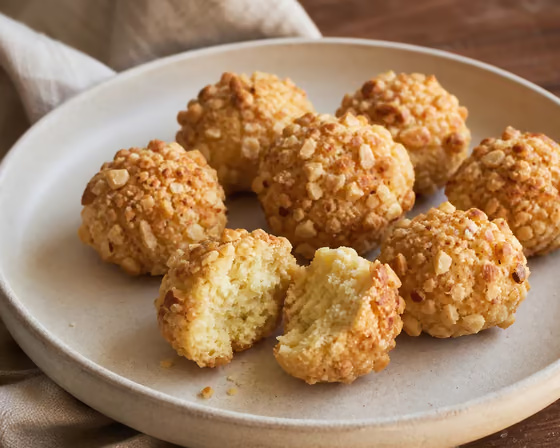
 Amendoados
Small dry, crumbly cakes, shaped by hand and crowned with coarsely chopped almonds.
Lisbon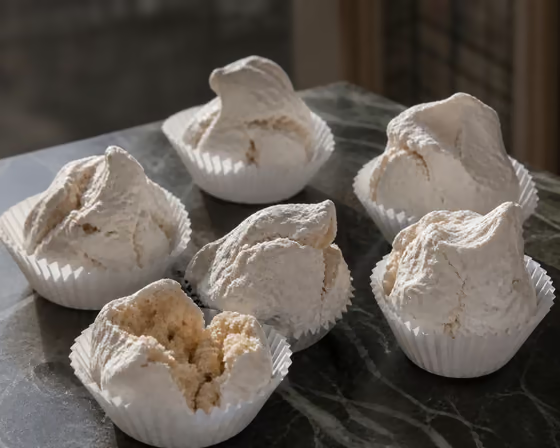 Catalogue image
 Azeitão Almond Meringues
Rustic hand-shaped almond meringues with a white, delicately cracked shell.
Lisbon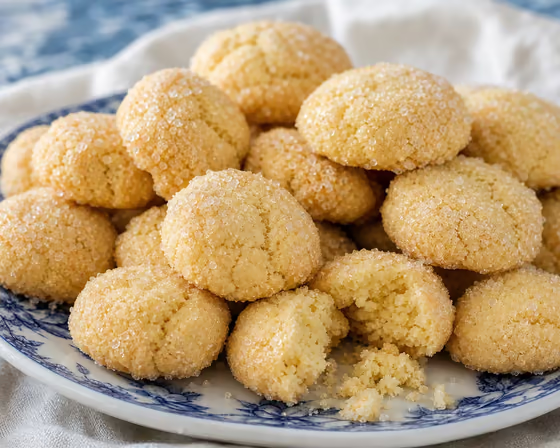 Catalogue image
 Cascais Sands
Beach sand that melts on the tongue.
Lisbon Catalogue image
 Arroubo Grape-Must Preserve
Must reduced slowly—alone as syrup or with fruit as uvada—in terminology that varies among sources and localities.
Lisbon