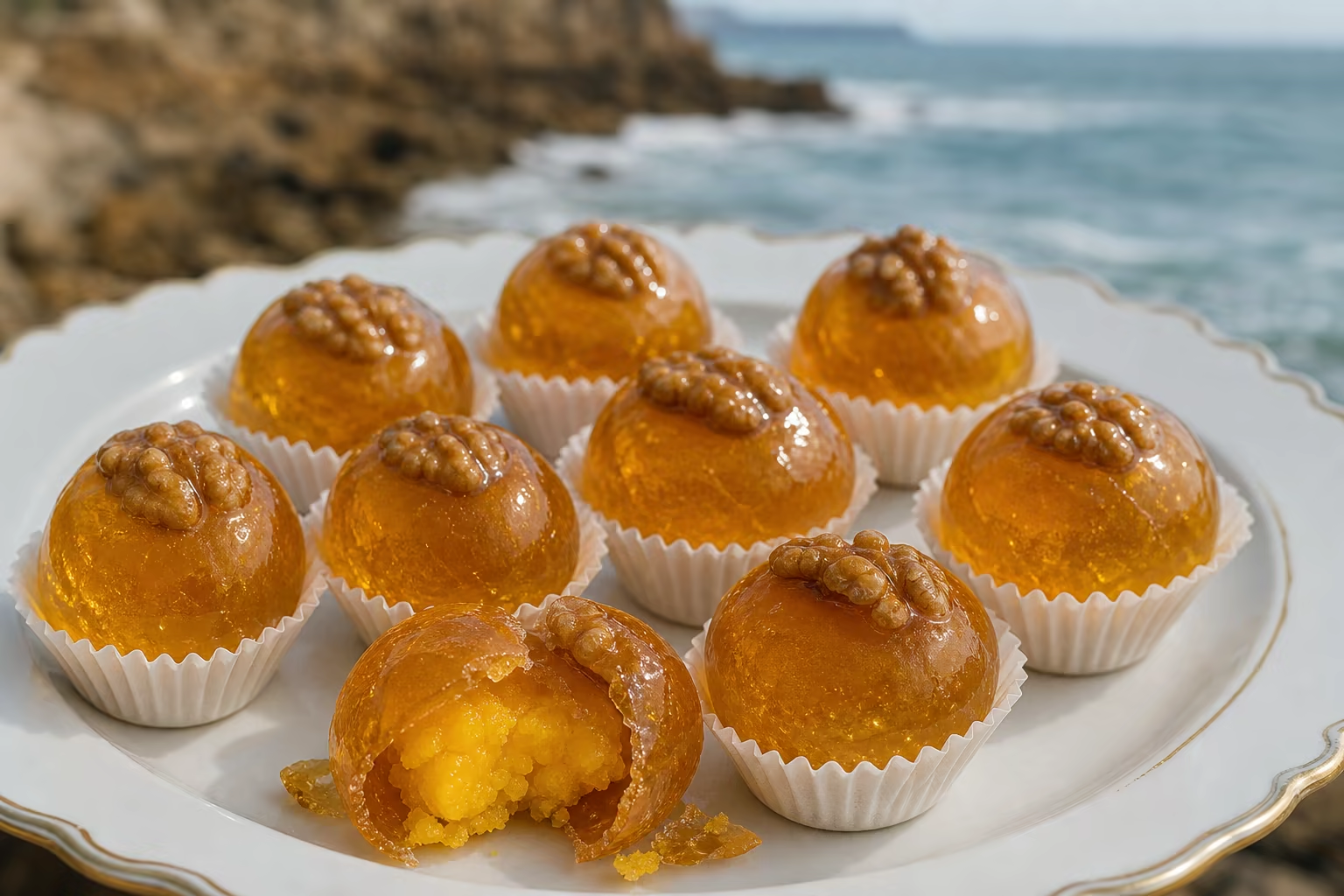
Cascais Walnuts
Also known as: Nozinhas · Stuffed walnuts
Moulded egg-yolk sweet crowned with walnut and coated in caramel.
- Origin
- Cascais · local form documented since the 1930s
- Place
- Cascais
- Region
- Lisbon
- Category
- Egg-Yolk Sweets
- Season
- Seasonality not documented
- Evidence
- Well documented
Nozes de Cascais are small balls of egg-yolk-and-sugar paste, topped with half a walnut and dipped in a caramel glaze. The recipe published by Cascais FoodLab uses water, sugar, egg yolks and walnut kernels; the cooled egg paste is shaped, topped with walnut and dipped in caramel.
Their rounded form, visible walnut half and translucent coating make the sweet immediately recognisable. The FoodLab recipe, credited to chef Gilberto Costa and based on Maria de Lourdes Modesto's work, is a contemporary municipal reference rather than the only possible historical version.
- Egg yolks
- Sugar
- Water
- Walnut halves
- Sugar-and-water caramel
The reference recipe combines a rich, sweet egg-yolk paste with walnut texture and an outer caramel layer. The glaze's crispness can vary with preparation and storage.
The research found recipes both with and without ground almond. Maria de Lourdes Modesto's Cozinha Tradicional Portuguesa version includes almond; the 1936, 1965 and 1984 recipes cited by the researcher do not. Cascais FoodLab's current recipe uses yolk, sugar, water and walnut, without almond.
Cascais FoodLab publishes the recipe and operates at Mercado da Vila, but the consulted page does not state that it sells the sweet. The research names former makers, including Pastelaria Bijou, which closed at the end of 2024. Confirm current producers and availability directly before visiting.
Not documented in the consulted sources.
Food-heritage research commissioned by Cascais Municipal Council from João Pedro Gomes found a 1932 advertisement from Antiga Casa Faz Tudo promoting nozinhas. The researcher also identified local recipes called nozes recheadas and a 1936 recipe in Culinária Portuguesa, concluding that the form recognised today was being made and eaten in Cascais by at least the 1930s. The study was still under way when these findings were reported in 2025.
Earlier municipal sources placed the start of local sales in the 1950s and repeated an attribution to the former Convent of Nossa Senhora da Piedade. The newer research found no evidence for that convent origin and treats it as a later narrative rather than historical fact. Recipes also varied: some publications include ground almond and others do not; yolk, sugar, water and walnut are the most consistent elements.
Well documented
Identity supported by institutional, specialist or corroborating sources.
- foodlab.cascais.pt/pt-pt/nozes-de-cascais (opens in a new tab)
- timeout.pt/cascais/pt/noticias/a-historia-desconhecida-da-origem-das-nozes-de-cascais-032525 (opens in a new tab)
- cascais.pt/noticia/areias-e-nozes-de-cascais-caminho-das-7-maravilhas-doces-de-portugal (opens in a new tab)
Pastries from here — Lisbon
 Catalogue image
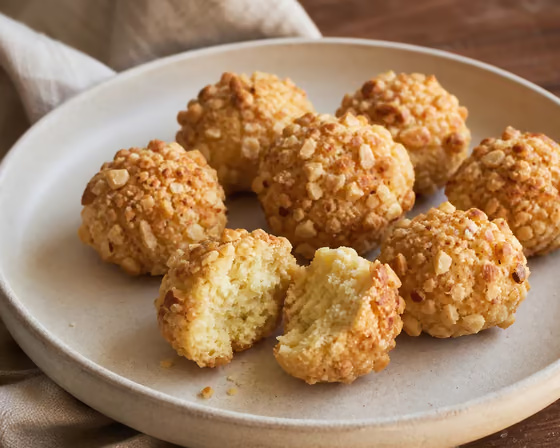
 Amendoados
Small dry, crumbly cakes, shaped by hand and crowned with coarsely chopped almonds.
Lisbon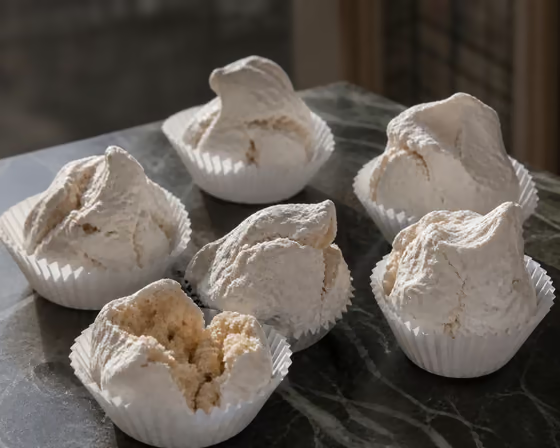 Catalogue image
 Azeitão Almond Meringues
Rustic hand-shaped almond meringues with a white, delicately cracked shell.
Lisbon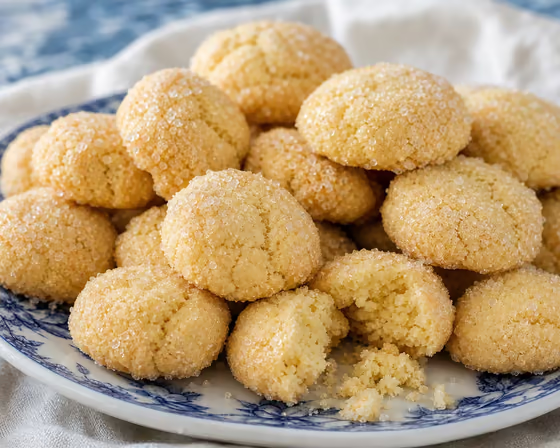 Catalogue image
 Cascais Sands
Beach sand that melts on the tongue.
Lisbon Catalogue image
 Arroubo Grape-Must Preserve
Must reduced slowly—alone as syrup or with fruit as uvada—in terminology that varies among sources and localities.
Lisbon