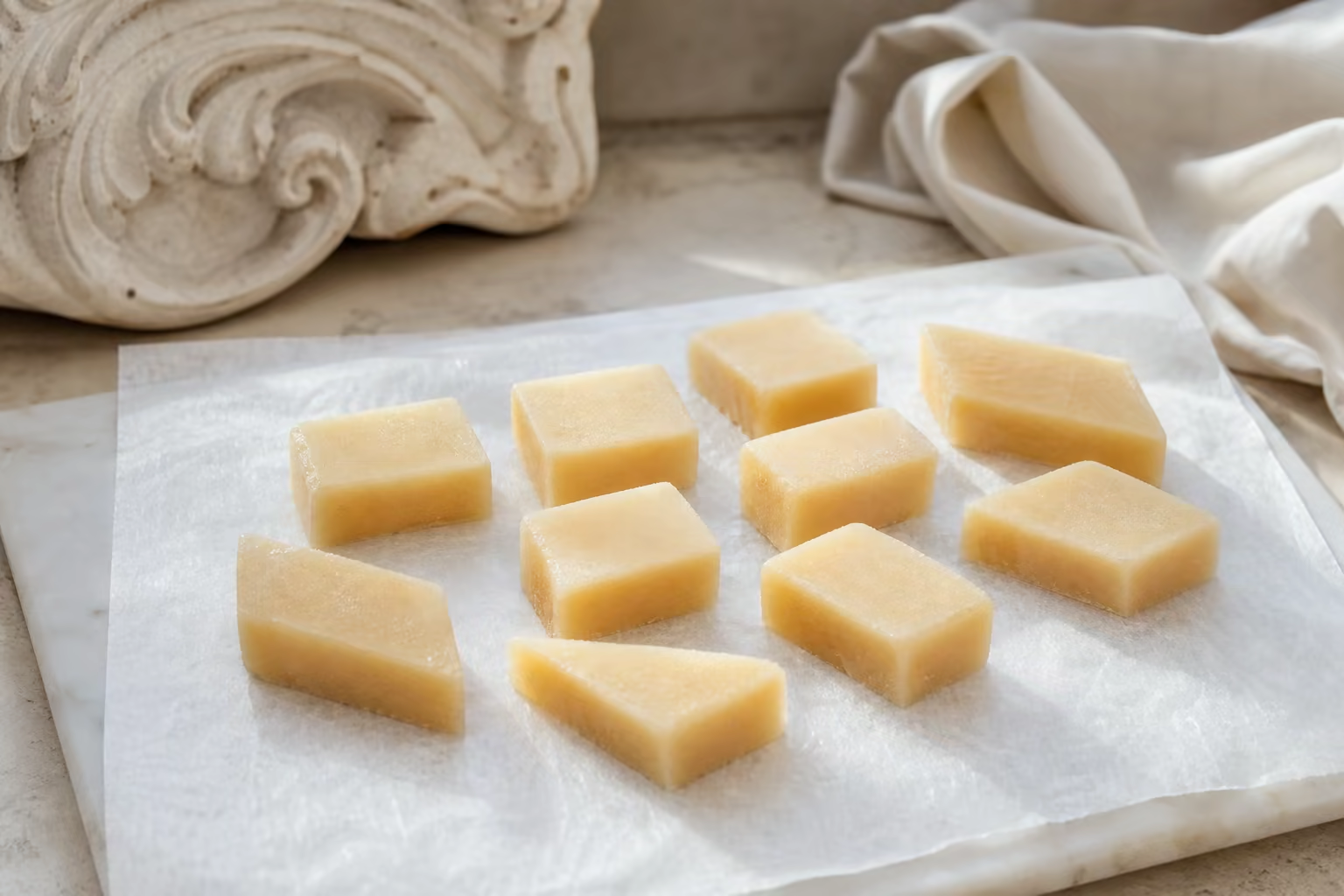
Odivelas White Quince Paste PGI
Also known as: Odivelas White Quince Paste
An almost-white convent quince paste, firm enough to slice and protected by PGI.
- Origin
- Odivelas municipality · Lisbon district · PGI registered in 2022
- Place
- Odivelas
- Region
- Lisbon
- Category
- Fruit & Honey Sweets
- Season
- Available year-round according to the PTPT record; festive shapes for Valentine’s Day, Easter and Christmas
- Evidence
- Well documented
Marmelada Branca de Odivelas PGI is made exclusively by cooking quince flesh with white sugar, water and lemon juice. The official specification requires a uniform near-white colour, even intense gloss, quince aroma, sweet taste and a solid consistency that can be cut with a knife.
The cooked flesh is puréed and added to syrup at the local ‘high sugar’ or hard-ball stage. In a tray, the product sets for at least one day, rests for at least another two hours after turning out, is cut and air-dries for a minimum of seven days. At least 350 grams of quince flesh or purée are used per kilogram of finished product.
- quince flesh
- white sugar
- water
- lemon juice
The specification fixes a sweet taste, quince aroma, intense gloss and a solid but not hard texture. Lemon juice is used to limit oxidation; the source does not attribute perceptible acidity to the finished product.
It may be sold in a container or cut into cubes, bars and individual pieces. For occasions such as Valentine’s Day, Easter and Christmas, the specification records moulded circles, clovers, hearts, rosettes, bells and stars.
The PGI name covers only production carried out entirely within Odivelas municipality. Consult the municipality’s producer list and tourism shop before visiting; availability and formats may vary.
The traditional-product source records it as dessert, a snack, breakfast food or a treat; it establishes no compulsory pairing.
The PGI specification presents Marmelada Branca as a legacy of the Bernardine nuns of the Monastery of Saint Denis and Saint Bernard in Odivelas and documents oral transmission of the technique to local people in the second half of the nineteenth century. It also transcribes the formula preserved in O Livro de Receitas da Última Freira de Odivelas: 480 g quince paste to 960 g sugar at the high stage.
Its reputation is documented at least in 1886 and in 1924, when a work already referred to the quince paste still being sold in the town’s pastry shops. The PGI requires every processing stage to take place within Odivelas municipality; European registration was granted in 2022.
Well documented
Identity supported by institutional, specialist or corroborating sources.
- dgadr.gov.pt/images/docs/val/dop_igp_etg/Valor/CE_marmelada_branca_odivelas.pdf (opens in a new tab)
- eur-lex.europa.eu/legal-content/PT/TXT/PDF/ (opens in a new tab)
- tradicional.dgadr.gov.pt/pt/cat/doces-e-produtos-de-pastelaria/1069-marmelada-branca-de-odivelas-igp (opens in a new tab)
- ec.europa.eu/agriculture/eambrosia/geographical-indications-register/details/EUGI00000017384 (opens in a new tab)
- ptpt.pt/produtos/marmelada-branca-de-odivelas (opens in a new tab)
- cm-odivelas.pt/cmodivelas/uploads/writer_file/document/4534/catalogo_de_produtos.pdf (opens in a new tab)
Pastries from here — Lisbon
 Catalogue image
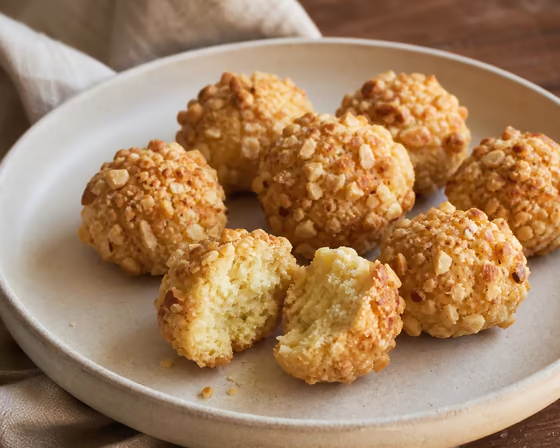
 Amendoados
Small dry, crumbly cakes, shaped by hand and crowned with coarsely chopped almonds.
Lisbon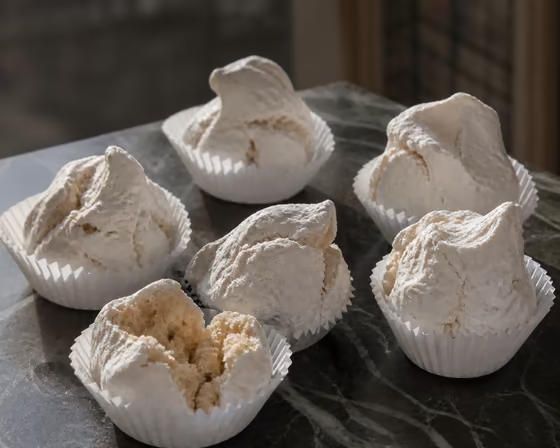 Catalogue image
 Azeitão Almond Meringues
Rustic hand-shaped almond meringues with a white, delicately cracked shell.
Lisbon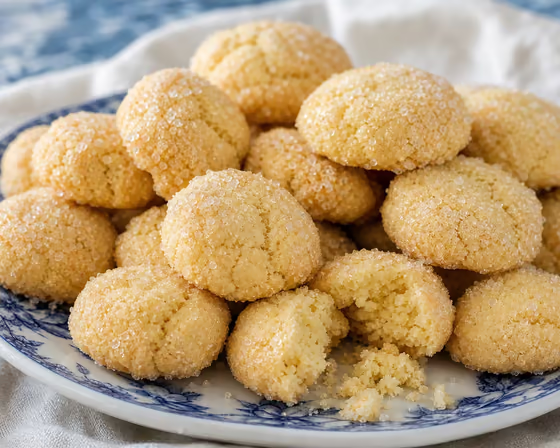 Catalogue image
 Cascais Sands
Beach sand that melts on the tongue.
Lisbon Catalogue image
 Arroubo Grape-Must Preserve
Must reduced slowly—alone as syrup or with fruit as uvada—in terminology that varies among sources and localities.
Lisbon