Fofos de Belas
Also known as: Fartos de Creme
A cylindrical pão de ló, split and filled with pastry cream — the sweet pride of Belas.
- Origin
- Egg sweet · Belas, Sintra (Lisbon region) · mid-19th century, c. 1850
- Place
- Belas
- Region
- Lisbon
- Category
- Egg-Yolk Sweets
- Season
- Year-round
- Evidence
- Well documented
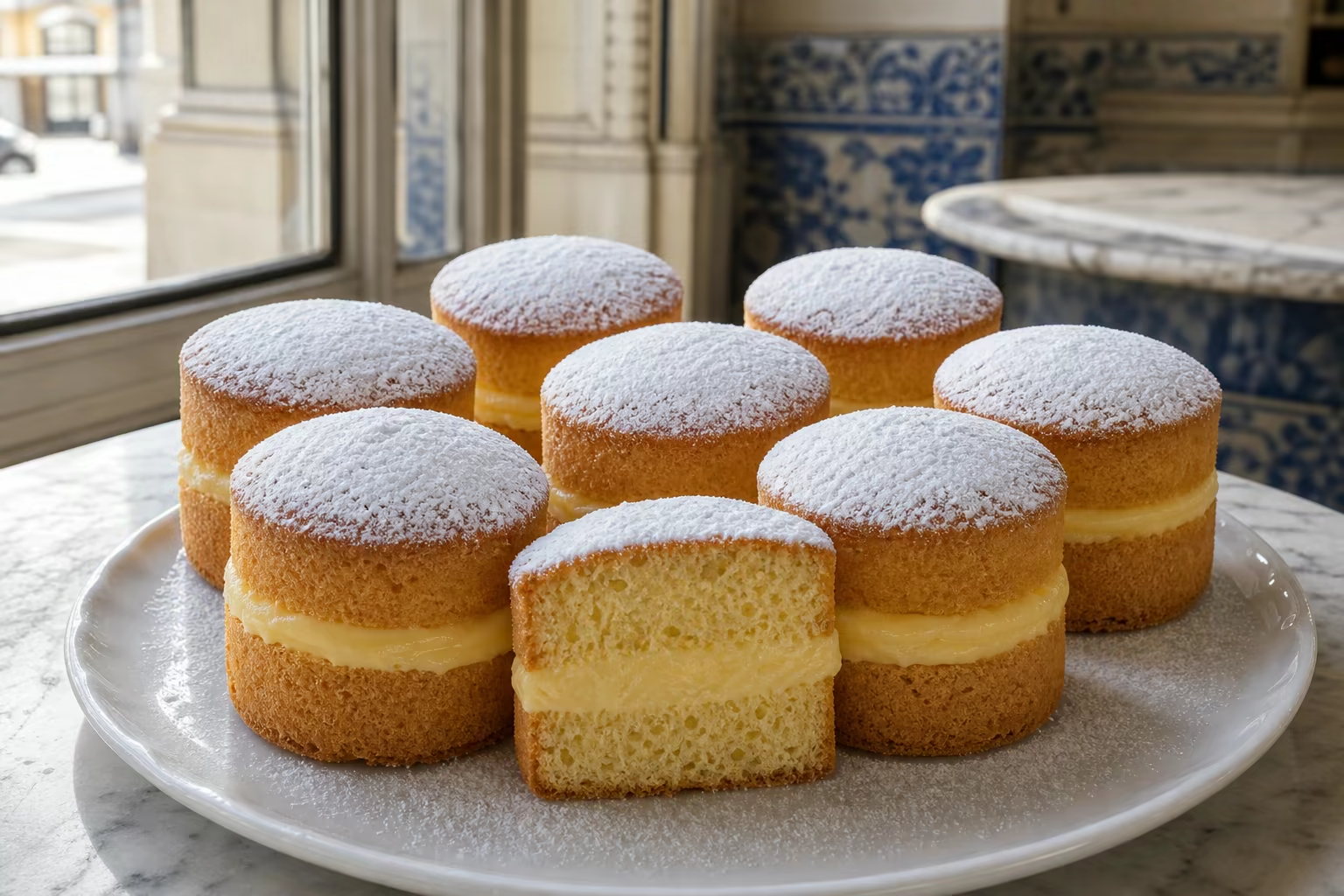
Fofos de Belas are small cylindrical cakes, about six centimetres in diameter, made from a light batter of flour, eggs and sugar — a kind of tall, airy pão de ló. Once baked, they are split with a horizontal cut, filled with pastry cream and dusted generously with icing sugar.
The charm is in the contrast: the cake's thin, toasted crust, the fluffy, slightly dry crumb that gives the sweet its name (fofo means 'fluffy'), and the silky yellow cream moistening it from within. They are simple in idea and demanding in execution, and they have been made in the same house in Belas, at the foot of the Sintra hills, for more than a century and a half.
- eggs
- sugar
- flour
- egg yolks
- milk
- cornstarch
- icing sugar (for dusting)
- lemon zest or vanilla (in the cream)
Every bite is contrast. The cake is light and airy, with a fluffy, faintly dry crumb and a thin golden crust from the wood-fired oven; inside, the pastry cream is soft, silky and frankly egg-rich, moistening the crumb around it. The icing sugar on top adds a fine, powdery sweetness. It is comforting rather than cloying, the cream balancing the dryness of the cake.
This is a sweet with a fixed recipe kept by a single family, so variations are few — they are sold mostly in boxes of six or twelve, or loose at the counter. The old name, fartos de creme, still surfaces, and some see kinship with other little cream-filled cakes of the Lisbon repertoire. Outside Belas, any pão de ló split and filled with cream will always be an imitation, never the original.
The right place is Belas itself, in the parish of Belas, municipality of Sintra: it is there, at the Casa dos Fofos de Belas — the only house that makes them, since the mid-19th century — that you find the real fofos, baked in a wood-fired oven and filled to order. Look for them fresh, the cream still moist and the sugar loosening as you bite — they do not keep well for long, and that is exactly how they should be eaten.
A short espresso or bica balances the sweetness of the cream; for an afternoon treat, a plain black tea or a glass of milk, in the spirit of those who once went to Belas on a Sunday.
The story of the fofos is the story of a single family. The house that makes them began around 1840 as a Casa do Pão-de-Ló, selling pão de ló and home-made pastries at the fairs and festivals around Lisbon; around 1850 it specialised almost entirely in fofos and opened to the public, later becoming the Fábrica dos Fofos de Belas. The innovation is said to have come from the mother of Liberdade Fonseca, who decided to fill the traditional pão de ló with cream — making the batter denser and more flavourful — and named the result, at first, fartos de creme.
The recipe stayed within the family, handed down from generation to generation, and the cakes are still baked in the original wood-fired oven, whose iron door recalls the ovens of the old palaces — traditionally heated with eucalyptus wood, which lends them a subtle savour. Though they never gained the fame of Sintra's queijadas and travesseiros, the fofos de Belas reached the semi-final of the 7 Sweet Wonders of Portugal (7 Maravilhas Doces de Portugal) in 2019.
Well documented
Identity supported by institutional, specialist or corroborating sources.
- tradicional.dgadr.gov.pt/pt/cat/doces-e-produtos-de-pastelaria/194-fofos-de-belas (opens in a new tab)
- fofosdebelas.com/historia/ (opens in a new tab)
- sintranoticias.pt/2019/08/16/fofos-de-belas-apurados-para-semi-final-7-maravilhas-doces-de-portugal/ (opens in a new tab)
- pt.wikipedia.org/wiki/Belas_(Portugal) (opens in a new tab)
Pastries from here — Lisbon
 Catalogue image
 Amendoados
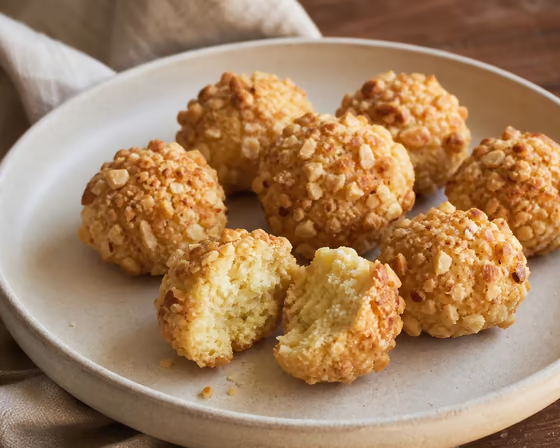
Small dry, crumbly cakes, shaped by hand and crowned with coarsely chopped almonds.
Lisbon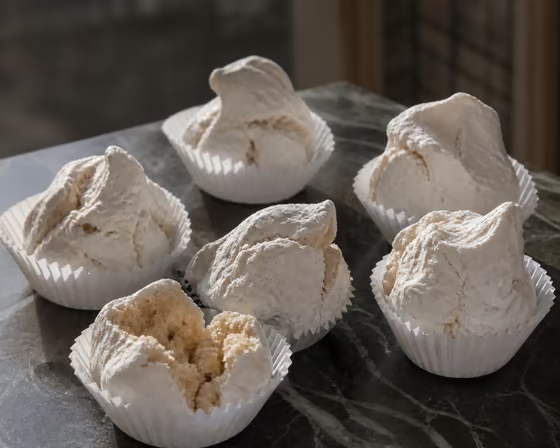 Catalogue image
 Azeitão Almond Meringues
Rustic hand-shaped almond meringues with a white, delicately cracked shell.
Lisbon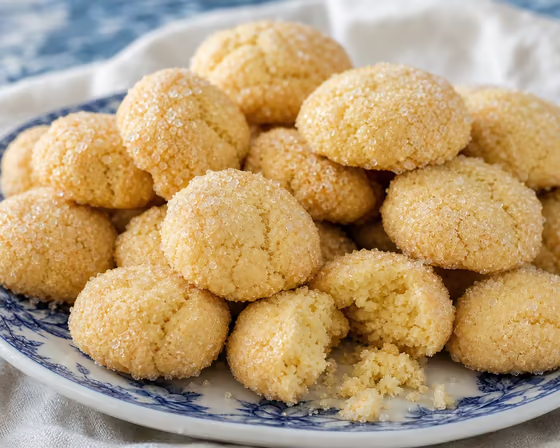 Catalogue image
 Cascais Sands
Beach sand that melts on the tongue.
Lisbon Catalogue image
 Arroubo Grape-Must Preserve
Must reduced slowly—alone as syrup or with fruit as uvada—in terminology that varies among sources and localities.
Lisbon