Celestes de Santa Clara
Also known as: Celestes · Santarém Celestes
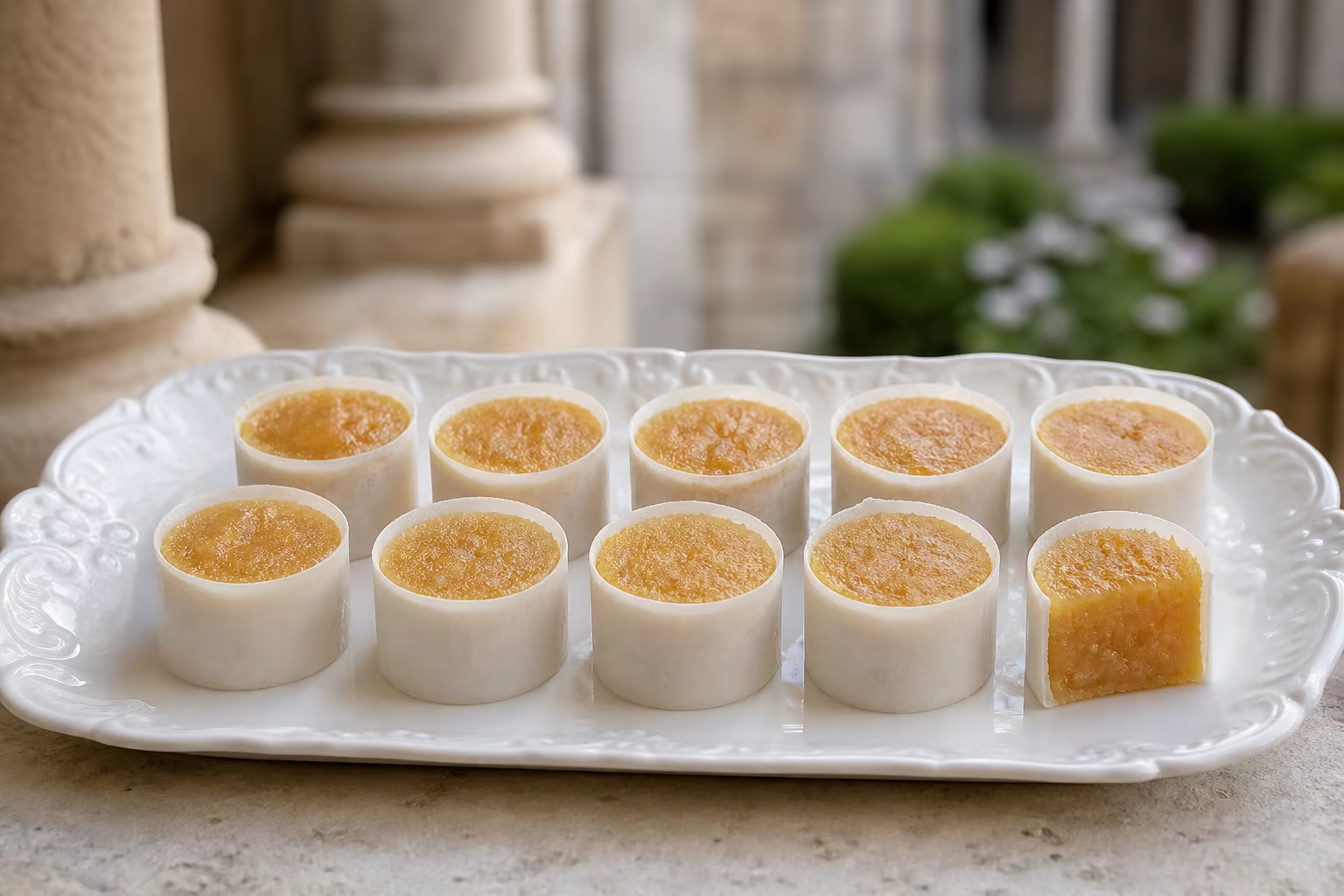
Small almond-and-egg cylinders, white with wafer and toasted on top.
- Origin
- Santarém · Convent of Santa Clara
- Place
- Santarém · Ribatejo
- Region
- Lisbon
- Category
- Convent Sweets
- Season
- Year-round · traditionally presented at the National Gastronomy Festival
- Evidence
- Well documented
Celestes de Santa Clara are small cylindrical sweets from Santarém, made with almonds, eggs, sugar, butter and lemon and enclosed in obreia wafer. The DGADR record gives a precise description: about 3.5 cm high and 3 cm in diameter, with white wafer sides and a toasted yellow top.
Inside, ground almonds are cooked with sugar syrup; after cooling, beaten whites, yolks, butter and lemon are added before the mixture returns to the oven. The wafer structures the small cylinder and provides a delicate neutral contrast to its moist, concentrated centre.
They are traditionally presented individually or in boxes of six or twelve. The name refers specifically to Santarém's Convent of Santa Clara rather than generically to any Poor Clare house.
- Peeled ground almonds
- Egg yolks and whites
- Sugar
- Butter
- Lemon
- Obreia wafer
Very sweet and rich, led by almond and egg yolk with subtle butter and lemon freshness; the thin wafer contrasts with the moist centre.
Proportions may vary, but the traditional record documents almonds, eggs, sugar, butter, lemon and wafer, together with the cylindrical form and toasted top. Versions omitting butter or lemon are adaptations rather than the sole historical formula.
Look for them at pastry and confectionery shops in Santarém and confirm availability before visiting. DGADR also documents their traditional presentation at Santarém's National Gastronomy Festival.
Unsweetened espresso or black tea to balance the concentrated sugar, almond and yolk.
DGADR, citing the 2001 reference work Produtos Tradicionais Portugueses, places the birth of the Celestes at Santarém's Convent of Santa Clara, founded in 1259 and associated with King Afonso III and his daughter Leonor Afonso. It explicitly records as legend—not historical fact—that angels devised the recipe and gave it to the nuns as a reward for their faith.
The same record documents the earliest known retail through a Santarém grocery owned by Ajax Augusto da Silva Rato, who collected the sweets from the convent turntable at agreed dates and times. The recipe later spread through novices or postulants, although Ajax Rato's shop remained a place where Santarém residents bought them for years.
Santarém's municipal food guide continues to present Celestes as a speciality born in the convent. The sources consulted do not date the recipe's invention or substantiate later biographical details beyond the chain recorded by DGADR.
Well documented
Identity supported by institutional, specialist or corroborating sources.
- tradicional.dgadr.gov.pt/pt/cat/doces-e-produtos-de-pastelaria/748-celestes-de-santa-clara (opens in a new tab)
- visitesantarem.pt/wp-content/uploads/2023/02/guiagastronomicosantarem_compressed.pdf (opens in a new tab)
- cm-santarem.pt/descobrir-santarem/gastronomia/item/1096-celestes-de-santa-clara-docaria (opens in a new tab)
- celestesecompanhia.pt/produto/os-celestes/ (opens in a new tab)
Pastries from here — Lisbon
 Catalogue image
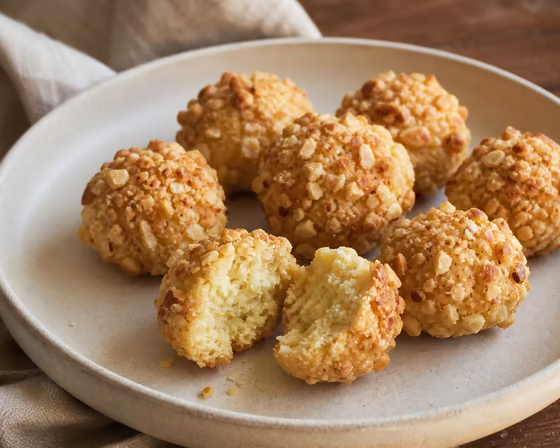
 Amendoados
Small dry, crumbly cakes, shaped by hand and crowned with coarsely chopped almonds.
Lisbon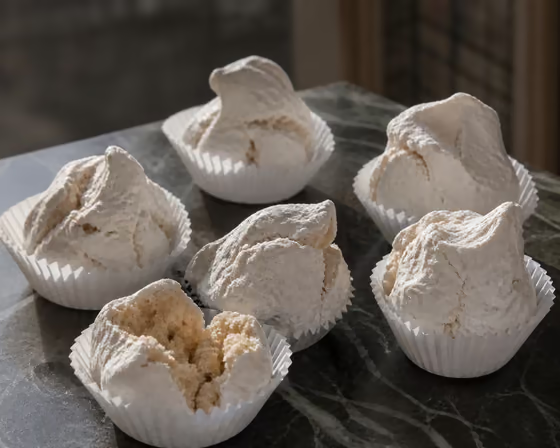 Catalogue image
 Azeitão Almond Meringues
Rustic hand-shaped almond meringues with a white, delicately cracked shell.
Lisbon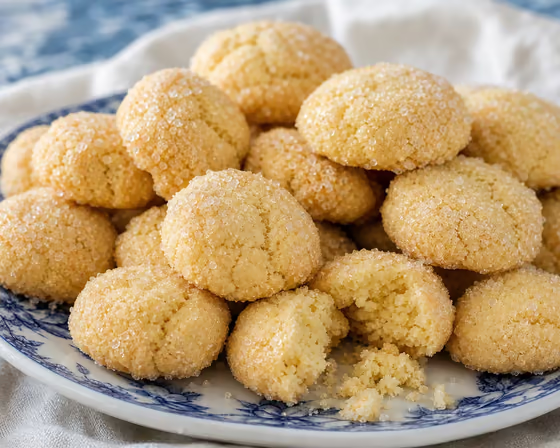 Catalogue image
 Cascais Sands
Beach sand that melts on the tongue.
Lisbon Catalogue image
 Arroubo Grape-Must Preserve
Must reduced slowly—alone as syrup or with fruit as uvada—in terminology that varies among sources and localities.
Lisbon