Paço de Arcos Cacetes
Also known as: Paço de Arcos Palitos · Casa Bonvalot Cacetes
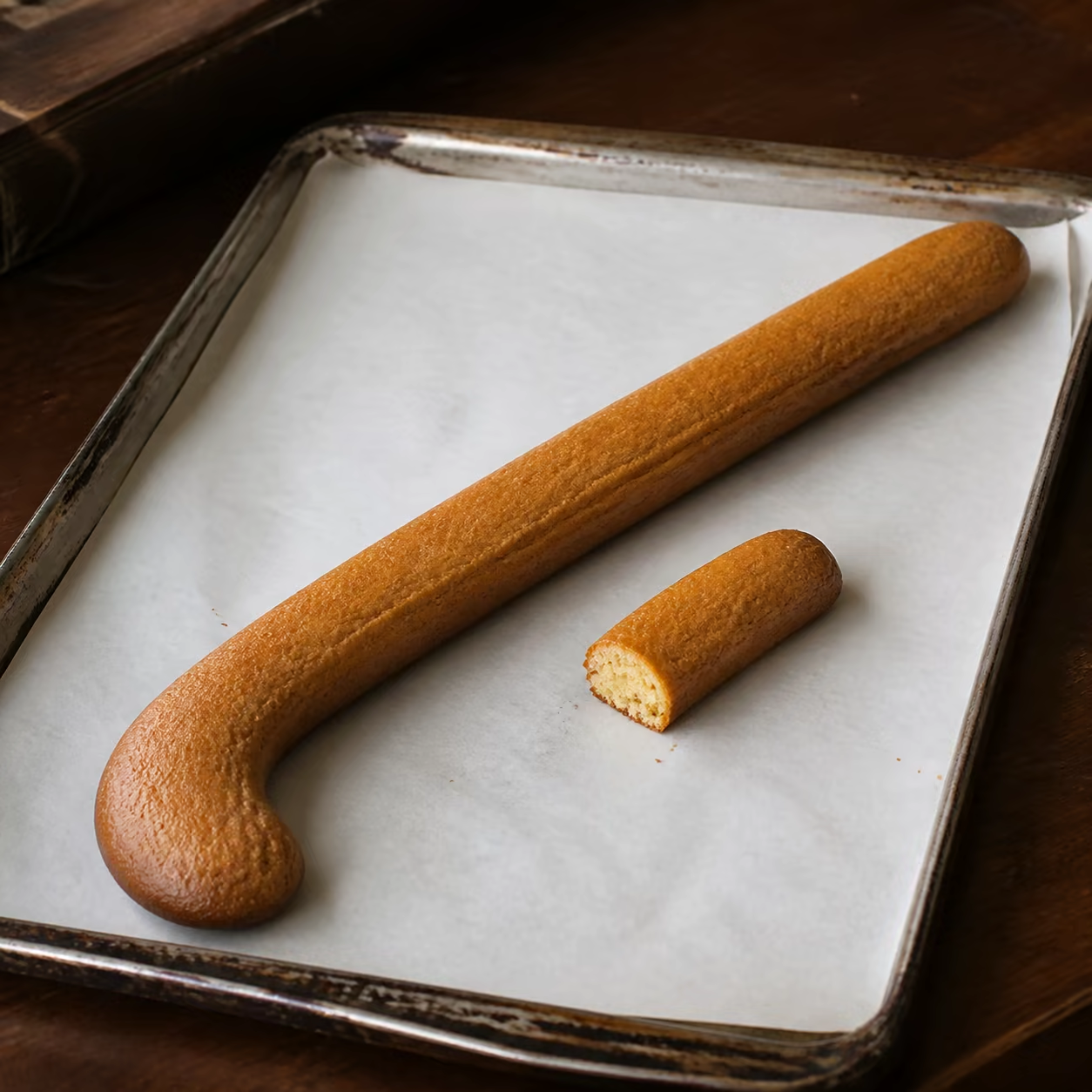
A vanished Paço de Arcos speciality remembered as a long cake shaped like a field-hockey stick.
- Origin
- Paço de Arcos, Oeiras · historical speciality documented in 1946
- Place
- Paço de Arcos
- Region
- Lisbon
- Category
- Cakes & Sweet Breads
- Season
- Historical speciality with no documented regular production
- Evidence
- Limited documentation
Cacetes de Paço de Arcos are documented by name in a 1946 issue of Panorama, whose guide to the Costa do Sol lists them among the town's sweets. A bilingual tourism guide from Oeiras municipality, published decades later, again presented them as a regional delicacy.
Later local accounts remember a long cake whose outline imitated a field-hockey stick and associate it with Casa Bonvalot, also known as Casa dos Cacetes. No recipe, unambiguous product photograph or description of its interior was found in the open sources. This page's image is therefore an editorial reconstruction of the remembered shape only; it does not claim to show the historical ingredients, crumb or finish.
The recipe and sensory profile are not described in the open sources reviewed.
Local accounts mention “Palitos de Paço de Arcos” as an earlier name and also remember “Stiques,” but the available evidence cannot determine whether these were names, successive shapes or separate products.
No documented current commercial production was found. Recent local sources treat Cacetes as a remembered speciality and describe the former Casa dos Cacetes as closed.
Not documented in the sources reviewed.
The earliest contemporary evidence reviewed here is the 1946 magazine Panorama, which records “Cacetes de Paço de Arcos” among the town's sweets beside Mimosos. The name remained in local memory and municipal tourism promotion: an Oeiras guide called them one of the area's sweet specialities, and the community newspaper A Voz de Paço de Arcos still recalled Cacetes and Stiques in 2025 as examples of the town's former pastry fame.
Local accounts attribute their sale to Casa Bonvalot and Manuel Pinhanços, mention an earlier name—“Palitos de Paço de Arcos”—and place antecedents around 1890. One account reports trademark registrations in 1926 and 1934; those trademark documents were not located in the open sources reviewed, so the dates and alleged French origin remain secondary testimony rather than facts confirmed here.
Limited documentation
The identity is documented, but its origin, composition or availability has limited sourcing.
- hemerotecadigital.cm-lisboa.pt/Periodicos/Panorama/N29/N29_master/Panorama_N29_1946.PDF (opens in a new tab)
- livrozilla.com/doc/443098/---bem-vindo----welcome---c%C3%A2mara-municipal-de-oeiras (opens in a new tab)
- avozdepacodearcos.org/wp-content/uploads/2025/08/AF_Jornal-58_LOW-1.pdf (opens in a new tab)
- kantophotomatico.blogspot.com/2020/03/rua-costa-pinto-e-casa-bonvalot-em-paco.html (opens in a new tab)
- osbardinos.blogspot.com/2009/11/paco-de-arcos-revisitado-ii.html (opens in a new tab)
Pastries from here — Lisbon
 Catalogue image
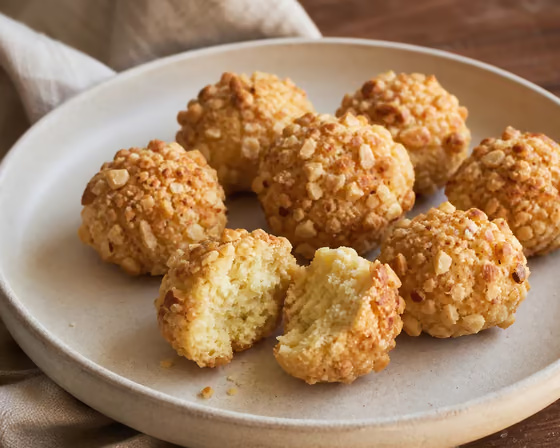
 Amendoados
Small dry, crumbly cakes, shaped by hand and crowned with coarsely chopped almonds.
Lisbon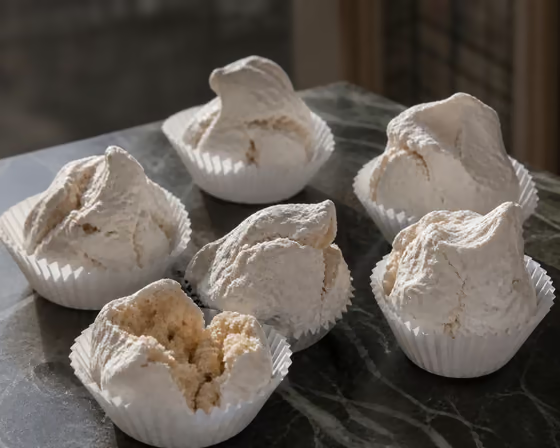 Catalogue image
 Azeitão Almond Meringues
Rustic hand-shaped almond meringues with a white, delicately cracked shell.
Lisbon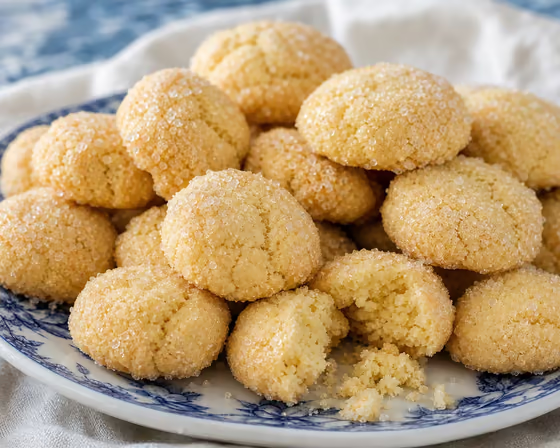 Catalogue image
 Cascais Sands
Beach sand that melts on the tongue.
Lisbon Catalogue image
 Arroubo Grape-Must Preserve
Must reduced slowly—alone as syrup or with fruit as uvada—in terminology that varies among sources and localities.
Lisbon