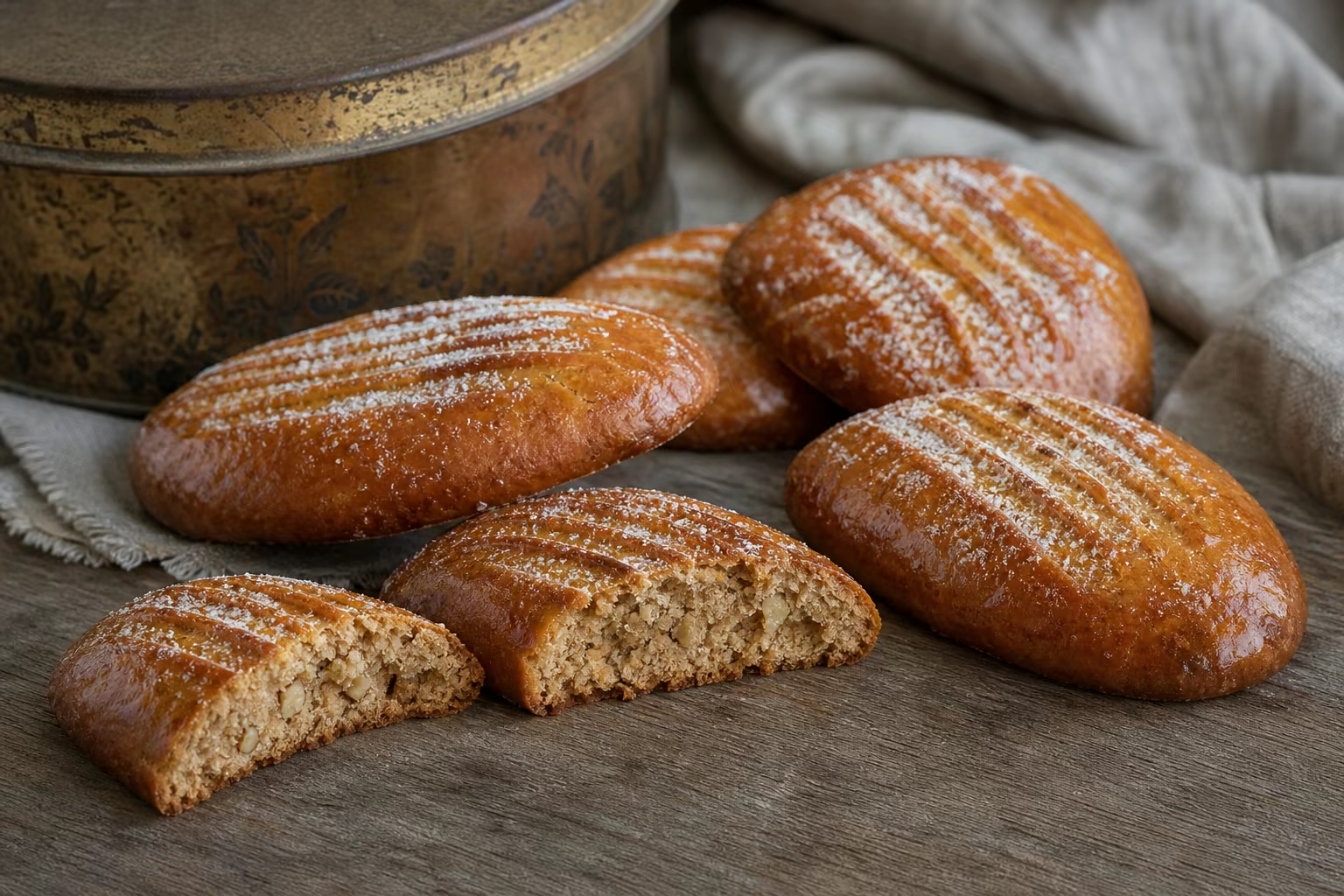
Boiled Broas
Also known as: Boiled Broas of Ribatejo · Ribatejo-Style Boiled Broas
The Ribatejo broa whose dough cooks in the pan first.
- Origin
- Ribatejo · documented in Torres Novas and Abrantes; earliest chronology unknown
- Place
- Santarém
- Region
- Lisbon
- Category
- Festive & Seasonal
- Season
- The months before Christmas
- Evidence
- Well documented
Broas Fervidas are defined by their process. In one formula published by Ruralea, water, olive oil, honey, sugar, walnuts, cinnamon, fennel and salt come to the boil; flour is added off the heat and the dough returns to the stove until thick and pulling away from the pan.
Once cool, it is shaped into flat ovals, marked with a fork, glazed with egg and baked briefly. The published finish is icing sugar, although the source itself treats it as optional.
- Wheat flour
- Water
- Honey
- Olive oil
- Brown sugar
- Walnut kernels
- Fennel seed
- Cinnamon
- Salt
- Beaten egg
- Butter for the tray
- Optional icing sugar
Very sweet and dense, led by honey, olive oil and walnut with the warm fragrance of cinnamon and fennel.
A formula attributed to Conceição Alves and published by Petitchef uses wheat flour and corn flour, oil and olive oil, coffee, chocolate, cinnamon and fennel, without honey or walnuts. It demonstrates the diversity reported by the sources rather than corroborating the Ruralea quantities.
The sources locate the tradition in Torres Novas and Abrantes around Christmas but do not verify current outlets. Check with local producers before visiting.
The source suggests tea, a simple match for a broa rich in honey and olive oil.
Ruralea presents Broas Fervidas as a Ribatejo speciality common in Torres Novas and Abrantes and associated with the months before Christmas. It also warns that many household formulas exist and their quantities vary.
They should not automatically be merged with Santarém’s Broas das Donas or ‘Santoro’: APTECE publishes that name for an almond, sugar, egg and flour preparation without the honey and walnuts that define the formula documented here. Their earliest chronology remains unknown, and no proof of convent ancestry for Broas Fervidas was found.
Well documented
Identity supported by institutional, specialist or corroborating sources.
- ruralea.com/broas-fervidas-a-moda-do-ribatejo/ (opens in a new tab)
- pt.petitchef.com/receitas/sobremesa/broas-fervidas-do-ribatejo-fid-1571751 (opens in a new tab)
- portugal-aptece.com/as-broas-ou-santoro-em-casa/ (opens in a new tab)
Pastries from here — Lisbon
 Catalogue image
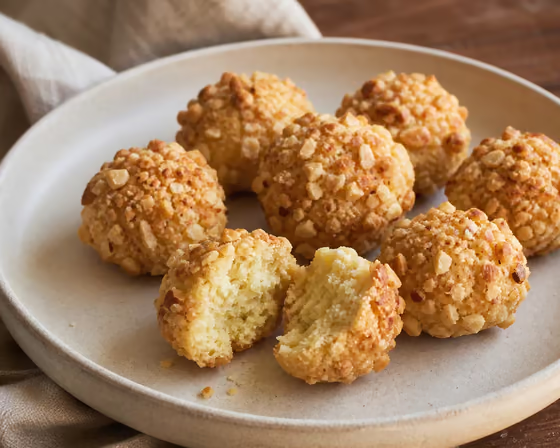
 Amendoados
Small dry, crumbly cakes, shaped by hand and crowned with coarsely chopped almonds.
Lisbon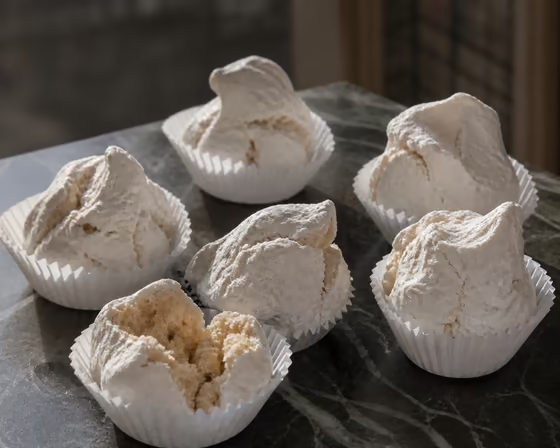 Catalogue image
 Azeitão Almond Meringues
Rustic hand-shaped almond meringues with a white, delicately cracked shell.
Lisbon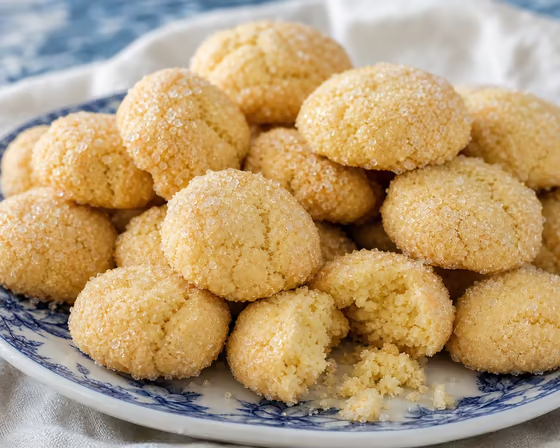 Catalogue image
 Cascais Sands
Beach sand that melts on the tongue.
Lisbon Catalogue image
 Arroubo Grape-Must Preserve
Must reduced slowly—alone as syrup or with fruit as uvada—in terminology that varies among sources and localities.
Lisbon