Head Cakes
Also known as: Head Cake · Bolo de Cabeça
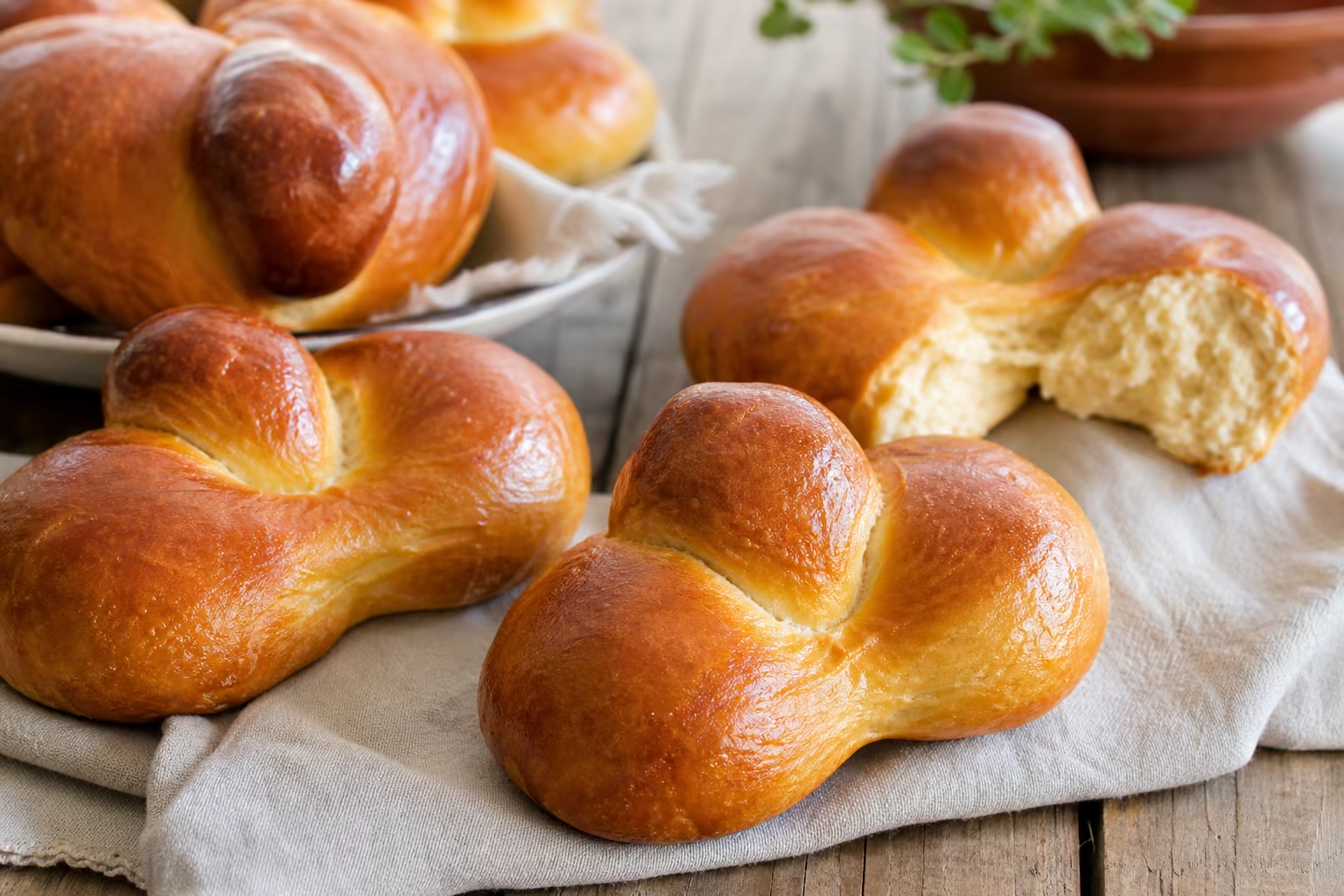
Torres Novas raised dough shaped into two overlapping figure eights.
- Origin
- Torres Novas · wedding, festival and pilgrimage buns; earliest chronology unknown
- Place
- Torres Novas
- Region
- Lisbon
- Category
- Festive & Seasonal
- Season
- Weddings, festivals and pilgrimages
- Evidence
- Well documented
Bolos de Cabeça are raised-dough buns from Torres Novas, substantial yet soft and scented with fennel seed, cinnamon, lemon juice and zest. The formula documented by MemóriaMedia scalds the dough with boiling olive oil and butter, mixes it for a long time and leaves it to rise overnight.
Their visual identity comes from shaping: portions of about 200 grams / 7.1 ounces are pinched to create four ‘heads’, folded and joined until they resemble two overlapping figure eights. Beaten egg supplies the gloss before a short bake in a very hot oven.
- Wheat flour
- Brown sugar
- Olive oil
- Butter
- Lemon
- Baker’s yeast
- Bicarbonate of soda
- Cinnamon
- Fennel seed
- Salt
- Water
- Beaten egg for glazing
A sweet, substantial yet soft dough with bright citrus, fennel seed and cinnamon, enriched by olive oil and butter beneath a thin glossy surface.
The field record documents horseshoes and little balls made from the same dough. Its domestic scaling note recommends more fennel and cinnamon, but contains a discrepancy: the main list gives 14 kilograms of sugar while the note uses 15 kilograms as the basis of its example.
The documentation places them in Torres Novas, especially around weddings, festivals and pilgrimages. We have not verified a current retail outlet; check directly before travelling.
Serve plain so the dough’s lemon, fennel and cinnamon remain distinct.
MemóriaMedia records the buns as an emblem of Torres Novas confectionery and as traditional cakes at the municipality’s weddings and pilgrimages. Its field record follows pastry maker Antónia Aguiar and publishes the formula used in her bakery, but neither dates the sweet’s creation nor gives a historical explanation for its name; its earliest chronology remains unknown.
The same dough can also become horseshoes and little balls; the source says the latter, decorated with sugar and walnut, are sold especially around All Saints. That does not establish Bolo de Cabeça itself as a ritual Pão-por-Deus bun, so the earlier association has been removed.
Well documented
Identity supported by institutional, specialist or corroborating sources.
- memoriamedia.net/index.php/bolos-de-cabeca (opens in a new tab)
- portugal-aptece.com/wp-content/uploads/2014/12/Arca-dos-Sabores-APTECE-1.compressed.pdf (opens in a new tab)
- turismodocentro.pt/wp-content/uploads/2020/03/Brochura-sub-Regional-Medio-Tejo-1.pdf (opens in a new tab)
Pastries from here — Lisbon
 Catalogue image
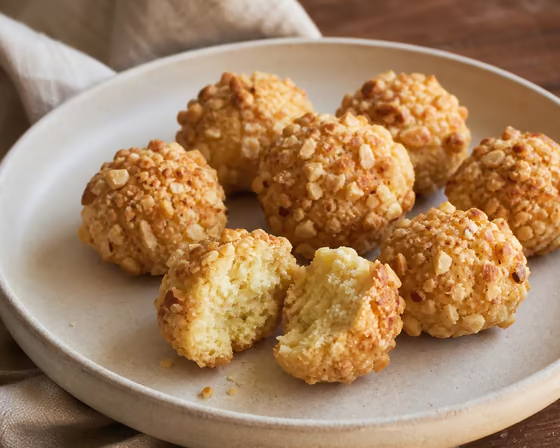
 Amendoados
Small dry, crumbly cakes, shaped by hand and crowned with coarsely chopped almonds.
Lisbon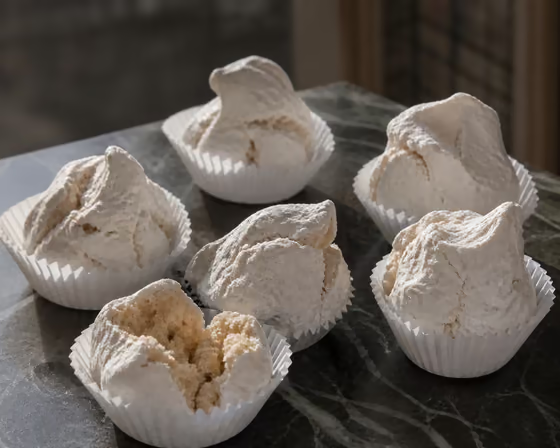 Catalogue image
 Azeitão Almond Meringues
Rustic hand-shaped almond meringues with a white, delicately cracked shell.
Lisbon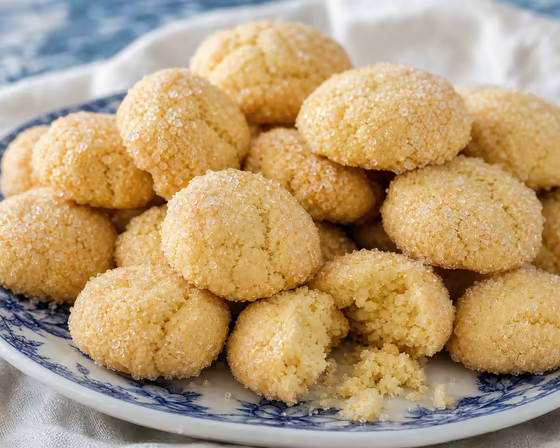 Catalogue image
 Cascais Sands
Beach sand that melts on the tongue.
Lisbon Catalogue image
 Arroubo Grape-Must Preserve
Must reduced slowly—alone as syrup or with fruit as uvada—in terminology that varies among sources and localities.
Lisbon