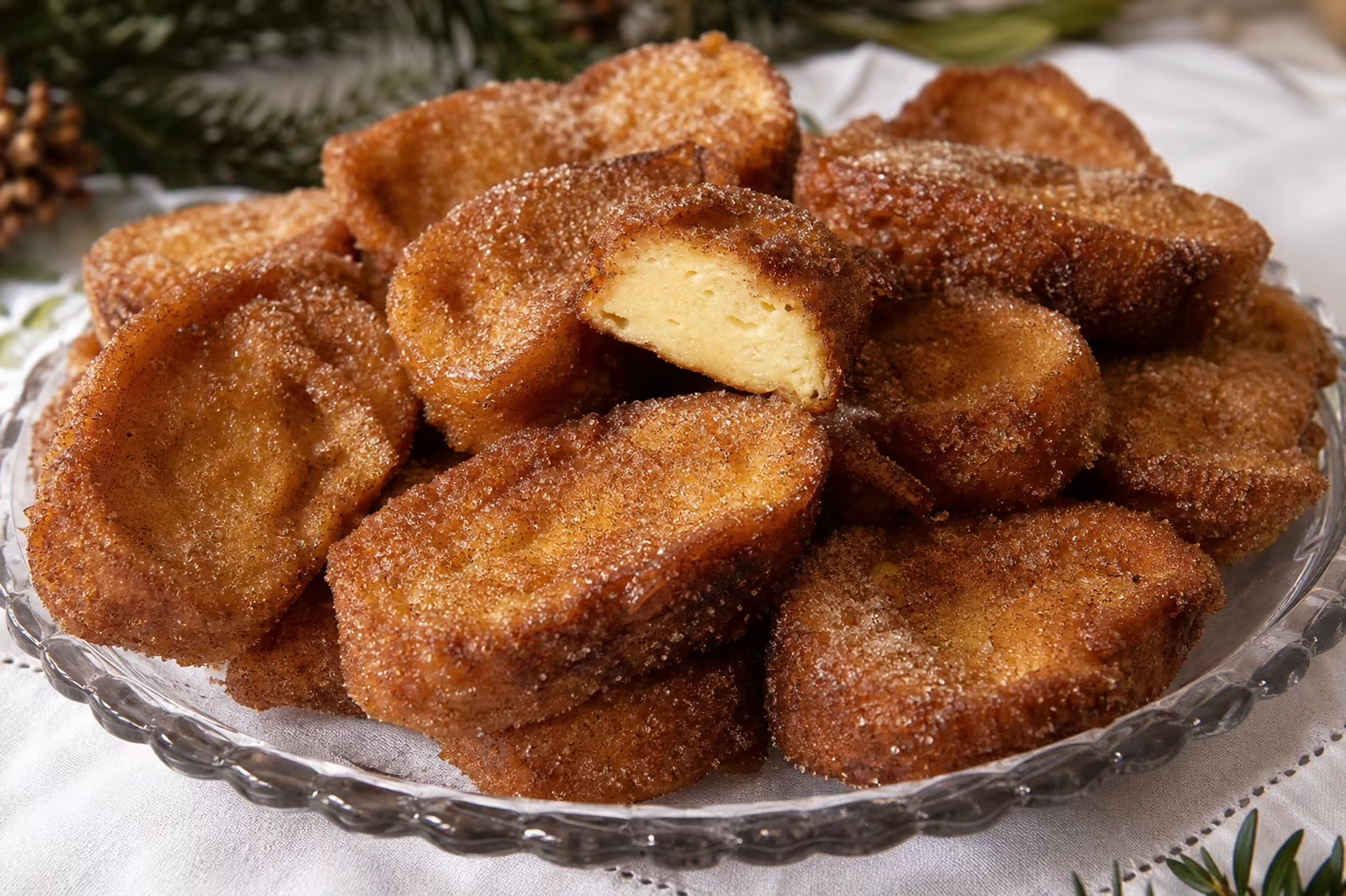
Portuguese French Toast
Also known as: Fatias douradas (golden slices)
Aged bread, milk, egg and cinnamon in a Portuguese Christmas tradition.
- Origin
- Portuguese festive sweet made with leftover bread · exact origin not established
- Place
- Nationwide
- Region
- Nationwide
- Category
- Fried Sweets
- Season
- Christmas
- Evidence
- Well documented
Rabanadas are slices of two- or three-day-old bread, commonly cacete, soaked in flavoured milk and coated with egg. Teleculinária's published traditional method fries them and finishes them with cinnamon sugar; RTP documents both that approach and an oven-baked version.
Firm bread absorbs the liquid without losing its shape. After cooking, the outside is golden while the crumb remains moist. Cinnamon sugar is a documented finish, though syrup-finished versions also exist.
- Two- or three-day-old cacete bread
- Milk
- Eggs
- Sugar
- Cinnamon
- Lemon peel
- Oil, for the fried version
The documented preparation combines a golden outside with moist bread within, flavoured milk, egg, sugar and cinnamon. Sweetness depends on whether they are simply coated with cinnamon sugar or also served with syrup.
Fried and oven-baked are two methods published by RTP. They may be finished simply with cinnamon sugar or served with a syrup of sugar, water, cinnamon and lemon. These document culinary choices; the consulted sources do not support assigning each one to a specific Portuguese region.
The strongest documented setting is the Portuguese Christmas table. The consulted sources do not support a nationwide list of pastry shops serving them year-round; outside the festive season, check availability before travelling.
As an editorial suggestion, espresso or unsweetened black tea.
The consulted sources confirm rabanadas within Portugal's Christmas repertoire but do not establish an inventor, date or place of creation. RTP Archives lists them among the traditional fried sweets of the Christmas Eve meal, alongside filhoses and sonhos; Continente likewise classifies them among traditional Portuguese Christmas sweets and connects their preparation with using up dry bread.
Older narratives circulate about soaked bread and food for women after childbirth. RTP Ensina explicitly presents the story of a young mother fed bread, milk, sugar and egg as a legend. This page does not turn that narrative, or Roman and wider European parallels, into a demonstrated genealogy of Portuguese rabanadas.
Well documented
Identity supported by institutional, specialist or corroborating sources.
- arquivos.rtp.pt/colecoes/o-natal (opens in a new tab)
- media.rtp.pt/praca/rubricas/rabanadas-tradicionais-no-forno-culinaria/ (opens in a new tab)
- ensina.rtp.pt/artigo/lenda-das-rabanadas/ (opens in a new tab)
- teleculinaria.pt/receitas/rabanadas-tradicionais/ (opens in a new tab)
- feed.continente.pt/alimentacao/doces-de-natal-tradicionais (opens in a new tab)
Pastries from here — Nationwide
 Catalogue image
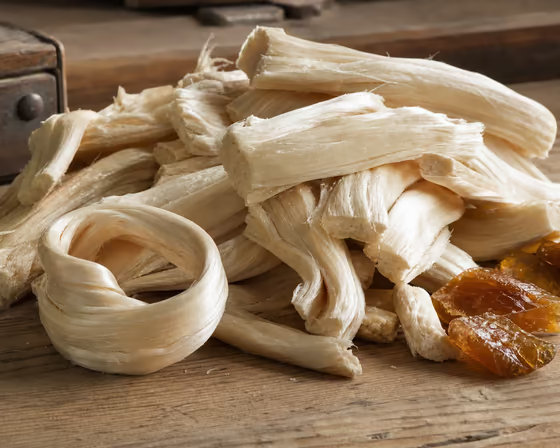
 Alféloa
Sugar or molasses cooked to a hard stage and worked until pale.
Nationwide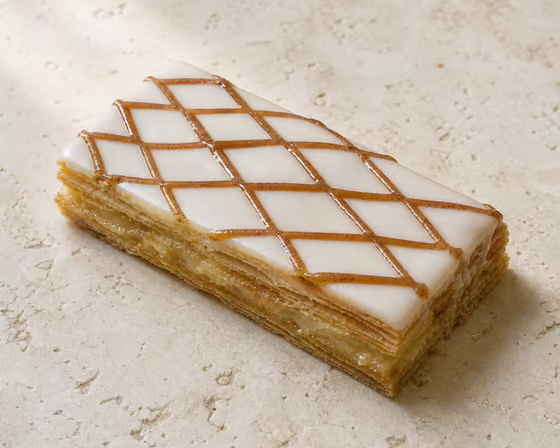 Catalogue image
 Portuguese Gila Allumette
A rectangular puff pastry with cream, gila and cinnamon beneath diamond-patterned royal icing.
Nationwide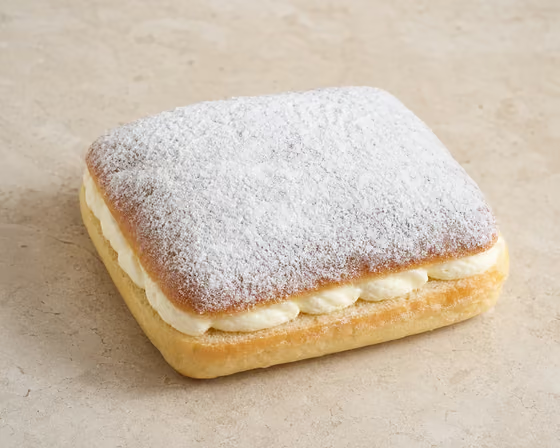 Catalogue image
 Portuguese Brioche Almofada
Light brioche dough, fresh buttercream and icing sugar.
Nationwide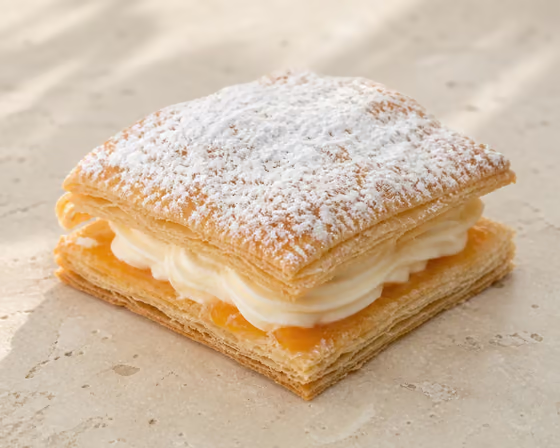 Catalogue image
 Portuguese Puff-Pastry Almofada
Puff pastry with white cream, egg sweet and icing sugar—the laminated Almofada variant.
Nationwide