Alféloa
Also known as: alfeloa
Sugar or molasses cooked to a hard stage and worked until pale.
- Origin
- Portugal · a historic sugar or molasses confection with documented northern and Madeiran forms; origin chronology unknown
- Place
- Portugal · documented northern and Madeiran forms
- Region
- Nationwide
- Category
- Festive & Seasonal
- Season
- No general season established; Madeiran convent records include festive occasions
- Evidence
- Well documented
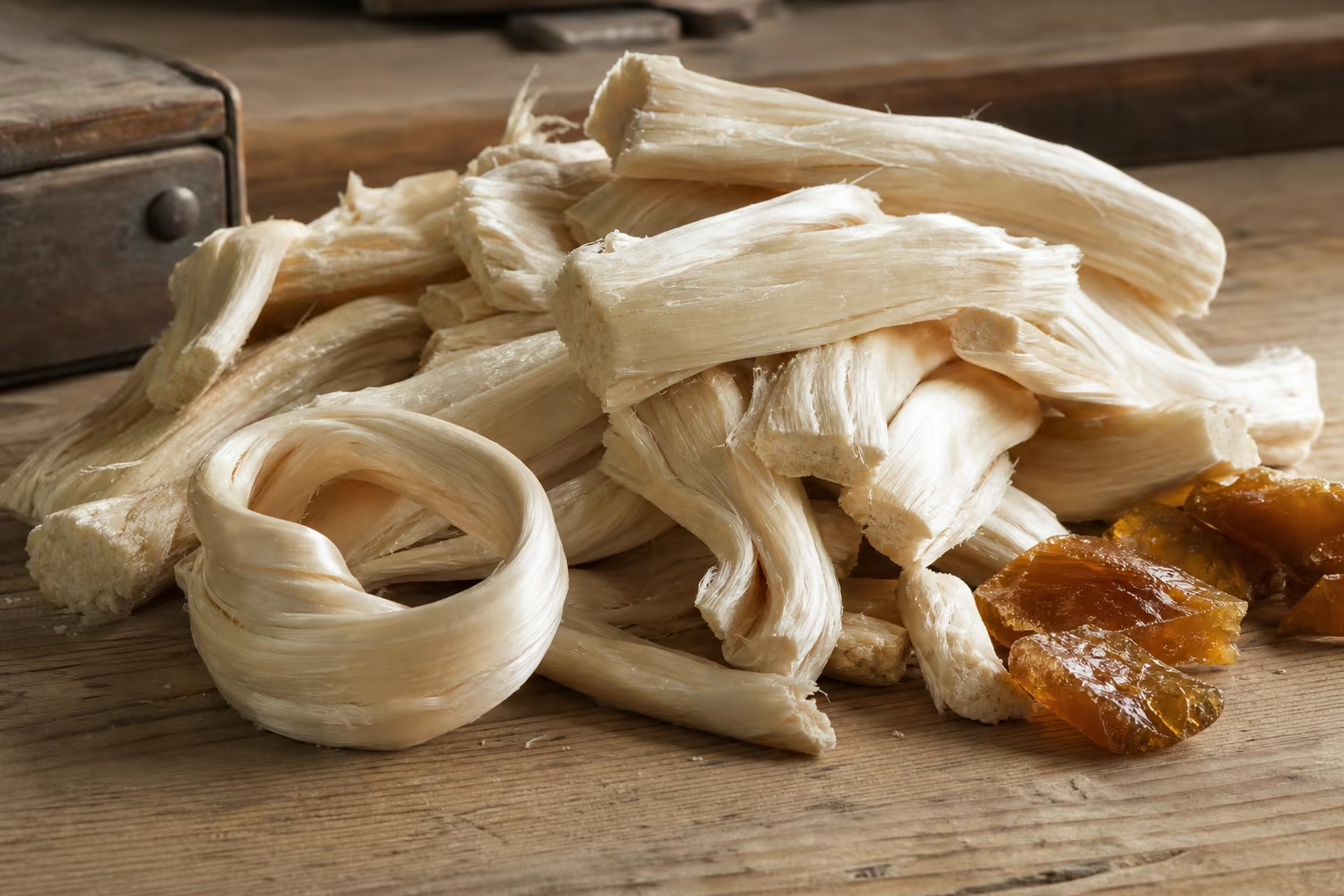
Alféloa is first and foremost a mass of sugar or molasses cooked to a hard stage and then worked until it lightens. Historical dictionaries describe a white alféloa shaped like a small rounded loaf and a molasses alféloa also called yellow or magana. The word also came to mean the sweet made from that mass.
There is no single regional form. A food-history study records a long candy called alféloa in northern Portugal. In Madeira, official documentation and the account books of Santa Clara Convent confirm alféloas made with sugar and sugarcane honey. This page brings those related forms together without turning either one into a single national recipe.
- Sugar or molasses
- Sugarcane honey (in the documented Madeiran form)
Its profile depends on the raw material: historical dictionaries distinguish white sugar alféloa from the yellow or magana molasses version. The consulted sources define the mass by its hard stage and the working that makes it pale, but publish no sufficiently precise modern sensory account to fix hardness, aroma or finish.
The documentation distinguishes at least a white sugar version, a yellow or magana molasses version, Madeiran alféloa with sugarcane honey, and the long candy recorded in the North. The sources consulted do not support the lemon, cinnamon or fennel flavourings previously attributed to this sweet as traditional.
Today it is primarily a historical confection. Documentation establishes the Madeiran tradition and the older northern use of the name, but not a current network of permanent makers. Confirm availability with museums, confectionery fairs or food-heritage programmes before travelling.
The historical sources consulted establish no traditional pairing; it should be understood as a confection or candy rather than a plated dessert.
The name alféloa comes from Arabic al-hálwa, ‘sugared sweet’, and is documented in Portuguese from the 15th century. In the early 18th century Bluteau distinguished a white, small-loaf-shaped mass from molasses alféloa; Morais Silva later described molasses cooked to a hard stage and lightened by working.
In Madeira, Santa Clara Convent accounts record sugar used for alféloas in 1700 and 1701. The official Madeira sugarcane-honey specification includes alféloa among the convent sweets made with that product. The word circulated more widely: historical research also notes a long candy bearing the name in northern Portugal. Its Arabic etymology does not by itself prove continuous regional production from the Islamic period. The creation date, place of first production and chronological relationship among the regional forms remain unknown.
Well documented
Identity supported by institutional, specialist or corroborating sources.
- dgadr.gov.pt/images/docs/val/dop_igp_etg/Valor/2_CE-DO-MelCanaMadeira-22-04-2022.pdf (opens in a new tab)
- ahm-abm.madeira.gov.pt/index.php/ahm/article/download/136/142/586 (opens in a new tab)
- ahm-abm.madeira.gov.pt/index.php/ahm/article/download/55/51/260 (opens in a new tab)
- infopedia.pt/dicionarios/lingua-portuguesa/alf%C3%A9loa (opens in a new tab)
- aulete.com.br/alf%C3%A9loa (opens in a new tab)
- researchgate.net/publication/353186736_Alimentar_o_corpo_despertar_os_sentidos (opens in a new tab)
Pastries from here — Nationwide
 Catalogue image
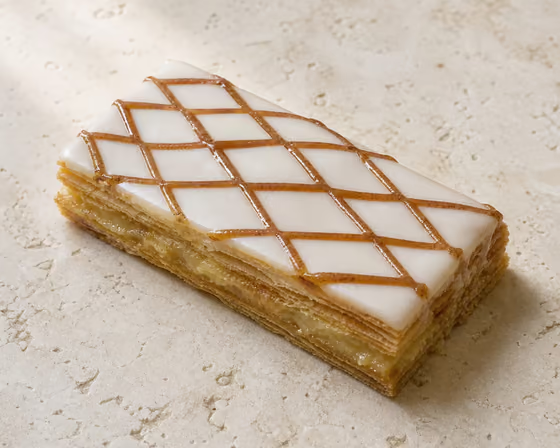
 Portuguese Gila Allumette
A rectangular puff pastry with cream, gila and cinnamon beneath diamond-patterned royal icing.
Nationwide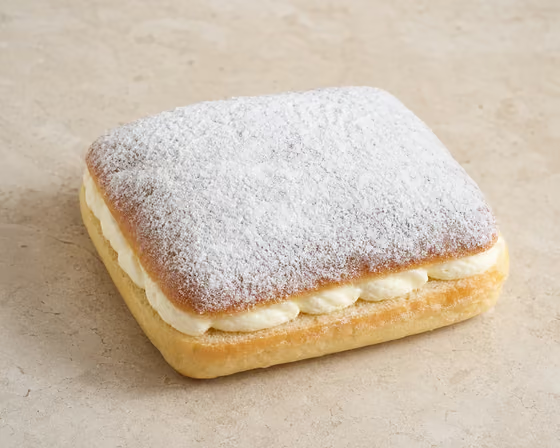 Catalogue image
 Portuguese Brioche Almofada
Light brioche dough, fresh buttercream and icing sugar.
Nationwide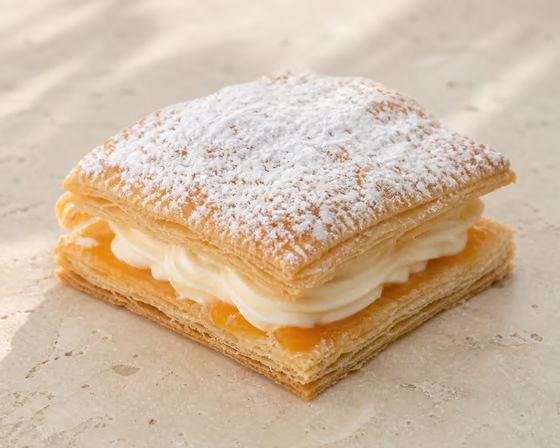 Catalogue image
 Portuguese Puff-Pastry Almofada
Puff pastry with white cream, egg sweet and icing sugar—the laminated Almofada variant.
Nationwide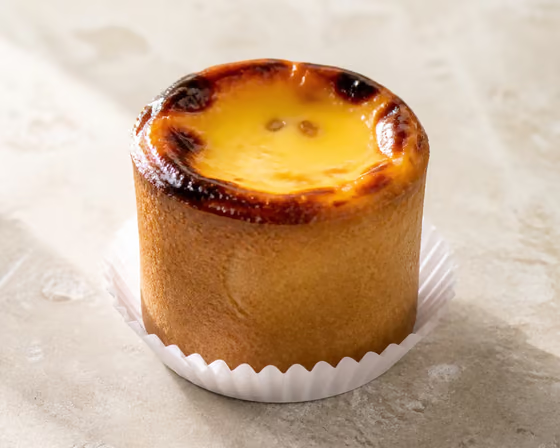 Catalogue image
 Portuguese Alsaciano Custard Cake
A tall sweet-pastry cylinder filled with caramelised lemon custard.
Nationwide