Portuguese Gila Allumette
Also known as: Portuguese gila allumette
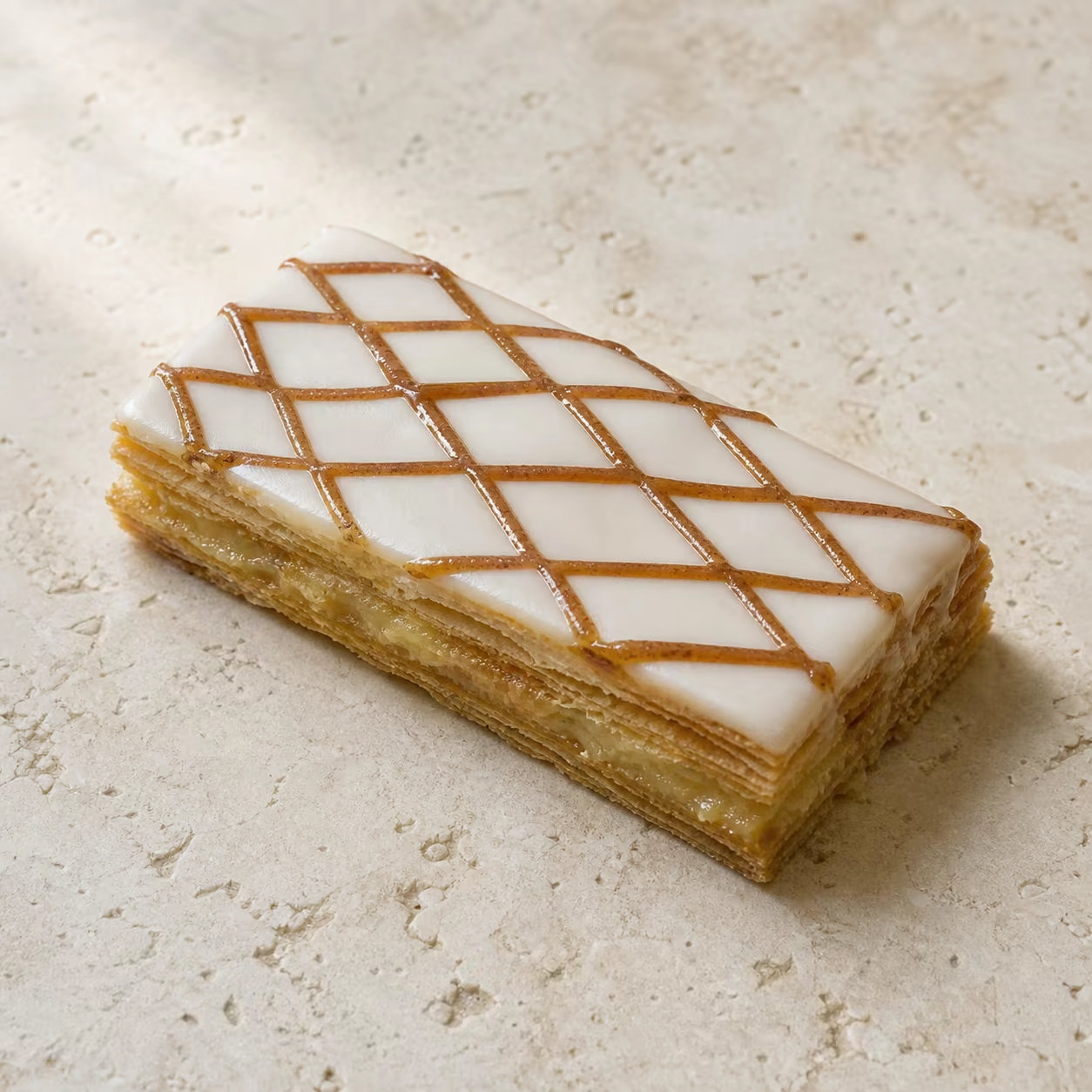
A rectangular puff pastry with cream, gila and cinnamon beneath diamond-patterned royal icing.
- Origin
- Pastry repertoire in Portugal · attributed, unproven French creation
- Place
- Portugal
- Region
- Nationwide
- Category
- Laminated & Fine Pastries
- Season
- Current availability and seasonality are undocumented
- Dough family
- Laminated puff pastry Layers created through repeated folds of dough and fat.
- Evidence
- Limited documentation
The specialist Fabrico Próprio encyclopedia documents the Allumette as puff pastry filled with pastry cream, gila and cinnamon, covered with royal icing and a decorative ‘burnt’ jelly finish. The photograph on the same record shows a low, elongated rectangle with visible pastry layers and crossed brown lines over the pale icing.
The source also records a simpler version without the decorative diamonds. It provides no dimensions, proportions, recipe, assembly method or technical explanation of the ‘burnt’ finish, so this page does not turn a counter description into a manufacturing formula.
- Puff pastry
- Pastry cream
- Gila
- Cinnamon
- Royal icing
- Jelly for the decorative burnt finish
The source identifies crisp, creamy and sugary components but publishes no tasting note. Any more detailed description would depend on each example's recipe and condition.
The only explicitly documented variation is the simpler version without decorative diamonds. The source confirms no differences in filling, proportion or size.
The record establishes historical or typological presence in the studied repertoire but identifies no current seller and does not call the pastry rare. Check directly with own-production confectioneries before travelling to find it.
Unsweetened coffee or tea; an editorial suggestion, not a documented pairing.
Fabrico Próprio classifies the item in its archive of Portuguese pastry and describes it as a French creation attributed to a Swiss-born pastry chef in Dinard. The Larousse gastronomic dictionary separately corroborates the attribution of the sweet glazed allumette to a Swiss Dinard pastry chef named Planta, who is said to have used leftover decorating icing. Both sources present the story as an attribution rather than documentarily proven authorship.
The Portuguese source establishes the cream, gila and cinnamon version in the repertoire studied in Portugal; neither source establishes when that composition arrived, who introduced it or where it was first sold in the country. The documented Portuguese version should not be conflated with every sweet or savoury allumette in French terminology.
Limited documentation
The identity is documented, but its origin, composition or availability has limited sourcing.
- fabricoproprio.net/enciclopedia/allumette/ (opens in a new tab)
- laroussecocina.mx/palabra/allumette/ (opens in a new tab)
Pastries from here — Nationwide
 Catalogue image
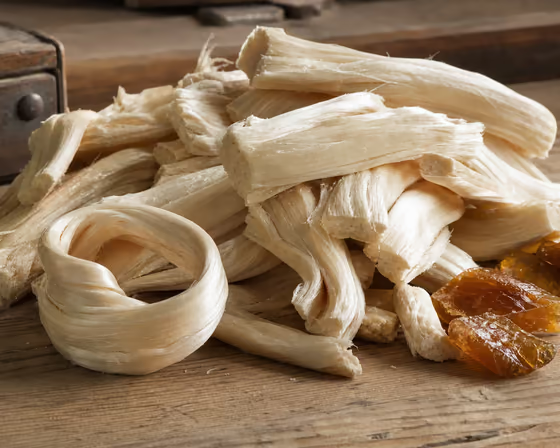
 Alféloa
Sugar or molasses cooked to a hard stage and worked until pale.
Nationwide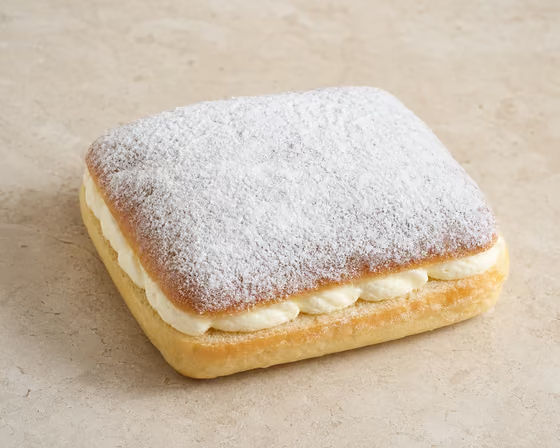 Catalogue image
 Portuguese Brioche Almofada
Light brioche dough, fresh buttercream and icing sugar.
Nationwide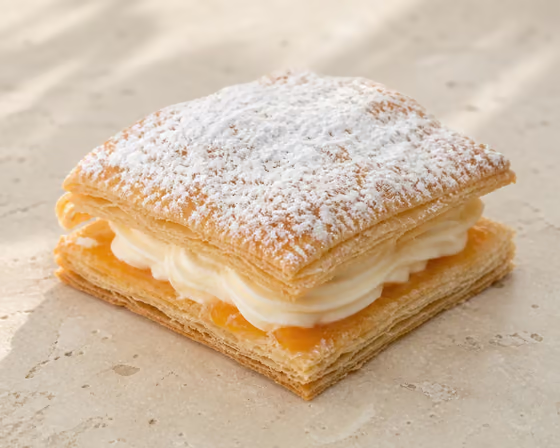 Catalogue image
 Portuguese Puff-Pastry Almofada
Puff pastry with white cream, egg sweet and icing sugar—the laminated Almofada variant.
Nationwide Catalogue image
 Portuguese Alsaciano Custard Cake
A tall sweet-pastry cylinder filled with caramelised lemon custard.
Nationwide