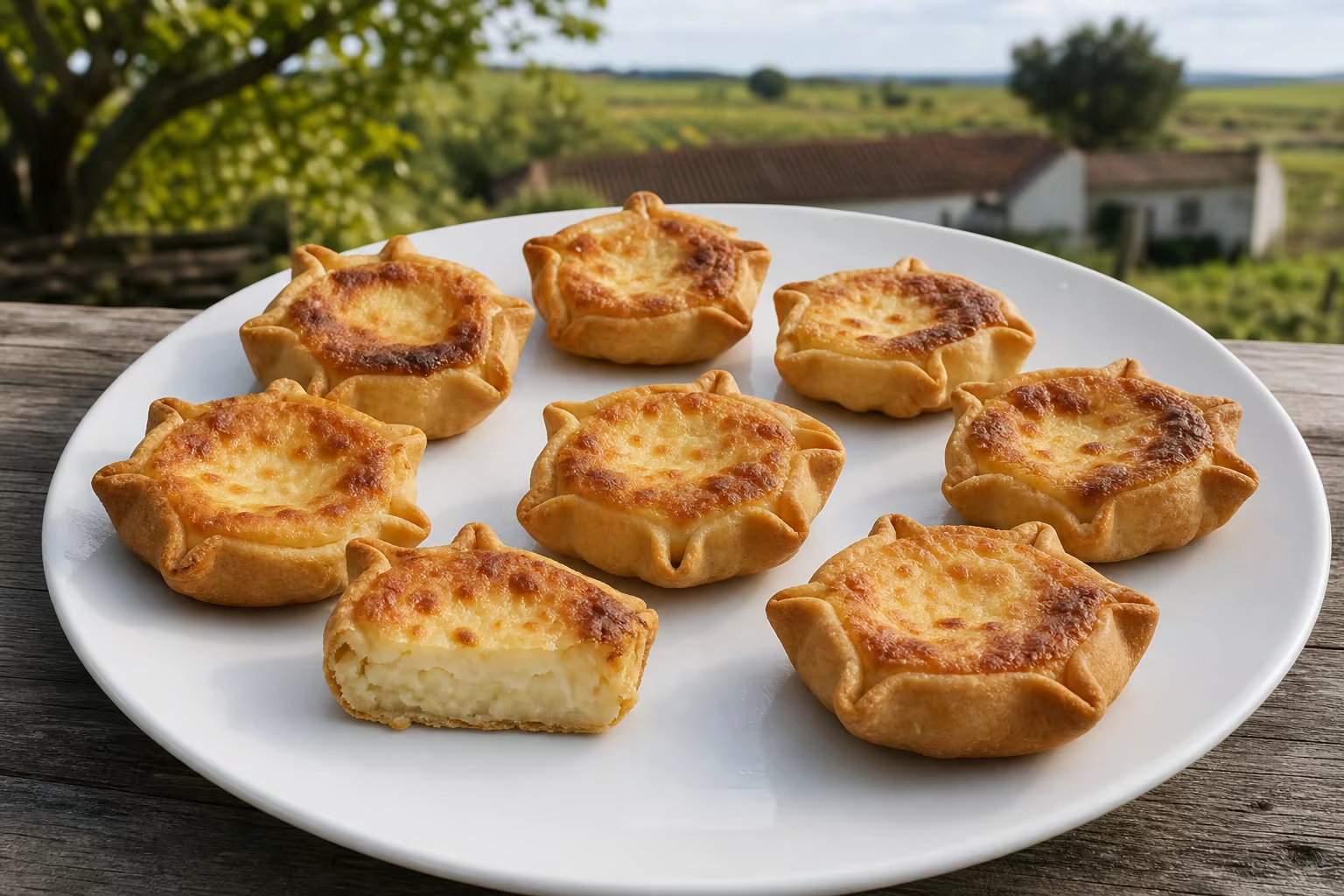
Pereira Queijada
Also known as: Pereira Queijadas
The little fresh-cheese queijada with seven creases, sealed by hand one by one.
- Origin
- Pereira, Montemor-o-Velho (Baixo Mondego); mentioned in King Manuel I's 1513 charter and spread from the Royal Ursuline College, founded in 1748.
- Place
- Pereira
- Region
- The Centre
- Category
- Cakes & Sweet Breads
- Season
- Year-round
- Evidence
- Well documented
The queijada de Pereira is a small, unassuming sweet about the size of a palm, a thin, crumbly pastry cradling a pale fresh sheep's-milk cheese filling. You recognise it at a glance by the crown of creases ringing its rim — seven, tradition says — pinched by hand to hold the filling and give the queijada its unmistakable wrinkled profile.
It was born in the parish of Pereira, in the municipality of Montemor-o-Velho, deep in the Baixo Mondego, where fertile fields and sheep's milk gave rise to one of Portugal's oldest queijadas. It is a tray sweet, sold in pairs and by the dozen, with a restrained sweetness and a dairy tang that recalls the cheese.
Despite its modest looks, it is a thing of hands: each queijada is filled and closed individually, with the help of a small iron tool stuck into a cork stopper, and baked in a wood-fired oven.
- Fresh sheep's-milk cheese
- Egg yolks
- Sugar
- Wheat flour
- Warm water (for the dough)
It is all about contrast: the thin, dry, faintly salted pastry shatters at the bite and gives way to a soft, moist, gently sweet interior, where the fresh cheese leaves a quiet dairy tang. This is no cloying treat — the sweetness is restrained and the cheese and yolks lead, finishing with the toasted note the wood oven leaves on the rim.
The recipe is remarkably stable, though houses differ subtly in the set of the filling and the thinness of the shell, with sweeter or plainer versions. It should not be confused with other Portuguese queijadas, such as those of Sintra (more spiced, with cinnamon) or the creamier convent queijadas; Pereira's is set apart by its crisp pastry and its trademark seven creases.
To taste the real thing, look for it in the parish of Pereira itself and in the town of Montemor-o-Velho, where a few family workshops still seal them by hand and bake them in wood-fired ovens. They are sold fresh, same-day, in cardboard boxes or paper wraps — and that is how they are best eaten, still warm.
It calls for a strong coffee or an espresso, mid-morning or mid-afternoon; a plain black tea works nicely too, and the indulgent pair it with a glass of white Port or a Moscatel.
The oldest known written reference dates to 1513: the charter granted to Pereira by King Manuel I exempted queijadas from paying tolls — a sign that they already circulated and had commercial value. Their spread is traditionally linked to the Royal Ursuline College of Pereira, founded in 1748, from which the recipe is said to have passed into the town's households; the college operated in the village until the mid-19th century. The painter Josefa d'Óbidos is also said to have depicted queijadas, which helps place this sweet within centuries-old Portuguese confectionery.
The know-how was handed down through the generations, largely by hand, keeping the same care over ingredients and baking times. It is still made today by a few houses in Pereira and Montemor-o-Velho, and appears on the official inventory of Traditional Portuguese Products (DGADR).
Well documented
Identity supported by institutional, specialist or corroborating sources.
- tradicional.dgadr.gov.pt/pt/cat/doces-e-produtos-de-pastelaria/1002-queijada-de-pereira (opens in a new tab)
- tradicional.dgadr.gov.pt/en/categories/desserts-and-pastry/1002-queijada-de-pereira (opens in a new tab)
- noponto.pt/queijadas-de-pereira/ (opens in a new tab)
- publico.pt/2019/09/09/fugas/noticia/ponto-queijadas-pereira-montemorovelho-1886026 (opens in a new tab)
- cm-montemorvelho.pt/index.php/component/k2/item/718-queijada-de-pereira (opens in a new tab)
Pastries from here — The Centre
 Catalogue image
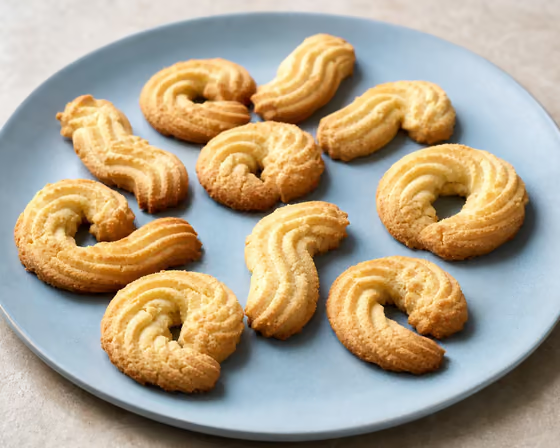
 Ílhavo Piped Butter Biscuits
Regional buttery biscuits piped into deeply ridged rings and curves.
The Centre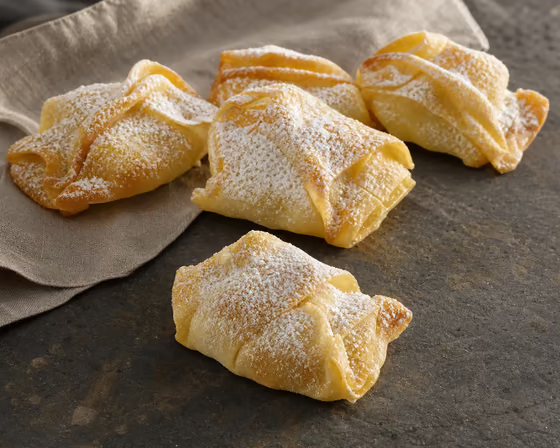 Catalogue image
 Saint Friar Gil’s Saddlebags
The small saddlebag-shaped pastry created at Vouzela’s vocational school and recognised as an innovative sweet.
The Centre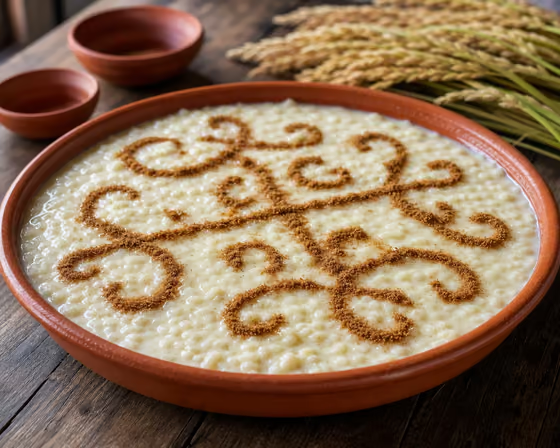 Catalogue image
 Baixo Mondego Rice Pudding
Mondego Carolino rice and Gândara milk, traced with cinnamon.
The Centre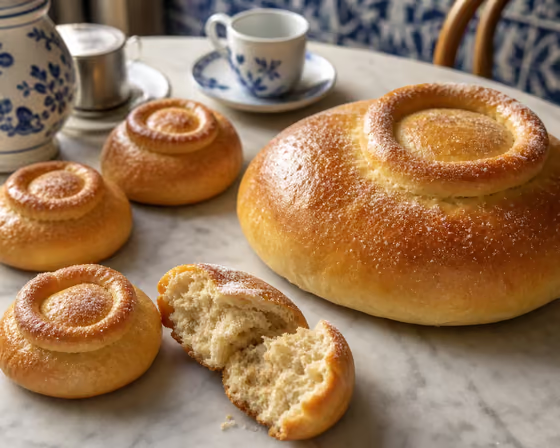 Catalogue image
 Arrufada de Coimbra
Coimbra's light, fragrant sweet bread, given by godparents at Easter.
The Centre