Arrufada de Coimbra
Also known as: Arrufadas de Coimbra · Arrufada of Coimbra's Convent of Sant'Ana
Coimbra's light, fragrant sweet bread, given by godparents at Easter.
- Origin
- Convents of Coimbra (above all the Convent of Sant'Ana, and also the recipe books of Santa Clara-a-Velha) · festive sweet bread
- Place
- Coimbra
- Region
- The Centre
- Category
- Cakes & Sweet Breads
- Season
- Year-round (especially Easter)
- Evidence
- Well documented
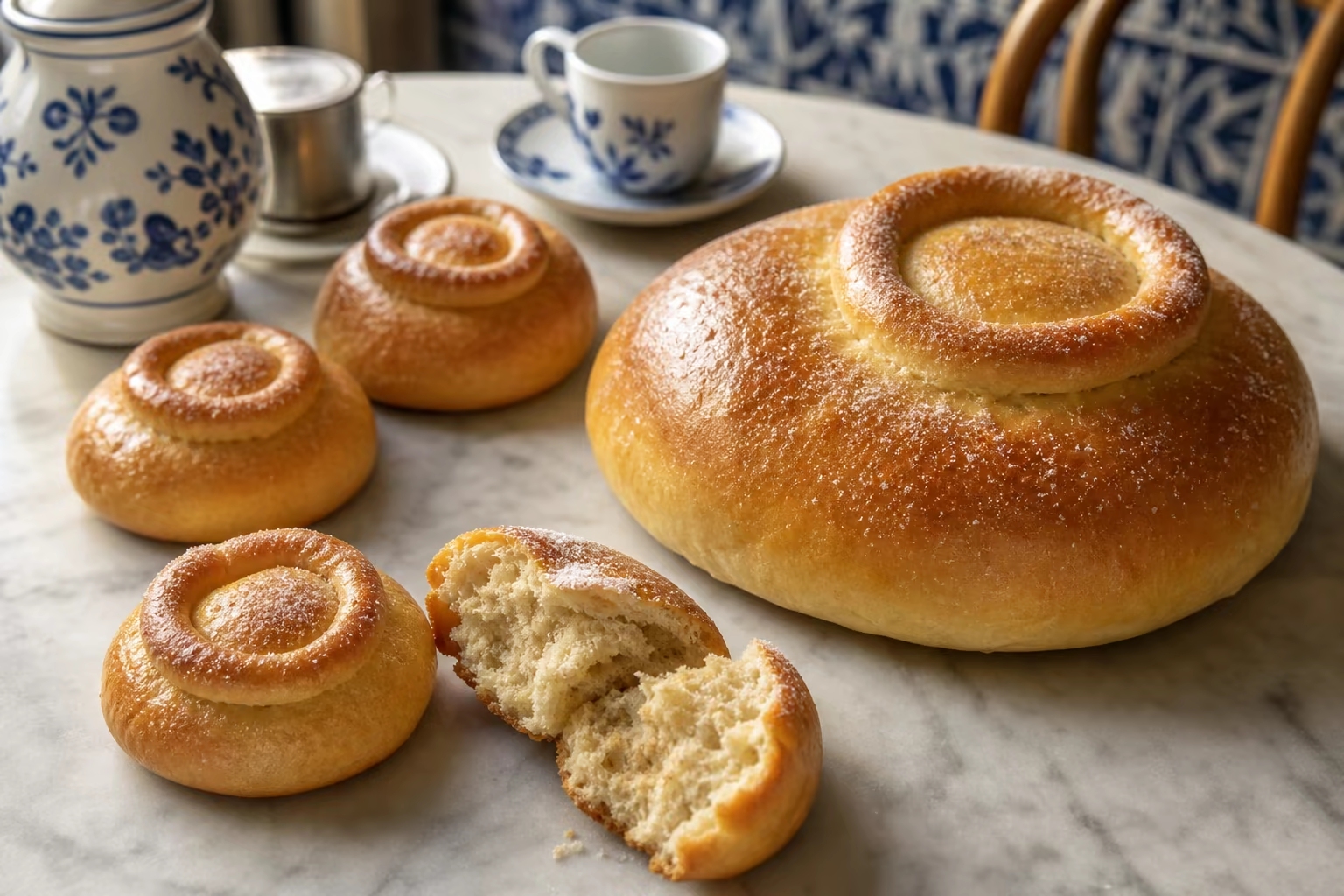
Unlike almost all of Coimbra's convent confectionery, the arrufada is a restrained sweet: a round, fluffy, mildly sweet bread, scented with cinnamon and topped by a rope of dough that forms a kind of crown. It is made with little more than flour, eggs, butter, sugar and milk, and owes its lightness to a long fermentation that can run to a full day.
It is a dry, well-keeping cake, made to last and to be torn by hand. That very plainness is what made it popular: cheaper than the nuns' egg sweets, it left the convents for the streets, where women vendors cried it through the city and by the railway station.
Today it remains an everyday Coimbra treat — eaten at breakfast or as an afternoon snack — but it comes into its own at Easter, when it recovers its old meaning as a festive cake and a gift.
- wheat flour
- eggs
- butter
- sugar
- milk
- baker's yeast
- cinnamon
The arrufada is light and fluffy, with the soft crumb of a good milk bread and only a gentle sweetness. The flavour is quiet and comforting, led by the warm scent of cinnamon and sometimes a dusting of sugar on the crust. It is a sweet to tear and chew slowly, not one that melts on the tongue.
It is mostly made round, with the rope of dough crowning the top, though it once also took the shape of a horseshoe. Recipes vary from house to house: some scent the dough with anise (erva-doce) or lemon zest as well as cinnamon, and the size ranges from a large cake to break and share to individual arrufadas.
In Coimbra, at traditional pastry shops in the Baixa — Pastelaria Briosa, at Largo da Portagem, is the inescapable reference, awarded for its arrufada. At Easter, look for it in the Baixa, where the Grupo Etnográfico da Região de Coimbra re-enacts the women vendors' Easter Saturday selling, chiefly at Praça 8 de Maio.
A coffee or a cup of milk at breakfast; for an afternoon snack it takes well to butter or a pot of tea. On an Easter table it sits beside folar and arroz-doce.
The arrufada belongs to Coimbra's convent confectionery, traditionally attributed to the Convent of Sant'Ana and also appearing in the recipe books of the Monastery of Santa Clara-a-Velha. Unlike the yolk-rich sweets, it was a humble sweet bread, which eased its passage from the cloisters into the city: from the start of the 20th century to its middle, the "arrufada women" were a constant sight in Coimbra's streets, hawking them from baskets lined with white cloths, notably by the railway station.
Its great moment is Easter. In Coimbra tradition, on Easter Saturday (Sábado de Aleluia) godparents would buy an arrufada to give to their godchildren, and the cake also featured in wedding rituals, when the bride carried arrufadas on decorated trays to the groom's family. Today the Grupo Etnográfico da Região de Coimbra re-enacts the women vendors' selling in the Baixa on Easter Saturday, and in 2014 the arrufada from Pastelaria Briosa won the "Best of the Best" prize at the National Competition of Portuguese Convent Confectionery.
Well documented
Identity supported by institutional, specialist or corroborating sources.
- tradicional.dgadr.gov.pt/pt/cat/doces-e-produtos-de-pastelaria/277-arrufada-de-coimbra (opens in a new tab)
- visitecoimbra.pt/gastronomia/docaria-conventual-de-coimbra/ (opens in a new tab)
- newincoimbra.nit.pt/comida/8-doces-tradicionais-de-coimbra-que-vao-mudar-a-sua-vida/ (opens in a new tab)
- diariocoimbra.pt/2026/03/28/tradicao-cumpre-se-com-a-venda-das-arrufadas-na-baixa-de-coimbra/ (opens in a new tab)
- hoteloslo-coimbra.pt/docaria-conventual-de-coimbra/ (opens in a new tab)
Pastries from here — The Centre
 Catalogue image
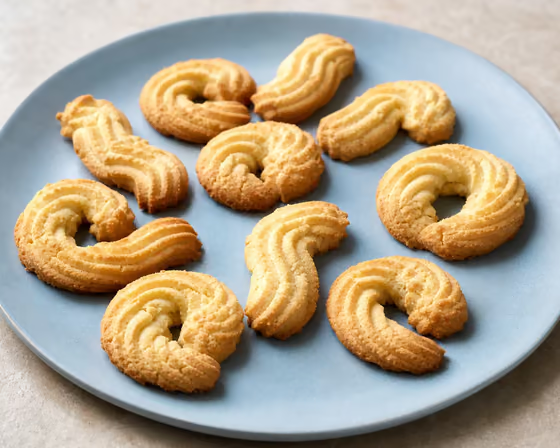
 Ílhavo Piped Butter Biscuits
Regional buttery biscuits piped into deeply ridged rings and curves.
The Centre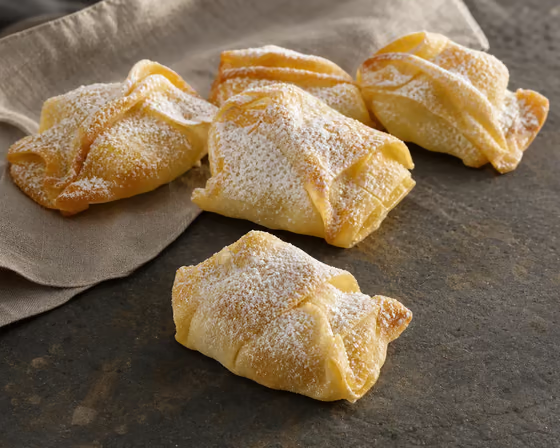 Catalogue image
 Saint Friar Gil’s Saddlebags
The small saddlebag-shaped pastry created at Vouzela’s vocational school and recognised as an innovative sweet.
The Centre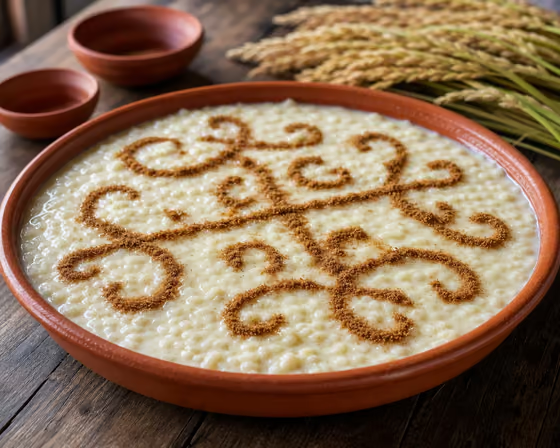 Catalogue image
 Baixo Mondego Rice Pudding
Mondego Carolino rice and Gândara milk, traced with cinnamon.
The Centre Catalogue image
 Anadia Bairradinos
A Bairrada sparkling-wine, almond and egg sweet shaped like a cork.
The Centre