Friar Ambrósio’s Pirilau
Also known as: Friar Ambrósio’s Pirilau · Vila Nova da Barquinha Pirilau
The cylindrical rolled-dough cake with quince paste that revived an irreverent Barquinha legend.
- Origin
- Vila Nova da Barquinha · contemporary reconstruction launched in 2022
- Place
- Vila Nova da Barquinha
- Region
- The Centre
- Category
- Cakes & Sweet Breads
- Season
- No documented fixed season; craft production and availability should be confirmed
- Evidence
- Well documented
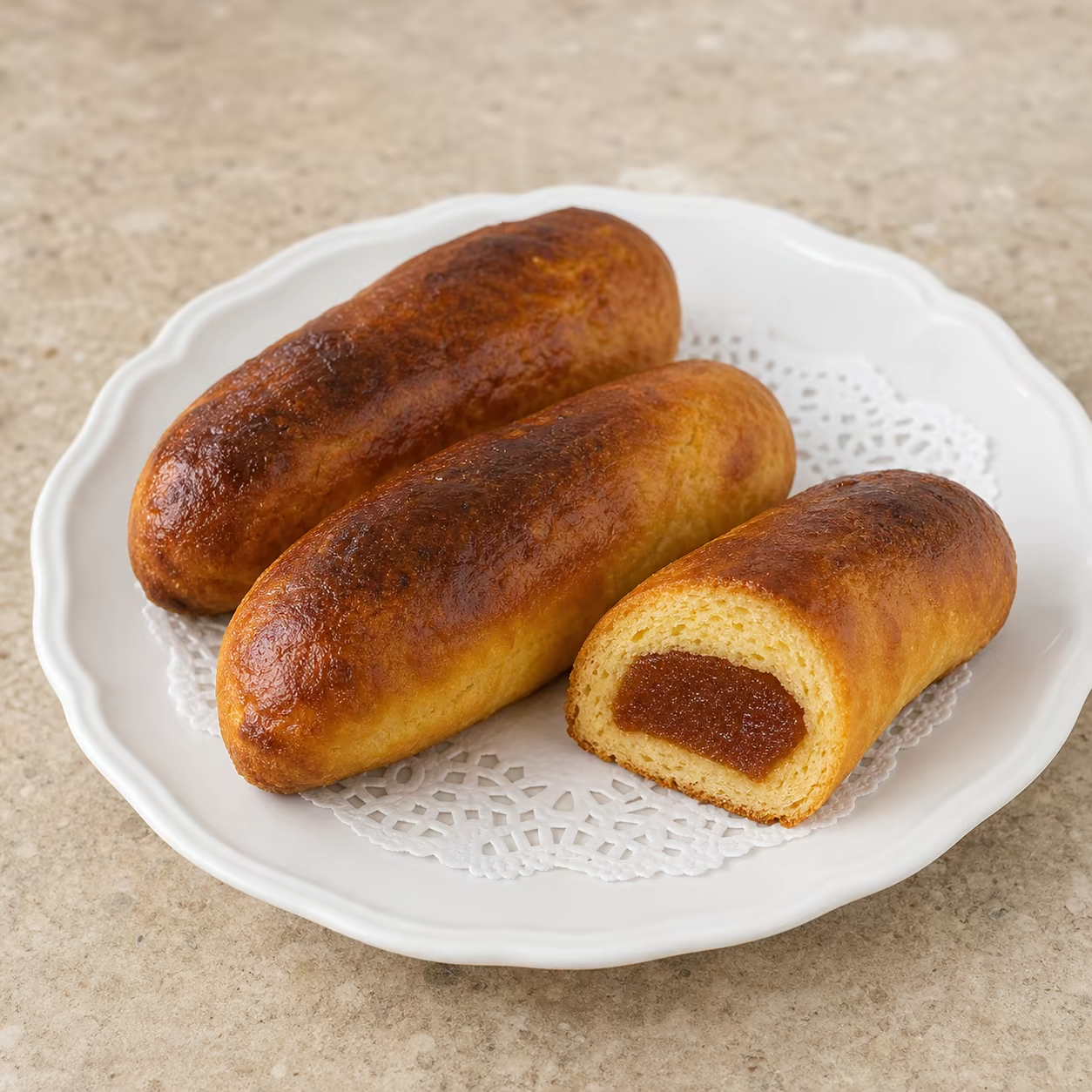
Pirilau do Frade Ambrósio is an elongated cylindrical cake made from rolled dough and filled with marmelada prepared from wild quinces. The producer describes a four-day craft process: a dough of eggs, sugar and flour is beaten and rested, then stretched, filled, rolled, brushed with yolk and baked in a wood-fired oven. The yolk gives the surface its caramelised finish and helps prevent cracking; the complete formula remains private.
Its phallic form and playful name are intentional parts of the sweet’s identity. The version now sold was developed by Teresa Nicolau with a pastry chef and publicly launched in June 2022. It should be understood as a contemporary reconstruction informed by research and local memory, not as evidence of an unbroken recipe transmission from convent times.
- Wheat flour
- Sugar
- Egg yolk
- Wild-quince marmelada
Moist, soft, golden dough with a caramelised surface, contrasted by the fruity tartness of wild-quince marmelada.
The complete commercial recipe is not public. The 2022 report documents rolled dough made with eggs, sugar and flour, a wild-quince marmelada filling and wood-fired baking; domestic versions should not be presented as the producer’s formula.
Look for Licoraria Tesouro D’Almourol and its appearances at fairs and local-product tastings in Vila Nova da Barquinha. Confirm availability, hours and sales points in advance, as daily production is not guaranteed.
The producer serves the cake at tastings with its craft liqueurs; other pairings are not documented in the sources reviewed.
According to the legend revived by the producer, Friar Ambrósio, associated with the vanished Convent of Our Lady of Loreto in Tancos, carried cylindrical cakes to the nuns of Odivelas Convent, who supposedly gave them their mischievous name. This provenance is not demonstrated by an independent historical source among those reviewed: press accounts sometimes place it in the 15th century, while tourism material says the 17th. The friar’s journey, the nuns’ role and the exact age should therefore be read as narrative tradition, not established fact.
Teresa Nicolau began researching and testing during the pandemic, developed the present version with a pastry chef and launched it at the Feira do Tejo in Vila Nova da Barquinha, held from 10 to 13 June 2022. The municipality later promoted it at tourism tastings; reporting, visit programmes and a municipal INTUR event confirm that Licoraria Tesouro D’Almourol was still producing and serving it in 2025.
Well documented
Identity supported by institutional, specialist or corroborating sources.
- cm-vnbarquinha.pt/index.php/servicos/comunicacao/noticias/turismo/municipio-destaca-projetos-apoiados-pelo-portugal-2020-na-btl (opens in a new tab)
- mediotejo.net/pirilau-do-frade-ambrosio-da-lenda-da-docaria-conventual-a-traquinice-das-freiras-de-odivelas-c-video/ (opens in a new tab)
- antenalivre.pt/regiao/a-recriacao-do-pirilau-do-frade-ambrosio-apresentada-na-feira-do-tejo (opens in a new tab)
- otemplario.pt/sabe-o-que-e-o-pirilau-do-frade-ambrosio/ (opens in a new tab)
- mediotejo.net/enologa-da-barquinha-resgata-doces-conventuais-e-licores-ancestrais-c-audio/ (opens in a new tab)
- templarportugal.com/pt/ficar/experiencias/gastronomia/tesouro-dalmourol/ (opens in a new tab)
- cm-vnbarquinha.pt/index.php/servicos/comunicacao/noticias/turismo/castelo-de-almourol-faz-sucesso-na-intur-2025 (opens in a new tab)
Pastries from here — The Centre
 Catalogue image
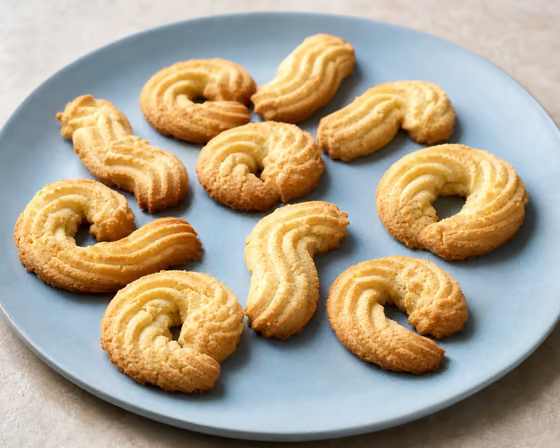
 Ílhavo Piped Butter Biscuits
Regional buttery biscuits piped into deeply ridged rings and curves.
The Centre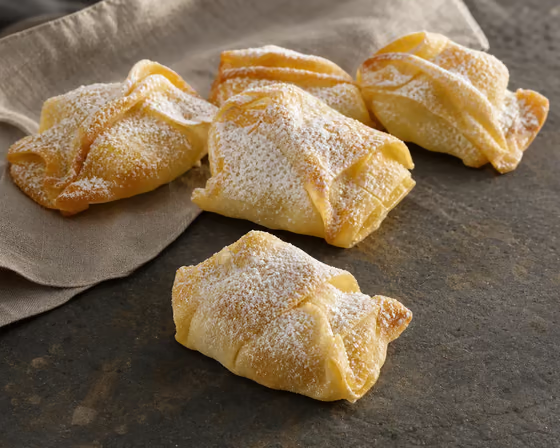 Catalogue image
 Saint Friar Gil’s Saddlebags
The small saddlebag-shaped pastry created at Vouzela’s vocational school and recognised as an innovative sweet.
The Centre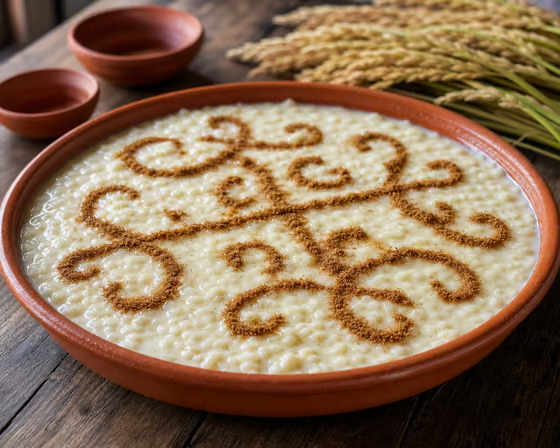 Catalogue image
 Baixo Mondego Rice Pudding
Mondego Carolino rice and Gândara milk, traced with cinnamon.
The Centre Catalogue image
 Arrufada de Coimbra
Coimbra's light, fragrant sweet bread, given by godparents at Easter.
The Centre