Safara Gila Pastries
Also known as: Safara Gila Pastries · Safara Pastry Parcels
Crisp olive-oil pastry layers hold translucent threads of gila squash.
- Origin
- Safara · Moura, Lower Alentejo
- Place
- Safara · Moura
- Region
- The Alentejo
- Category
- Cakes & Sweet Breads
- Season
- Year-round; traditionally Christmas and Easter
- Evidence
- Well documented
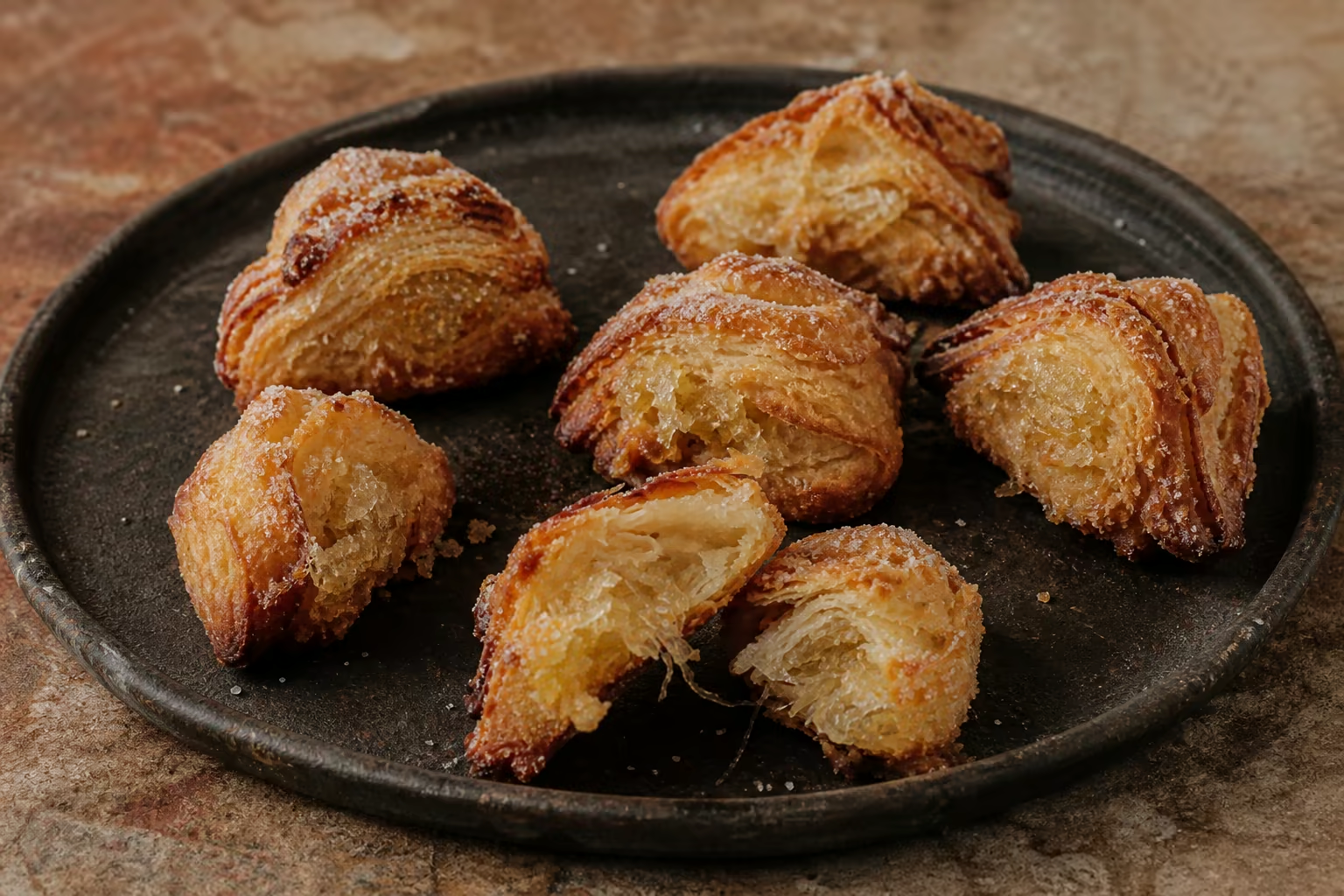
Pastelinhos de Safara are small, irregular parcels of laminated pastry, golden with lightly caramelised edges and filled with threads of gila squash preserve. The dough combines wheat flour, animal fat, olive oil, sugar and eggs; according to its makers, the secret lies less in a long ingredient list than in the way this dough is worked and folded.
At first bite, the thin leaves break into dry, sugary shards. Then comes the moist, translucent, fibrous gila, binding the layers without turning the pastry heavy. Its compact, crumpled and deliberately irregular form separates it from smooth azevias and neat half-moon turnovers.
- wheat flour
- animal fat
- olive oil
- gila squash preserve
- sugar
- eggs
Sweet without being creamy, with moist fibrous gila at the centre, fruity olive-oil notes and a very crisp, rich, lightly caramelised pastry.
Size, number of folds and exterior sugar vary by batch and maker. Its identity remains the laminated olive-oil-and-fat pastry with gila filling; it should not be confused with Popia Alentejana, another product made by the same bakery.
In the Moura and Safara area, directly from producers and regional-food shops. The Pastelinhos de Safara company maintains its factory and sales operation in Moura's industrial zone; the product also reaches retailers elsewhere in Portugal. Check opening times and stock.
Coffee, pennyroyal tea or a small glass of Alentejo pennyroyal liqueur, preferably not overly sweet.
Moura Municipal Council identifies the pastries as originating in Safara and describes them succinctly as little laminated-pastry and gila cakes. The recipe's starting date is not securely documented. Sources connected with local production describe a family tradition passed from grandparents to parents and recall that the pastries were made especially for festive seasons such as Christmas and Easter.
The business that adopted the name Pastelinhos de Safara opened to the public in 1985 and helped carry the sweet beyond the village. Production now takes place in Moura's industrial area while retaining the Safara territorial identity and making the pastry available year-round.
Well documented
Identity supported by institutional, specialist or corroborating sources.
- cm-moura.pt/safara/ (opens in a new tab)
- pastelinhosdesafara.pt/about (opens in a new tab)
- pastelinhosdesafara.pt/product/pastelinhos-produto-03 (opens in a new tab)
- auchan.pt/pt/produtos-frescos/pastelaria/pastelaria-regional/bolo-pastelinhos-de-safara-400g/751702.html (opens in a new tab)
- lifecooler.com/artigo/atividades/pastelinhos-de-safara/414988 (opens in a new tab)
Pastries from here — The Alentejo
 Catalogue image
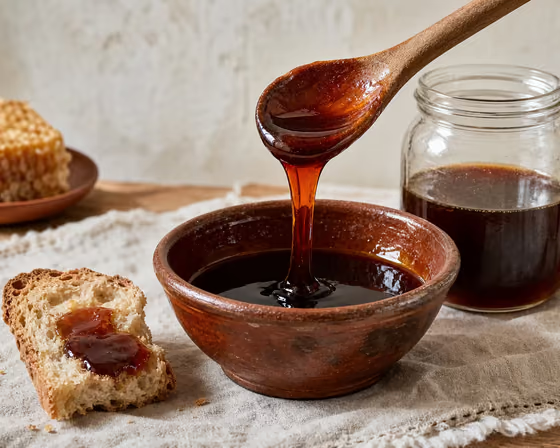
 Portuguese Água-mel Syrup
Water that recovers honey from combs after extraction, filtered and reduced for hours to 70–77° Brix.
The Alentejo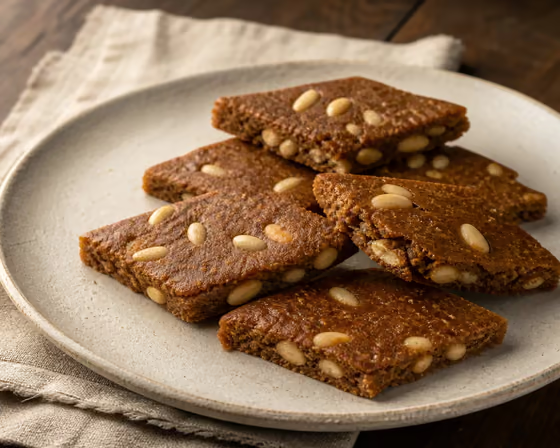 Catalogue image
 Alcomonias
Toasted coarse wheat flour, honey and pine nuts spread and cut into diamonds.
The Alentejo Catalogue image
 Amoreiras-Gare Alcôncoras
A large circular honey-and-olive-oil biscuit born from Amoreiras-Gare's promise-pole tradition.
The Alentejo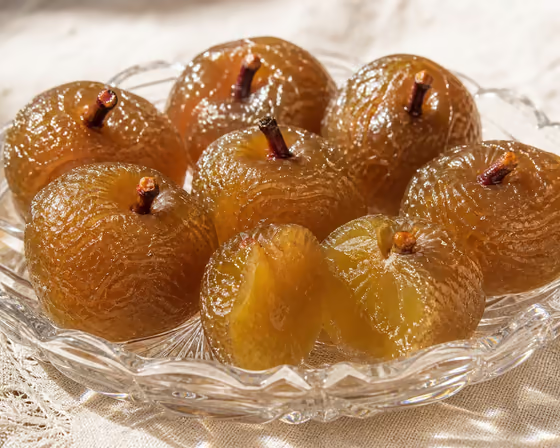 Catalogue image
 Elvas Plums
Protected Rainha Cláudia Verde greengages sold fresh, dried or candied—the sweet form requires at least seven days of slow candying.
The Alentejo