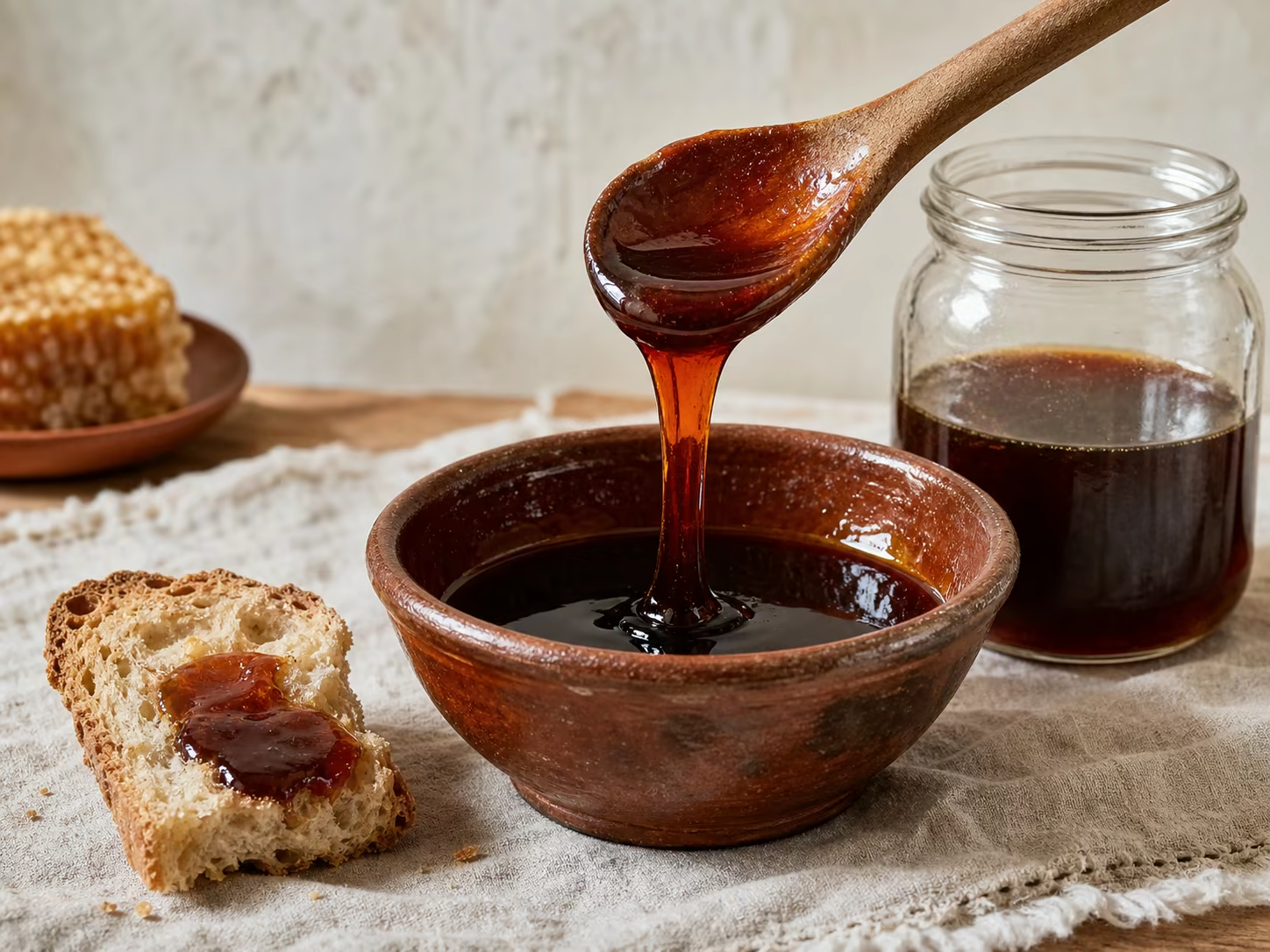
Portuguese Água-mel Syrup
Also known as: Portuguese honey-water syrup · Poor man’s honey
Water that recovers honey from combs after extraction, filtered and reduced for hours to 70–77° Brix.
- Origin
- Southern Portugal · especially Alentejo and Algarve; earliest chronology unknown
- Place
- Alentejo and Algarve · especially associated with Mértola
- Region
- The Alentejo
- Category
- Fruit & Honey Sweets
- Season
- Made after honey extraction; limited availability dependent on the beekeeper
- Evidence
- Well documented
Água-mel is a honey-related traditional food from southern Portugal. After extraction, combs and cappings still carrying residual honey, pollen and propolis are broken up or immersed in hot water. The resulting liquid is filtered to remove wax and other solids, then concentrated over heat, with stirring and foam removal, until it becomes a dark syrup.
Scientific sources do not describe one standard method. A University of Algarve dissertation records washing at about 70–75°C / 158–167°F and thermal treatment for 8–10 hours; process studies describe heating the liquid at 100–108°C / 212–226°F until it reaches 70–77° Brix, with substantial differences among producers. The 2022 research stresses that production follows no pre-established methodology and depends on each producer’s tradition. These values therefore document observed manufacture rather than form a complete domestic recipe.
- water
- honey remaining on the comb
- residual pollen and propolis; wax is filtered out
- orange or lemon rind in some versions
The sources establish a concentrated 70–77° Brix syrup that darkens, becomes more viscous and forms brown pigments during heating. No sensory study was found that would justify prescribing floral intensity, bitterness or perceived acidity.
Composition and endpoint vary with the honey, amount of water and residue, vessel, heat source and producer. Slow Food records orange or lemon rind, cinnamon and other spices in some families, although most add nothing. Research also identifies Sardinian abbamele as a similar product, not as a Portuguese alternative name.
Slow Food describes água-mel as difficult to find, available from some small shops or directly from a small number of beekeepers. Look at honey fairs and among Alentejo and Algarve producers, confirming the product, origin and availability in advance.
Slow Food documents use on toasted bread, with fresh or aged cheese, in salads, with dried cod, in liqueurs and in água-mel cake. These applications are broader than one prescribed pairing.
The practice recovers honey that would otherwise remain in the comb after extraction. Scientific literature calls it an ancient southern Portuguese product but, in that statement, supplies no first date, document or named maker; the exact chronology therefore remains unknown.
Slow Food’s Ark of Taste records the old name ‘poor man’s honey’ and two hospitality memories: in Mértola, água-mel with bread was offered to people who knocked asking for water; farther north in Alentejo, it was accompanied by olives. These are oral traditions recorded by the organisation, not dates of invention. Studies published since 2011 have measured concentration, colour, viscosity and chemical changes during heating, providing a technical basis for characterising a product that had been little standardised.
Well documented
Identity supported by institutional, specialist or corroborating sources.
- fondazioneslowfood.com/en/ark-of-taste-slow-food/agua-mel/ (opens in a new tab)
- pmc.ncbi.nlm.nih.gov/articles/PMC8746383/ (opens in a new tab)
- sapientia.ualg.pt/server/api/core/bitstreams/4dc9bf83-ee69-4aaa-96cd-965a364e5512/content (opens in a new tab)
- sapientia.ualg.pt/server/api/core/bitstreams/93aa8c1b-a251-4086-85fd-8acc5d250ff4/content (opens in a new tab)
- onlinelibrary.wiley.com/doi/abs/10.1111/j.1745-4549.2011.00590.x (opens in a new tab)
Pastries from here — The Alentejo
 Catalogue image
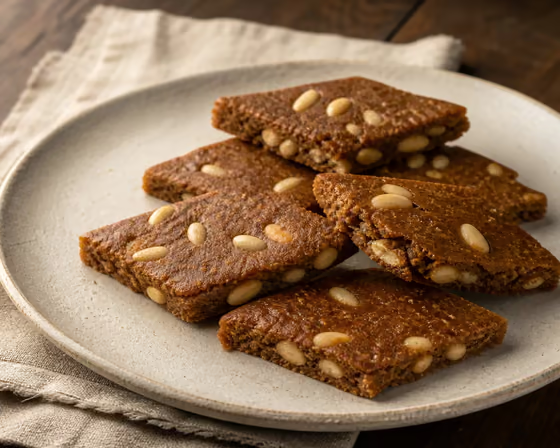
 Alcomonias
Toasted coarse wheat flour, honey and pine nuts spread and cut into diamonds.
The Alentejo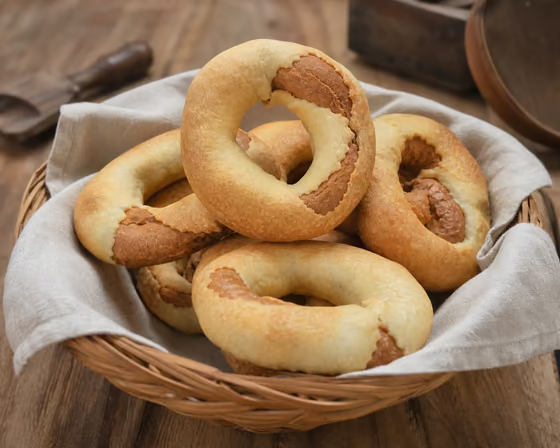 Catalogue image
 Amoreiras-Gare Alcôncoras
A large circular honey-and-olive-oil biscuit born from Amoreiras-Gare's promise-pole tradition.
The Alentejo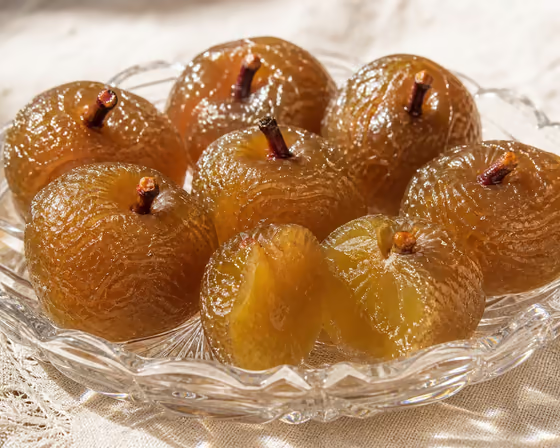 Catalogue image
 Elvas Plums
Protected Rainha Cláudia Verde greengages sold fresh, dried or candied—the sweet form requires at least seven days of slow candying.
The Alentejo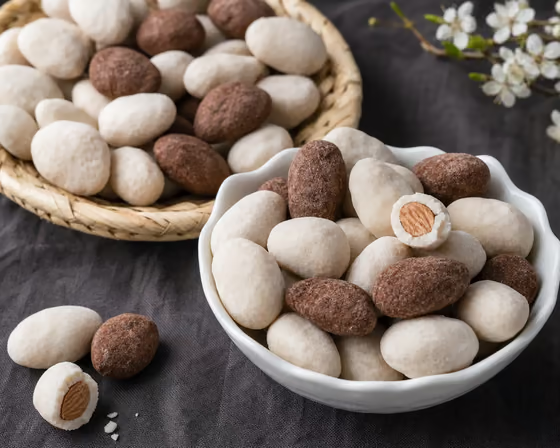 Catalogue image
 Portalegre Sugar Almonds
Almonds coated by hand in sugar, made in Portalegre for Easter.
The Alentejo