Alcomonias
Also known as: Alcomonias · Alcamonias
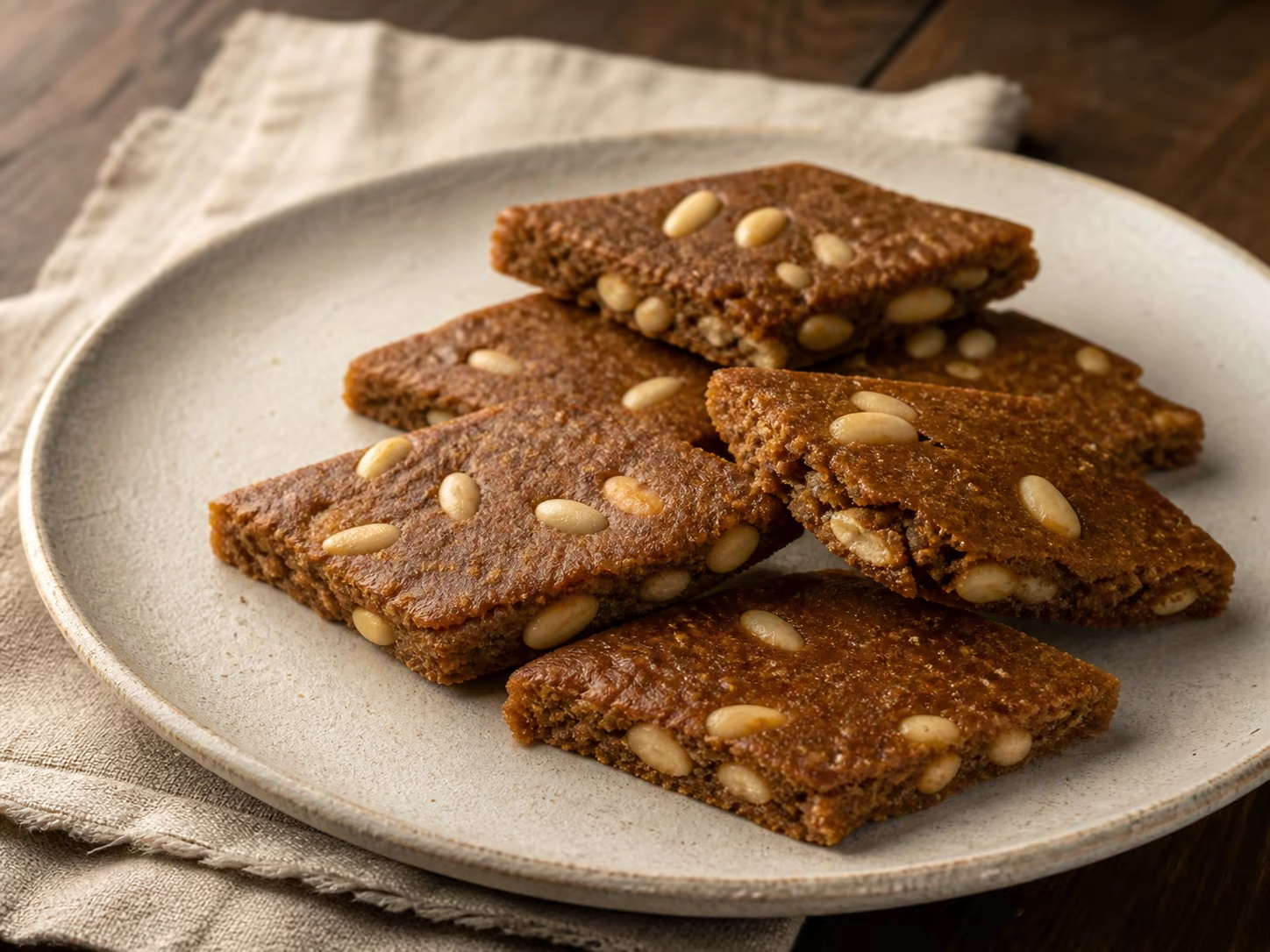
Toasted coarse wheat flour, honey and pine nuts spread and cut into diamonds.
- Origin
- Alentejo coast · especially Santiago do Cacém and Grândola
- Place
- Santiago do Cacém
- Region
- The Alentejo
- Category
- Fruit & Honey Sweets
- Season
- Documented at fairs in September and on 30 November; a regional source states it can be made year-round
- Evidence
- Well documented
Alcomonias are a traditional sweet from the Alentejo coast, documented by DGADR and historical research especially in the municipalities of Santiago do Cacém and Grândola. The heritage formula published by Santiago do Cacém municipality uses honey, cinnamon, water, toasted pine nuts and toasted rolão—a coarse fraction of milled wheat. The hot paste is spread on a floured surface and cut into diamonds before it cools.
The proportions are not uniform. A 2007 municipal bulletin recorded a producer's recipe using sifted wheat flour, honey or light brown sugar, water and pine nuts. The municipality's 2023 heritage journal notes that sugar now tends to replace honey while the diamond shape persists. These are documented variants of local practice, not a standardized national formula.
- Toasted rolão or wheat flour
- Honey or light brown sugar, depending on the version
- Pine nuts
- Water
- Cinnamon in the published heritage formula
Toasted flour, honey and pine nuts in the heritage formula; texture and sweetness depend on proportions and whether honey or sugar is used.
The 2023 municipal formula uses rolão, honey and cinnamon; the 2007 municipal record uses sifted flour and permits honey or light brown sugar. Historical research records cumin in older meanings of the name but not among present ingredients.
Municipal documentation links them to the Santo André fair on 30 November and the Feira do Monte on the first weekend of September. O Setubalense also documents the Melides fair and production in Santiago do Cacém and Grândola.
The reviewed municipal and academic sources establish no single traditional accompaniment.
The medieval origin of today's recipe is not directly established, but the name has strong historical documentation. Drawing on Maria da Conceição Vilhena's study, the municipal journal records the word in fifteenth-century documents for a diamond-shaped sweet of linseed, cumin or sesame and honey, and relates it to Arabic kammunîya, meaning ‘resembling cumin’. A historical study published in 2024 gives the form al-kamūniyya, ‘that which contains cumin’, and notes that cumin has disappeared from present ingredients.
The same municipal journal documents alcomonia as a seasonal regional sweet sold at the Santo André fair on 30 November and publishes a formula recorded by Manuel Fialho. An earlier municipal bulletin interviewed Leonilda, then aged 81 with more than fifty years of practice, who had passed the craft to her daughter Isalina. These sources establish recent family and fair continuity; the association with Arab heritage is etymological and historiographical, not an uninterrupted documentary chain for the recipe.
Well documented
Identity supported by institutional, specialist or corroborating sources.
- tradicional.dgadr.gov.pt/pt/cat/doces-e-produtos-de-pastelaria/992-alcomonias (opens in a new tab)
- cm-santiagocacem.pt/wp-content/uploads/Revista-N.o-1-Salvaguarda-Patrimonio-Historia-e-Cultura-de-Santiago-do-Cacem.pdf (opens in a new tab)
- cm-santiagocacem.pt/wp-content/uploads/Boletim-6.pdf (opens in a new tab)
- dialogosmediterranicos.com.br/RevistaDM/article/download/474/526/2648 (opens in a new tab)
- osetubalense.com/edicao-1000/especial-165-anos/alcomonias-ha-mais-de-um-seculo-a-adocar-a-regiao/ (opens in a new tab)
Pastries from here — The Alentejo
 Catalogue image
 Portuguese Água-mel Syrup
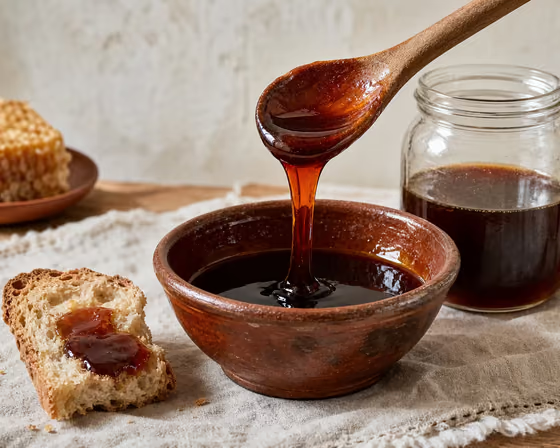
Water that recovers honey from combs after extraction, filtered and reduced for hours to 70–77° Brix.
The Alentejo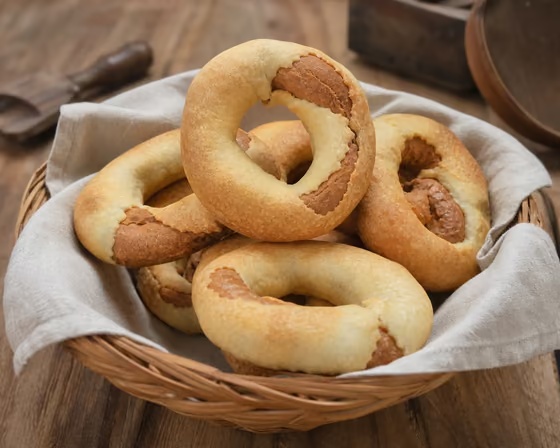 Catalogue image
 Amoreiras-Gare Alcôncoras
A large circular honey-and-olive-oil biscuit born from Amoreiras-Gare's promise-pole tradition.
The Alentejo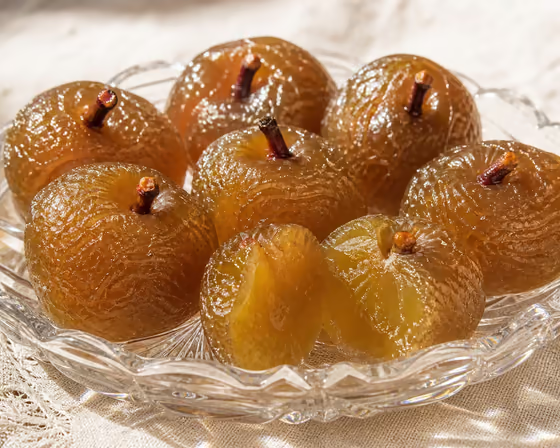 Catalogue image
 Elvas Plums
Protected Rainha Cláudia Verde greengages sold fresh, dried or candied—the sweet form requires at least seven days of slow candying.
The Alentejo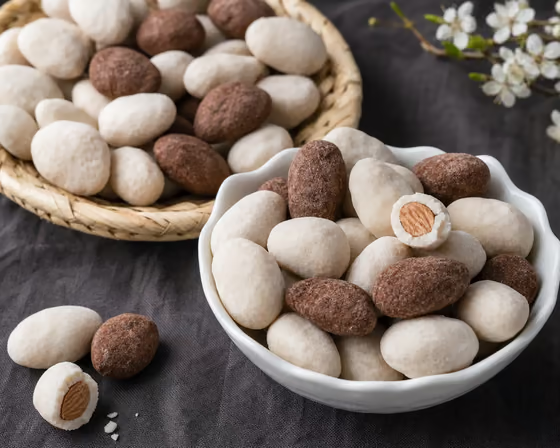 Catalogue image
 Portalegre Sugar Almonds
Almonds coated by hand in sugar, made in Portalegre for Easter.
The Alentejo