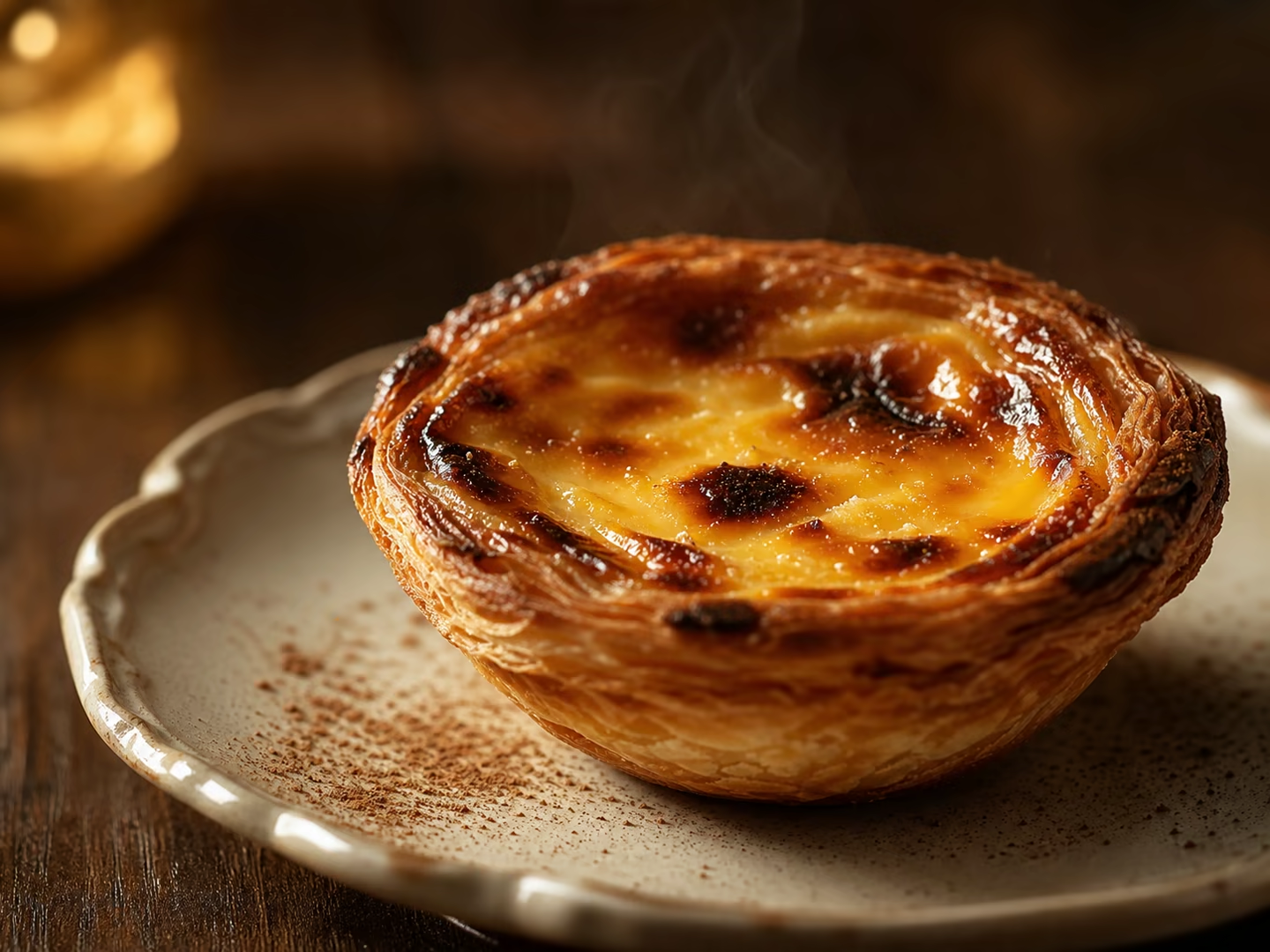
Pastel de Nata
Also known as: Pastel de Belém · Portuguese custard tart
The crackling shell and scorched custard that conquered the world.
- Origin
- Belém, Lisbon — a Jerónimos monastery recipe, sold commercially since 1837
- Place
- Belém
- Region
- Lisbon
- Category
- Custards & Creams
- Season
- Year-round
- Evidence
- Well documented
The pastel de nata is the undisputed king of Portuguese pastry: a cup of thin, crackling puff pastry filled with a custard of egg yolks, milk and sugar cooked with lemon peel and cinnamon. It emerges from the oven freckled with scorched, almost-burnt spots, the centre creamy and still trembling.
It is bought at the counter, warm, dusted to taste with cinnamon and icing sugar, and eaten in two or three bites. The contrast between the crisp shell and the soft custard is its whole reason for being — and the reason one is rarely enough.
In Belém, where the original recipe has been sold since 1837, it is called pastel de Belém, a name reserved to that one house. Everywhere else — and across the world — it is simply pastel de nata.
- puff pastry
- egg yolks
- milk
- sugar
- flour
- lemon peel
- cinnamon stick
- ground cinnamon and icing sugar (to dust)
A crisp, buttery puff-pastry shell gives way to a silky custard — sweet but balanced by lemon's brightness and a whisper of cinnamon. The scorched spots lend a faint caramel bitterness that keeps it from cloying. Best of all warm, straight from the oven.
Recipes vary in the thinness of the pastry, the ratio of yolk, and how dark the top is baked. Some custards set firm, others stay loose, and modern riffs abound — mini, giant, wholemeal, gluten-free, or flavoured (chocolate, carob, matcha) — that divide the purists. In Lisbon and Porto, rival houses jostle for the title of best tart.
In Belém, at the historic Antiga Confeitaria de Belém (Pastéis de Belém), serving the original since 1837 — the queue is worth it. In Lisbon, Manteigaria is the modern benchmark; both it and Fábrica da Nata have outposts in Porto too. Seek out places that bake throughout the day: a good tart is eaten warm, never cold from the display case.
A short, strong bica (espresso), whose bitterness cuts the sweetness, or a galão (milky coffee) in the late afternoon. For a festive turn, it pairs beautifully with a glass of Moscatel de Setúbal or white Port.
Its story is tied to the Jerónimos Monastery in Belém. As in so many Portuguese convents, egg whites were used to starch habits and clarify wine, and the many leftover yolks went into rich pastries. With the dissolution of Portugal's religious orders in 1834, in the wake of the liberal revolution, the monasteries closed and many clergy lost their livelihood.
According to the house's own account, someone connected to the monastery began selling these tarts in a shop attached to a sugar-cane refinery. In 1837 the Antiga Confeitaria de Belém was born, and to this day it guards its so-called 'secret recipe' in a workshop closed to the public, known only to a handful of master pastry chefs.
Well documented
Identity supported by institutional, specialist or corroborating sources.
- pasteisdebelem.pt/en/history/ (opens in a new tab)
- visitlisboa.com/en/places/pasteis-de-belem (opens in a new tab)
- visitportugal.com/pt-pt/content/receitas-tradicionais-portuguesas-past%C3%A9is-de-nata (opens in a new tab)
- en.wikipedia.org/wiki/Pastel_de_nata (opens in a new tab)
- historiccafesroute.com/historic-antiga-confeitaria-de-belem/ (opens in a new tab)
Pastries from here — Lisbon
 Catalogue image
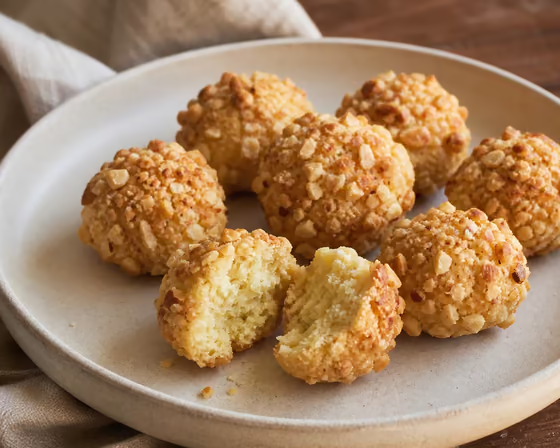
 Amendoados
Small dry, crumbly cakes, shaped by hand and crowned with coarsely chopped almonds.
Lisbon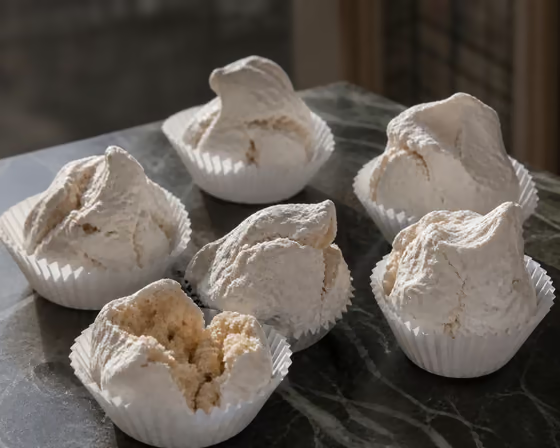 Catalogue image
 Azeitão Almond Meringues
Rustic hand-shaped almond meringues with a white, delicately cracked shell.
Lisbon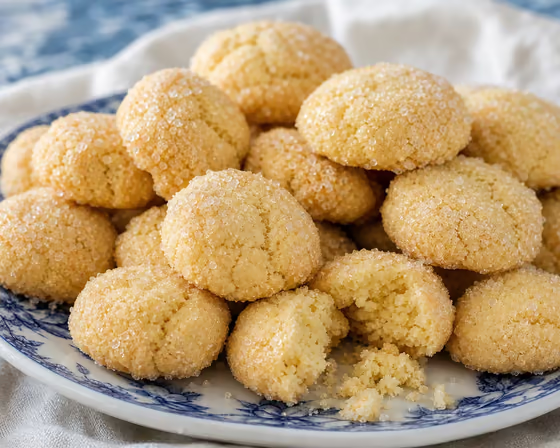 Catalogue image
 Cascais Sands
Beach sand that melts on the tongue.
Lisbon Catalogue image
 Arroubo Grape-Must Preserve
Must reduced slowly—alone as syrup or with fruit as uvada—in terminology that varies among sources and localities.
Lisbon