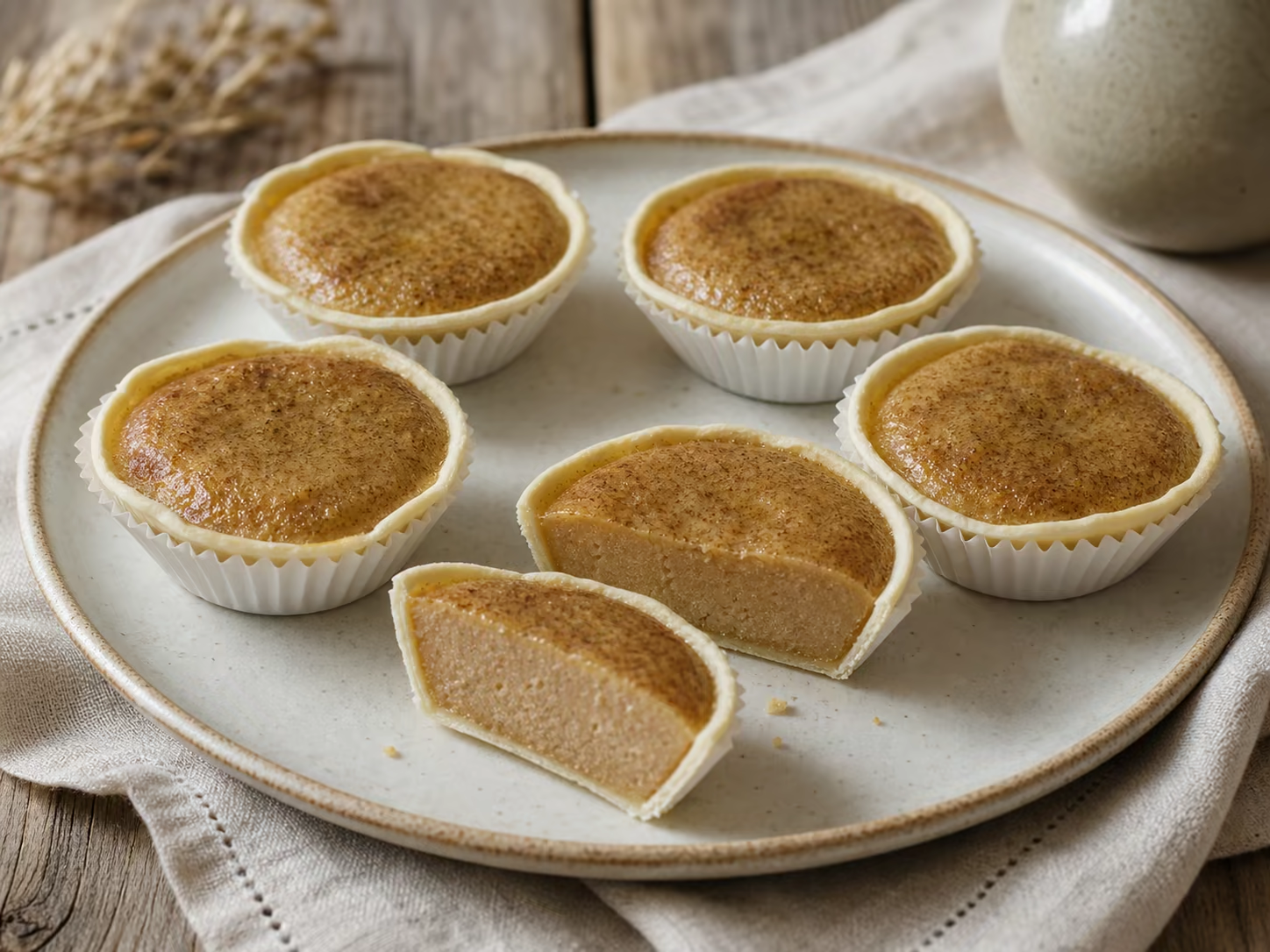
Almeirim Friar Tart
Also known as: Almeirim Friar Tart · Black-eyed-pea Tart
The black-eyed-pea tart linking Almeirim's sweets to the Stone Soup legend.
- Origin
- Almeirim · Ribatejo
- Place
- Almeirim · Ribatejo
- Region
- The Alentejo
- Category
- Cakes & Sweet Breads
- Season
- Year-round
- Evidence
- Well documented
Pastel de Frade de Almeirim is a small, shallow round tart with a very thin pale shell surrounding a smooth black-eyed-pea filling. In the oven, its domed top takes on golden and brown tones while the centre remains dense, moist and soft.
It belongs to Portugal's broad family of sweet bean tarts but replaces the usual white bean with black-eyed peas, recognisable by their earthier flavour. The exact commercial formula is not published; the defining, publicly documented element is this particular pulse, transformed into a sweet rather than a soup or savoury side dish.
- black-eyed peas
- sugar
- eggs
- thin pastry shell
- aromatics according to the producer
Sweet, dense and soft, with toasted notes on top and the earthy undertone of black-eyed peas.
The local production formula has not been published in full proportions. Colour and height vary slightly between batches, but black-eyed peas and the individual tart form define the pastry.
In Almeirim pastry shops and at food events connected to the confraternity; check availability, as it is less widespread than Broas de Almeirim.
Coffee, tea or a fortified wine from the Tejo region.
Its contemporary origin is openly acknowledged. Almeirim's Gastronomic Confraternity felt that the city, famous for Sopa da Pedra, needed a sweet of its own. It drew on the travelling friar in the legend — who persuades a village to contribute ingredients to a soup begun with a stone — and chose black-eyed peas to unite name, story and flavour.
The tart was being promoted as a local specialty by 2018, and the following year the municipality and confraternity entered it in the Seven Wonders of Portuguese Sweets alongside Bolo Finto, Broas de Almeirim and melon ice cream. It is a transparent example of food heritage created in the present and adopted as a local marker, not a recovered medieval or convent recipe.
Well documented
Identity supported by institutional, specialist or corroborating sources.
- noponto.pt/pastel-frade/ (opens in a new tab)
- omirante.pt/sociedade/2019-04-16-Almeirim-leva-doces-tipicos-a-concurso-nas-7-Maravilhas (opens in a new tab)
- gazetarural.com/wp-content/uploads/2019/04/7-Maravilhas-Doces-de-Portugal-Lista-de-Nomeados.pdf (opens in a new tab)
Pastries from here — The Alentejo
 Catalogue image
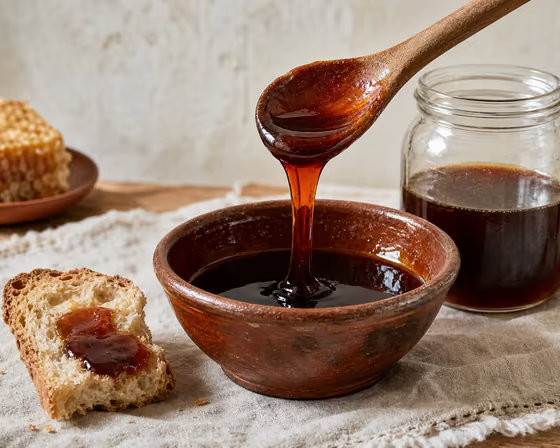
 Portuguese Água-mel Syrup
Water that recovers honey from combs after extraction, filtered and reduced for hours to 70–77° Brix.
The Alentejo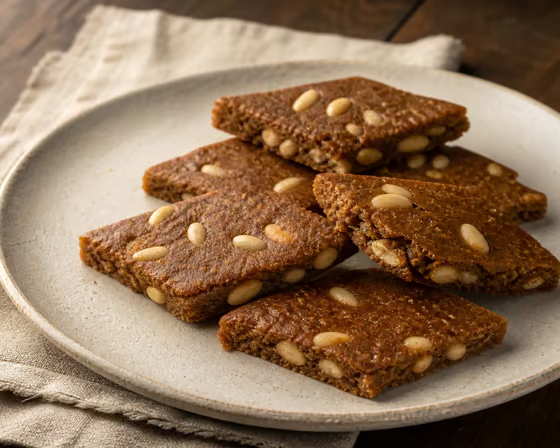 Catalogue image
 Alcomonias
Toasted coarse wheat flour, honey and pine nuts spread and cut into diamonds.
The Alentejo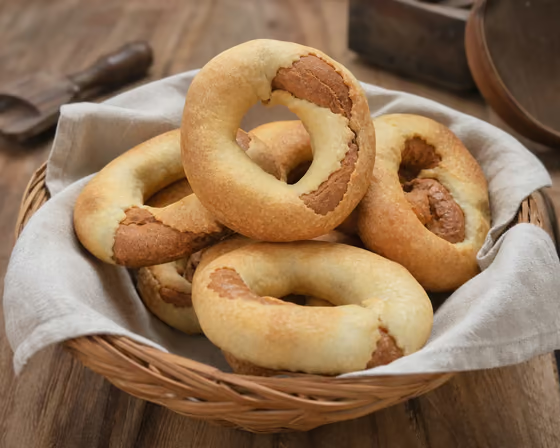 Catalogue image
 Amoreiras-Gare Alcôncoras
A large circular honey-and-olive-oil biscuit born from Amoreiras-Gare's promise-pole tradition.
The Alentejo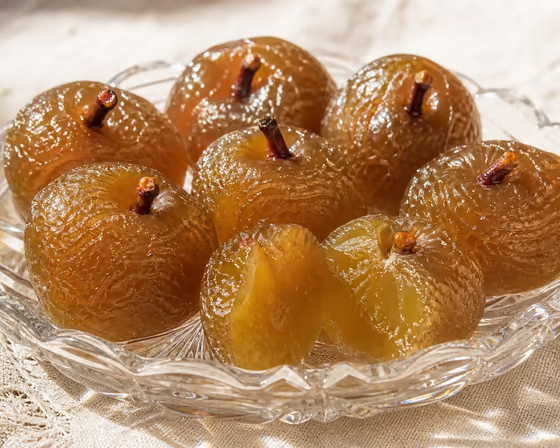 Catalogue image
 Elvas Plums
Protected Rainha Cláudia Verde greengages sold fresh, dried or candied—the sweet form requires at least seven days of slow candying.
The Alentejo