Peniche Pastries
Thin pastry, an egg-yolk and almond filling, and a tradition passed between Peniche confectioners.
- Origin
- Peniche · Oeste · documented 20th-century family tradition
- Place
- Peniche
- Region
- The West
- Category
- Fried Sweets
- Season
- No verified traditional season · check availability
- Evidence
- Well documented
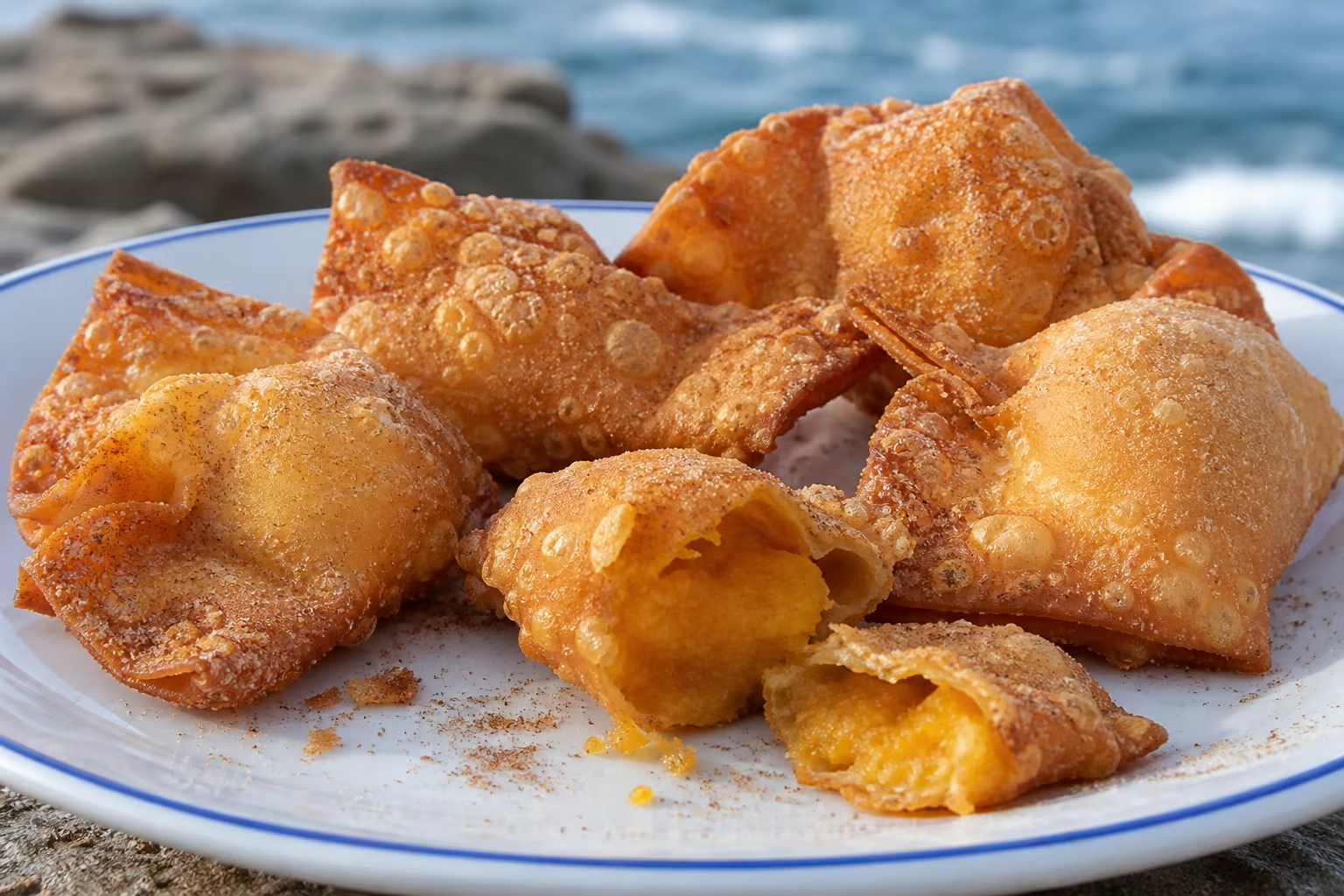
Pastéis de Peniche are fried pastries made with thin, short pastry and a filling of sugar, egg yolks and almonds. Food historian Virgílio Nogueiro Gomes described local examples shaped as half-moons or squares, sealed before frying and finished with icing sugar and cinnamon; he also recorded a few drops of lemon in the filling. Because the proportions belong to family recipes, this record documents the published profile rather than claiming one canonical formula.
Peniche Municipal Council included them among the sweets submitted by the municipality to the 2019 Seven Wonders of Portuguese Sweets competition, in a candidature prepared with local businesses and master pastry makers. Turismo Centro de Portugal likewise presents them, alongside Amigos and Esses, as one of Peniche's principal sweet specialities.
The photograph on this page is an editorial interpretation consistent with the forms described by the sources. It is not a photograph of an authenticated specimen and does not prove a compulsory presentation.
- Egg yolks
- Almonds
- Sugar
- Wheat flour
- Fat and liquid for the pastry — vary between published recipes
- Fat for frying
- Icing sugar and cinnamon to finish
- A few drops of lemon in the version observed by Virgílio Nogueiro Gomes
Thin, crisp fried pastry with a sweet egg-yolk and almond filling; sugar, cinnamon and, in some versions, lemon complete the profile.
Sources show both half-moon and square forms. Amigos de Peniche, Penichenses and Esses are distinct local specialities and should not be treated as alternative names for this pastry.
No Ponto recorded them in some pastry shops and chiefly from private confectioners in Peniche. Because that information dates from 2015, confirm local availability before visiting; this review did not verify a specific current producer.
No traditional pairing was identified in the sources consulted; coffee or tea are editorial suggestions.
A convent origin is repeated by some sources, but the published research by the No Ponto project states that it found no concrete evidence for that claim. Similarities between the filling and that of Pastéis de Santa Clara, or between the pastry and azevias, are culinary comparisons rather than proof of monastic provenance.
The oral transmission is better documented. Ida and Graciete Guilherme told No Ponto that they learned from their mother, Maria da Conceição, who had received the recipe from Maria Isabel Roque, an elderly Peniche confectioner. Their agreement gave Maria Isabel half the profits for the rest of her life. An account of Ida Guilherme's book Saberes e Sabores — Da Terra e do Mar places this transmission in the 1930s. This supports a local 20th-century family lineage; it does not date the pastry's invention.
Well documented
Identity supported by institutional, specialist or corroborating sources.
- noponto.pt/pastel-de-peniche/ (opens in a new tab)
- virgiliogomes.com/index.php/cronicas/911-doces-de-peniche (opens in a new tab)
- virgiliogomes.com/index.php/cronicas/914-mais-doces-de-peniche (opens in a new tab)
- cm-peniche.pt/municipio/comunicacao/noticias/todas-as-noticias/noticia/peniche-candidata-se-as-7-maravilhas-doces-de-portugal (opens in a new tab)
- estacoesnauticas.turismodocentro.pt/pages/922 (opens in a new tab)
- alcoutimlivre.blogspot.com/2012/08/saberes-e-sabores-da-terra-e-do-mar.html (opens in a new tab)
Pastries from here — The West
 Catalogue image
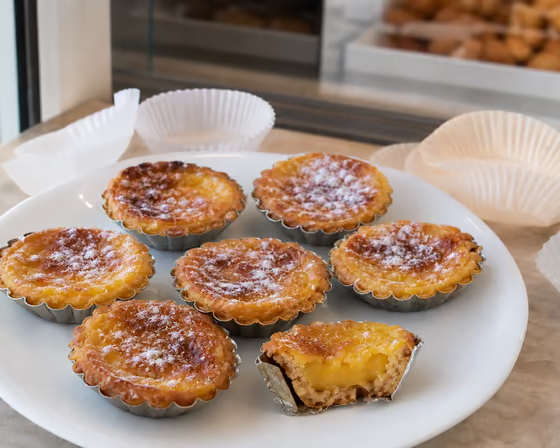
 Friends of Peniche
The sweet named after friends you should not trust.
The West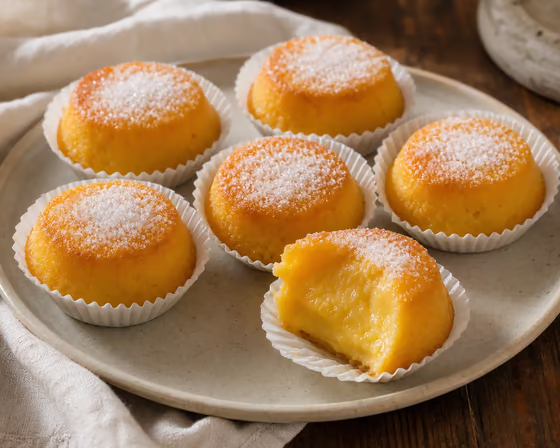 Catalogue image
 Areias Brancas
Small yolk-and-almond pudding cakes, named by the coast and covered with white sugar.
The West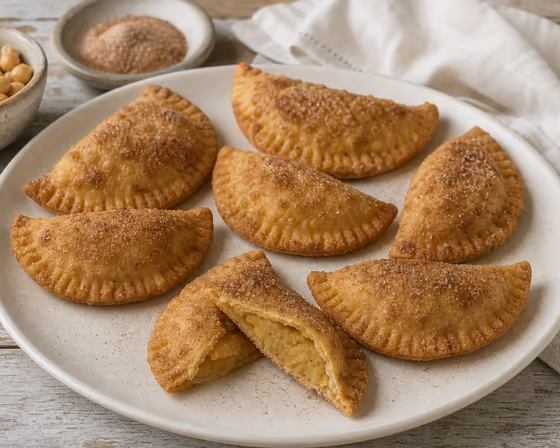 Catalogue image
 Peniche Chickpea Azevias
Thin fried half-moons with a sweet, creamy chickpea, almond and egg-yolk filling.
The West Catalogue image
 Lourinhã DOC Brandy Bonbon
A dark-chocolate bonbon with a Lourinhã DOC brandy heart.
The West