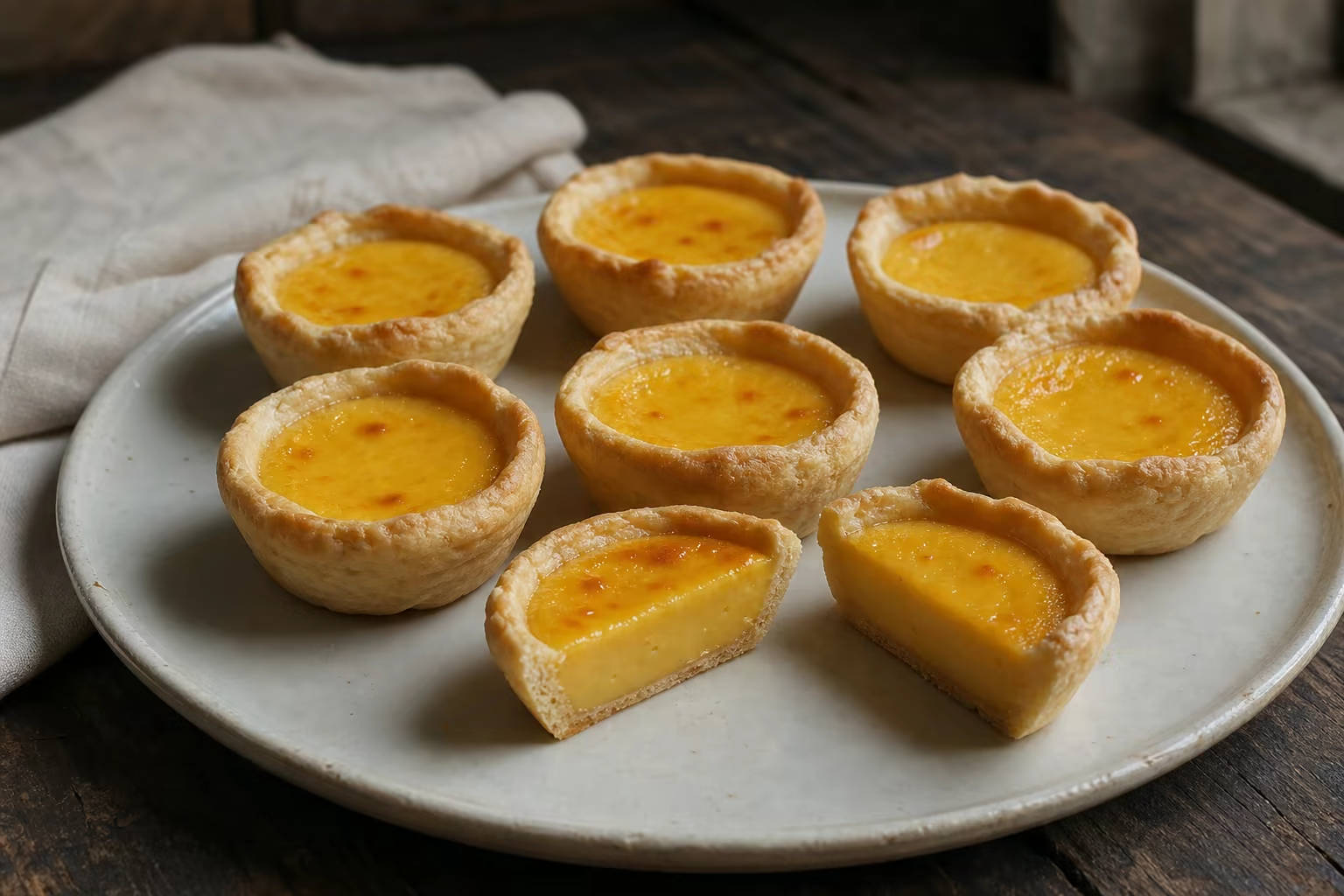
Marvila Egg Custard Tartlets
Also known as: Little Egg Pastries of Marvila · Marvila Pastries
Historic pastry cases of egg sweet and sponge cake, recovered directly from a recipe printed in 1788.
- Origin
- Recipe printed in 1788; creation date unknown · associated with the former Convent of Our Lady of the Conception of Marvila, Lisbon
- Place
- Marvila · Lisbon
- Region
- Lisbon
- Category
- Convent Sweets
- Season
- No season stated in the 1788 source
- Evidence
- Well documented
The “Recipe for little egg pastries of Marvilla”, published in 1788 in Arte nova, e curiosa, para conserveiros, confeiteiros e copeiros, directs the cook to make very small cases from flour, butter, orange-blossom water, cinnamon and sugar. Once baked and cold, they are filled with an egg sweet firmer than “ovos grossos” and mixed with toasted grated sponge cake; they are dipped in sugar syrup at the espadana stage and finished with powdered sugar and cinnamon.
The formula survives in historical language and measures. “One quarta” is not converted without metrological context, “ten réis” of cinnamon is a purchase value, and the oven has neither temperature nor time. The recipe on this page is therefore an annotated culinary transcription, not a tested domestic adaptation.
- Flour
- Butter
- Orange-blossom water
- Cinnamon
- Sugar
- Eggs
- Toasted grated sponge cake
The historical formula combines butter-and-orange-blossom pastry, a concentrated egg-and-sponge filling and a sugar-and-cinnamon coating. No standardised sensory assessment of the original execution survives.
The 1788 source documents one specific formula. Modern recreations should disclose conversions, scale, oven and interpretive choices rather than present them as the words of the original.
A local recovery was announced in 2009, but the reviewed sources do not confirm regular current production. Check with Marvila Parish or local heritage initiatives.
No specific historical pairing was found in the 1788 recipe.
The primary recipe appears on pages 174–175 of the 1788 edition, and the same volume explains “ovos grossos” on pages 73–74. A local record associates the sweet with the Bridgettine nuns of the Convent of Our Lady of the Conception of Marvila, founded in the seventeenth century, and reports later fame and a recovery in 2009.
The 1788 printing proves that the formula circulated by that date; it does not prove when it was created, who composed it or whether the text exactly reproduces convent practice. Its creation date remains unknown, and current commercial availability has not been confirmed.
Well documented
Identity supported by institutional, specialist or corroborating sources.
- books.google.com/books (opens in a new tab)
- play.google.com/store/books/details/Arte_nova_e_curiosa_para_conserveiros_con (opens in a new tab)
- hemerotecadigital.cm-lisboa.pt/Periodicos/Olisipo/1953/N63/N63_master/Olisipo_N63_Jul1953.PDF (opens in a new tab)
- pnrmarvila.blogspot.com/2009/09/pasteis-de-marvila.html (opens in a new tab)
- lisboa.rockproject.eu/wp-content/uploads/2021/09/ResearchNote_MargaridaRSilva.pdf (opens in a new tab)
- paroquiamarvila.wixsite.com/paroquiademarvila/aparoquia (opens in a new tab)
Pastries from here — Lisbon
 Catalogue image
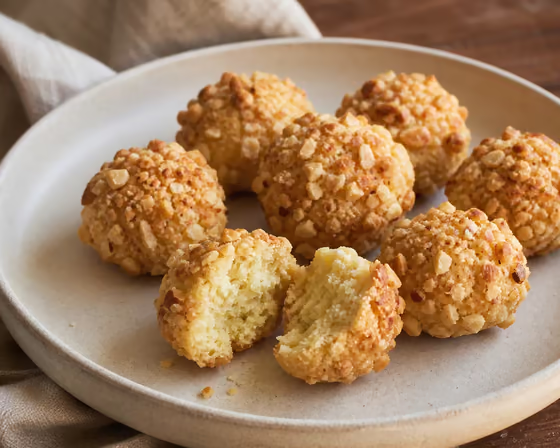
 Amendoados
Small dry, crumbly cakes, shaped by hand and crowned with coarsely chopped almonds.
Lisbon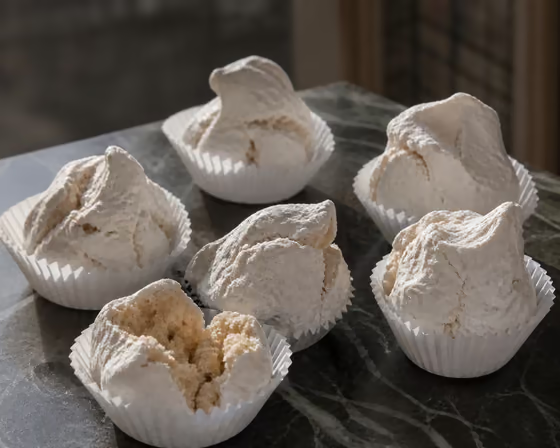 Catalogue image
 Azeitão Almond Meringues
Rustic hand-shaped almond meringues with a white, delicately cracked shell.
Lisbon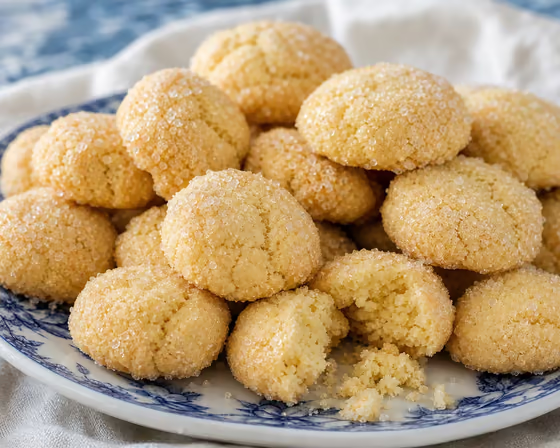 Catalogue image
 Cascais Sands
Beach sand that melts on the tongue.
Lisbon Catalogue image
 Arroubo Grape-Must Preserve
Must reduced slowly—alone as syrup or with fruit as uvada—in terminology that varies among sources and localities.
Lisbon