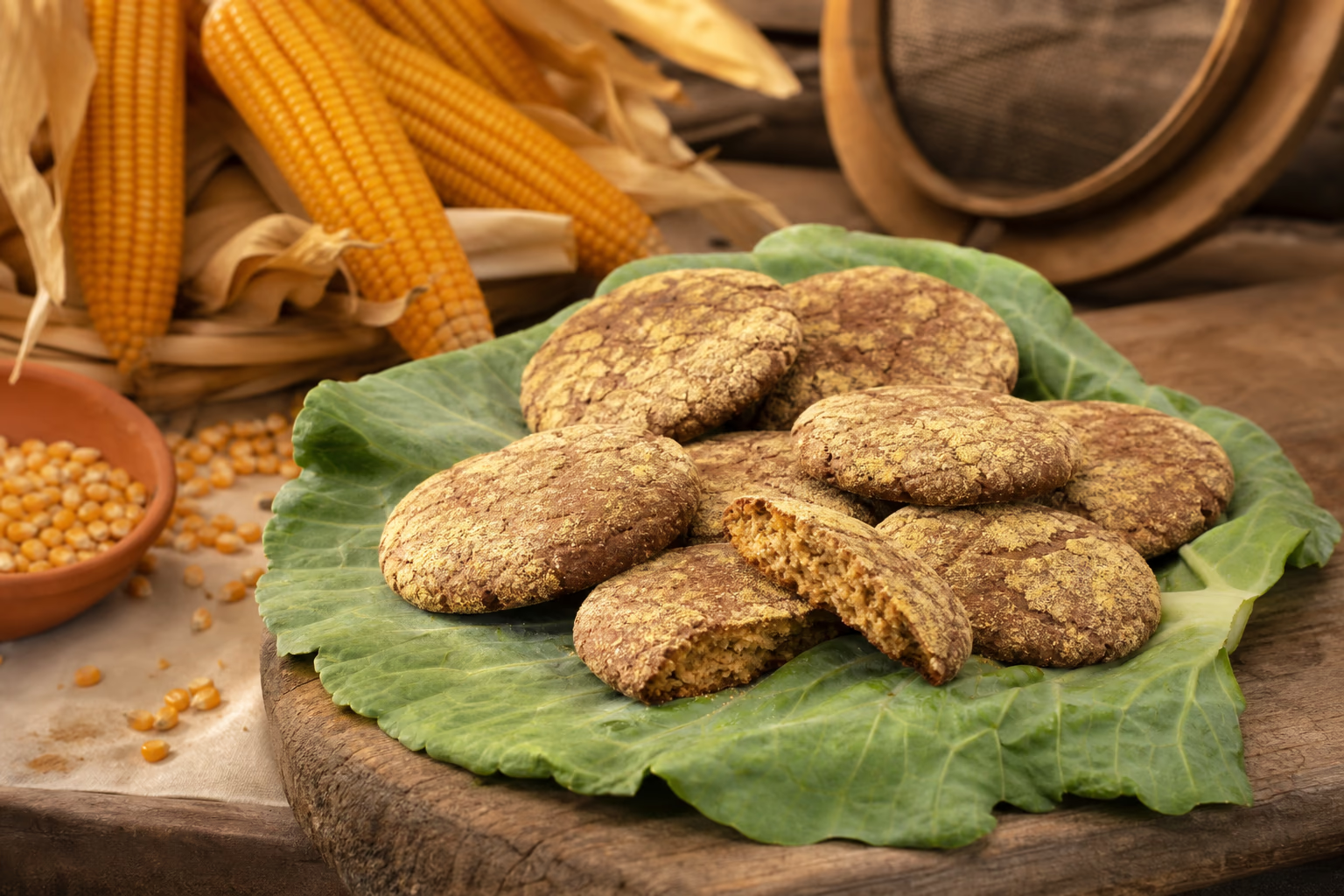
Porto de Mós Corn Broas
Also known as: Porto de Mós Corn Broas · Repetelos · Resulhos
Low corn broas with honey, anise and olive oil, baked on cabbage leaves.
- Origin
- Porto de Mós · made from leftover maize-bread dough
- Place
- Porto de Mós
- Region
- The Centre
- Category
- Cakes & Sweet Breads
- Season
- Linked to bread-baking days · year-round
- Evidence
- Well documented
Parrameiros are small flat broas made from dough left over after maize bread. Honey or brown sugar, anise and olive oil enrich that base, creating a dark, dense, grainy and aromatic cake.
They are shaped into low rounds, placed on cabbage leaves and baked near the mouth of the wood-fired oven, where the heat is gentler. Maize meal remains visible in both crust and compact crumb.
- Maize-bread dough
- Honey or brown sugar
- Anise seed
- Olive oil
- Cabbage leaves for baking
Dense and fairly dry, with toasted maize, honeyed sweetness, persistent anise and the fruity richness of olive oil.
Honey or brown sugar may provide the sweetness, and the same product is locally known as Repetelos or Resulhos.
Look for them at traditional-food events, bakeries and rural producers around Porto de Mós; availability is more occasional than that of a commercial biscuit.
Barley coffee, anise tea or a mildly salted aged cheese.
The specialty belongs to a thrift kitchen: one bread batch also supplied dough for a simple sweet, avoiding waste and another firing of the oven. Porto de Mós tourism records the names Parrameiros, Repetelos and Resulhos.
The method—reused maize dough, cabbage leaf and baking at the oven mouth—ties the sweet directly to household breadmaking and the municipality's memory of wood-fired ovens.
Well documented
Identity supported by institutional, specialist or corroborating sources.
- visite.portodemos.pt/visitar/made-in-porto-de-mos/docaria (opens in a new tab)
- municipio-portodemos.pt/pages/1291 (opens in a new tab)
Pastries from here — The Centre
 Catalogue image
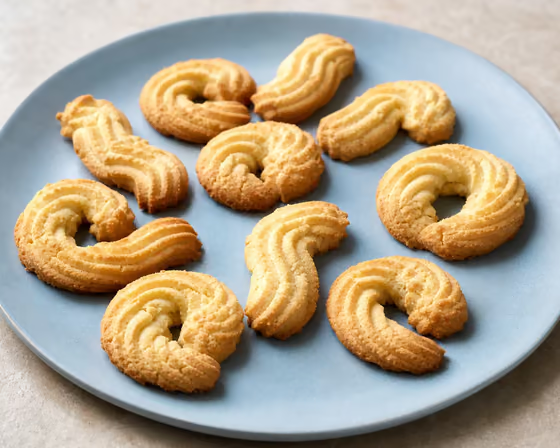
 Ílhavo Piped Butter Biscuits
Regional buttery biscuits piped into deeply ridged rings and curves.
The Centre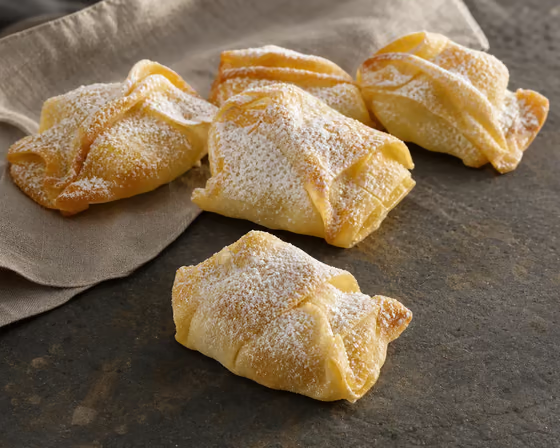 Catalogue image
 Saint Friar Gil’s Saddlebags
The small saddlebag-shaped pastry created at Vouzela’s vocational school and recognised as an innovative sweet.
The Centre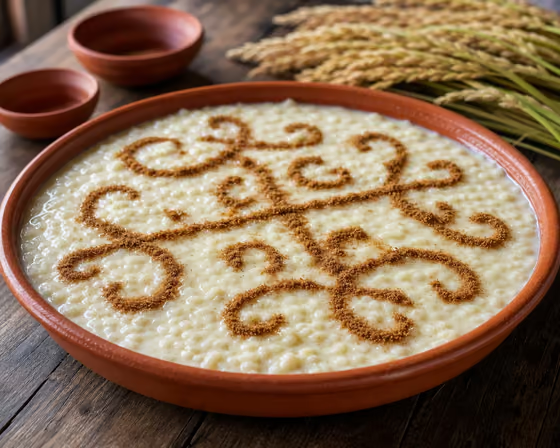 Catalogue image
 Baixo Mondego Rice Pudding
Mondego Carolino rice and Gândara milk, traced with cinnamon.
The Centre Catalogue image
 Arrufada de Coimbra
Coimbra's light, fragrant sweet bread, given by godparents at Easter.
The Centre