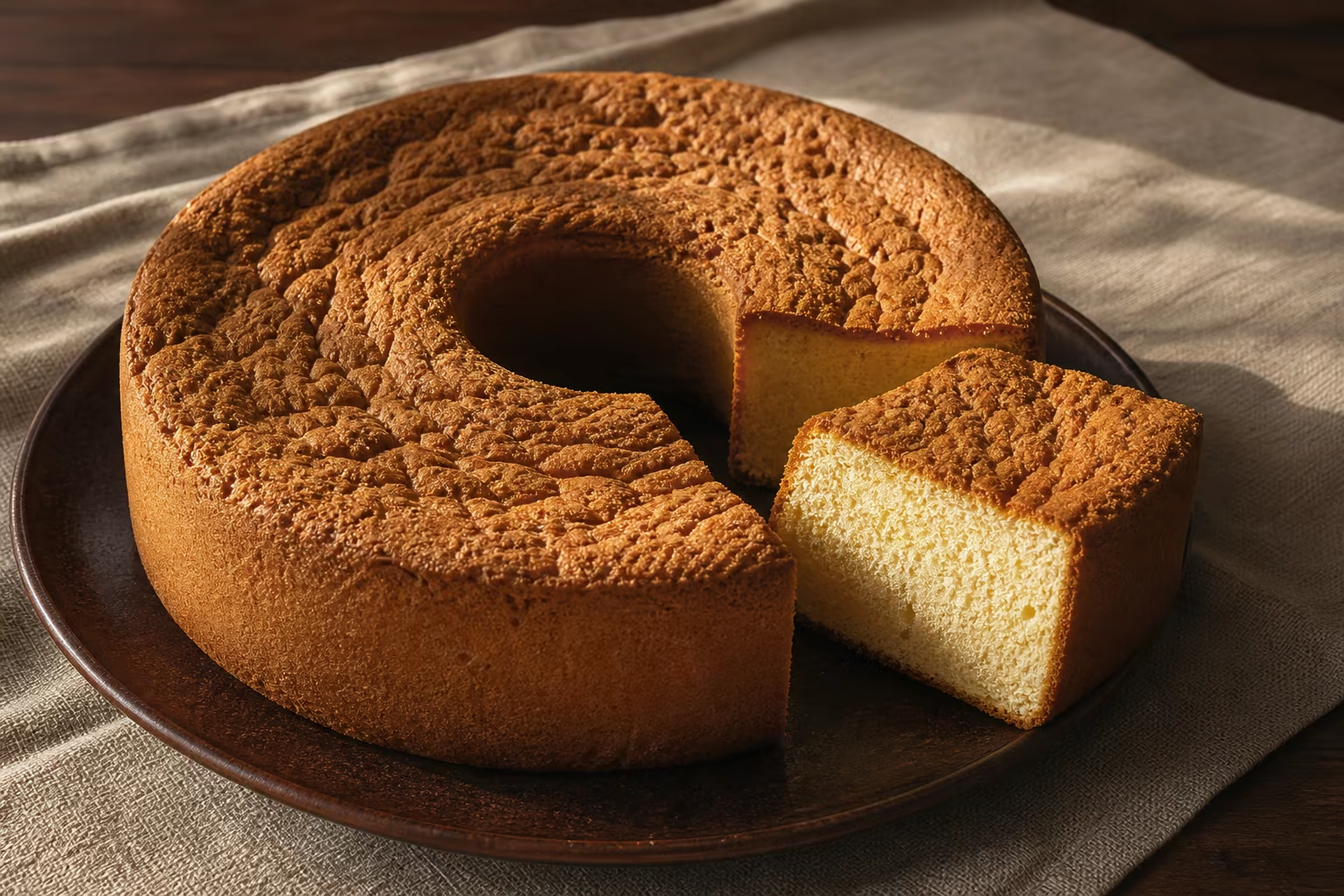
Tábua Ring Sponge Cake
Also known as: Tábua Ring Sponge Cake
A yellow, airy ring sponge traditionally baked after the village broa.
- Origin
- Tábua · Coimbra Region
- Place
- Tábua · Coimbra
- Region
- The Centre
- Category
- Cakes & Sweet Breads
- Season
- Family and religious celebrations
- Evidence
- Well documented
Pão-de-Ló de Tábua is a large ring cake with a wrinkled brown crust and a tall, airy yellow crumb. Eight eggs are separated: yolks and sugar are beaten to a pale cream, then stiff whites and flour are folded in alternately to preserve the air. It bakes in a greased and floured chimney mould.
Unlike moist yolk-centred pães-de-ló, this version is fully baked, light and intended for slicing.
- eggs
- sugar
- wheat flour
- butter for greasing
Airy, fully baked and clean-tasting, with pronounced egg and homely sweetness.
Browning and height depend on the oven; the recorded formula uses neither leavening nor aromatics.
At family tables, festivals and producers around the municipality. Tábua's municipal tourism portal lists pão-de-ló among its sweets, while the Gastronomic Charter preserves this particular household formula; territorial presence does not imply every local version follows the collected recipe exactly.
Coffee, tea or Beira cheese.
The regional charter collected the recipe from one of the municipality's storytellers, who remembered her mother beating it in a glazed ceramic bowl beside the oven, waiting for the broa to come out so the residual heat could be used.
The account records a Tábua household practice: the festive cake followed everyday bread in the baking order, transforming eggs, sugar and flour into celebration food.
Well documented
Identity supported by institutional, specialist or corroborating sources.
- visitarganil.pt/wp-content/uploads/2023/12/carta_gastrono_mica_jan2022_compacto.pdf (opens in a new tab)
- tabuaoencantodasbeiras.pt/oconcelho/a-gastronomia/ (opens in a new tab)
Pastries from here — The Centre
 Catalogue image
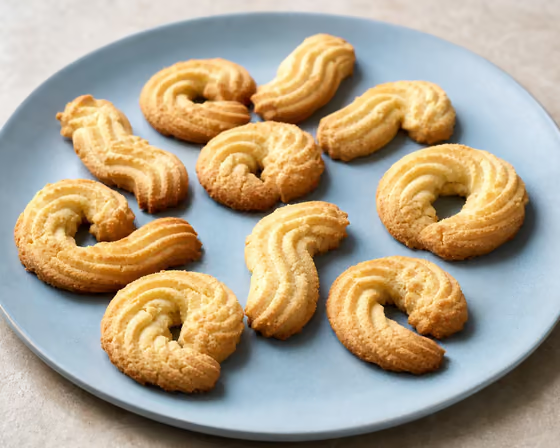
 Ílhavo Piped Butter Biscuits
Regional buttery biscuits piped into deeply ridged rings and curves.
The Centre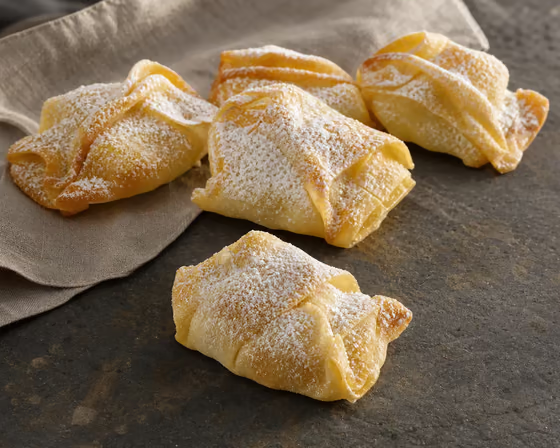 Catalogue image
 Saint Friar Gil’s Saddlebags
The small saddlebag-shaped pastry created at Vouzela’s vocational school and recognised as an innovative sweet.
The Centre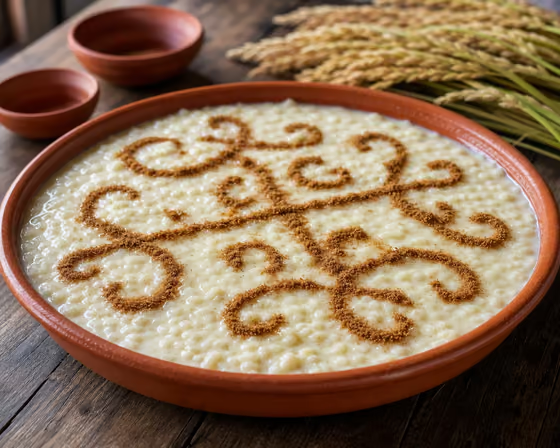 Catalogue image
 Baixo Mondego Rice Pudding
Mondego Carolino rice and Gândara milk, traced with cinnamon.
The Centre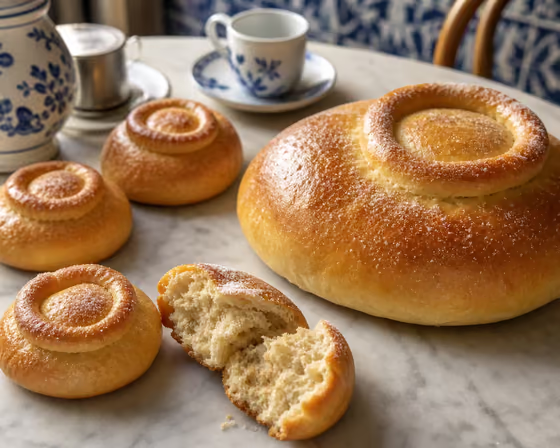 Catalogue image
 Arrufada de Coimbra
Coimbra's light, fragrant sweet bread, given by godparents at Easter.
The Centre