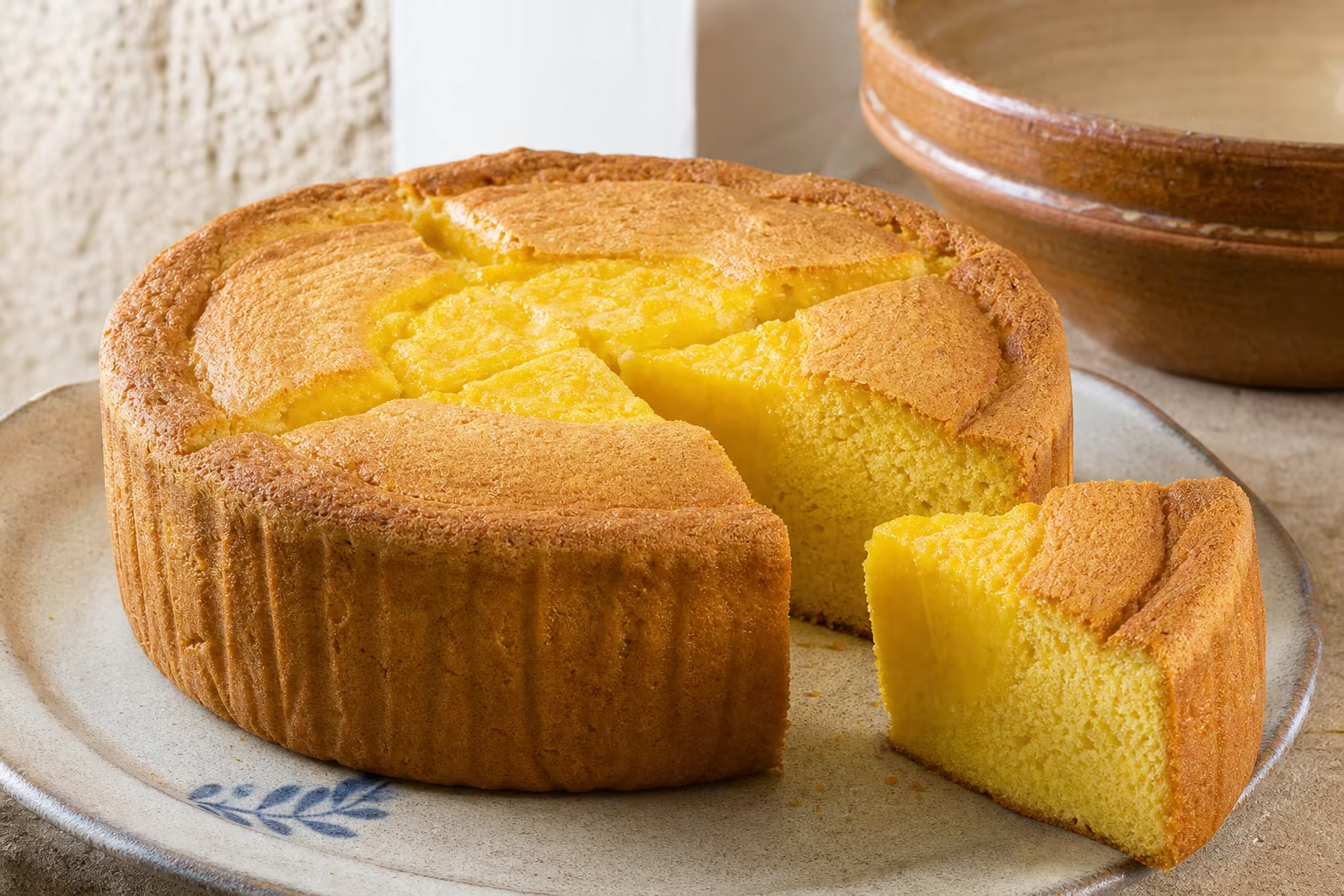
Soure Cross-Cut Sponge Cake
Also known as: Soure Cross-Cut Sponge Cake
A tall 24-egg sponge cut into a cross during baking to create a moister yellow centre.
- Origin
- Soure · Coimbra Region
- Place
- Soure · Coimbra
- Region
- The Centre
- Category
- Cakes & Sweet Breads
- Season
- Year-round · São Mateus · Easter
- Evidence
- Well documented
Pão-de-Ló de Soure is a tall, round, intensely yellow cake made with six whole eggs, eighteen additional yolks, sugar and little flour. Midway through its long bake, a cross is cut in the centre and the four points are pulled slightly outward, creating a lower, moister yellow area on top surrounded by more fully baked sponge.
Traditionally beaten in a glazed earthenware bowl with a cross-tipped wooden spoon and baked in a wood-fired oven, it is moist without being liquid and exceptionally yolk-rich.
- whole eggs
- egg yolks
- sugar
- wheat flour
- butter for greasing
Exceptionally yolk-rich, sweet and moist in the centre, with a lighter, more fully baked edge.
Traditional batches use 24 or 32 eggs; moisture depends on the timing of the cut and the oven.
At traditional Soure bakeries, including Padaria Dona Estrela, and during the São Mateus festivities.
Cloth-filtered coffee or fortified wine.
The recipe has circulated in Soure since at least the mid-nineteenth century. The regional charter links it both to the town's former monasteries and to servants of aristocratic houses, who transmitted the formula and sold cakes for extra income.
In the early twentieth century it accompanied hot coffee at the São Mateus festivities. Traditional production continues, and Soure municipality now promotes it as a local product at national and international fairs.
Well documented
Identity supported by institutional, specialist or corroborating sources.
- visitarganil.pt/wp-content/uploads/2023/12/carta_gastrono_mica_jan2022_compacto.pdf (opens in a new tab)
- cm-soure.pt/wp-content/uploads/2025/04/02.a-Reuniao-Ordinaria-%E2%80%93-29-de-Janeiro.pdf (opens in a new tab)
- cm-soure.pt/wp-content/uploads/2024/01/3.4-Plano-Estrategico.pdf (opens in a new tab)
Pastries from here — The Centre
 Catalogue image
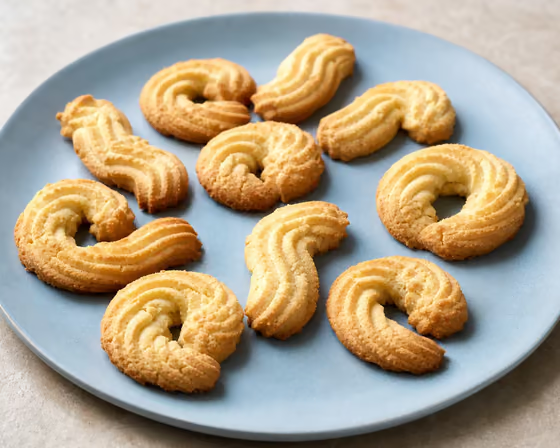
 Ílhavo Piped Butter Biscuits
Regional buttery biscuits piped into deeply ridged rings and curves.
The Centre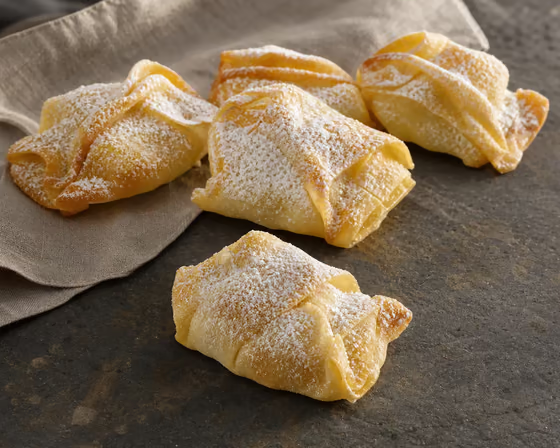 Catalogue image
 Saint Friar Gil’s Saddlebags
The small saddlebag-shaped pastry created at Vouzela’s vocational school and recognised as an innovative sweet.
The Centre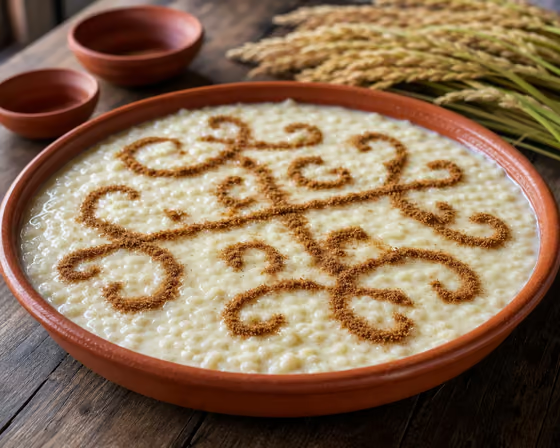 Catalogue image
 Baixo Mondego Rice Pudding
Mondego Carolino rice and Gândara milk, traced with cinnamon.
The Centre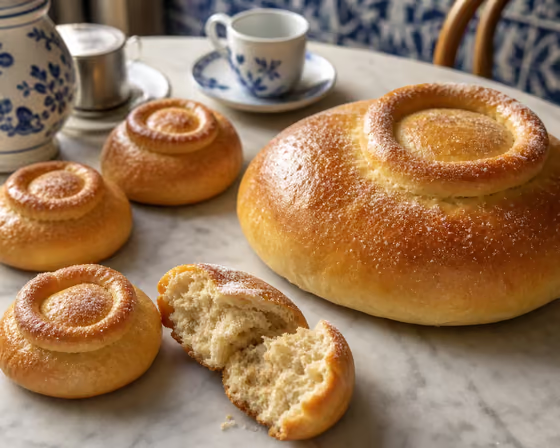 Catalogue image
 Arrufada de Coimbra
Coimbra's light, fragrant sweet bread, given by godparents at Easter.
The Centre