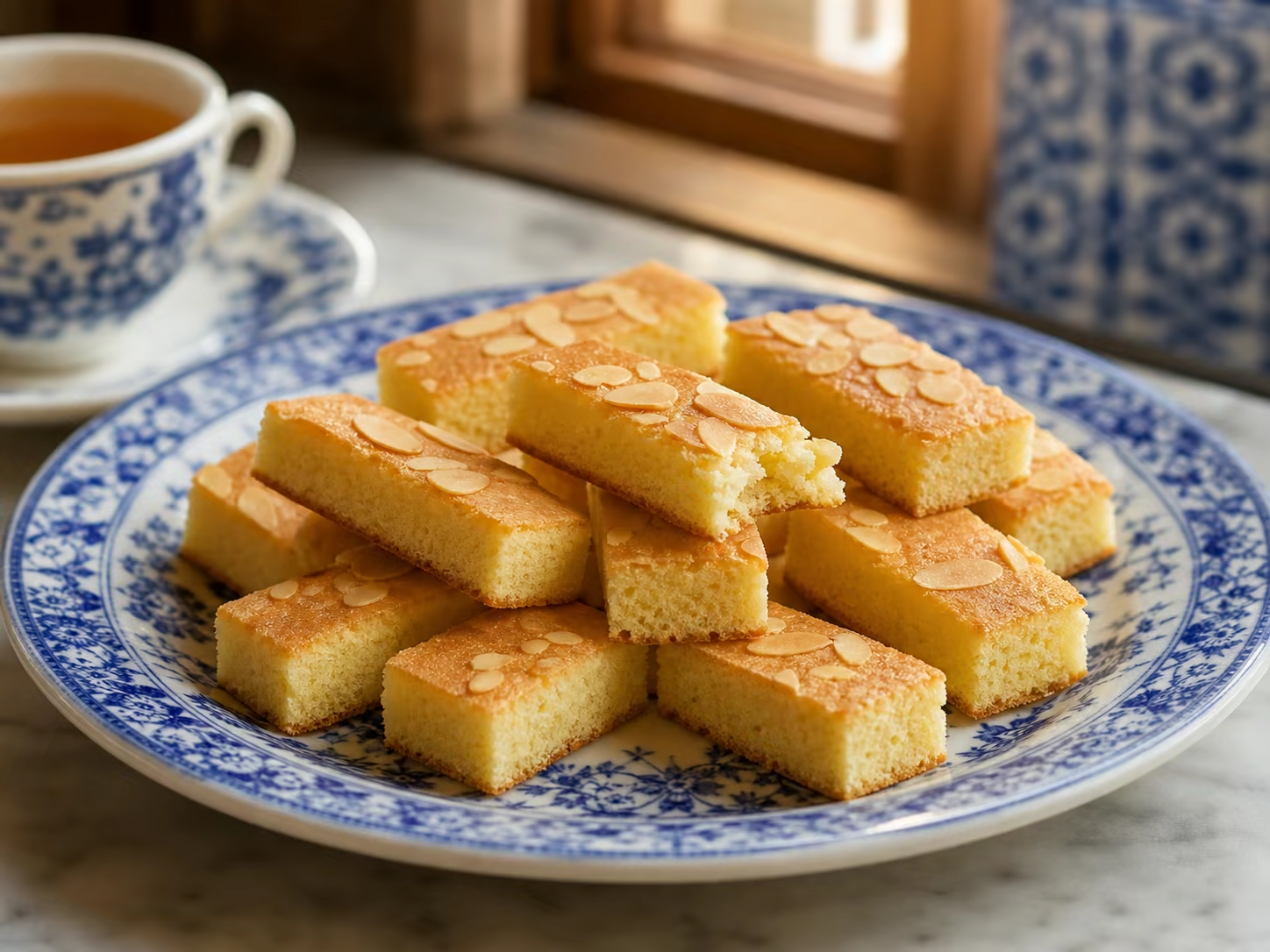
Aveiro Savoy Fingers
Also known as: Aveiro Savoy Fingers · Portuguese Savoy Cake Fingers
Dry strips of almond-topped sponge cake associated with Aveiro's sweet table.
- Origin
- Aveiro · documented local tradition; creator and date unknown
- Place
- Aveiro
- Region
- The Centre
- Category
- Cakes & Sweet Breads
- Season
- No documented traditional season
- Evidence
- Well documented
Aveiro's Palitos de Sabóia are strips of sponge cake topped with sliced almonds. A chapter published by UA Editora in 2024 describes them as a dry sweet that makes two trips to the oven. In one household practice recorded by the authors, they are also used instead of a spoon to eat ovos moles from a bowl.
A separately published culinary recipe uses eggs, sugar, flour, lemon zest, raising agent, salt and almonds, bakes the mixture in a tray and cuts it into 6 × 2 cm pieces. That recipe documents one possible formula, but does not prove that every Aveiro version uses lemon, raising agent or those exact dimensions. The image on this page is an editorial representation consistent with the documented sponge-and-almond strips, not a photograph from an identified producer.
- eggs
- sugar
- wheat flour
- lemon zest
- raising agent
- slivered peeled almonds
- salt
A dry sponge-and-almond sweet; lemon zest appears in the published recipe but is not confirmed as universal to the Aveiro version.
The university source documents two trips to the oven, while the consulted culinary recipe describes only one bake before cutting. This difference is retained as a documentary variation rather than resolved by assumption.
The Aveiro connection is documented, but the consulted sources do not confirm a current producer or stockist. Check directly with local pastry shops before visiting.
Bowl-served ovos moles and, for the dry sweets, licor de alguidar are pairings documented by the university source.
The Aveiro association is supported by two independent sources. In 2019, Aveiro municipality entered Palitos de Saboia in the Biscuits and Dry Cakes category of the Seven Wonders of Portuguese Sweets. In 2024, authors affiliated with the University of Aveiro included them among the sweets that express Aveiro's gastronomic identity.
These sources establish the contemporary tradition and local form, but do not identify a creator, originating pastry shop or early date. Palitos de Sabóia are also mentioned in other Portuguese regions, so the available evidence supports an Aveiro tradition rather than an exclusively Aveiro origin.
Well documented
Identity supported by institutional, specialist or corroborating sources.
- ria.ua.pt/handle/10773/45627 (opens in a new tab)
- doi.org/10.48528/e91m-ek89 (opens in a new tab)
- cdnc.heyzine.com/files/uploaded/v3/66352b46252599cde6060fb427cd1f8f906d3856.pdf (opens in a new tab)
- gastronomias.com/doces/doce2346a.htm (opens in a new tab)
- ovarnews.pt/37363-2/ (opens in a new tab)
- gazetarural.com/wp-content/uploads/2019/04/7-Maravilhas-Doces-de-Portugal-Lista-de-Nomeados.pdf (opens in a new tab)
Pastries from here — The Centre
 Catalogue image
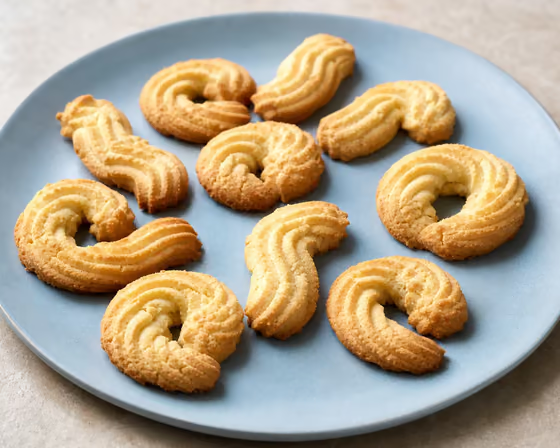
 Ílhavo Piped Butter Biscuits
Regional buttery biscuits piped into deeply ridged rings and curves.
The Centre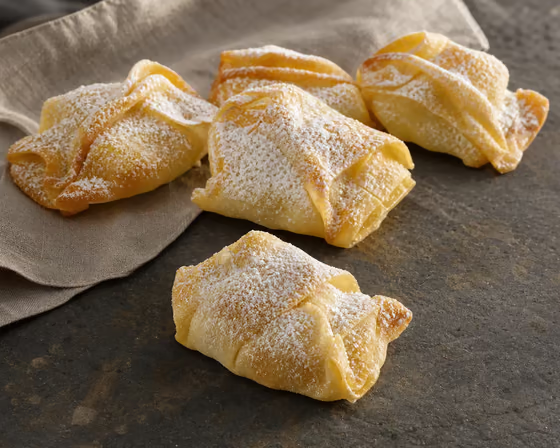 Catalogue image
 Saint Friar Gil’s Saddlebags
The small saddlebag-shaped pastry created at Vouzela’s vocational school and recognised as an innovative sweet.
The Centre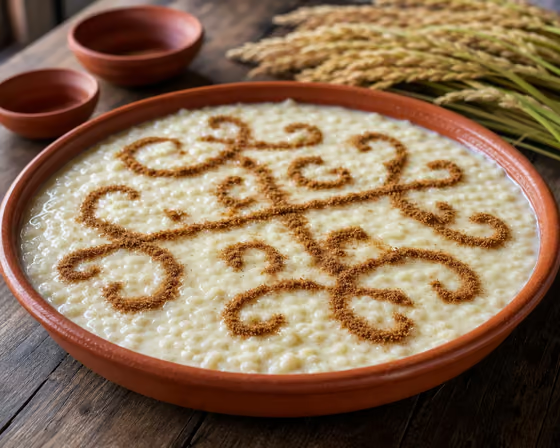 Catalogue image
 Baixo Mondego Rice Pudding
Mondego Carolino rice and Gândara milk, traced with cinnamon.
The Centre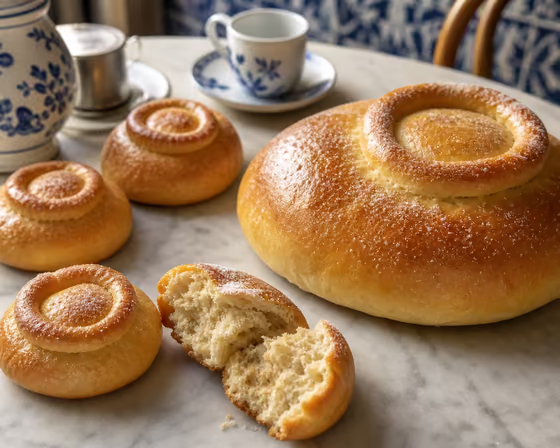 Catalogue image
 Arrufada de Coimbra
Coimbra's light, fragrant sweet bread, given by godparents at Easter.
The Centre