Malassadas
Also known as: Carnival malassadas · São Miguel malassadas · Malasadas · Melaçadas / Melassadas
The Azorean Carnival fry-up: airy yeast dough, crackling oil and sugar on your fingers.
- Origin
- An Azorean Carnival fry-up, above all from São Miguel
- Place
- Azores
- Region
- The Azores
- Category
- Fried Sweets
- Season
- Carnival
- Evidence
- Well documented
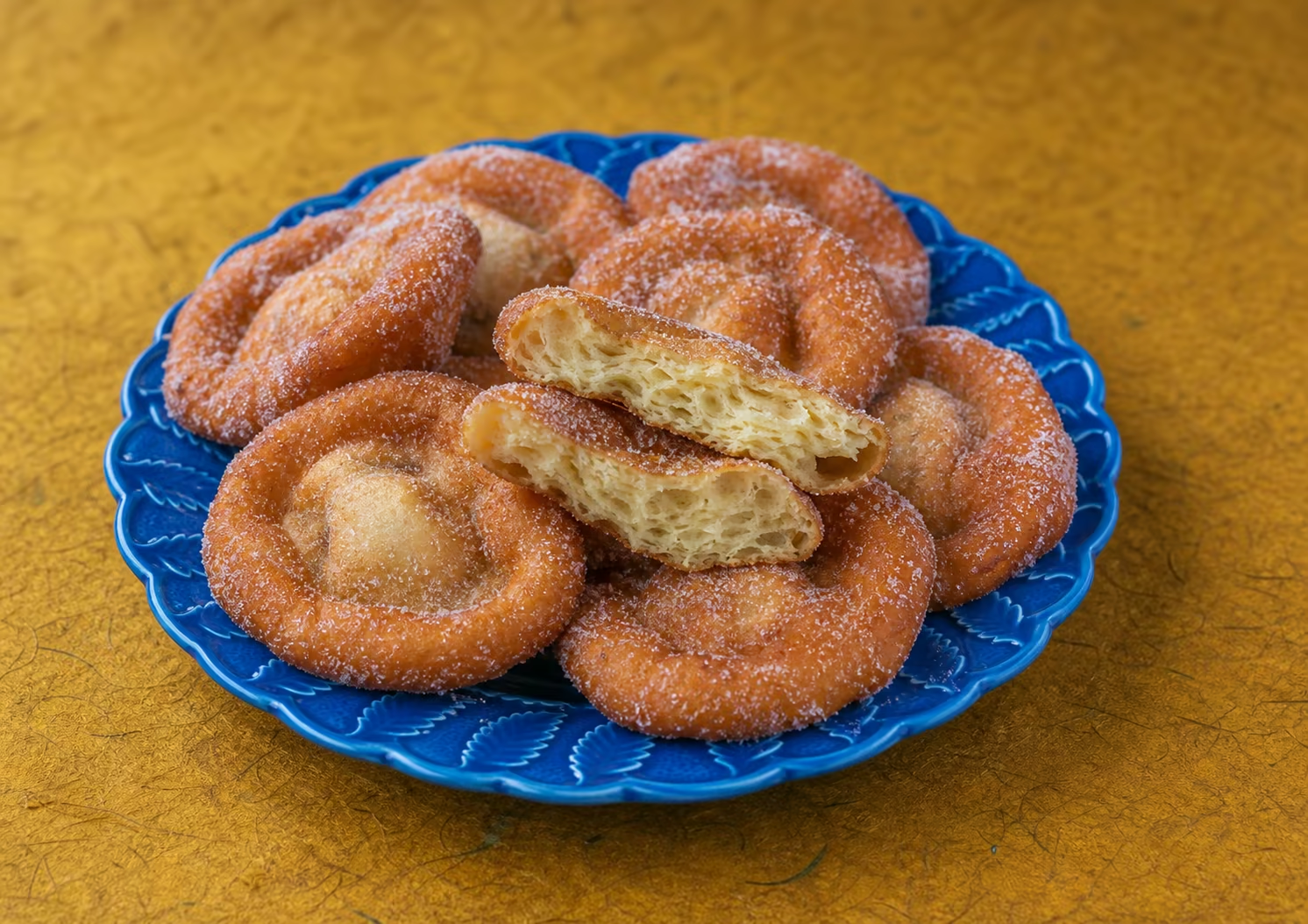
Malassadas are the Azores' Carnival sweet, and few São Miguel households let Shrove Tuesday pass without a bowl of yeasted dough rising in the kitchen. Pieces are fried in very hot oil until golden and tossed in sugar while still warm.
The name suggests “poorly baked”: this dough never enters an oven but sizzles in oil. Inside it is light and airy like sweet bread; outside, a fine crust cracks at the first bite. Some families make them round and flat, others stretch them with a hole in the middle, but the yeasted crumb and sugared shell remain constant.
- Wheat flour
- Eggs
- Sugar
- Milk
- Baker's yeast
- Orange juice
- Aguardente spirit (in many versions)
- Oil for frying
- Sugar and cinnamon for dusting
Eaten warm, they are light and airy inside, with a wafer-thin crust that crackles and, in many versions, a thread of orange running through the dough. The sugar and cinnamon outside bring the sweetness; the dough itself is restrained, more bread than cake. Well-drained, they never cloy — the secret is to eat them straight from the pan.
Malassadas are found in both the Azores and Madeira, with differences in dough, shape and serving. In the Azores, some are scented more strongly with orange and others include aguardente; on Flores, the cultural inventory records the spelling ‘melaçadas’ among Carnival fritters liberally dusted with sugar and cinnamon. That spelling also preserves the old explanation that the name came from molasses, although DGADR considers ‘mal-assadas’ the likelier origin. Madeira's official tourism board highlights a version served with cane honey. They may be round and flat like a filhó or larger and stretched, sometimes with a hole; Hawaiian malasadas tend to be larger and may be filled.
First and foremost at home, at Carnival — that is when they are best, fresh from the pan. Around Fat Tuesday they appear in bakeries, fairs and festivals across São Miguel and the wider archipelago. Visitors outside the season will find them in a few traditional houses that keep them year-round.
A strong espresso or a cup of Azorean tea — São Miguel is home to Gorreana, the oldest tea plantation in Europe, and the only tea grown on Portuguese soil. For the full festive spirit, a small glass of aguardente alongside.
Malassadas belong to the Iberian family of sweet yeasted fritters, related to mainland sonhos and filhós. The tradition is linked to Madeira's sugar economy and became especially established in the Azores as a Carnival sweet designed to use eggs, milk, fat and sugar before Lent.
Island emigrants carried the tradition across the Atlantic. Thousands of Portuguese workers began arriving in Hawaii from Madeira and the Azores in 1878, and malasadas became so beloved there that Shrove Tuesday is widely known locally as Malasada Day.
Well documented
Identity supported by institutional, specialist or corroborating sources.
- en.wikipedia.org/wiki/Malasada (opens in a new tab)
- tradicional.dgadr.gov.pt/pt/cat/doces-e-produtos-de-pastelaria/187-malassadas (opens in a new tab)
- aeazores.org/en/publicacoes/malassadas-an-azorean-internationally-known-sweet/ (opens in a new tab)
- visitmadeira.com/en/what-to-do/food-and-wine-enthusiasts/traditional-madeira-food/sweets-and-desserts/ (opens in a new tab)
- keolamagazine.com/food/malasada-magic/ (opens in a new tab)
- hawaiimagazine.com/so-whats-the-big-deal-with-malasadas/ (opens in a new tab)
- gorreana.pt/en/ (opens in a new tab)
- culturacores.azores.gov.pt/ea/pesquisa/Default.aspx (opens in a new tab)
Pastries from here — The Azores
 Catalogue image
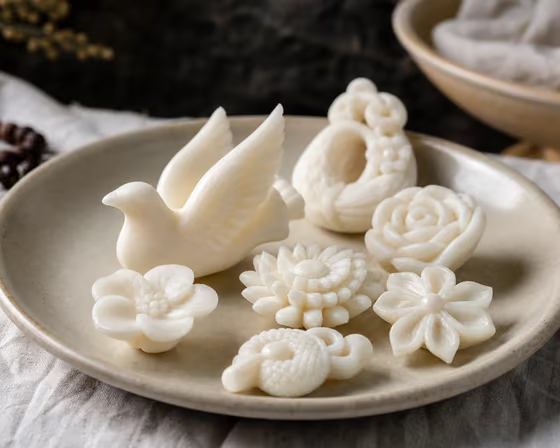
 Alfenim Pulled Sugar
Hand-pulled sugar shaped into animals, flowers, hearts and votive figures.
The Azores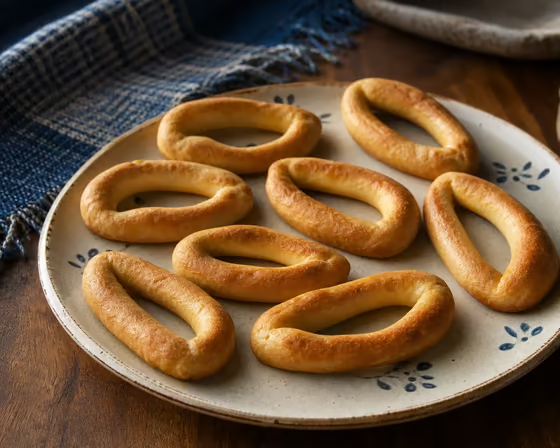 Catalogue image
 Brandy Biscuits
Crisp Santa Maria rings kneaded with eggs, rich fats and a glass of brandy.
The Azores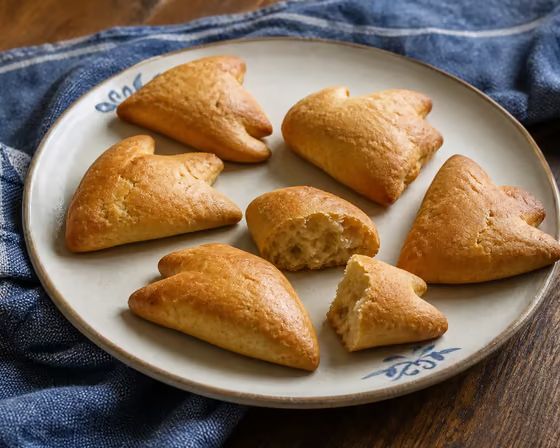 Catalogue image
 Ear-Shaped Biscuits
Santa Maria's triangular enriched biscuits, clipped at the tips like little ears.
The Azores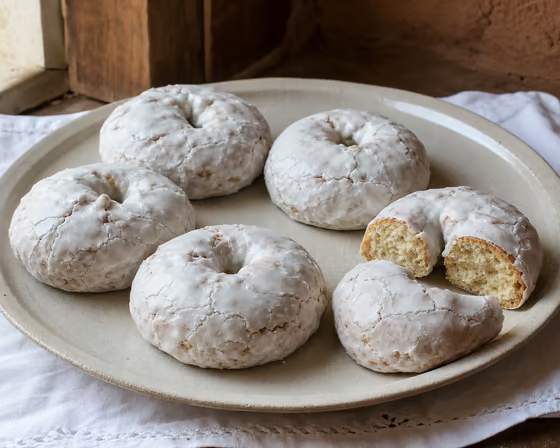 Catalogue image
 Santa Maria Encanelado Biscuits
Santa Maria's yeasted rings under a thick white sugar glaze.
The Azores