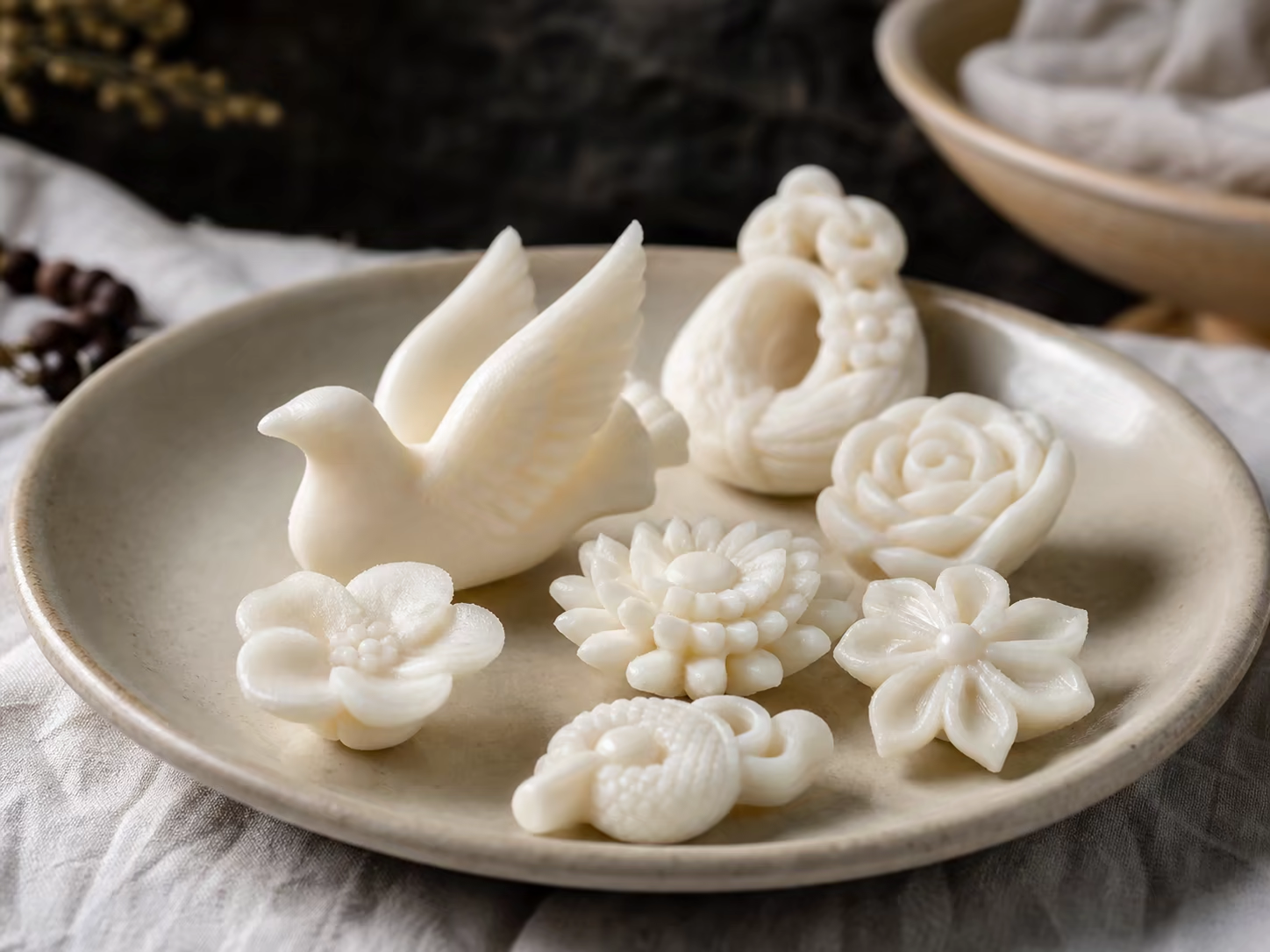
Alfenim Pulled Sugar
Hand-pulled sugar shaped into animals, flowers, hearts and votive figures.
- Origin
- Azores · official documentation differs among Santa Maria, Terceira and Graciosa
- Place
- Santa Maria · Terceira
- Region
- The Azores
- Category
- Festive & Seasonal
- Season
- Available year-round according to DGADR; especially associated with Holy Spirit festivals
- Evidence
- Well documented
Azorean alfenim is a paste of sugar, water and vinegar. In DGADR's formula, the syrup reaches soft-ball stage, is poured onto greased metal cooled over cold water, and is repeatedly pulled until elastic, opaque and white. While still warm, it is cut and shaped into doves, animals, flowers, fruit, rings, baskets, human figures and body parts. It may also be eaten as candy or used to decorate other cakes.
Its geography must be read source by source. DGADR delimits production to Santa Maria, yet its own history emphasizes survival on Terceira. The Azores Crafts and Design Centre says the tradition endured chiefly on Terceira and Graciosa and identifies a certified maker in Ribeirinha, Terceira. The Regional Culture Directorate's Azorean Encyclopaedia defines it as a traditional Terceira sweet. Together these references demonstrate an inter-island tradition, not a consensually exclusive origin.
- Sugar
- Water
- White-wine vinegar
- Butter only for greasing in DGADR's formula
Sugar sweetness; final texture depends on syrup stage, pulling and the thickness of the figure.
DGADR publishes a Santa Maria formula using soft-ball stage. The Azorean Encyclopaedia records a higher stage on Terceira, tested in cold water. The repertoire includes zoomorphic, anthropomorphic, floral, votive and decorative figures.
The Azores Crafts Centre documents certified production in Ribeirinha on Terceira. DGADR states year-round availability for its Santa Maria record; a diocesan source confirms year-round sale in some Terceira pastry shops and prominence during Holy Spirit festivals.
The reviewed official sources specify no traditional accompaniment.
Official sources agree on an eastern and Arabic transmission but express it with different degrees of certainty. The Azores Crafts Centre describes an eastern recipe brought to Iberia by Arabs, called al-fenid, and later transmitted from mainland Portugal to the Azores. The Azorean Encyclopaedia is more cautious: the sweet and its technique ‘are thought to have been absorbed from Arab culture’. This page does not turn that transmission hypothesis into an undocumented date or route.
In the Azores, official documentation connects alfenim with Holy Spirit festivals. The crafts catalogue describes animals, flowers, hearts and anthropomorphic figures offered as religious vows. DGADR records body-part shapes as ex-votos, wedding-table decoration and prestigious gifts; on Terceira, an offering to the Holy Spirit may remain in the império until auctioned to raise funds for the brotherhood. The ritual role is well documented, although the sources do not present every practice as common to every island.
Well documented
Identity supported by institutional, specialist or corroborating sources.
- tradicional.dgadr.gov.pt/pt/cat/doces-e-produtos-de-pastelaria/681-alfenim (opens in a new tab)
- artesanato.azores.gov.pt/catalogodigital/pt/alfenim (opens in a new tab)
- culturacores.azores.gov.pt/ea/pesquisa/Default.aspx (opens in a new tab)
- culturacores.azores.gov.pt/ea/pesquisa/default.aspx (opens in a new tab)
- novaresearch.unl.pt/en/publications/do%C3%A7aria-a%C3%A7oriana-da-hist%C3%B3ria-que-os-gestos-contam/ (opens in a new tab)
- igrejaacores.pt/divino-espirito-santo-a-festa-que-reune-todos-os-acorianos/ (opens in a new tab)
Pastries from here — The Azores
 Catalogue image
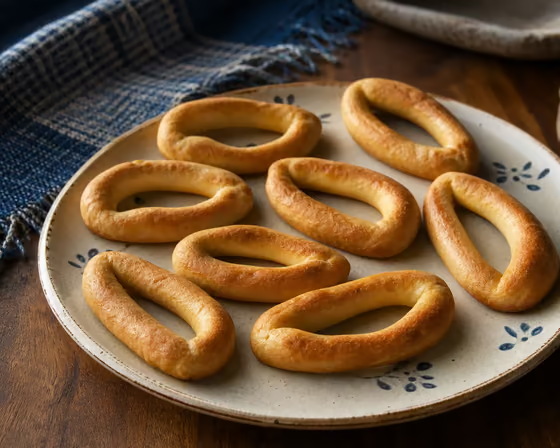
 Brandy Biscuits
Crisp Santa Maria rings kneaded with eggs, rich fats and a glass of brandy.
The Azores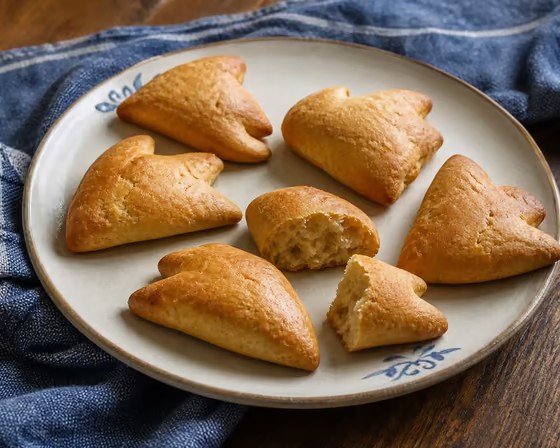 Catalogue image
 Ear-Shaped Biscuits
Santa Maria's triangular enriched biscuits, clipped at the tips like little ears.
The Azores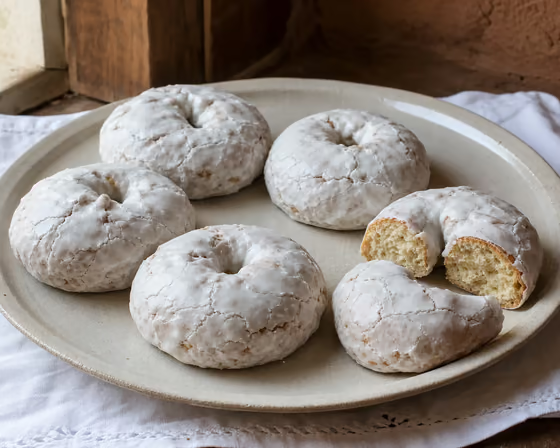 Catalogue image
 Santa Maria Encanelado Biscuits
Santa Maria's yeasted rings under a thick white sugar glaze.
The Azores Catalogue image
 Azorean Griddle Bread
An Azorean maize round of flour, water and salt, cooked on earthenware and eaten hot.
The Azores